


Prefer the print book? Buy on Amazon
As an Amazon Associate, Sumizeit earns from qualifying purchases.
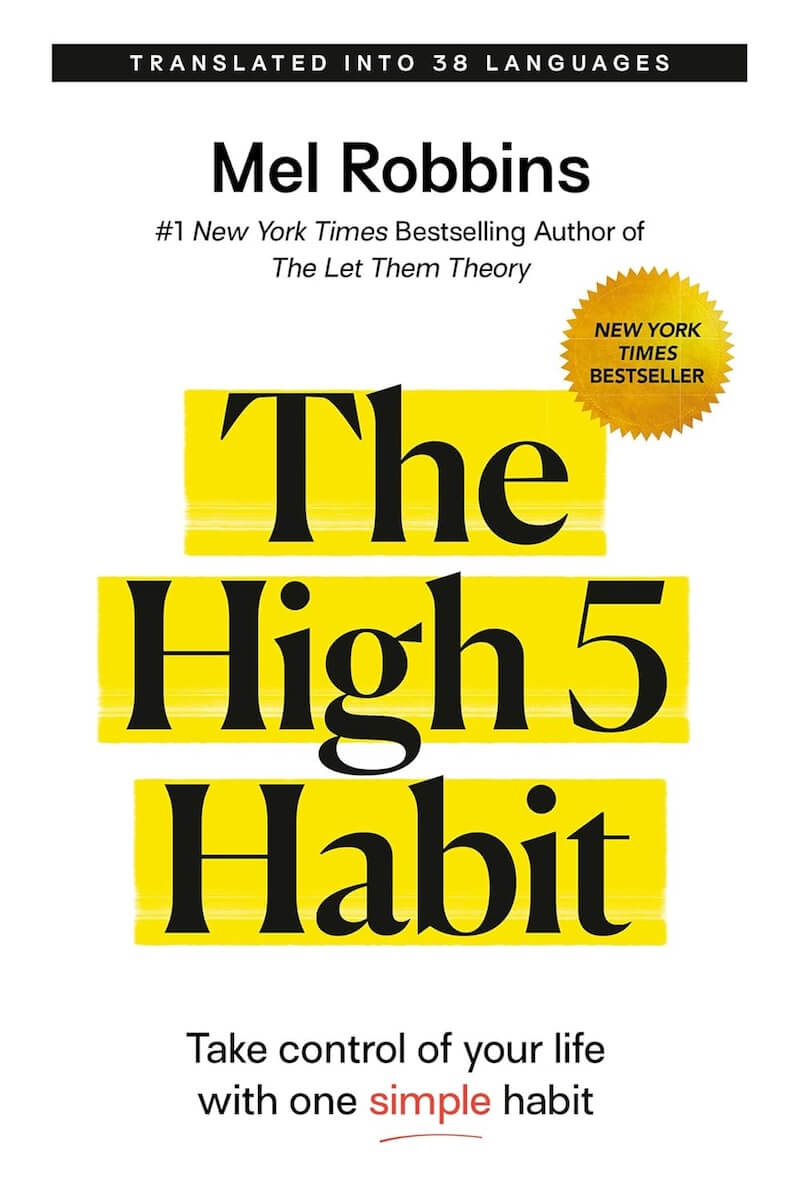
The High 5 Habit Book Summary
This The High 5 Habit Book Summary covers the key ideas, lessons, and takeaways in about 20 minutes.
Short Description:
The High 5 Habit builds confidence through daily self-encouragement.
Helps with these goals
Want the complete 20-minute summary?
- Full structured summary
- Video Summary
- Podcast Summary
- Audio summary
- Key takeaways
- Exercises
- Quiz
- Highlights and notes
- Ask the book with AI
Want a Free Weekly Read?
Get a free summary every week straight to your mailbox.
Preview the The High 5 Habit book summary
Below is a preview of Sumizeit’s comprehensive human-written summary of The High 5 Habit by Mel Robbins. The full summary is 15-20 minutes long and covers the book’s key ideas in text, audio, visual, and video formats. Unlock the full 20 Minute Summary
The High 5 Habit by Mel Robbins presents a deceptively simple but transformative practice designed to repair the relationship we have with ourselves, rewrite limiting internal narratives, and build a foundation of confidence and emotional resilience. The premise appears almost too simple: begin each morning by looking at yourself in the mirror and giving your own reflection a high five. According to Robbins, this single gesture—repeated daily—serves as an anchor, a psychological interruption, and a symbolic declaration that you are on your own side. The book combines neuroscience, behavioral psychology, habit formation theory, and personal stories to demonstrate how such a tiny action can reshape patterns of thought and behavior that may have been embedded for decades.
Robbins argues that many individuals wake up and immediately begin mentally attacking themselves. Instead of encouragement or excitement for the day ahead, they focus on what is wrong, what they fear, and what they believe they lack. Most people would never speak to a friend the way they routinely speak to themselves. The High 5 Habit offers a new way to begin the day—by celebrating oneself rather than criticizing. Robbins insists that self-support is not self-indulgence or ego; it is a prerequisite for growth and fulfillment. If encouragement from others feels powerful, she argues, then encouragement from oneself is even more impactful because it originates internally rather than relying on external approval.
Why the Habit Works: The Science of Positive Association
The physical act of high fiving carries built-in emotional meaning. Unlike words, which can feel forced or inauthentic, the gesture itself communicates enthusiasm, celebration, recognition, and mutual support. It is a universal symbol of encouragement—it requires no translation.
Robbins explains that when you high five someone else, you are acknowledging their effort and potential. High fives communicate statements such as: “You’ve got this,” “I believe in you,” and “Keep going.” When you direct that gesture at yourself, your brain cannot interpret it any differently—it automatically processes encouragement even if the conscious mind protests or feels embarrassed. This allows the gesture to bypass the internal critic that often blocks verbal affirmations.
For example, if you stand in front of a mirror and say, “I believe in myself,” an inner voice may immediately respond with: “No you don’t. You always fail. Who do you think you’re kidding?” But a high five contains no space for argument. The gesture itself communicates emotional truth faster than doubt can interfere.
Robbins supports this concept with research involving school-aged children. In one study, high fives were shown to be more effective at inspiring perseverance than verbal praise related to intelligence or effort. Children who received a high five continued working longer and maintained higher motivation because they internalized encouragement of themselves rather than conditional performance-based validation. Robbins suggests adults need the same reinforcement.
Understanding the Reticular Activating System and Thought Filtering
A major theme in the book is the Reticular Activating System (RAS), the brain structure responsible for filtering millions of sensory inputs so that only the most…
Want the complete 20-minute summary?
- Full structured summary
- Video Summary
- Podcast Summary
- Audio summary
- Key takeaways
- Exercises
- Quiz
- Highlights and notes
- Ask the book with AI
Who should read The High 5 Habit?
The High 5 Habit is for anyone struggling with self-doubt, negative self-talk, or difficulty taking action toward their goals. Whether you're battling procrastination, limiting beliefs, or simply feel disconnected from your own potential, this book offers a practical tool to rebuild your relationship with yourself. It's especially valuable for those who've internalized criticism or find it difficult to trust their own instincts.
Why does The High 5 Habit matter?
In a world that constantly tells us we're not enough, The High 5 Habit by Mel Robbins offers a simple yet scientifically-backed method to become your own greatest supporter rather than your harshest critic. Self-belief is the foundation for meaningful change, and this book provides an actionable framework to rewire decades-old patterns of self-sabotage. With practical strategies rooted in neuroscience and psychology, it addresses the emotional barriers—procrastination, fear, and self-doubt—that keep people stuck.
What are the key themes in The High 5 Habit?
- Self-support as the foundation for personal transformation
- How the Reticular Activating System filters reality based on beliefs
- Breaking free from limiting beliefs and negative self-narratives
- Reframing failure as feedback rather than a final verdict
- Building resilience and emotional awareness through daily practices
- The power of visualization and mental rehearsal
- Developing intuition and self-trust in decision-making
Want the complete 20-minute summary?
- Full structured summary
- Video Summary
- Podcast Summary
- Audio summary
- Key takeaways
- Exercises
- Quiz
- Highlights and notes
- Ask the book with AI
How can you apply ideas from The High 5 Habit?
- Begin each morning by looking in the mirror and giving your reflection a deliberate high five to interrupt the cycle of self-criticism before your day begins
- Practice the 5-Second Rule when procrastination tempts you: count backward from five and take immediate action to bypass hesitation and emotional avoidance
- Identify and flip your limiting beliefs by writing them down, questioning their validity, and replacing them with empowering alternatives you repeat daily
- Train your Reticular Activating System by setting a specific intention each morning and consciously noticing evidence that supports it throughout the day
- Break large goals into five-minute increments to reduce emotional overwhelm and build momentum through small, achievable wins
- Use visualization before important events or decisions: mentally rehearse success and imagine yourself navigating challenges with confidence
- Create a journal practice to strengthen intuition by regularly reflecting on your inner voice and reviewing times you trusted (or ignored) your instincts
What common mistakes do readers make with The High 5 Habit?
- Assuming the high five habit is superficial or too simple to work—the real power lies in consistent daily repetition, not in the complexity of the practice
- Trying to change external circumstances before transforming your internal narrative—this approach reverses the actual order of sustainable change
- Using the high five once or twice and expecting immediate results rather than understanding that neural pathway rewiring requires weeks of consistent practice
- Continuing to outsource self-belief to others' validation instead of recognizing that internal support is infinitely more powerful than external approval
- Interpreting fear as a sign to stop pursuing goals rather than recognizing discomfort as evidence that you're moving toward something meaningful
Sumizeit Exercises Apply what you've learned
Turn ideas from The High 5 Habit into action with a short guided reflection: identify the biggest takeaway, connect it to your life, and commit to one step you can take in the next 24 hours.
What is the expert analysis of The High 5 Habit?
Overview
The High 5 Habit by Mel Robbins emerges as a noteworthy contribution to the self-improvement genre by proposing a deceptively simple yet psychologically potent daily ritual: giving oneself a high five in the mirror each morning. Robbins, a recognized authority in behavior change and motivational psychology, leverages her extensive background—anchored in neuroscience, habit formation, and behavioral psychology—to craft a practice that aims to recalibrate the internal dialogue many individuals have with themselves. The book’s significance lies not only in its accessible approach but also in its integration of scientific insights with relatable storytelling, positioning it as a practical manual for fostering self-compassion, confidence, and resilience in a culture often marked by harsh self-criticism.
Core Thesis
At the heart of Robbins’ argument is the premise that self-support is foundational to personal transformation. She contends that the habitual internal narrative of self-criticism undermines motivation and well-being, and that a simple, embodied gesture—the high five to oneself—can interrupt these negative thought patterns. This act serves as a nonverbal cue that reprograms the Reticular Activating System (RAS) to prioritize positive, empowering information over limiting beliefs. Through consistent practice, individuals can rewire neural pathways, bolster emotional resilience, and cultivate a mindset conducive to growth, courage, and authentic self-trust. The book thus reframes self-encouragement not as narcissism but as a critical prerequisite for meaningful change and fulfillment.
Strengths
- Integration of Neuroscience and Psychology: Robbins adeptly synthesizes complex scientific concepts such as the RAS and habit formation into accessible language, grounding her practice in credible research.
- Practicality and Accessibility: The High 5 Habit is straightforward and easy to implement, lowering barriers for readers who may feel overwhelmed by more intensive self-help regimens.
- Use of Narrative and Case Studies: The inclusion of vivid, relatable examples—from children’s perseverance to adult transformations—enhances the book’s emotional resonance and illustrates the habit’s real-world applicability.
- Focus on Embodied Cognition: By emphasizing a physical gesture over verbal affirmations alone, Robbins taps into the power of nonverbal communication to bypass internal skepticism and foster genuine emotional shifts.
- Holistic Approach to Self-Improvement: The book addresses a broad spectrum of psychological challenges including procrastination, fear of failure, limiting beliefs, and emotional resilience, offering a cohesive framework rather than isolated tips.
Critiques & Counterarguments
- Potential Oversimplification: While the high five gesture is symbolically powerful, some readers may find the emphasis on a single ritual insufficient for addressing deeply entrenched psychological issues such as trauma or clinical depression, which often require more comprehensive therapeutic interventions.
- Limited Empirical Evidence: The reliance on anecdotal stories and a few cited studies—such as those involving children and high fives—may not fully substantiate the broad claims about adult neuroplasticity and long-term behavioral change. More rigorous, peer-reviewed research would strengthen the scientific foundation.
- Cultural and Individual Differences: The universality of the high five as a positive gesture may not translate across all cultures or personality types; some individuals might experience embarrassment or resistance that could undermine the habit’s effectiveness.
- Competing Psychological Frameworks: Cognitive-behavioral therapy (CBT) and mindfulness-based approaches emphasize verbal cognitive restructuring and present-moment awareness rather than symbolic physical gestures. These methods have extensive empirical support and may offer more nuanced tools for transforming self-critical thought patterns.
- Risk of Neglecting External Factors: The book’s focus on internal self-support might inadvertently downplay systemic or relational factors that contribute to self-esteem and motivation, such as social support, economic conditions, or cultural pressures.
Who Should Read This
The High 5 Habit is ideally suited for readers seeking an accessible entry point into self-improvement who appreciate a blend of science and storytelling. It appeals to individuals who struggle with negative self-talk, procrastination, or self-doubt and are looking for a simple, daily practice to cultivate self-compassion and resilience. Professionals in coaching, education, or wellness fields may also find Robbins’ integration of neuroscience and behavioral psychology useful for guiding clients toward practical mindset shifts. However, those dealing with severe psychological conditions or seeking comprehensive therapeutic strategies may need to complement this book with more specialized interventions.
Frequently asked questions about the The High 5 Habit book summary
What is The High 5 Habit about?
The High 5 Habit by Mel Robbins is about a simple daily practice of giving yourself a high five in the mirror each morning to interrupt self-criticism and build genuine self-support. The book combines neuroscience and psychology to explain how this small gesture can transform your internal narrative, rewire limiting beliefs, and create the emotional foundation necessary for meaningful personal change and resilience.
Who should read The High 5 Habit?
This book is for anyone struggling with self-doubt, negative self-talk, procrastination, or difficulty taking action toward their goals. It's valuable for people who've internalized criticism, fear failure, struggle with limiting beliefs, or want to build genuine self-confidence rather than relying on external validation. Whether you're navigating a life transition or simply want to become your own greatest supporter, this book offers practical, science-backed tools.
What are the main takeaways from The High 5 Habit?
The main takeaways are that self-support is the foundation of transformation, limiting beliefs are invisible barriers that can be identified and flipped, failure should be reframed as feedback rather than verdict, and a simple daily gesture can interrupt decades-old patterns of self-sabotage. The book emphasizes that true change begins internally with how you see yourself, and that your Reticular Activating System will filter reality to match your self-belief, making consistent daily practice essential for rewiring neural pathways.
How does the Reticular Activating System relate to personal growth?
The Reticular Activating System is the brain's filtering mechanism that highlights information confirming your existing beliefs while ignoring contradictory evidence. If you believe you're incapable, your RAS emphasizes failures and limitations. By shifting your internal narrative through practices like the high five habit, you reprogram your RAS to notice opportunities, resources, and evidence of your capability that were always present but previously invisible.
Can the high five habit really make a difference?
Yes, when practiced consistently. The high five gesture bypasses intellectual defenses and communicates encouragement directly to your nervous system faster than self-criticism can interfere. Robbins supports this with neuroscience research and numerous examples of people who transformed their lives through daily practice, proving that consistent repetition of a simple gesture can rewire neural pathways and shift deeply embedded patterns.
How do I use the 5-Second Rule to overcome procrastination?
When you feel the urge to procrastinate, immediately count backward from five (5-4-3-2-1) and take action before your mind manufactures reasons to delay. This interrupts the emotional avoidance mechanism that causes procrastination by bypassing hesitation. The rule works because procrastination is rooted in emotional discomfort, not laziness, so taking immediate small action builds confidence and breaks the avoidance cycle.
How do I transform limiting beliefs?
First, recognize your self-critical thoughts rather than operating from them unconsciously. Second, question whether these beliefs are actually true or just comfortable patterns you've believed. Third, intentionally flip them into empowering alternatives—for example, changing 'I always fail' to 'Every challenge teaches me something valuable.' Finally, reinforce the new belief through repetition, journaling, and the high five habit until your Reticular Activating System accepts it as true.
What role does visualization play in achieving goals?
Visualization mentally rehearses success, and the brain responds to imagined practice similarly to actual practice, strengthening neural pathways that support your goal. When combined with consistent daily action and the high five habit, visualization conditions your Reticular Activating System to notice opportunities and solutions aligned with your visualized outcome, making you more likely to recognize and act on possibilities that move you toward your goals.
About Sumizeit
Sumizeit is a profitable Scomy LLC company based in Miami, Florida. Our founders, Clemens Raemy and Weina Scott, are successful entrepreneurs with several exits. Sumizeit is a popular book summary app / micro learning app used by busy professionals and entrepreneurs with over 2,500 non-fiction book summaries and 10,000 podcast summaries in text, audio, visual, podcast, and video format. We also have stellar retention tools to make ideas stick - such as flashcards with spaced repetition, quizzes, streaks, highlighting and notes, daily challenges, riddles, mini-courses, meditation, and more. You won't only learn the idea, but also remember it. Over 90% of our users change their habits with Sumizeit.
Upgrade Now
Want the complete 20-minute summary?
- Full structured summary
- Video Summary
- Podcast Summary
- Audio summary
- Key takeaways
- Exercises
- Quiz
- Highlights and notes
- Ask the book with AI
Here's why readers love Sumizeit
Join thousands of learners getting smarter every day
"Great experience. Detailed summaries. Loved the gamification feature. Makes learning fun. Good customer service. I recommend Sumizeit to anyone. You'll learn a lot."
"I always felt busy but still wanting to keep up with the book discussion in my friend group. This was a great supplement to help me keep reading the books I find fun while keeping up with important books."
"I love this website. Instead of scrolling social media, I find myself learning a lot. I use it everyday. I recommend this app for anyone who is too busy and wants to get up to speed with their favorite books."
The High 5 Habit Book Summary PDF
Looking for a The High 5 Habit Book Summary PDF you can save and revisit offline? Our The High 5 Habit Book Summary PDF captures the book’s core ideas in a clean, printable format — the key frameworks, takeaways, and structure without the fluff. Download the The High 5 Habit Book Summary PDF when you want a reference you can annotate, share with your team, or review on the go. Get your The High 5 Habit Book Summary PDF from the download page below.
Download The High 5 Habit Book Summary PDFPeople also liked these summaries
Readers who explored The High 5 Habit often enjoyed these titles next.

Want the complete 20-minute summary?
- Full structured summary
- Video Summary
- Podcast Summary
- Audio summary
- Key takeaways
- Exercises
- Quiz
- Highlights and notes
- Ask the book with AI
Featured Book Titles
Popular Book Summaries at sumizeit, leading book summary app