


Prefer the print book? Buy on Amazon
As an Amazon Associate, Sumizeit earns from qualifying purchases.
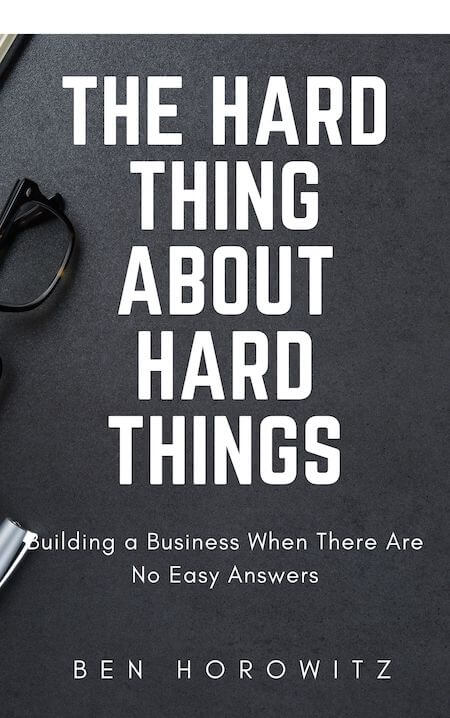
The Hard Thing About Hard Things Book Summary
This The Hard Thing About Hard Things Book Summary covers the key ideas, lessons, and takeaways in about 20 minutes.
Short Description:
The Hard Thing About Hard Things teaches resilience and leadership through struggle.
He argues that struggle is the price of greatness. Every crisis is a lesson in resilience, empathy, and courage. When you confront hard things instead of avoiding them, you earn the right to lead. Entrepreneurship, at its core, is about embracing pain, making imperfect choices, and never losing sight of your people.
Helps with these goals
Preview the The Hard Thing About Hard Things book summary
Below is a preview of Sumizeit’s comprehensive human-written summary of The Hard Thing About Hard Things by Ben Horowitz. The full summary is 15-20 minutes long and covers the book’s key ideas in text, audio, visual, and video formats. Unlock the full 20 Minute Summary
Ben Horowitz’s The Hard Thing About Hard Things shatters the illusion that business success follows a clear, formulaic path. Most business books celebrate vision, strategy, and culture—but Horowitz insists that the hardest part of leadership begins when the playbook stops working. It’s not about crafting an inspiring mission statement; it’s about firing a close friend who’s no longer right for the role, managing panic when investors lose faith, and finding the will to keep going when everything seems doomed.
Drawing on his journey as the CEO of Loudcloud, a cloud computing company launched during the dot-com boom of 1999, Horowitz recounts how his startup nearly collapsed when the bubble burst. His customers went bankrupt, capital evaporated, and survival seemed impossible. Yet through brutal honesty and relentless adaptation, he transformed Loudcloud into Opsware, eventually selling it to Hewlett-Packard for $1.6 billion. Those scars formed the backbone of his book—and later inspired the creation of Andreessen Horowitz (a16z), a venture capital firm built to support founders through their hardest moments.
The Struggle: Every Entrepreneur’s Breaking Point
Horowitz defines The Struggle as the crushing period when everything you’ve built seems to be falling apart. It’s the anxiety that keeps you awake at 3 a.m., the self-doubt that makes you question why you started this company in the first place. He shares his own nights of despair—times when he considered quitting, when payroll was uncertain, and when his board demanded results that felt impossible.
The Struggle, Horowitz argues, isn’t unique—it’s universal. Steve Jobs faced it when Apple ousted him from the company he founded. Elon Musk faced it in 2008 when Tesla and SpaceX were both near bankruptcy. The Struggle is where leadership is tested and character is forged.
To survive it, Horowitz gives several actionable steps:
Don’t lie to yourself. Denial is deadly. Confront your company’s issues head-on, even when the truth is painful.
Don’t quit. The only guaranteed failure is giving up. Keep searching for a path forward, no matter how grim things look.
Seek peers who’ve survived similar crises. They might not fix your problems, but they’ll remind you that you’re not alone.
Be transparent with your team. Your employees can handle bad news better than you think, and often they’ll help find the solution.
He recalls telling his staff during Loudcloud’s lowest point that the company was nearly out of money—but instead of panicking, they rallied. That moment of shared honesty became a turning point.
Mastering the CEO’s Psychology
According to Horowitz, the hardest part of being a CEO isn’t operational—it’s psychological. Leading a company means living in a constant state of uncertainty, where you are simultaneously the most powerful and the most vulnerable person in the room.
He calls it an “emotional rollercoaster”: one day you’re on top of the world after landing a big deal, the next day you’re wondering if you’ll have to fire half your team. To endure, CEOs must manage their own minds as carefully as they manage their businesses.
His…
Want the complete 20-minute summary?
- Full structured summary
- Video Summary
- Podcast Summary
- Audio summary
- Infographic
- Key takeaways
- Exercises
- Quiz
- Highlights and notes
- Ask the book with AI
Who should read The Hard Thing About Hard Things?
This book is essential for founders, CEOs, and aspiring leaders who want unfiltered wisdom about navigating crises and building great companies. It's also valuable for anyone in a high-stakes leadership role who needs honest guidance on managing teams, making tough decisions, and surviving the inevitable struggles that come with growth.
Why does The Hard Thing About Hard Things matter?
The Hard Thing About Hard Things cuts through business clichés to address the real, messy challenges that most leadership books ignore. In an era where entrepreneurship and rapid scaling are celebrated, Horowitz's candid exploration of failure, doubt, and emotional resilience provides a crucial counterbalance—teaching leaders how to survive and lead through chaos rather than avoid it.
What are the key themes in The Hard Thing About Hard Things?
- Surviving 'The Struggle' and finding resilience through crisis
- CEO psychology and emotional discipline under pressure
- Building teams based on strength and stage-appropriate fit
- Transparency and radical honesty as cultural foundations
- Wartime versus peacetime leadership styles
- Management debt and its long-term organizational costs
How can you apply ideas from The Hard Thing About Hard Things?
- Create a peer network of other CEOs or leaders facing similar challenges for regular check-ins and emotional support
- Implement weekly or bi-weekly one-on-one meetings with direct reports where you listen 90% of the time and ask open-ended questions
- Audit your hiring process to prioritize specialized strength for key roles over well-rounded competence
- Establish a regular feedback cadence (weekly or monthly) with specific, actionable guidance tied to role expectations
- Map your critical business processes back to clear goals, measure results, and assign accountability at each stage
- Conduct a management debt audit—identify short-term decisions (avoided reviews, misaligned roles, weak hires) and create a plan to address them
- Share both wins and failures transparently with your team in all-hands meetings to model authenticity and build trust
What common mistakes do readers make with The Hard Thing About Hard Things?
- Hiring 'safe' generalists instead of specialists who excel at what matters most, leading to slower execution
- Suppressing bad news or uncomfortable truths, which causes teams to hide problems instead of solving them
- Avoiding difficult people decisions to spare short-term discomfort, accumulating management debt that later destroys culture
- Treating feedback as occasional performance reviews rather than a continuous, specific, and kind process
Sumizeit Exercises Apply what you've learned
Turn ideas from The Hard Thing About Hard Things into action with a short guided reflection: identify the biggest takeaway, connect it to your life, and commit to one step you can take in the next 24 hours.
What is the expert analysis of The Hard Thing About Hard Things?
Overview
The Hard Thing About Hard Things by Ben Horowitz stands as a seminal work in contemporary business literature, distinguished by its unvarnished exploration of the brutal realities of entrepreneurship and leadership. Horowitz, a veteran Silicon Valley entrepreneur and co-founder of the influential venture capital firm Andreessen Horowitz, draws deeply from his own harrowing experiences navigating the collapse of the dot-com bubble and transforming his startup Loudcloud into the successful Opsware. This book transcends conventional business manuals by focusing not on idealized strategies or visionary platitudes, but on the gritty, often lonely challenges that define the CEO’s journey when conventional wisdom fails.
Core Thesis
Horowitz’s central argument is that the essence of leadership—and the true test of a CEO—is found not in moments of comfort or clear success, but in the crucible of “The Struggle,” the period when everything seems to be falling apart. He posits that surviving and thriving through these existential crises requires brutal honesty, emotional discipline, transparent communication, and relentless perseverance. The book insists that leadership is less about having perfect answers and more about making difficult decisions under uncertainty, managing psychological turmoil, and fostering a culture of trust and ownership. Ultimately, Horowitz reframes entrepreneurship as a psychological and emotional endurance test rather than a purely strategic or operational challenge.
Strengths
- Authenticity and Raw Honesty: Horowitz’s candid recounting of personal failures and doubts lends the book a rare credibility and emotional resonance that many business books lack.
- Practical, Actionable Advice: The book offers concrete, experience-tested strategies for managing crises, hiring, building culture, and decision-making under pressure.
- Psychological Insight: By foregrounding the CEO’s emotional landscape, Horowitz illuminates a neglected dimension of leadership, emphasizing mental resilience and self-awareness.
- Nuanced Leadership Framework: The wartime vs. peacetime CEO dichotomy provides a compelling lens for understanding how leadership styles must adapt to context.
- Focus on Culture and People: The emphasis on transparency, ownership, and prioritizing people before profits reflects a sophisticated understanding of sustainable organizational health.
Critiques & Counterarguments
- Overemphasis on Individual Leadership: While Horowitz highlights the CEO’s psychological burden, the book may underplay systemic factors such as market dynamics, team agency, and external ecosystems that also critically shape outcomes.
- Potential Oversimplification of “The Struggle”: The framing of struggle as a universal, almost heroic rite of passage risks romanticizing hardship and may inadvertently marginalize founders facing structural disadvantages or mental health issues beyond mere perseverance.
- Limited Engagement with Alternative Leadership Models: Horowitz’s wartime/peacetime CEO framework, while insightful, could be complemented by other leadership theories emphasizing distributed leadership, servant leadership, or collaborative decision-making, which challenge the centrality of the CEO’s unilateral decisiveness.
- Evidence Base and Generalizability: The book’s reliance on Horowitz’s personal narrative and Silicon Valley case studies may limit its applicability across different industries, cultures, or organizational scales where leadership challenges manifest differently.
- Competing Research on Decision-Making Under Uncertainty: Behavioral economics and cognitive psychology suggest that decision-making under uncertainty often suffers from biases and heuristics that Horowitz’s model of decisive action may underestimate or oversimplify.
Who Should Read This
The Hard Thing About Hard Things is essential reading for current and aspiring entrepreneurs, CEOs, and startup leaders who seek an unfiltered, pragmatic guide to the psychological and operational challenges of building and sustaining a company. It is especially valuable for those who appreciate leadership as a deeply human endeavor marked by vulnerability and resilience rather than abstract strategy alone. Additionally, investors, executive coaches, and business students interested in the lived realities behind startup success stories will find Horowitz’s insights both instructive and sobering. However, readers looking for a comprehensive leadership theory or a blueprint for guaranteed success may need to supplement this book with broader perspectives.
Frequently asked questions about the The Hard Thing About Hard Things book summary
What is The Hard Thing About Hard Things about?
The Hard Thing About Hard Things by Ben Horowitz is a leadership manual for founders and CEOs that cuts through business clichés to address the real, messy challenges of building and scaling companies. Rather than focusing on strategy and vision, Horowitz explores the psychological and operational struggles that test a leader's character—including managing crises, making decisions with incomplete information, building great teams, and surviving the intense periods of doubt and fear that every successful company faces.
Who should read The Hard Thing About Hard Things?
This book is essential for founders, CEOs, and anyone in high-stakes leadership roles who wants candid, practical wisdom on navigating crises and building resilient organizations. It's also valuable for aspiring entrepreneurs and managers who need to understand that struggle isn't a sign of failure but a universal part of building something great. Horowitz's honest, street-level approach appeals to leaders who prefer truth over motivation.
What are the main takeaways from The Hard Thing About Hard Things?
The main takeaways include: (1) Every successful leader faces 'The Struggle'—a breaking point where failure seems inevitable—and surviving it requires brutal honesty, not denial; (2) CEO success is determined by emotional discipline and psychology, not just operational skill; (3) Hire for exceptional strength rather than well-roundedness, and match people to your stage of growth; (4) Transparency and radical honesty build culture and accelerate problem-solving; (5) Training and frequent, specific feedback are the highest-leverage investments a leader can make; (6) Great CEOs toggle between wartime (crisis-driven) and peacetime (strategy-driven) leadership as circumstances demand.
What is 'The Struggle' according to Ben Horowitz?
The Struggle is the crushing period when everything a founder has built seems to be falling apart—characterized by anxiety, doubt, and the question of why you started the company in the first place. Horowitz argues it's universal among successful leaders and is the moment when leadership and character are truly tested. Examples include Steve Jobs being ousted from Apple and Elon Musk facing near-bankruptcy at both Tesla and SpaceX. The key to surviving it is confronting harsh truths, refusing to quit, seeking peer support, and being transparent with your team.
What is the difference between wartime and peacetime CEOs?
Peacetime CEOs lead during stability, focusing on culture, long-term strategy, and growth—like Eric Schmidt expanding Google's innovation infrastructure. Wartime CEOs lead during crisis and make fast, often ruthless decisions to ensure survival—like Steve Jobs returning to Apple and slashing products to focus on core offerings. Horowitz learned to toggle between both mindsets as circumstances shifted, arguing that the best CEOs can adapt their leadership style based on whether the company is in growth mode or survival mode.
How does Ben Horowitz recommend building a great team?
Horowitz recommends hiring for exceptional strength rather than well-roundedness—a great salesperson who struggles with politics is more valuable than a competent generalist. Stage fit matters more than prestige: a candidate perfect for a large company may fail in startup chaos. He also emphasizes hiring people with the right kind of ambition—those motivated by company success over personal ego, as they lift up their teams rather than poison culture. Finally, he stresses that training and continuous, specific feedback are the highest-leverage ways to develop your team.
What does Horowitz say about company culture?
Horowitz argues that culture isn't built through slogans but through consistent behavior—clear expectations, minimal bureaucracy, mutual respect, and the understanding that every voice matters. Transparency is central: suppressing uncomfortable truths creates 'organizational cancer,' while early, honest communication about problems enables teams to fix them faster. Leaders must model authenticity by discussing both wins and losses publicly. Cultural signals—how you respond to mistakes, celebrate wins, and share bad news—matter far more than motivational speeches in shaping real organizational behavior.
About Sumizeit
Sumizeit is a profitable Scomy LLC company based in Miami, Florida. Our founders, Clemens Raemy and Weina Scott, are successful entrepreneurs with several exits. Sumizeit is a popular book summary app / micro learning app used by busy professionals and entrepreneurs with over 2,500 non-fiction book summaries and 10,000 podcast summaries in text, audio, visual, podcast, and video format. We also have stellar retention tools to make ideas stick - such as flashcards with spaced repetition, quizzes, streaks, highlighting and notes, daily challenges, riddles, mini-courses, meditation, and more. You won't only learn the idea, but also remember it. Over 90% of our users change their habits with Sumizeit.
Upgrade Now
Here's why readers love Sumizeit
Join thousands of learners getting smarter every day
"Great experience. Detailed summaries. Loved the gamification feature. Makes learning fun. Good customer service. I recommend Sumizeit to anyone. You'll learn a lot."
"I always felt busy but still wanting to keep up with the book discussion in my friend group. This was a great supplement to help me keep reading the books I find fun while keeping up with important books."
"I love this website. Instead of scrolling social media, I find myself learning a lot. I use it everyday. I recommend this app for anyone who is too busy and wants to get up to speed with their favorite books."
The Hard Thing About Hard Things Book Summary PDF
Looking for a The Hard Thing About Hard Things Book Summary PDF you can save and revisit offline? Our The Hard Thing About Hard Things Book Summary PDF captures the book’s core ideas in a clean, printable format — the key frameworks, takeaways, and structure without the fluff. Download the The Hard Thing About Hard Things Book Summary PDF when you want a reference you can annotate, share with your team, or review on the go. Get your The Hard Thing About Hard Things Book Summary PDF from the download page below.
Download The Hard Thing About Hard Things Book Summary PDFPeople also liked these summaries
Readers who explored The Hard Thing About Hard Things often enjoyed these titles next.


Ready to read the whole thing?
- Full structured summary
- Video Summary
- Podcast Summary
- Audio summary
- Infographic
- Key takeaways
- Exercises
- Quiz
- Highlights and notes
- Ask the book with AI
Featured Book Titles
Popular Book Summaries at sumizeit, leading book summary app