


As an Amazon Associate, Sumizeit earns from qualifying purchases.
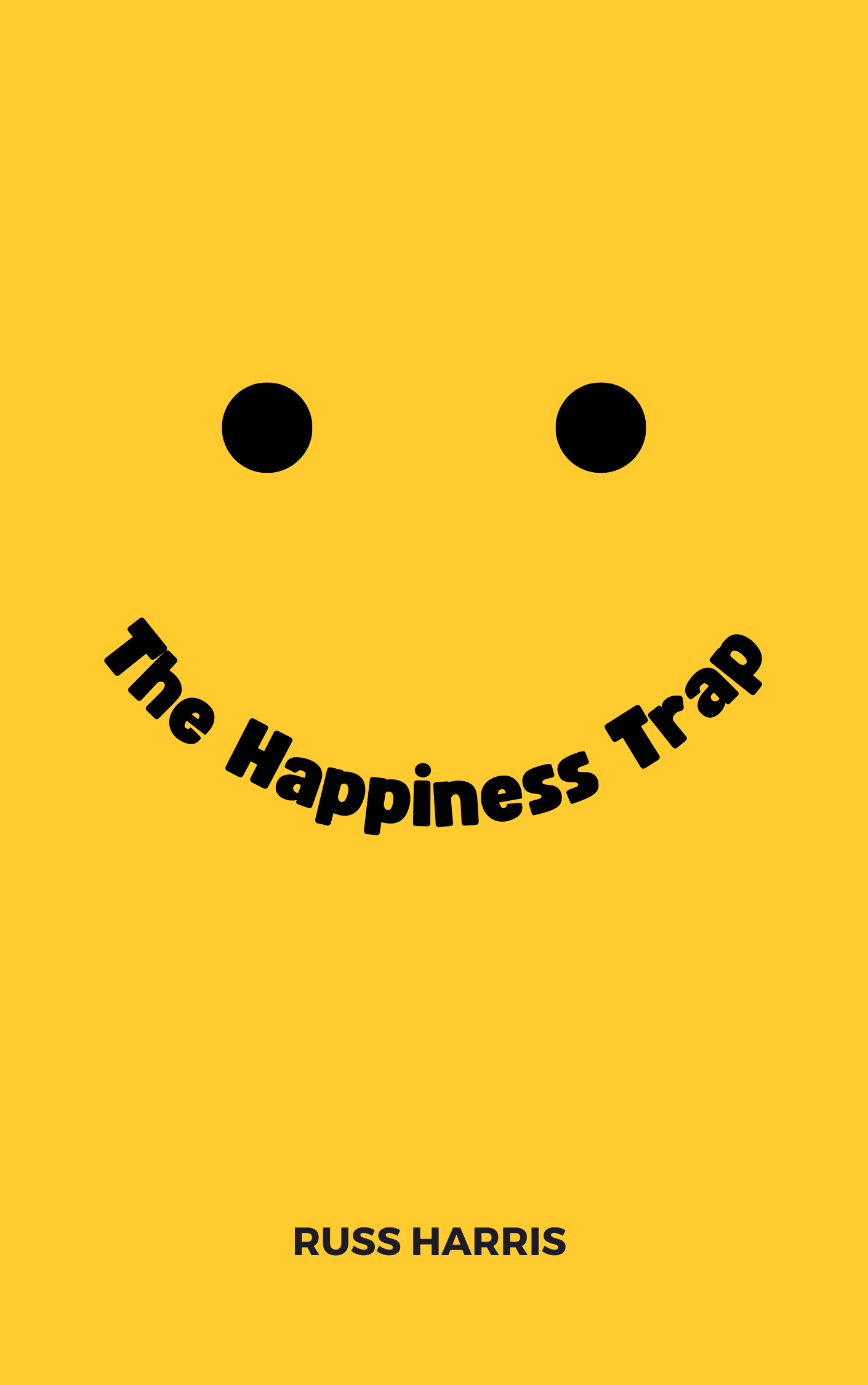
The Happiness Trap Book Summary
This The Happiness Trap Book Summary covers the key ideas, lessons, and takeaways in about 20 minutes.
The key takeaway is that a meaningful life is not about eliminating pain or achieving constant joy but about embracing the full spectrum of human emotions and staying true to one’s values. By accepting life’s challenges and taking committed action toward meaningful goals, individuals can cultivate a deeper sense of fulfilment, regardless of their emotional state. This perspective offers a healthier and more sustainable approach to well-being than the conventional idea of happiness as an attainable goal.
Helps with these goals
Want the complete 20-minute summary?
- Full structured summary
- Video Summary
- Podcast Summary
- Audio summary
- Key takeaways
- Exercises
- Quiz
- Highlights and notes
- Ask the book with AI
What is in the The Happiness Trap book summary?
Below is a preview of Sumizeit’s expert-written summary of The Happiness Trap by Russ Harris. The full summary covers the book’s key ideas in text, audio, and video.
The Happiness Trap by Russ Harris, first published in 2007, is based on Acceptance and Commitment Therapy (ACT), a mindfulness-based behavioral therapy. The book challenges the common belief that happiness is a normal human condition that can be achieved by avoiding negative emotions and relentlessly pursuing pleasure. Harris argues that the conventional pursuit of happiness is a cultural construct that leads people into what he calls the "happiness trap." In this trap, the more one chases happiness, the more elusive it becomes, often resulting in greater dissatisfaction and anxiety.
The book presents a pragmatic approach to mental well-being, focusing on accepting life's difficulties instead of avoiding or fighting them. Harris uses research from evolutionary psychology to explain how the human brain is hardwired to focus on problems and threats. In a world where survival instincts no longer apply in the same way, this trait can lead to increased anxiety and unhappiness. He shows how ACT helps people break free from this cycle through psychological flexibility, which involves embracing difficult emotions while committing to actions aligned with one's values.
Using step-by-step exercises and techniques, The Happiness Trap provides readers with tools to manage stress, anxiety, and emotional pain while creating a more fulfilling life. The book is particularly useful for individuals dealing with chronic stress or mental health challenges, offering a more sustainable path to well-being than traditional self-help advice.
Happiness Myth
One of the foundational ideas in The Happiness Trap is that happiness, as defined by modern society, is not a natural human state. Harris argues that the cultural belief that we should always be happy is deeply flawed and leads to greater emotional suffering. This myth is perpetuated by the media, self-help industry, and society at large, creating unrealistic expectations about how we should feel. According to Harris, this "happiness myth" suggests that happiness is the default state, and if people aren’t happy, something is wrong. This often results in a cycle where individuals constantly seek happiness through external means, such as career success, wealth, or relationships, only to feel disappointed when these pursuits fail to deliver lasting joy.
Harris draws on research from evolutionary psychology to explain that humans are hardwired to focus on problems and potential threats because this helped our ancestors survive. In the modern world, this survival mechanism translates into a mind that is often fixated on worries, fears, and what could go wrong. The constant bombardment of messages urging people to be happy compounds these tendencies, making unhappiness seem like a personal failure. Harris urges readers to reject this myth and accept that emotional pain is a natural part of the human experience, not something to be avoided at all costs.
Cognitive Defusion
Cognitive diffusion is one of the most important techniques introduced in The Happiness Trap and is a core component of ACT. Cognitive defusion refers to the process of distancing oneself from thoughts rather than becoming entangled in them.
Want the complete 20-minute summary?
- Full structured summary
- Video Summary
- Podcast Summary
- Audio summary
- Key takeaways
- Exercises
- Quiz
- Highlights and notes
- Ask the book with AI
Who should read The Happiness Trap?
The Happiness Trap is ideal for anyone feeling trapped by the pressure to constantly feel happy or struggling with chronic stress, anxiety, or depression. It's particularly valuable for people who want to move beyond surface-level self-help and discover a more meaningful, values-driven approach to living. This book also appeals to those interested in mindfulness-based psychology and individuals seeking practical, evidence-based strategies for mental well-being rather than unrealistic promises of perpetual joy.
Why does The Happiness Trap matter?
In today's culture of relentless positivity and curated social media perfection, The Happiness Trap offers a refreshingly honest perspective: the pursuit of happiness itself may be making us miserable. Russ Harris's approach, grounded in Acceptance and Commitment Therapy, provides a sustainable alternative to the exhausting chase for constant happiness by teaching us to accept life's difficulties while focusing on what truly matters. This message is increasingly relevant as anxiety and depression continue to rise, and many people recognize that traditional self-help advice has failed them.
What are the key themes in The Happiness Trap?
- The happiness myth and how modern culture creates unrealistic emotional expectations
- Psychological flexibility through accepting difficult emotions rather than fighting them
- Cognitive defusion: distancing yourself from unhelpful thoughts
- Living according to personal values instead of external pressures
- Mindfulness as a practical tool for present-moment awareness
- The evolutionary roots of human suffering and anxiety
What are the key lessons from the The Happiness Trap book summary?
Happiness is not the goal
The cultural obsession with constant happiness is a trap that actually increases dissatisfaction. Instead of chasing happiness, focus on living meaningfully regardless of your emotional state.
Your thoughts are not facts
Cognitive defusion teaches you to observe thoughts as mental events rather than truths, reducing their power over your behavior and emotional well-being.
Avoidance amplifies suffering
Resisting or fighting difficult emotions often makes them stronger. Acceptance and mindfulness create a more peaceful relationship with pain.
Distinguish values from goals
Values are ongoing principles that guide your life, while goals are specific outcomes. Living by values provides deeper fulfillment than chasing external achievements.
Emotional pain is universal
Suffering is part of being human, not a sign of failure. Accepting this reality frees you from the burden of fighting your own emotions.
Action comes before motivation
You don't need to feel ready or confident to take meaningful steps forward. Committed action toward your values works even when fear or doubt is present.
Your brain evolved for survival, not happiness
Our minds naturally focus on threats and problems because this trait kept our ancestors alive. Understanding this helps you manage modern anxiety without self-judgment.
Mindfulness is not about clearing your mind
True mindfulness means staying present with whatever arises, including discomfort and chaos, without judgment or resistance.
Values create resilience
When you're anchored to your core values, you can weather life's difficulties with greater strength and purpose than when chasing fleeting emotions.
Small actions compound over time
Breaking values-aligned goals into manageable steps makes change feel less overwhelming and builds momentum through consistent effort.
Fusion with thoughts limits your choices
When you believe your thoughts completely, you're trapped by them. Creating distance from thoughts expands your options for responding authentically.
Fulfillment comes from alignment
Living according to your values creates deeper satisfaction than any external achievement or emotional state ever could.
Acceptance is active, not passive
Accepting difficult emotions doesn't mean resignation or defeat; it's a deliberate choice to allow experiences without resistance.
External achievements don't guarantee happiness
The happiness trap shows how career success, wealth, and other pursuits often disappoint because they're chased as happiness substitutes rather than value-aligned actions.
Psychological flexibility is learnable
Through practice with ACT techniques, you can develop the ability to hold difficult emotions while still living meaningfully.
Your relationship with emotions matters more than the emotions themselves
The quality of your life depends less on which emotions you feel and more on how you relate to them.
Want the complete 20-minute summary?
- Full structured summary
- Video Summary
- Podcast Summary
- Audio summary
- Key takeaways
- Exercises
- Quiz
- Highlights and notes
- Ask the book with AI
How can you apply ideas from The Happiness Trap?
- Use cognitive defusion exercises like imagining thoughts as leaves on a stream to reduce the grip of negative self-talk and anxiety
- Clarify your personal values through reflection exercises, then align daily decisions and actions with those core principles
- Practice mindfulness meditation on your breath or body sensations to develop present-moment awareness and emotional acceptance
- Take one small action toward a meaningful goal each day, even when you feel afraid or unmotivated, to build committed action habits
- When facing difficult emotions, practice acceptance by observing them without resistance rather than immediately trying to eliminate them
- Evaluate major life decisions based on whether they align with your values, not just whether they promise happiness or success
- Break large, values-driven goals into smaller, manageable steps to avoid overwhelm and maintain steady progress
What common mistakes do readers make with The Happiness Trap?
- Assuming that happiness should be your primary life goal, then blaming yourself when you can't achieve it consistently
- Fighting or suppressing difficult emotions, which actually amplifies them and creates additional suffering
- Believing that your thoughts are always true and letting them control your behavior without questioning them
- Postponing meaningful action until you feel sufficiently motivated, confident, or emotionally ready to begin
Sumizeit Exercises Apply what you've learned
Turn ideas from The Happiness Trap into action with a short guided reflection: identify the biggest takeaway, connect it to your life, and commit to one step you can take in the next 24 hours.
What is the expert analysis of The Happiness Trap?
Overview
The Happiness Trap, authored by Russ Harris, is a seminal work that bridges clinical psychology and accessible self-help literature through the lens of Acceptance and Commitment Therapy (ACT). First published in 2007, the book stands out for its challenge to the pervasive cultural narrative that happiness is a default human state achievable through the avoidance of negative emotions. Harris, a medical doctor and psychotherapist, leverages his expertise to distill complex psychological principles into practical strategies aimed at fostering psychological flexibility and resilience. The book’s significance lies in its evidence-based approach to mental health, offering a counterpoint to traditional self-help paradigms that often emphasize positive thinking and emotional control.
Core Thesis
At the heart of The Happiness Trap is the argument that the conventional pursuit of happiness is fundamentally flawed and counterproductive. Harris contends that the societal imperative to be happy at all times creates a paradoxical trap, where the more individuals chase happiness, the more elusive it becomes, often exacerbating anxiety and dissatisfaction. Instead of striving to eliminate negative emotions, the book advocates for acceptance of the full range of human experience, emphasizing mindfulness, cognitive defusion, and values-based living as tools to cultivate a meaningful life. Psychological flexibility—embracing discomfort while committing to value-driven action—is presented as the antidote to the happiness trap.
Strengths
- Integration of ACT Principles: Harris adeptly translates Acceptance and Commitment Therapy into accessible language and actionable exercises, making sophisticated clinical concepts available to a broad audience.
- Pragmatic and Practical: The book is rich with step-by-step techniques, such as cognitive defusion exercises and mindfulness practices, which empower readers to engage actively with their mental health challenges.
- Challenging Cultural Norms: By deconstructing the “happiness myth,” Harris offers a refreshing critique of societal pressures, encouraging readers to redefine well-being on their own terms.
- Values-Centered Approach: Emphasizing values over transient emotions provides a durable framework for personal fulfillment that transcends momentary mood states.
- Accessible yet Authoritative: Harris’s background as a clinician lends credibility, while his clear writing style ensures the material is approachable for lay readers.
Critiques & Counterarguments
- Potential Oversimplification: While the book simplifies ACT for accessibility, some readers may find the nuanced clinical mechanisms behind acceptance and defusion underexplored, which could limit understanding of their full therapeutic potential.
- Limited Engagement with Alternative Models: Harris’s focus on ACT sidelines other psychological approaches, such as cognitive-behavioral therapy (CBT) variants that emphasize cognitive restructuring, or positive psychology frameworks that advocate for cultivating positive emotions rather than accepting negative ones.
- Evolutionary Psychology Interpretations: The evolutionary explanation for the brain’s negativity bias, while compelling, is presented without addressing ongoing debates about the complexity of human affective systems and cultural variability in emotional experience.
- Empirical Evidence Scope: Although ACT is supported by growing research, some critics argue that more longitudinal studies are needed to establish the long-term efficacy of the specific exercises and values-based living advocated in the book.
- Real-World Applicability: The emphasis on acceptance might be challenging for individuals facing severe mental health conditions or socio-economic hardships, where systemic factors play a significant role and acceptance alone may be insufficient.
Who Should Read This
- Individuals Experiencing Chronic Stress or Anxiety: Those seeking scientifically grounded, practical strategies to manage difficult emotions will find the book particularly valuable.
- Readers Disillusioned with Traditional Self-Help: Anyone frustrated by the relentless positivity culture and looking for a more nuanced understanding of happiness and well-being.
- Practitioners and Students of Psychology: Mental health professionals and trainees interested in ACT will appreciate Harris’s clear exposition and applied exercises.
- Mindfulness and Values-Oriented Seekers: Readers drawn to mindfulness practices and meaning-centered living will benefit from the book’s integration of these themes.
- Those Open to Psychological Flexibility: Individuals willing to engage with discomfort as part of growth and committed to aligning actions with personal values will find a sustainable framework for fulfillment.
Frequently asked questions about the The Happiness Trap book summary
What is The Happiness Trap about?
The Happiness Trap by Russ Harris argues that the modern cultural obsession with pursuing constant happiness is fundamentally flawed and actually increases suffering. The book introduces Acceptance and Commitment Therapy (ACT) techniques to help readers break free from this trap by accepting life's difficulties, managing unhelpful thoughts, and living according to their personal values rather than chasing fleeting emotions.
Who should read The Happiness Trap?
The Happiness Trap is ideal for people struggling with chronic stress, anxiety, or depression who want a practical, evidence-based alternative to traditional self-help. It's also valuable for anyone feeling overwhelmed by societal pressure to be constantly happy, those interested in mindfulness, or individuals seeking a deeper sense of meaning and fulfillment through values-driven living.
What are the main takeaways from The Happiness Trap?
The main takeaways are that chasing happiness is unsustainable and often counterproductive, that accepting difficult emotions is healthier than fighting them, and that a meaningful life comes from living according to your values rather than chasing emotional states. Russ Harris also teaches practical techniques like cognitive defusion and mindfulness to help readers develop psychological flexibility and take committed action toward what matters most to them.
What is cognitive defusion and how does it work?
Cognitive defusion is a technique that helps you distance yourself from unhelpful thoughts rather than believing them as absolute truths. Instead of accepting every thought as reality, you learn to observe thoughts as fleeting mental events, like leaves floating down a stream. This reduces the emotional impact of negative thinking patterns and gives you more freedom in how you respond.
How does The Happiness Trap differ from other self-help books?
Unlike traditional self-help books that promise happiness through external achievement or positive thinking, The Happiness Trap teaches acceptance and values-based living based on scientific research in ACT. It acknowledges that pain and difficult emotions are natural parts of life and focuses on building a meaningful existence rather than eliminating negative feelings.
Can I apply The Happiness Trap techniques to anxiety and depression?
Yes, The Happiness Trap is specifically designed for people managing anxiety, depression, and chronic stress. The ACT techniques in the book, including mindfulness, cognitive defusion, and acceptance, help you reduce the struggle with these conditions and take meaningful action despite them, leading to improved mental well-being without requiring the emotions to disappear first.
What role do values play in The Happiness Trap?
In The Happiness Trap, values are the foundation of a fulfilling life. Russ Harris emphasizes clarifying what truly matters to you—such as kindness, creativity, or integrity—and then taking consistent action aligned with those values. Values provide deeper satisfaction than external goals and help you navigate life's difficulties with greater resilience and purpose.
About Sumizeit
Sumizeit is a profitable Scomy LLC company based in Miami, Florida. It has been helping readers learn from nonfiction books for 7 years with expert-written summaries in text, audio, podcast, and video.
Want the complete 20-minute summary?
- Full structured summary
- Video Summary
- Podcast Summary
- Audio summary
- Key takeaways
- Exercises
- Quiz
- Highlights and notes
- Ask the book with AI
Here's why readers love Sumizeit
Join thousands of learners getting smarter every day
"Great experience. Detailed summaries. Loved the gamification feature. Makes learning fun. Good customer service. I recommend Sumizeit to anyone. You'll learn a lot."
"I always felt busy but still wanting to keep up with the book discussion in my friend group. This was a great supplement to help me keep reading the books I find fun while keeping up with important books."
"I love this website. Instead of scrolling social media, I find myself learning a lot. I use it everyday. I recommend this app for anyone who is too busy and wants to get up to speed with their favorite books."
The Happiness Trap Book Summary PDF
Looking for a The Happiness Trap Book Summary PDF you can save and revisit offline? Our The Happiness Trap Book Summary PDF captures the book’s core ideas in a clean, printable format — the key frameworks, takeaways, and structure without the fluff. Download the The Happiness Trap Book Summary PDF when you want a reference you can annotate, share with your team, or review on the go. Get your The Happiness Trap Book Summary PDF from the download page below.
Download The Happiness Trap Book Summary PDFPeople also liked these summaries
Readers who explored The Happiness Trap often enjoyed these titles next.



Want the complete 20-minute summary?
- Full structured summary
- Video Summary
- Podcast Summary
- Audio summary
- Key takeaways
- Exercises
- Quiz
- Highlights and notes
- Ask the book with AI
Featured Book Titles
Popular Book Summaries at sumizeit, leading book summary app