


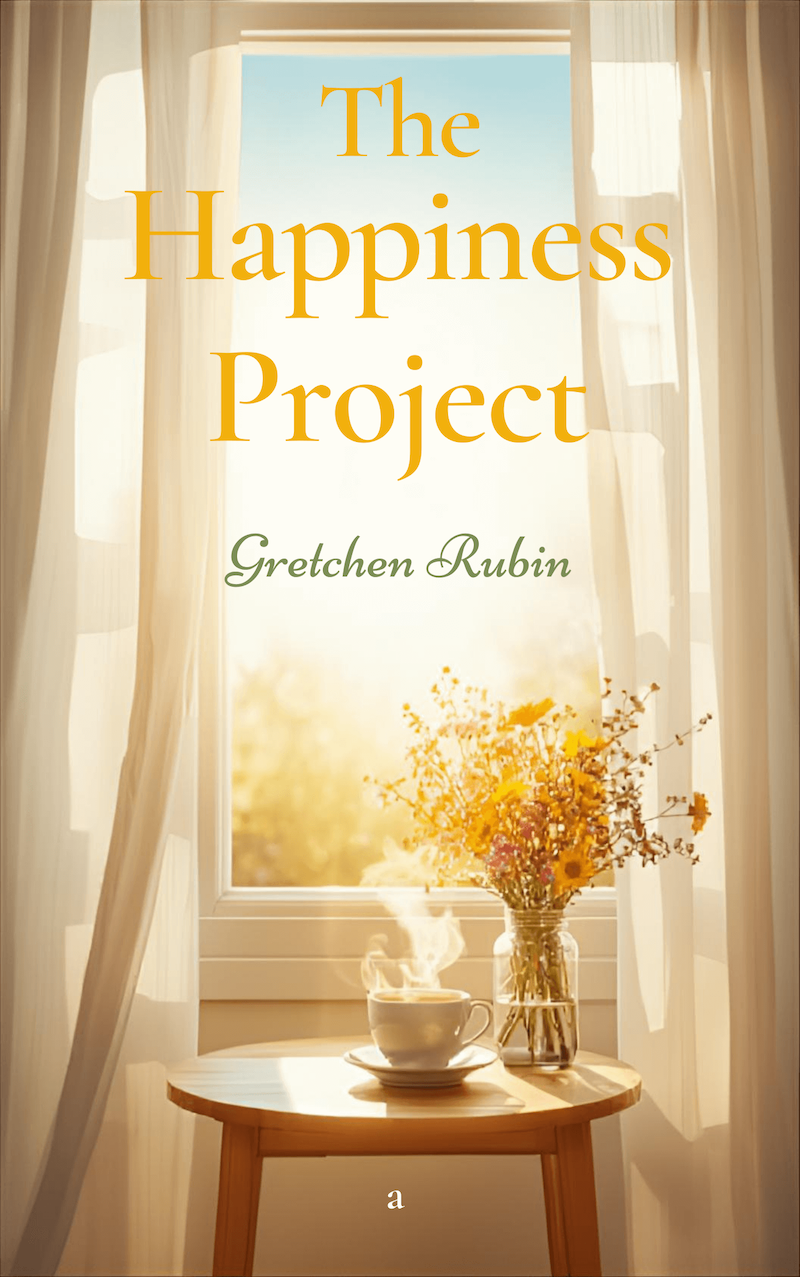
Prefer the print book? Buy on Amazon
As an Amazon Associate, Sumizeit earns from qualifying purchases.
The Happiness Project Book Summary
This The Happiness Project Book Summary covers the key ideas, lessons, and takeaways in about 20 minutes.
Short Description:
The Happiness Project grows happiness through deliberate daily choices.
Helps with these goals
Preview the The Happiness Project book summary
Below is a preview of Sumizeit’s comprehensive human-written summary of The Happiness Project by Gretchen Rubin. The full summary is 15-20 minutes long and covers the book’s key ideas in text, audio, visual, and video formats. Unlock the full 20 Minute Summary
Gretchen Rubin’s The Happiness Project chronicles her intentional year-long effort to increase happiness by applying small, practical changes to everyday life rather than relying on dramatic transformations. Instead of quitting her job to travel the world or transforming her identity in extreme ways, she chooses to refine ordinary habits already present in her routine. Each month focuses on a different aspect of well-being—energy, relationships, work, parenting, leisure, friendships, money, mindfulness, attitude, passion, and meaning—supported by specific resolutions she tracks and reflects on. Her approach demonstrates that happiness is built gradually through real-life decisions rather than through rare, life-changing experiences.
Foundational Ideas That Guide the Happiness Project
Rubin establishes several guiding principles at the beginning. First, happiness increases when we intentionally do more of what brings joy and reduce what consistently triggers negativity. For example, she notes that waking up earlier improves her mood more than staying up late watching television, even though the latter feels enjoyable in the moment.
Second, she makes an important distinction between feeling good and feeling “right.” Someone might love the relaxation of watching movies all weekend, but ultimately feel unfulfilled if it comes at the expense of deeper goals like writing a book or learning a new skill.
Third, she identifies that humans rapidly adapt to positive change, which means achievements quickly fade into normalcy. For example, the excitement of buying a new car or receiving a promotion disappears much sooner than anticipated. Therefore, continual growth is required to sustain happiness.
Fourth, happiness is contagious. A cheerful attitude uplifts others, while chronic complaining drains social energy. She recounts moments when choosing a positive tone during tense mornings transformed the emotional environment for her entire family.
Month One: Building Energy and Clearing Mental Space
Rubin begins with physical and mental energy, reasoning that without vitality and clarity, sustained improvement is nearly impossible. She first focuses on sleep because she realizes she regularly stays up late reading or browsing the internet, telling herself she needs “me time.” The next morning she feels exhausted, irritable, and rushed. She discovers that dimming lights in the evening, avoiding stimulating tasks before bed, and beginning her nighttime routine earlier greatly improves her rest. For example, instead of starting to clean the kitchen at 11 p.m., she completes those tasks earlier in the evening and reads in low light.
Exercise becomes another essential component. Rubin explains that even a short walk can reset her mental state. On days when she takes a brisk morning walk, she notices she feels calmer and more focused. She tries different forms of exercise recommended by friends—such as yoga and dance classes—to discover activities she genuinely enjoys, rather than forcing herself onto a treadmill she dislikes.
Clearing physical clutter also raises her energy dramatically. Decluttering starts with her bedroom closet, where she finds clothes she has not worn in years, items bought cheaply but never used, gifts that did not suit her style, and leftover craft materials from abandoned hobbies.
Want the complete 20-minute summary?
- Full structured summary
- Video Summary
- Podcast Summary
- Audio summary
- Key takeaways
- Exercises
- Quiz
- Highlights and notes
- Ask the book with AI
Who should read The Happiness Project?
The Happiness Project is ideal for anyone feeling stuck in daily routines or wondering if there's more to life than their current circumstances. Whether you're overwhelmed by work, relationships, or parenting, or simply seeking greater contentment, this book offers practical strategies for people who prefer gradual, achievable improvements over dramatic life overhauls. It resonates especially with readers who value both self-reflection and actionable change.
Why does The Happiness Project matter?
In a world that often promises happiness through major events or purchases, Gretchen Rubin's approach is refreshingly grounded in everyday habits and intentional choices. The book demonstrates that sustained happiness comes from consistent small decisions rather than waiting for perfect circumstances, making it deeply relevant for people navigating busy, complicated lives. It challenges the myth that happiness requires extreme sacrifice or transformation, showing instead that contentment grows from refining what you already do.
What are the key themes in The Happiness Project?
- Happiness is built through daily habits and small, intentional choices rather than dramatic life changes
- Energy and mental clarity are foundational to sustained well-being
- Relationships thrive on appreciation, presence, and understanding rather than expectation
- Meaning comes from aligning actions with personal values and passions
- Gratitude and perspective shift can transform how you experience ordinary moments
- Positivity and attitude are contagious and shape the emotional environment around you
How can you apply ideas from The Happiness Project?
- Create a monthly happiness focus plan by selecting one area of life—such as sleep, relationships, or work—and developing specific resolutions to test for improvement
- Implement the one-minute rule to eliminate lingering tasks that drain mental energy, completing anything that takes less than 60 seconds immediately
- Schedule a weekly friend check-in or plan one monthly coffee meeting to strengthen relationships through consistent, low-pressure effort
- Establish a daily gratitude practice by noting one or two specific moments of joy or appreciation each evening before bed
- Audit your leisure activities by asking whether you genuinely enjoy them, and give yourself permission to replace obligatory hobbies with authentic interests
- Use a 15-minute timed work sprint to build momentum on procrastinated tasks, discovering that starting often requires far less willpower than anticipated
- Identify one area of your home or schedule to declutter using the moving test—would you pack this if leaving tomorrow?—and donate or discard items that don't serve you
What common mistakes do readers make with The Happiness Project?
- Waiting for dramatic life changes instead of recognizing that small, consistent daily habits create measurable happiness improvements
- Neglecting foundational well-being like sleep and movement while pursuing more ambitious goals, making progress unsustainable
- Assuming happiness comes from major purchases or achievements without recognizing how quickly humans adapt to positive changes
- Prioritizing productivity and efficiency over presence and joy, missing the meaningful moments that become cherished memories
- Offering criticism and nagging in relationships instead of releasing expectations and finding appreciation for what already exists
- Treating best items and experiences as reserved for special occasions rather than using and enjoying them regularly
Sumizeit Exercises Apply what you've learned
Turn ideas from The Happiness Project into action with a short guided reflection: identify the biggest takeaway, connect it to your life, and commit to one step you can take in the next 24 hours.
What is the expert analysis of The Happiness Project?
Overview
The Happiness Project by Gretchen Rubin stands as a seminal work in the contemporary self-improvement and positive psychology genres. Rubin, a former lawyer turned bestselling author and researcher, leverages both personal narrative and empirical insights to explore the incremental cultivation of happiness. The book’s significance lies in its accessible, methodical approach to well-being—eschewing grand transformations for manageable, habitual changes. Rubin’s background in behavioral research and her engaging prose have made this work influential among readers seeking practical, evidence-informed strategies to enhance life satisfaction.
Core Thesis
At its core, Rubin’s thesis posits that happiness is not a static state or a product of extraordinary life events, but rather the cumulative effect of intentional, small-scale adjustments in daily behavior and mindset. She argues that by consciously prioritizing activities that foster joy and minimizing those that provoke negativity, individuals can incrementally build a sustainable sense of well-being. This process requires ongoing reflection, adaptation, and the integration of diverse life domains—ranging from physical health and relationships to work and leisure—into a comprehensive happiness practice.
Strengths
- Practical Framework: Rubin’s month-by-month structure offers a clear, actionable roadmap that demystifies the pursuit of happiness, making it approachable for a broad audience.
- Holistic Approach: The book’s attention to multiple facets of life—energy, relationships, work, parenting, money, and mindfulness—reflects a nuanced understanding that happiness is multifaceted and interconnected.
- Balance of Personal Narrative and Research: Rubin effectively blends anecdotal evidence with psychological principles, enhancing both relatability and credibility.
- Emphasis on Habit Formation: By focusing on small, sustainable changes rather than radical upheavals, Rubin aligns with contemporary behavioral science emphasizing the power of habits.
- Emotional Intelligence and Communication: The nuanced exploration of interpersonal dynamics, especially in marriage and friendships, highlights the importance of empathy, appreciation, and positive communication.
Critiques & Counterarguments
- Oversimplification of Complex Emotions: While the book promotes positivity and gratitude, it may underrepresent the complexity of negative emotions and structural factors that influence happiness, such as socioeconomic status or mental health conditions.
- Limited Engagement with Cultural Variability: Rubin’s framework is largely Western-centric, potentially limiting its applicability across diverse cultural contexts where concepts of happiness and well-being differ significantly.
- Evidence Base and Generalizability: The reliance on personal experimentation and selective research citations may not fully capture the heterogeneity of human experience; some findings from positive psychology research suggest that forced happiness or relentless positivity can backfire.
- Competing Theories: Philosophical traditions such as Stoicism or Buddhist mindfulness emphasize acceptance of suffering and detachment from desire, contrasting with Rubin’s active pursuit of happiness through external changes.
- Real-World Constraints: The book’s recommendations may be challenging to implement for individuals facing systemic barriers, chronic stress, or caregiving burdens, raising questions about the scalability of its approach.
Who Should Read This
The Happiness Project is ideally suited for readers who appreciate a structured, research-informed yet accessible guide to enhancing personal well-being. It will resonate with individuals seeking pragmatic strategies to incrementally improve their daily lives without dramatic upheaval. Those interested in habit formation, positive psychology, and self-reflection will find Rubin’s insights particularly valuable. However, readers looking for deep philosophical inquiry into the nature of happiness or those confronting severe psychological distress may need to supplement this book with more specialized resources.
Frequently asked questions about the The Happiness Project book summary
What is The Happiness Project about?
The Happiness Project by Gretchen Rubin documents her year-long personal experiment to increase happiness through deliberate, practical changes to everyday life. Rather than seeking dramatic transformation, she tests small modifications across twelve areas of well-being—including sleep, relationships, work, parenting, friendships, and gratitude—tracking what actually improves her contentment and life satisfaction.
Who should read The Happiness Project?
Anyone seeking greater contentment through manageable, evidence-based strategies will benefit from this book. It's particularly valuable for busy professionals, parents, and people in committed relationships who want to improve specific areas of life without overhauling everything. Readers who prefer practical, actionable advice over abstract philosophy will find Rubin's approach most useful.
What are the main takeaways from The Happiness Project?
The core insight is that happiness grows from consistent small choices rather than major life changes or waiting for perfect circumstances. Key takeaways include the importance of foundational energy, the power of strengthening relationships through appreciation, aligning work with genuine passion, practicing gratitude for perspective shifts, and recognizing that positivity and presence transform both your experience and others' responses to you.
How does Gretchen Rubin structure her happiness project?
Rubin organizes her year into twelve months, each focusing on a different dimension of well-being such as energy, marriage, work, parenting, leisure, friendships, money, gratitude, passion, mindfulness, attitude, and integration. For each month, she develops specific resolutions related to that theme, tests them throughout the month, and reflects on what works for her personally.
Can I start a happiness project based on this book?
Yes—the book is designed to inspire personal experimentation rather than provide a one-size-fits-all formula. You can adopt Rubin's general approach by selecting one area of your life that matters most, developing concrete resolutions to test, tracking your experience, and building momentum through small, achievable changes over time.
What does Rubin say about the role of relationships in happiness?
Relationships profoundly impact happiness, requiring intentional effort to strengthen. Rubin emphasizes eliminating nagging, reframing expectations as gifts, understanding how others express love, and investing consistently through regular communication and showing up. She shows that appreciation and presence matter far more than grand gestures.
How does The Happiness Project address work and career fulfillment?
Rubin explores how work occupies much of daily life and advocates for aligning careers with genuine interests rather than merely respectable fields. She describes her transition from law to writing, demonstrates how productivity systems enable better focus, and highlights the importance of community and accountability in pursuing meaningful goals.
About Sumizeit
Sumizeit is a profitable Scomy LLC company based in Miami, Florida. Our founders, Clemens Raemy and Weina Scott, are successful entrepreneurs with several exits. Sumizeit is a popular book summary app / micro learning app used by busy professionals and entrepreneurs with over 2,500 non-fiction book summaries and 10,000 podcast summaries in text, audio, visual, podcast, and video format. We also have stellar retention tools to make ideas stick - such as flashcards with spaced repetition, quizzes, streaks, highlighting and notes, daily challenges, riddles, mini-courses, meditation, and more. You won't only learn the idea, but also remember it. Over 90% of our users change their habits with Sumizeit.
Upgrade Now
Here's why readers love Sumizeit
Join thousands of learners getting smarter every day
"Great experience. Detailed summaries. Loved the gamification feature. Makes learning fun. Good customer service. I recommend Sumizeit to anyone. You'll learn a lot."
"I always felt busy but still wanting to keep up with the book discussion in my friend group. This was a great supplement to help me keep reading the books I find fun while keeping up with important books."
"I love this website. Instead of scrolling social media, I find myself learning a lot. I use it everyday. I recommend this app for anyone who is too busy and wants to get up to speed with their favorite books."
The Happiness Project Book Summary PDF
Looking for a The Happiness Project Book Summary PDF you can save and revisit offline? Our The Happiness Project Book Summary PDF captures the book’s core ideas in a clean, printable format — the key frameworks, takeaways, and structure without the fluff. Download the The Happiness Project Book Summary PDF when you want a reference you can annotate, share with your team, or review on the go. Get your The Happiness Project Book Summary PDF from the download page below.
Download The Happiness Project Book Summary PDFPeople also liked these summaries
Readers who explored The Happiness Project often enjoyed these titles next.





Ready to read the whole thing?
- Full structured summary
- Video Summary
- Podcast Summary
- Audio summary
- Key takeaways
- Exercises
- Quiz
- Highlights and notes
- Ask the book with AI
Featured Book Titles
Popular Book Summaries at sumizeit, leading book summary app