
Question 1 of 10


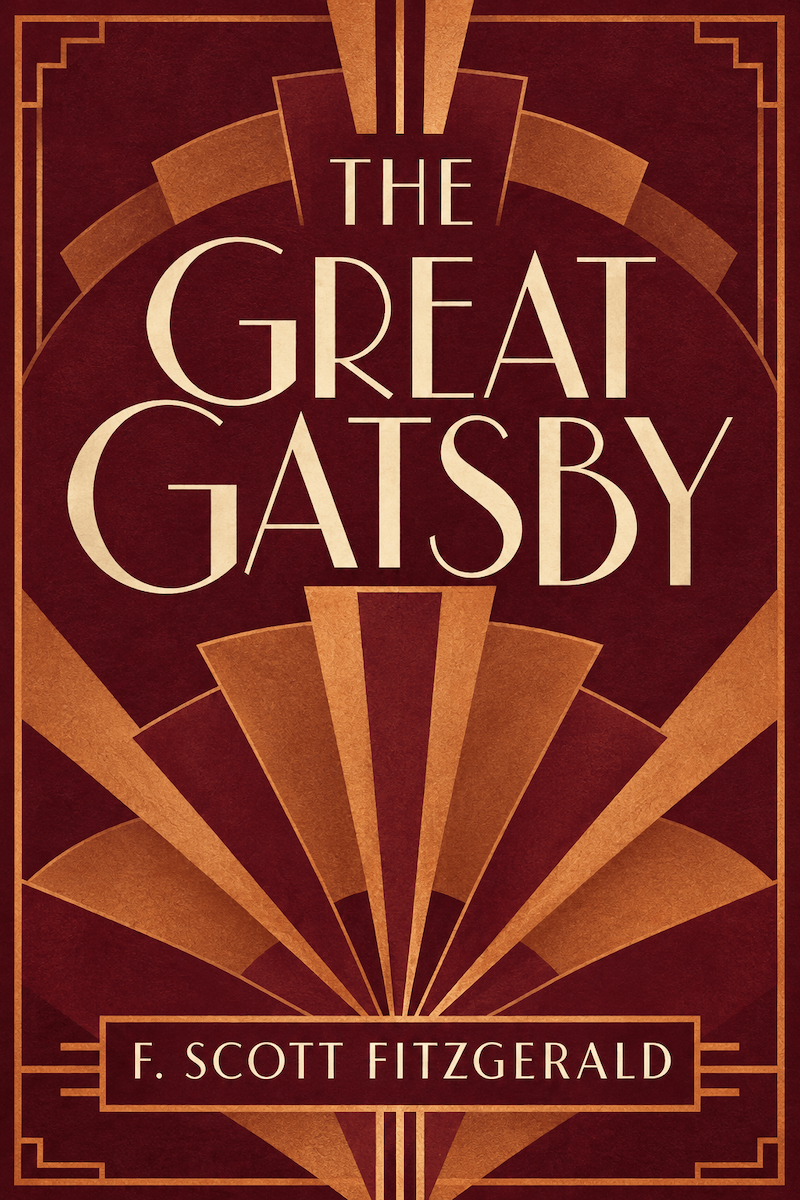
Prefer the print book? Buy on Amazon
As an Amazon Associate, Sumizeit earns from qualifying purchases.
Book Summary
The Great Gatsby Book Summary
This The Great Gatsby Book Summary covers the key ideas, lessons, and takeaways in about 20 minutes.
Short Description:
Chapter by chapter summary of Fitzgerald’s tale of wealth, love and lies
The Great Gatsby shows that a dream can be beautiful and still ruin the person who chases it. Gatsby spends his life building a version of himself that Daisy might love, but he fixes his hope on a past that is gone and on a woman who is not who he imagines. Money cannot buy him a place in her world, and the people who do belong to it never face any cost for their carelessness. The book asks you to look at what you are reaching for and whether it was ever real.
Helps with these goals
Preview the The Great Gatsby book summary
Below is a preview of Sumizeit’s comprehensive human-written summary of The Great Gatsby by F. Scott Fitzgerald. The full summary is 15-20 minutes long and covers the book’s key ideas in text, audio, visual, and video formats. Unlock the full 20 Minute Summary
The Great Gatsby takes place in the summer of 1922 on Long Island and in New York City. A young man from the Midwest named Nick Carraway tells the story. He moves east to sell bonds and ends up living next door to a mysterious millionaire named Jay Gatsby. Gatsby throws huge parties every weekend, but he never seems to enjoy them. He is really waiting for one guest to walk through the door. Her name is Daisy Buchanan, and he loved her five years earlier.
On the surface, this is a love story. Underneath, it is a book about money, class, lies, and the way people try to rewrite the past. It is short, and it hits hard.
The main characters
Nick Carraway is the narrator. He grew up in Minnesota, went to Yale, and fought in World War I. He says he holds back judgment on people, though he ends up judging almost everyone.
Jay Gatsby is rich, polite, and nearly impossible to read. He calls everyone "old sport" and fills his house with hundreds of strangers.
Daisy Buchanan is Nick's second cousin once removed. She is charming and light, and her voice sounds like money. She is married to Tom.
Tom Buchanan is Daisy's husband. He comes from old money, played football at Yale, and has a cruel streak and a mistress.
Jordan Baker is a professional golfer and a friend of Daisy's. She is cool, bored, and a little dishonest.
George and Myrtle Wilson run a garage in a gray stretch of land between West Egg and the city. George is worn out. Myrtle wants a better life and is having an affair with Tom.
Chapter 1, Nick meets the Buchanans
Nick rents a small house in West Egg, the side of the bay where the newly rich live. Across the water is East Egg, home to old money. He drives over for dinner with Daisy and Tom.
Tom is huge, loud, and sure of himself. He talks about a racist book he has been reading as if it were serious science. Midway through dinner, a phone call pulls him away. It is his mistress. Daisy knows. Later she tells Nick that she hopes her baby daughter grows up to be a pretty little fool, because that is the safest thing a girl can be in this world. Jordan then tells Nick the truth about Tom's affair.
Nick goes home and spots a man standing alone on the neighboring lawn. The man stretches both arms out toward the dark water, toward a small green light at the end of Daisy's dock. That man is Gatsby.
Chapter 2, The Valley of Ashes
The road to New York passes through the Valley of Ashes, a gray wasteland of dust and smoke. A faded billboard hangs over it, showing the huge eyes of an eye doctor named T. J. Eckleburg. They stare down at everything.
Tom drags Nick off the train to meet his mistress, Myrtle Wilson, at her…
Want the complete 20-minute summary?
- Full structured summary
- Video Summary
- Podcast Summary
- Audio summary
- Key takeaways
- Exercises
- Quiz
- Highlights and notes
- Ask the book with AI
Who should read The Great Gatsby?
The Great Gatsby appeals to readers who want to understand the American Dream and its darker implications. It resonates with anyone curious about wealth, ambition, love, and the gap between aspiration and reality—whether they're first-time readers or returning to Fitzgerald's masterpiece.
Why does The Great Gatsby matter?
Published in 1925, The Great Gatsby remains urgently relevant because it explores timeless human struggles: the pursuit of status, the desire to reclaim the past, and the moral cost of chasing an illusion. The novel forces us to examine our own dreams and ask whether we're reaching for something real or something that will never satisfy us.
What are the key themes in The Great Gatsby?
- The American Dream and its corruption
- The impossibility of recapturing the past
- Class, wealth, and social boundaries
- Appearance versus reality
- Moral decay and carelessness
- Obsessive love and self-delusion
- The hollowness of material excess
How can you apply ideas from The Great Gatsby?
- Examine your own ambitions and ask whether you are pursuing something real or a fantasy shaped by what others told you to want
- Recognize when you are projecting an idealized version onto a person rather than accepting who they actually are
- Notice how wealth and status can mask underlying insecurity and how acquiring more things does not resolve internal emptiness
- Observe how people around you excuse their own harmful behavior while criticizing others for the same actions, and consider where you do this
- Reflect on friendships and connections built on genuine understanding versus those built on convenience, proximity, or transaction
- Challenge yourself to act with integrity even when no one is watching, and to hold others accountable rather than silently enabling their harm
What common mistakes do readers make with The Great Gatsby?
- Assuming Gatsby is purely tragic and romantic rather than seeing how his obsession and self-delusion contribute to his downfall
- Overlooking Nick's unreliability and moral compromises because his narration seems reasonable and sympathetic
- Treating the novel as merely a love story instead of recognizing its larger critique of the American Dream and class inequality
- Blaming only Gatsby for his unhappiness while ignoring the carelessness and cruelty of those born into privilege who face no consequences
Sumizeit Exercises Apply what you've learned
Turn ideas from The Great Gatsby into action with a short guided reflection: identify the biggest takeaway, connect it to your life, and commit to one step you can take in the next 24 hours.
What is the expert analysis of The Great Gatsby?
Overview
The Great Gatsby, authored by F. Scott Fitzgerald, stands as a quintessential work of American literature and a defining portrait of the Jazz Age. Published in 1925, Fitzgerald’s novel captures the turbulence, excess, and moral ambiguity of 1920s America through the lens of a tragic love story. Despite its initial modest reception, the book has since ascended to canonical status, revered for its incisive social commentary and lyrical prose. Fitzgerald, a key figure of the Lost Generation, drew on his own experiences and observations of wealth and decadence to craft a narrative that is both intimate and emblematic of broader cultural shifts.
Core Thesis
At its core, The Great Gatsby explores the elusive nature of the American Dream and the corrosive effects of idealism when confronted with reality. Gatsby’s relentless pursuit of Daisy Buchanan symbolizes a broader human yearning to recapture an idealized past and achieve a transcendent future, yet this dream is ultimately unattainable. Fitzgerald critiques the moral decay masked by wealth and glamour, illustrating how social stratification and materialism undermine genuine human connection. The novel interrogates the tension between appearance and reality, the fragility of identity, and the impossibility of erasing the past.
Strengths
- Economy of Language: Fitzgerald’s prose is both elegant and economical, packing profound emotional and thematic weight into a relatively short narrative.
- Symbolism and Imagery: The novel’s rich symbolism—such as the green light, the Valley of Ashes, and the eyes of T. J. Eckleburg—imbues the story with layers of meaning that invite sustained analysis.
- Complex Characterization: Characters like Gatsby and Nick Carraway are multifaceted, embodying contradictions that reflect the complexities of human motivation and societal roles.
- Cultural Critique: The novel offers a sharp critique of the Jazz Age’s hedonism and the moral bankruptcy beneath the surface of American prosperity.
- Timeless Themes: Issues of identity, memory, and the pursuit of happiness resonate beyond the historical moment, ensuring the novel’s enduring relevance.
Critiques & Counterarguments
- Idealization of Gatsby: Some critics argue that Fitzgerald romanticizes Gatsby’s criminal undertakings and obsessive love, potentially glossing over the ethical implications of his actions.
- Limited Female Perspectives: The female characters, particularly Daisy and Jordan, can be seen as underdeveloped or confined to archetypes, which may reflect the gender norms of the era but limit the novel’s psychological depth in this regard.
- Class Determinism: While the novel critiques class divisions, it arguably presents social mobility as nearly impossible, which some sociological research and contemporary narratives challenge by highlighting more nuanced pathways of change.
- Historical Context and Modern Relevance: The novel’s focus on the 1920s elite might feel distant to some modern readers, and its themes of decadence and moral decay, while universal, may require contextualization to fully appreciate their contemporary resonance.
- Contrasting Literary Views: Other American literary works, such as those by John Steinbeck or Richard Wright, offer more direct critiques of economic inequality and systemic injustice, which complicate Fitzgerald’s more subtle and symbolic approach.
Who Should Read This
The Great Gatsby is essential reading for those interested in American literature, cultural history, and the psychology of aspiration and disillusionment. It appeals to readers who appreciate nuanced character studies, symbolic storytelling, and incisive social critique. Scholars and enthusiasts of the Jazz Age, as well as anyone intrigued by the complexities of identity, memory, and the American Dream, will find the novel both rewarding and thought-provoking. Furthermore, its brevity and literary craftsmanship make it accessible for readers seeking a profound yet concise exploration of human desires and societal contradictions.
Discussion questions for The Great Gatsby Short questions you can actually use in a conversation
Frequently asked questions about the The Great Gatsby book summary
What is The Great Gatsby about?
The Great Gatsby by F. Scott Fitzgerald is a novel set in the summer of 1922 about a mysterious millionaire named Jay Gatsby who throws lavish parties in hopes of reuniting with his lost love, Daisy Buchanan. On the surface it reads as a love story, but beneath that it is a profound examination of wealth, class, ambition, and the dangers of trying to recapture the past.
Who should read The Great Gatsby?
Anyone interested in understanding the American Dream, the tension between aspiration and reality, or the corrupting influence of wealth and status should read this novel. It appeals to readers who want to explore timeless questions about love, identity, and what truly matters in life.
What are the main takeaways from The Great Gatsby?
The Great Gatsby demonstrates that a dream can be beautiful and still destroy the person who pursues it, especially when that dream is built on illusion rather than reality. The novel shows that wealth cannot buy genuine social acceptance or love, that the past cannot be rewritten, and that the wealthy often escape the consequences of their carelessness while ordinary people suffer the costs.
Why does Gatsby stare at the green light?
The green light at the end of Daisy's dock symbolizes Gatsby's dreams and his longing for a future with Daisy. It represents everything he is reaching for but cannot have—the embodiment of his obsession and his belief that happiness lies just beyond his grasp if he can only reconnect with his past.
Is The Great Gatsby still relevant today?
Yes, The Great Gatsby remains deeply relevant because it explores timeless human desires: the pursuit of wealth and status, the wish to reclaim lost love, and the gap between who we are and who we want to be. Its critique of carelessness among the privileged and its exploration of the American Dream continue to resonate with contemporary readers.
What happens at the end of The Great Gatsby?
Gatsby is shot and killed by George Wilson, whose wife Myrtle was hit by Gatsby's car (though Daisy was driving). Gatsby takes the blame to protect Daisy, and Wilson then shoots himself. Almost no one attends Gatsby's funeral, and Nick leaves New York convinced that the wealthy are careless and destructive but never face consequences.
How is The Great Gatsby a critique of the American Dream?
The novel shows that the American Dream—the belief that anyone can rise through hard work and become whoever they want—is built on illusion. Gatsby reinvents himself through crime and money, yet cannot buy his way into true acceptance or achieve lasting happiness, suggesting that the dream itself may be fundamentally flawed and corrupting.
About Sumizeit
Sumizeit is a profitable Scomy LLC company based in Miami, Florida. Our founders, Clemens Raemy and Weina Scott, are successful entrepreneurs with several exits. Sumizeit is a popular book summary app / micro learning app used by busy professionals and entrepreneurs with over 2,500 non-fiction book summaries and 10,000 podcast summaries in text, audio, visual, podcast, and video format. We also have stellar retention tools to make ideas stick - such as flashcards with spaced repetition, quizzes, streaks, highlighting and notes, daily challenges, riddles, mini-courses, meditation, and more. You won't only learn the idea, but also remember it. Over 90% of our users change their habits with Sumizeit.
Upgrade Now
Here's why readers love Sumizeit
Join thousands of learners getting smarter every day
"Great experience. Detailed summaries. Loved the gamification feature. Makes learning fun. Good customer service. I recommend Sumizeit to anyone. You'll learn a lot."
"I always felt busy but still wanting to keep up with the book discussion in my friend group. This was a great supplement to help me keep reading the books I find fun while keeping up with important books."
"I love this website. Instead of scrolling social media, I find myself learning a lot. I use it everyday. I recommend this app for anyone who is too busy and wants to get up to speed with their favorite books."
The Great Gatsby Book Summary PDF
Looking for a The Great Gatsby Book Summary PDF you can save and revisit offline? Our The Great Gatsby Book Summary PDF captures the book’s core ideas in a clean, printable format — the key frameworks, takeaways, and structure without the fluff. Download the The Great Gatsby Book Summary PDF when you want a reference you can annotate, share with your team, or review on the go. Get your The Great Gatsby Book Summary PDF from the download page below.
Download The Great Gatsby Book Summary PDFPeople also liked these summaries
Readers who explored The Great Gatsby often enjoyed these titles next.


Ready to read the whole thing?
- Full structured summary
- Video Summary
- Podcast Summary
- Audio summary
- Key takeaways
- Exercises
- Quiz
- Highlights and notes
- Ask the book with AI
Featured Book Titles
Popular Book Summaries at sumizeit, leading book summary app
Atomic Habits Book Summary Rich Dad Poor Dad Book Summary The Four Agreements Book Summary The 48 Laws of Power Book Summary When Breath Becomes Air Book Summary Think and Grow Rich Book Summary