


As an Amazon Associate, Sumizeit earns from qualifying purchases.
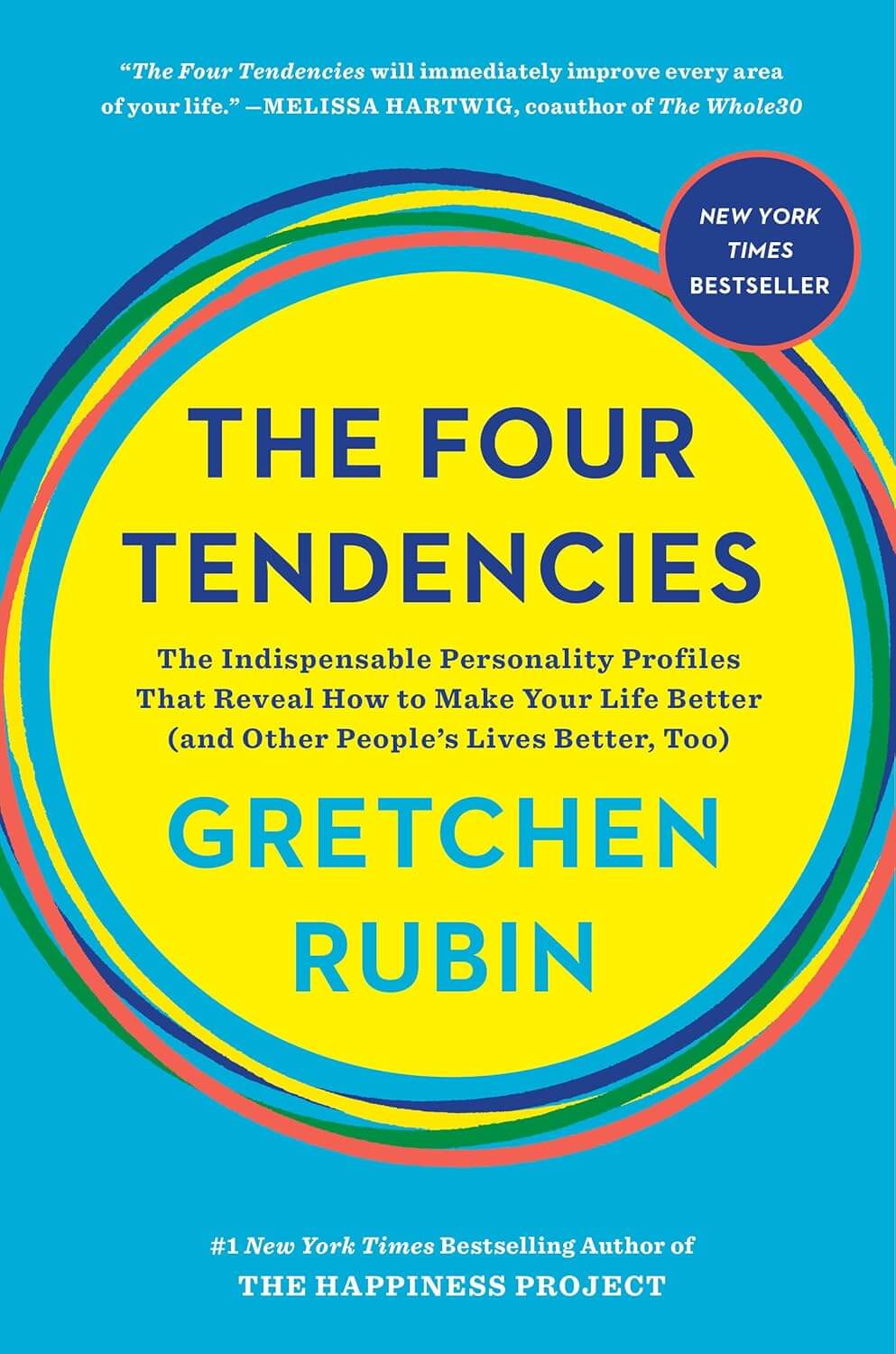
The Four Tendencies Book Summary
This The Four Tendencies Book Summary covers the key ideas, lessons, and takeaways in about 20 minutes.
There is no ideal tendency. Each pattern has strengths that can be harnessed and weaknesses that can be managed. Success and happiness depend not on changing who you are, but on working with your nature rather than fighting it.
When you stop blaming yourself or others for “lack of discipline” and start recognizing these predictable patterns, habits become easier to build, relationships become smoother, and frustration gives way to clarity.
By understanding expectations—how they motivate, constrain, or repel—you gain a practical framework for making better decisions, communicating more effectively, and creating systems that support lasting change.
Helps with these goals
Want the complete 20-minute summary?
- Full structured summary
- Video Summary
- Podcast Summary
- Audio summary
- Key takeaways
- Exercises
- Quiz
- Highlights and notes
- Ask the book with AI
What is in the The Four Tendencies book summary?
Below is a preview of Sumizeit’s expert-written summary of The Four Tendencies by Gretchen Rubin. The full summary covers the book’s key ideas in text, audio, and video.
In The Four Tendencies, Gretchen Rubin sets out to answer a deceptively simple question: why do people who seem competent, motivated, and disciplined in some areas of life struggle so much in others? Why can someone meet intense professional demands with ease yet fail repeatedly at personal goals like exercising, saving money, or resting?
Rubin’s answer doesn’t rely on willpower, intelligence, or morality. Instead, she identifies a single underlying pattern that explains much of human behavior: how people respond to expectations.
Expectations are everywhere. Some come from outside us—deadlines, requests, rules, social norms, obligations to other people. Others come from within—personal goals, values, resolutions, and promises we make to ourselves. Rubin observed that people differ dramatically in how they respond to these two types of expectations, and those differences are remarkably consistent across life situations.
From this insight, she developed a framework that divides people into four broad patterns of behavior, which she calls the Four Tendencies. Each tendency reflects a distinct way of responding to outer demands and inner commitments. None is better or worse. Each comes with its own strengths, blind spots, and strategies for success.
The power of the Four Tendencies lies not in labeling people, but in helping them understand themselves and others well enough to design lives, habits, and relationships that actually work.
The Core Idea: Expectations as the Key to Behavior
Rubin’s system is built on a single diagnostic question: how do you respond to expectations?
An expectation is anything that asks you to act or refrain from acting. It might be concrete and explicit, such as a work deadline, or vague and internal, such as a desire to be healthier or more creative. Some expectations are imposed by others, while some are self-generated.
By observing patterns in how people respond to these demands, Rubin identified four dominant tendencies:
Some people reliably meet both outer and inner expectations.
Some readily meet expectations they personally endorse but resist those imposed by others.
Some consistently come through for others but struggle to follow through for themselves.
Some resist expectations of all kinds, regardless of their source.
These patterns are stable over time. They don’t depend on age, gender, profession, or culture. While people are complex and multifaceted, most individuals strongly identify with one tendency, often recognizing themselves immediately when they learn about it.
Importantly, Rubin emphasizes that your tendency is not something you can change. It is a foundational aspect of how you interact with the world. Growth doesn’t come from trying to become a different tendency, but from learning how to work with your natural inclinations rather than against them.
The Four Tendencies at a Glance
The Four Tendencies are defined by how they respond to two types of expectations:
Inner expectations: personal goals, values, self-imposed standards.
Outer expectations: demands, requests, rules, or deadlines from other people or institutions.
Each tendency responds differently:
Upholders meet both inner and outer expectations.
Questioners meet inner expectations but resist outer ones unless they are justified.
Want the complete 20-minute summary?
- Full structured summary
- Video Summary
- Podcast Summary
- Audio summary
- Key takeaways
- Exercises
- Quiz
- Highlights and notes
- Ask the book with AI
Who should read The Four Tendencies?
The Four Tendencies is for anyone struggling to understand why they excel in some areas of life but falter in others. Whether you're a manager trying to motivate different team members, a parent seeking to guide your children more effectively, or someone frustrated by your own inconsistent follow-through, this book offers clarity without judgment. If you've ever felt broken for not living up to your own expectations, this framework will help you see yourself differently.
Why does The Four Tendencies matter?
Most self-help advice treats everyone the same, telling you to exercise more willpower or follow better systems—but these approaches fail because they ignore how fundamentally different people are in responding to expectations. Understanding your tendency and others' tendencies transforms frustration into compassion and makes lasting change actually achievable. In our work and personal relationships, this self-knowledge reduces conflict, improves communication, and helps you design a life that actually works with your nature rather than against it.
What are the key themes in The Four Tendencies?
- How people respond to expectations is the key to understanding behavior
- There are four distinct patterns of responding to outer and inner expectations
- No tendency is better or worse—each has strengths and blind spots
- Self-knowledge enables better decision-making and relationship dynamics
- Working with your nature is more effective than fighting against it
- External accountability and internal motivation operate differently across tendencies
What are the key lessons from the The Four Tendencies book summary?
Expectations Shape Behavior More Than Willpower
Your response to expectations—whether they come from others or yourself—is a more reliable predictor of behavior than motivation or discipline. Understanding this shifts focus from self-blame to self-understanding.
Upholders Meet Both Inner and Outer Expectations
Upholders naturally follow through on commitments to themselves and others without requiring external pressure, making them reliable but sometimes rigid in their adherence to rules.
Questioners Convert Outer Expectations into Inner Ones
Questioners resist arbitrary rules but excel when they understand the reasoning behind a request, at which point they commit fully and become self-directed.
Obligers Meet Outer Expectations While Struggling with Inner Ones
Obligers are remarkably responsive to others' needs but lack internal accountability, making external structures and accountability partners essential for their personal goals.
Rebels Resist All Expectations, Including Self-Imposed Ones
Rebels are driven by autonomy and identity, not obligation, and will resist even beneficial goals if they feel like pressure rather than choice.
Tendency Is Not Fixed by Age, Gender, or Profession
Your tendency is a stable, foundational aspect of how you interact with the world that remains consistent across different life domains and demographics.
You Cannot Change Your Tendency—Only How You Work with It
Growth comes from leveraging your natural inclinations and designing systems that align with your tendency, not from trying to become a different type.
Rigidity and Burnout Are Common Pitfalls Within Each Tendency
Upholders risk becoming inflexible, Questioners risk over-analysis, Obligers risk burnout, and Rebels risk inconsistency—but each pitfall can be managed with awareness.
Most Conflicts Arise from Mismatched Expectations and Assumptions
When people recognize their own tendency and learn to identify others', communication improves dramatically because intentions become clearer and expectations become aligned.
Clarity and Justification Are the Most Persuasive Tools
Upholders respond to clear priorities, Questioners to logical justification, Obligers to external deadlines, and Rebels to choice and autonomy—matching your approach to their tendency improves outcomes.
External Accountability Is Essential for Obligers' Personal Goals
Obligers thrive when they have accountability partners, public commitments, or scheduled obligations that turn personal goals into external expectations.
Identity-Based Framing Works Better Than Obligation-Based Framing
Framing actions in terms of who someone wants to be—rather than what they should do—resonates across all tendencies but is especially powerful for Rebels and Questioners.
Obliger-Rebellion Occurs When External Pressure Becomes Unbearable
Obligers who sacrifice too much for others may experience sudden refusal to meet any expectations, which can damage relationships and surprise those around them.
Questioners Drive Innovation Through Constant Improvement
Questioners' tendency to challenge assumptions and seek better solutions makes them excellent at identifying inefficiencies and driving organizational or personal change.
Upholders Often Underestimate How Difficult Follow-Through Is for Others
Because expectations feel natural to Upholders, they may judge or lack empathy for those who struggle with accountability, missing opportunities for more effective collaboration.
Respecting Autonomy Is Essential for Working with Rebels
Offering information and outlining consequences while allowing Rebels to choose independently is far more effective than attempting to control or direct their behavior.
Different Tendencies Require Different Motivational Strategies
A one-size-fits-all approach to habits, deadlines, and feedback fails because each tendency is motivated by different factors—clarity, justification, accountability, or autonomy.
People Can Have Subtle Tips Toward Neighboring Tendencies
While most people strongly identify with one primary tendency, some exhibit characteristics of adjacent types, explaining variations within categories.
Want the complete 20-minute summary?
- Full structured summary
- Video Summary
- Podcast Summary
- Audio summary
- Key takeaways
- Exercises
- Quiz
- Highlights and notes
- Ask the book with AI
How can you apply ideas from The Four Tendencies?
- Assess your own tendency to understand why certain goals feel easy while others feel impossible, then design systems that work with rather than against your natural response pattern
- Use external accountability structures like accountability partners, public commitments, or scheduled deadlines if you're an Obliger struggling with personal goals
- Provide clear reasoning and evidence when requesting something from a Questioner, rather than issuing directives without justification
- Offer Rebels information and autonomy to choose their own path, avoiding controlling language that triggers resistance
- Set clear priorities for Upholders to prevent them from becoming overwhelmed by competing demands or overly rigid about low-value rules
- Identify the tendencies of people in your life—colleagues, partners, children—and adjust how you communicate requests, feedback, and support accordingly
- When facing burnout or repeated failure, consider whether your current system matches your tendency; redesign rather than blame yourself for lack of willpower
What common mistakes do readers make with The Four Tendencies?
- Assuming everyone is motivated by the same factors—when in reality each tendency requires different incentives to follow through
- Trying to change your own tendency instead of working with it, leading to frustration and wasted effort fighting your nature
- Judging others for lacking discipline when they're actually struggling because their tendency is misaligned with their current system
- Giving an Obliger guilt about not prioritizing themselves, when what they actually need is external accountability structures to support personal goals
Sumizeit Exercises Apply what you've learned
Turn ideas from The Four Tendencies into action with a short guided reflection: identify the biggest takeaway, connect it to your life, and commit to one step you can take in the next 24 hours.
What is the expert analysis of The Four Tendencies?
Overview
The Four Tendencies by Gretchen Rubin is a seminal contribution to the self-improvement and behavioral psychology genres, offering a novel framework for understanding human motivation and habit formation. Rubin, an established author and speaker on happiness and habits, distills complex behavioral patterns into an accessible typology based on how individuals respond to expectations—both internal and external. This book stands out for its practical applicability across personal development, workplace dynamics, and interpersonal relationships, making it significant for readers seeking to decode the often perplexing variability in human follow-through and motivation.
Core Thesis
At the heart of Rubin’s argument is the proposition that the key to understanding human behavior lies in how people respond to expectations. She identifies four distinct “Tendencies” — Upholders, Questioners, Obligers, and Rebels — each characterized by a unique pattern of engagement with inner and outer expectations. This taxonomy transcends traditional personality models by focusing specifically on the motivational axis of expectation response, positing that self-knowledge of one’s tendency enables more effective habit formation, relationship management, and goal attainment. Crucially, Rubin asserts that these tendencies are stable and foundational, not traits to be changed but realities to be harnessed.
Strengths
- Clarity and Accessibility: Rubin’s framework is elegantly simple yet profound, making complex psychological concepts approachable without sacrificing nuance.
- Practical Utility: The Four Tendencies provide actionable insights that readers can immediately apply to improve self-discipline, interpersonal communication, and organizational effectiveness.
- Comprehensive Scope: By addressing both inner and outer expectations, Rubin captures a broad spectrum of motivational dynamics often overlooked in habit literature.
- Empathy and Non-Judgment: The model avoids hierarchical valuation of tendencies, fostering self-acceptance and reducing blame for perceived failures in discipline or motivation.
- Integration of Research and Anecdote: Rubin effectively blends empirical observation with relatable storytelling, enhancing engagement and credibility.
Critiques & Counterarguments
- Empirical Rigor and Validation: While Rubin’s typology resonates intuitively, it lacks robust empirical validation through large-scale, peer-reviewed psychological studies, which limits its standing within academic psychology.
- Oversimplification of Human Complexity: The model’s four-category system may underrepresent the fluidity and contextual variability of human motivation, potentially pigeonholing individuals into fixed boxes.
- Neglect of Sociocultural Factors: Rubin’s claim of universality across culture and profession may overlook how social, economic, and cultural contexts shape responses to expectations in ways that transcend individual tendencies.
- Competing Theories: Alternative frameworks such as Self-Determination Theory (Deci & Ryan) emphasize intrinsic versus extrinsic motivation with a more nuanced understanding of autonomy, competence, and relatedness, which can challenge Rubin’s binary inner/outer expectation model.
- Real-World Variability: In practice, individuals may exhibit situational shifts in tendency based on stress, environment, or developmental stage, suggesting a more dynamic interplay than Rubin’s model accounts for.
Who Should Read This
The Four Tendencies is ideal for readers engaged in personal development, leadership, coaching, and organizational behavior who seek a straightforward yet insightful tool for decoding motivation and improving habit formation. It is particularly valuable for those frustrated by inconsistent follow-through—whether in themselves or others—and who desire a framework that fosters empathy and strategic adaptation rather than self-criticism. Additionally, professionals in human resources, education, and counseling will find Rubin’s typology a useful lens for tailoring communication and accountability strategies. However, readers with a preference for rigorously validated psychological models may view this book as a complementary, rather than definitive, resource.
Frequently asked questions about the The Four Tendencies book summary
What is The Four Tendencies about?
The Four Tendencies by Gretchen Rubin is a framework that explains how people respond to expectations—both external demands from others and internal commitments to themselves. The book identifies four distinct patterns: Upholders who meet both types of expectations, Questioners who question outer expectations until convinced, Obligers who meet outer expectations but struggle with inner ones, and Rebels who resist all expectations. Rather than relying on willpower, Rubin shows that understanding your tendency and designing your life accordingly is the key to lasting change and better relationships.
Who should read The Four Tendencies?
Anyone frustrated by inconsistent follow-through, managers trying to motivate diverse teams, parents seeking to guide their children effectively, or people in relationships struggling to communicate and understand each other should read this book. If you've ever wondered why you excel in some areas but struggle in others, or felt broken for lacking discipline, this framework offers clarity and practical strategies. The book is valuable for anyone wanting to understand themselves and others more deeply.
What are the main takeaways from The Four Tendencies?
The main takeaway is that meaningful change comes from working with your nature rather than against it. There is no ideal tendency—each has distinct strengths and blind spots that can be leveraged or managed. Understanding your own tendency and learning to identify others' tendencies transforms communication, reduces conflict, and makes it possible to design systems and relationships that actually work. Finally, self-knowledge is more powerful than willpower for creating lasting change.
What are the four tendencies?
The four tendencies are: Upholders (meet both outer and inner expectations), Questioners (meet inner expectations but question outer ones), Obligers (meet outer expectations but struggle with inner ones), and Rebels (resist both types of expectations). Each tendency represents a distinct way of responding to demands and commitments, shaped by how much someone values external accountability versus internal autonomy.
Can you change your tendency?
No—your tendency is a foundational aspect of how you interact with the world and remains stable over time. However, you can change how you work with your tendency by designing systems and strategies that align with your natural inclinations rather than fighting against them. Growth comes from self-awareness and adaptation, not from trying to become a different type.
How can understanding tendencies improve relationships?
Understanding tendencies improves relationships by reducing misunderstandings and judgment. When you recognize that a partner's struggle isn't laziness but a tendency mismatch, or that a colleague's questioning isn't disrespect but their natural way of processing, you can adjust how you communicate, set expectations, and offer support. This leads to clearer communication, less conflict, and more effective collaboration.
How do I figure out my tendency?
Your tendency is revealed by observing how you respond to expectations. Ask yourself: Do you easily meet both personal goals and external demands? Do you question rules unless they make sense to you? Do you prioritize others' expectations over your own? Do you resist being told what to do? Most people strongly identify with one tendency immediately upon learning about it, though the book provides guidance for determining your type if you're uncertain.
About Sumizeit
Sumizeit is a profitable Scomy LLC company based in Miami, Florida. It has been helping readers learn from nonfiction books for 7 years with expert-written summaries in text, audio, podcast, and video.
Want the complete 20-minute summary?
- Full structured summary
- Video Summary
- Podcast Summary
- Audio summary
- Key takeaways
- Exercises
- Quiz
- Highlights and notes
- Ask the book with AI
Here's why readers love Sumizeit
Join thousands of learners getting smarter every day
"Great experience. Detailed summaries. Loved the gamification feature. Makes learning fun. Good customer service. I recommend Sumizeit to anyone. You'll learn a lot."
"I always felt busy but still wanting to keep up with the book discussion in my friend group. This was a great supplement to help me keep reading the books I find fun while keeping up with important books."
"I love this website. Instead of scrolling social media, I find myself learning a lot. I use it everyday. I recommend this app for anyone who is too busy and wants to get up to speed with their favorite books."
The Four Tendencies Book Summary PDF
Looking for a The Four Tendencies Book Summary PDF you can save and revisit offline? Our The Four Tendencies Book Summary PDF captures the book’s core ideas in a clean, printable format — the key frameworks, takeaways, and structure without the fluff. Download the The Four Tendencies Book Summary PDF when you want a reference you can annotate, share with your team, or review on the go. Get your The Four Tendencies Book Summary PDF from the download page below.
Download The Four Tendencies Book Summary PDFPeople also liked these summaries
Readers who explored The Four Tendencies often enjoyed these titles next.




Want the complete 20-minute summary?
- Full structured summary
- Video Summary
- Podcast Summary
- Audio summary
- Key takeaways
- Exercises
- Quiz
- Highlights and notes
- Ask the book with AI
Featured Book Titles
Popular Book Summaries at sumizeit, leading book summary app