Question 1 of 5
Which dysfunction is listed third in the book's ordered model of team dysfunctions?
The summary lists the five dysfunctions in order and names Lack of Commitment as the third dysfunction.


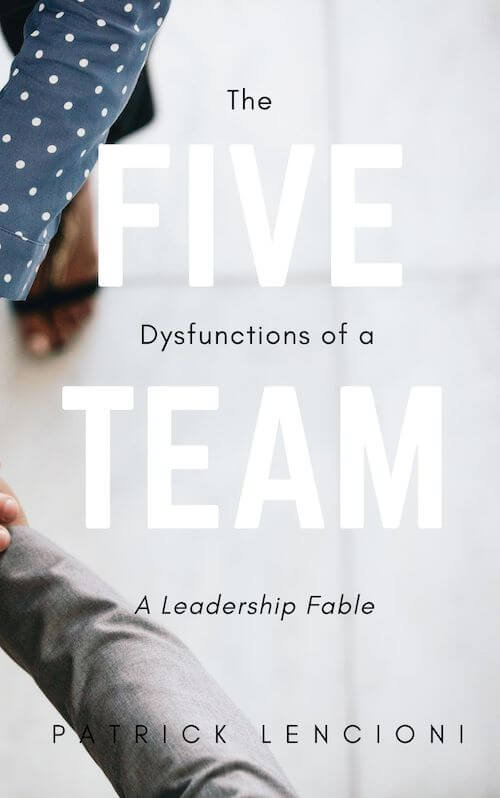
Prefer the print book? Buy on Amazon
As an Amazon Associate, Sumizeit earns from qualifying purchases.
This The Five Dysfunctions of a Team Book Summary covers the key ideas, lessons, and takeaways in about 20 minutes.
Helps with these goals
Want a Free Weekly Read?
Get a free summary every week straight to your mailbox.
Below is a preview of Sumizeit’s expert-written summary of The Five Dysfunctions of a Team by Patrick Lencioni. The full summary covers the book’s key ideas in text, audio, visual, and video formats.
Teamwork is prone to failure due to the ever-present human tendency towards weaknesses that can cripple a group effort. A few examples of team-busting predispositions include ego, selfishness, and personal agenda. The Five Dysfunctions of a Team by Patrick Lencioni addresses the five most common deficiencies among team members and shows how to overcome them. Lencioni teaches these principles by telling the fictional story of a CEO organizing and moving her motley team forward. In this parable, Katheryn, a 57-year-old executive, is the unexpected choice for the new CEO position. She is charged with changing the direction of DecisionTech, a technology company that is failing. The book focuses on the participants in the management team and the dynamic forces between each of the players. The five dysfunctions are presented in the following order: Absence of Trust, Fear of Conflict, Lack of Commitment, Avoidance of Accountability, and Inattention to Results.
The core issue to be addressed when initially building a strong team is a lack of trust. In a work environment where much is expected, people tend to want to hide their weaknesses. They perceive that any admission of shortcomings could lead to censure, criticism, loss of promotion or even the job itself. This unwillingness to be vulnerable can result in distrust between team members as they speculate on the motives, intentions, strengths, and weaknesses of the other team players instead of accurately calculating what skills and abilities are available for the collective effort.
In the fable, Katheryn opens her team meeting by having the members share their strengths and weaknesses. She demonstrates strong leadership and begins to gain trust by being the first to expose her flaws. This helps the others feel more comfortable when it’s their turn to be as exposed and honest about both their weaknesses and their abilities. Katheryn openly discloses the leadership mistakes she made in the past and confesses that she was even fired from a job because of them. Such a revelation sets the tone for the other team members to be as truthful, recognizing that sharing these vulnerabilities is not as risky as it seems.
A few exercises to overcome trust issues include personal histories, where the team members answer questions that help share some of their life experiences and wisdom, inventory of the team members, where the team highlights the qualities of each other and looks at areas they can improve, taking personal profile tests like Myers-Briggs which provides insights that can be useful, and ropes course-type activities which may seem silly on the surface, but generate opportunities for communication and trust.
Very often, the fear of conflict causes teams to remain silent, holding back what could be important opinions, observations, and even expertise, afraid of offending the others. Conflict can actually be productive. This is an essential truth that follows the establishment of trust.
This book is essential for team leaders, managers, and executives who want to build high-performing teams. It's also valuable for individual contributors who want to understand team dynamics and contribute more effectively to their organizations. Anyone frustrated by ineffective meetings, lack of accountability, or team conflict will find practical guidance here.
Most organizations underestimate how dysfunctional their teams truly are, which directly impacts productivity and bottom-line results. Patrick Lencioni's framework gives teams a clear roadmap to diagnose and fix the root causes of failure rather than treating symptoms. In today's complex, collaborative work environment, team health has become a critical competitive advantage that separates thriving companies from struggling ones.
Turn ideas from The Five Dysfunctions of a Team into action with a short guided reflection: identify the biggest takeaway, connect it to your life, and commit to one step you can take in the next 24 hours.
The Five Dysfunctions of a Team is a seminal work in the field of organizational behavior and team dynamics, authored by Patrick Lencioni, a recognized thought leader in business management and organizational health. Published in 2002, the book has become a cornerstone for understanding the internal barriers that prevent teams from achieving cohesion and high performance. Lencioni’s background as a consultant and founder of The Table Group lends the book practical credibility, while his engaging use of a fictional narrative makes complex interpersonal dynamics accessible to a broad audience. The book’s significance lies in its clear, structured framework that identifies five core dysfunctions undermining teamwork, providing leaders with actionable insights to cultivate trust, productive conflict, commitment, accountability, and results orientation within their teams.
Lencioni’s central argument is that the primary reasons teams fail are not external obstacles but internal dysfunctions rooted in human behavior and relational dynamics. He posits that these dysfunctions—Absence of Trust, Fear of Conflict, Lack of Commitment, Avoidance of Accountability, and Inattention to Results—form a hierarchical model where each dysfunction builds on the previous one. Overcoming these dysfunctions requires intentional leadership and deliberate interventions to foster vulnerability-based trust, encourage healthy debate, secure genuine commitment, enforce peer accountability, and maintain a collective focus on results. The book’s parable format illustrates how these dysfunctions manifest in real-world team settings and how they can be systematically addressed to transform dysfunctional groups into cohesive, high-performing teams.
This book is essential reading for organizational leaders, managers, and consultants seeking a foundational understanding of team dynamics and practical strategies to enhance team performance. It is particularly valuable for those new to leadership roles or those facing challenges in building cohesive teams. Additionally, HR professionals and coaches can benefit from its diagnostic framework and actionable tools. While seasoned organizational psychologists or scholars may find the model somewhat simplistic, the book remains a highly effective primer for translating complex interpersonal issues into manageable interventions. Ultimately, anyone invested in fostering collaboration and accountability within groups will find Lencioni’s insights both inspiring and pragmatically useful.
Try a few questions from the The Five Dysfunctions of a Team quiz. Unlock the full summary for the full quiz and answers that will help the ideas stick.
Question 1 of 5
The summary lists the five dysfunctions in order and names Lack of Commitment as the third dysfunction.
Question 2 of 5
The summary states that Katheryn, a 57-year-old executive, is the unexpected choice for the new CEO position.
Question 3 of 5
The summary identifies the company in the story as DecisionTech.
Question 4 of 5
The summary explains she exposes her flaws to demonstrate vulnerability and begin to gain trust, encouraging others to be honest.
Question 5 of 5
The summary lists ropes course–type activities as one exercise that generates opportunities for communication and trust.
The Five Dysfunctions of a Team by Patrick Lencioni identifies the five most common reasons teams fail: absence of trust, fear of conflict, lack of commitment, avoidance of accountability, and inattention to results. Lencioni teaches these principles through a fictional parable about a CEO transforming a struggling technology company, showing how each dysfunction builds on the previous one and how to address them systematically.
Team leaders, managers, executives, and anyone responsible for team performance should read this book. It's also valuable for individual contributors who want to understand team dynamics and improve their collaboration. Anyone frustrated with ineffective meetings, lack of accountability, or unresolved conflict will gain practical insights from Lencioni's framework.
The main takeaways are that trust must be built intentionally through vulnerability; healthy conflict leads to better decisions; commitment requires being heard, not unanimous agreement; peer accountability drives performance; and team results must always take priority over individual ambitions. Additionally, teams must spend significant time together face-to-face to maintain these principles, and leaders must model vulnerability first.
Teams can build trust by having leaders model vulnerability by openly sharing their weaknesses and past failures. Lencioni recommends exercises like personal history sharing, personality assessments, and collaborative activities that deepen understanding between members. Most importantly, leaders must go first in exposing flaws, creating psychological safety for others to be honest about their limitations.
Lencioni argues that healthy conflict is essential for teams to reach the best decisions and move forward efficiently. When teams fear conflict, they hold back important perspectives and expertise, leading to poor outcomes. Once trust is established, productive debate allows teams to examine all sides of issues and develop stronger solutions than silence ever could.
The book emphasizes that peer-to-peer accountability is more effective than top-down accountability alone. When teammates hold each other accountable for shared goals, performance standards rise and mutual respect increases. This requires clear goals, regular progress reviews, and the understanding that avoiding accountability feels kind but actually allows poor performance to harm the entire team.
Lencioni explains that when team members prioritize personal achievements—such as winning awards, earning promotions, or hitting individual metrics—they lose focus on collective goals. This self-interest directly undermines team results and can cause talented people to be removed from teams, regardless of their individual accomplishments. Team goals must always take priority.
Lencioni stresses that regular face-to-face time is critical for maintaining team health. Spending time together helps resolve conflicts faster, builds the familiarity that maintains trust, and allows teams to address issues as they arise. He recommends teams spend at least eight days per quarter together in various meetings and off-site gatherings.
Sumizeit is a profitable Scomy LLC company based in Miami, Florida. It has been helping readers learn from nonfiction books for 7 years with expert-written summaries in text, audio, podcast, and video.
Join thousands of learners getting smarter every day
"Great experience. Detailed summaries. Loved the gamification feature. Makes learning fun. Good customer service. I recommend Sumizeit to anyone. You'll learn a lot."
"I always felt busy but still wanting to keep up with the book discussion in my friend group. This was a great supplement to help me keep reading the books I find fun while keeping up with important books."
"I love this website. Instead of scrolling social media, I find myself learning a lot. I use it everyday. I recommend this app for anyone who is too busy and wants to get up to speed with their favorite books."
Looking for a The Five Dysfunctions of a Team Book Summary PDF you can save and revisit offline? Our The Five Dysfunctions of a Team Book Summary PDF captures the book’s core ideas in a clean, printable format — the key frameworks, takeaways, and structure without the fluff. Download the The Five Dysfunctions of a Team Book Summary PDF when you want a reference you can annotate, share with your team, or review on the go. Get your The Five Dysfunctions of a Team Book Summary PDF from the download page below.
Download The Five Dysfunctions of a Team Book Summary PDFReaders who explored The Five Dysfunctions of a Team often enjoyed these titles next.
Popular Book Summaries at sumizeit, leading book summary app