


Prefer the print book? Buy on Amazon
As an Amazon Associate, Sumizeit earns from qualifying purchases.
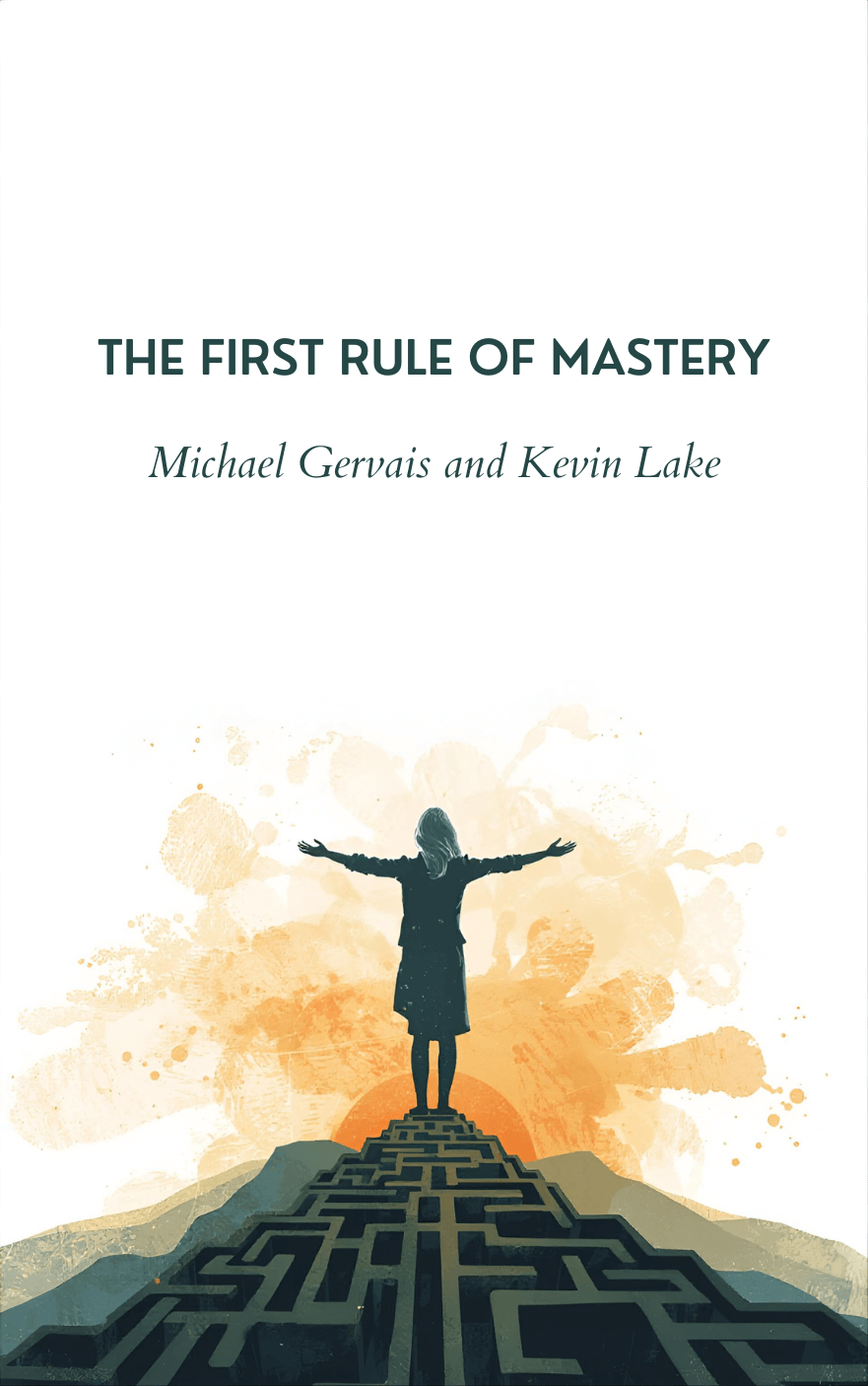
The First Rule of Mastery Book Summary
This The First Rule of Mastery Book Summary covers the key ideas, lessons, and takeaways in about 20 minutes.
Short Description:
A practical guide to escaping approval-seeking and building true inner mastery
By redefining value as inherent, clarifying control, challenging distorted thinking, and practicing new responses, individuals can step outside the prison of approval. From that position, growth becomes sustainable, risk becomes tolerable, and authenticity becomes possible. The reward is not indifference to others, but independence from their opinions.
Helps with these goals
Preview the The First Rule of Mastery book summary
Below is a preview of Sumizeit’s comprehensive human-written summary of The First Rule of Mastery by Michael Gervais. The full summary is 15-20 minutes long and covers the book’s key ideas in text, audio, visual, and video formats. Unlock the full 20 Minute Summary
Most people believe their biggest obstacles come from a lack of talent, discipline, or opportunity. The First Rule of Mastery challenges that assumption. Michael Gervais and Kevin Lake argue that the true constraint holding most people back is far more subtle: the habit of organizing one’s life around how others might judge it.
From early childhood, humans learn to scan social environments for approval and rejection. This skill once helped our ancestors survive. Today, however, it often becomes a psychological trap. People delay action, mute their authentic voices, and choose paths that look impressive rather than meaningful—all because they fear negative evaluation.
The authors frame this tendency as a mental prison. It doesn’t involve physical barriers, but it shapes nearly every decision: what careers people pursue, how they speak in meetings, what they post online, and even how they define success. Mastery, they argue, cannot exist inside this prison. Before someone can master a craft, a role, or a life, they must first master their relationship with other people’s opinions.
This book is not about becoming reckless or dismissive of feedback. Instead, it offers a framework for reclaiming agency—learning how to listen without surrendering, how to act without waiting for permission, and how to build a stable sense of worth that doesn’t rise and fall with applause or criticism.
Why the Human Brain Is Obsessed With Approval
The fear of judgment is not a personal flaw—it is a biological inheritance. Gervais and Lake explain that the human nervous system evolved in environments where social rejection could mean death. Being cast out of a tribe meant losing protection, food, and companionship. As a result, modern brains remain exquisitely sensitive to social signals.
This sensitivity shows up in subtle ways. When entering a room, people instinctively read faces for signs of acceptance. During conversations, they adjust tone and posture based on perceived reactions. Even silence can feel threatening, interpreted as disapproval rather than neutrality.
The brain treats social evaluation as a survival issue. That’s why criticism triggers physical reactions—tightness in the chest, racing thoughts, shallow breathing. These reactions are not conscious choices. They happen before logic has a chance to intervene.
The problem arises when this ancient alarm system operates in modern contexts where rejection is rarely fatal. A critical email, an awkward pause, or a lack of engagement on social media may feel dangerous, even though the actual consequences are minor or nonexistent. The body reacts as if survival is at stake, pushing people toward caution, conformity, and self-censorship.
Mental Shortcuts That Distort Social Reality
Beyond biology, the authors identify predictable thinking errors that amplify fear of judgment. These distortions don’t reflect reality, but they feel convincing because they align with emotional discomfort.
One common distortion is the belief that everyone is watching. People often assume they are the focal point of attention, when in fact most individuals are absorbed in their own concerns. A small mistake—mispronouncing a word, stumbling during a presentation—feels monumental internally but often goes unnoticed externally.
Another…
Want the complete 20-minute summary?
- Full structured summary
- Video Summary
- Podcast Summary
- Audio summary
- Key takeaways
- Exercises
- Quiz
- Highlights and notes
- Ask the book with AI
Who should read The First Rule of Mastery?
The First Rule of Mastery is for anyone whose decisions are shaped by fear of judgment—high achievers, perfectionist professionals, creative individuals, and anyone feeling stuck between who they are and who they think they should be. If you're exhausted by managing others' perceptions or struggling to take meaningful risks, this book offers a path toward authentic freedom. It's especially valuable for leaders, artists, athletes, and executives who have succeeded through performance but feel internally fragmented.
Why does The First Rule of Mastery matter?
In an age of constant digital evaluation and extreme individualism, the pressure to earn worth through achievement and approval has never been more intense. The First Rule of Mastery reveals that this psychological trap—not lack of talent or discipline—is what actually limits growth and mastery. By addressing the root cause of self-sabotage, this book helps readers reclaim agency and pursue excellence from a place of freedom rather than fear, which is essential for sustainable success and genuine well-being.
What are the key themes in The First Rule of Mastery?
- Breaking free from the need for external approval
- Inherent vs. conditional self-worth
- The biology of social judgment and ancient survival mechanisms
- Cognitive distortions that amplify fear of judgment
- The cost of living for others' opinions
- Reclaiming agency through psychological autonomy
- Mastery as psychological freedom, not just skill
How can you apply ideas from The First Rule of Mastery?
- Practice the spotlight reversal exercise: track how little time you spend analyzing others' mistakes, then apply that observation to how little others likely notice yours
- Identify your fear-trigger situations (presentations, feedback sessions, social gatherings) and design alternative responses through deliberate practice in low-stakes contexts
- Create a trusted feedback circle: consciously decide whose opinions matter most rather than treating all feedback equally, reducing noise while preserving learning
- Use mortality reflection: regularly ask yourself whether a social fear is worth obeying given the finite time you have, reorienting toward long-term meaning
- Separate controllable inputs from uncontrollable outcomes: focus your energy on preparation, integrity, and effort while releasing attachment to others' reactions
- Challenge distorted thoughts by seeking clarification directly: ask for feedback explicitly rather than interpreting silence or brief responses as judgment
- Cultivate curiosity about your anxiety: when fear spikes, examine what it reveals about which values or identities feel threatened, using discomfort as a teacher
What common mistakes do readers make with The First Rule of Mastery?
- Confusing freedom from approval with indifference to feedback: The goal is discernment, not dismissal of all input
- Expecting insight alone to rewire automatic responses: Behavioral change requires repeated practice in challenging situations, not just intellectual understanding
- Assuming high achievement already proves inherent worth: Many successful people maintain hidden fragility because they tie value to performance rather than existence
- Trying to manage others' opinions directly: This wastes energy on the uncontrollable; focus instead on controllable inputs like preparation and integrity
- Ignoring digital culture's role in approval-seeking: Simply wanting freedom isn't enough; you must actively design your relationship with metrics, platforms, and collapsed audiences
Sumizeit Exercises Apply what you've learned
Turn ideas from The First Rule of Mastery into action with a short guided reflection: identify the biggest takeaway, connect it to your life, and commit to one step you can take in the next 24 hours.
What is the expert analysis of The First Rule of Mastery?
Overview
The First Rule of Mastery, authored by Michael Gervais and Kevin Lake, stands as a significant contribution to contemporary discussions on psychological freedom and personal excellence. Gervais, a seasoned performance psychologist, brings deep expertise from his work with elite athletes and high achievers, while Lake’s background in creative strategy enriches the narrative with accessible and practical frameworks. Together, they explore the subtle yet profound influence of social evaluation on human behavior, positioning their work at the intersection of psychology, philosophy, and self-improvement. The book’s significance lies in its reframing of mastery—not merely as skill acquisition but as liberation from the tyranny of external judgment.
Core Thesis
The central argument of The First Rule of Mastery is that the primary barrier to achieving true mastery in any domain is not lack of talent or discipline, but the pervasive habit of organizing one’s life around others’ opinions. The authors contend that this social conditioning acts as a psychological prison, limiting authenticity, risk-taking, and growth. Mastery, therefore, requires first mastering one’s relationship with judgment—learning to disentangle self-worth from external validation and to cultivate agency and resilience in the face of inevitable critique.
Strengths
- Interdisciplinary Integration: The book adeptly synthesizes evolutionary biology, cognitive psychology, and cultural analysis to explain why fear of judgment is both innate and socially reinforced.
- Practical Frameworks: Beyond theory, it offers concrete cognitive and behavioral strategies—such as reframing worth, challenging distorted thinking, and deliberate practice—that readers can apply to rewire their responses to social anxiety.
- Nuanced View of Feedback: It balances the necessity of receiving feedback with the imperative of maintaining autonomy, advocating for selective listening rather than outright dismissal of others’ opinions.
- Contemporary Relevance: The exploration of digital culture’s amplification of social evaluation is timely, capturing how social media metrics distort authentic self-expression and exacerbate anxiety.
- Emphasis on Mortality: The use of finitude as a compass to prioritize meaning over approval provides a profound philosophical anchor that elevates the work beyond mere self-help.
Critiques & Counterarguments
- Evidence Base: While the book draws on psychological research, some arguments rely heavily on anecdotal observations and evolutionary psychology narratives that can be difficult to empirically verify or may oversimplify complex social phenomena.
- Overgeneralization of Social Sensitivity: The framing of social evaluation as a near-universal psychological prison may understate cultural and individual variability. Some collectivist cultures, for instance, value social harmony differently, and not all individuals experience approval-seeking as debilitating.
- Competing Psychological Models: Alternative schools, such as Acceptance and Commitment Therapy (ACT), emphasize embracing judgment and discomfort rather than distancing from external evaluation, suggesting a more integrative approach to social anxiety than pure detachment.
- Potential Underestimation of Social Feedback: The book’s emphasis on independence from others’ opinions risks minimizing the constructive role that social feedback and community validation play in identity formation and motivation.
- Digital Culture Complexity: While the critique of social media is compelling, some research indicates that digital platforms can also foster authentic connections and support, complicating the narrative of isolation and conformity.
Who Should Read This
The First Rule of Mastery is ideally suited for high performers, creatives, and professionals who find themselves constrained by fear of judgment and who seek a deeper psychological foundation for sustainable excellence. It will resonate with readers interested in the psychology of performance, emotional regulation, and authenticity, as well as those navigating the challenges of digital social environments. Philosophically inclined readers who appreciate reflections on mortality and meaning will also find the book enriching. However, those looking for a purely empirical or clinical manual on social anxiety may find the approach more conceptual than prescriptive.
Frequently asked questions about the The First Rule of Mastery book summary
What is The First Rule of Mastery about?
The First Rule of Mastery by Michael Gervais and Kevin Lake argues that the primary obstacle to excellence is not lack of talent or discipline, but the psychological trap of organizing decisions around fear of judgment. The book reveals how ancient survival mechanisms and modern cultural forces create invisible chains that prevent authentic action and mastery. It provides frameworks for reclaiming psychological freedom by separating self-worth from external evaluation.
Who should read The First Rule of Mastery?
Anyone whose decisions are shaped by fear of judgment should read this book, especially high achievers, perfectionists, creative professionals, leaders, and athletes. It's particularly valuable for people who have succeeded through performance but feel internally exhausted or fragmented. If you're caught between who you are and who you think you should be, this book offers a practical path toward authentic freedom.
What are the main takeaways from The First Rule of Mastery?
The main takeaways are: mastery begins with psychological freedom, not skill acquisition; self-worth is inherent, not conditional on achievement or approval; fear of judgment is biologically rooted but often disproportionate to actual risk; distorted thinking patterns can be interrupted through deliberate practice; and controlling uncontrollable factors (others' opinions) drains energy without producing results. True excellence becomes possible when you separate identity from output and act according to your values rather than imagined judgments.
How does fear of judgment develop according to The First Rule of Mastery?
The book explains that fear of judgment has dual roots: biological inheritance and cultural conditioning. Our nervous systems evolved when social rejection meant death, so rejection still triggers survival-level alarm. This is amplified by modern culture's extreme individualism, digital metrics, and conditional approval in childhood. The combination creates automatic, powerful responses that feel protective but actually limit growth.
What cognitive distortions does The First Rule of Mastery identify?
The book identifies three key distortions: the spotlight effect (assuming everyone is watching when they're absorbed in their own concerns), projection (assuming others share your self-criticism), and selective attention (searching for evidence of judgment while ignoring contradictions). Together, these create closed loops where fear shapes perception and perception reinforces fear, becoming automatic over time.
How does The First Rule of Mastery suggest rewiring approval-seeking behavior?
The book recommends a three-step process: identify triggering situations where fear spikes, design alternative responses through deliberate practice, and rehearse new patterns in gradually challenging contexts. This mirrors athletic training—skills are built through repetition, not intention alone. The approach also includes examining anxiety with curiosity, clarifying control over inputs versus outcomes, and connecting with mortality to reorient toward long-term meaning.
Can you ignore others' opinions completely according to The First Rule of Mastery?
No. The book emphasizes that freedom from approval doesn't mean dismissing all feedback or becoming reckless. Instead, it requires discernment: consciously choosing whose perspectives matter most, seeking specific and actionable feedback offered in good faith, and filtering out vague, self-serving, or demeaning input. The goal is independence from judgment, not indifference to learning.
What role does digital culture play in The First Rule of Mastery?
The book identifies digital culture as a major force that intensifies approval-seeking. Social media metrics (likes, shares, followers) turn evaluation into constant feedback with little context. Collapsed audiences mean a single post reaches friends, colleagues, family, and strangers simultaneously, encouraging cautious self-presentation. This curated inauthenticity prevents genuine connection and makes approval feel perpetually unstable, intensifying the psychological trap the book addresses.
About Sumizeit
Sumizeit is a profitable Scomy LLC company based in Miami, Florida. Our founders, Clemens Raemy and Weina Scott, are successful entrepreneurs with several exits. Sumizeit is a popular book summary app / micro learning app used by busy professionals and entrepreneurs with over 2,500 non-fiction book summaries and 10,000 podcast summaries in text, audio, visual, podcast, and video format. We also have stellar retention tools to make ideas stick - such as flashcards with spaced repetition, quizzes, streaks, highlighting and notes, daily challenges, riddles, mini-courses, meditation, and more. You won't only learn the idea, but also remember it. Over 90% of our users change their habits with Sumizeit.
Upgrade Now
Here's why readers love Sumizeit
Join thousands of learners getting smarter every day
"Great experience. Detailed summaries. Loved the gamification feature. Makes learning fun. Good customer service. I recommend Sumizeit to anyone. You'll learn a lot."
"I always felt busy but still wanting to keep up with the book discussion in my friend group. This was a great supplement to help me keep reading the books I find fun while keeping up with important books."
"I love this website. Instead of scrolling social media, I find myself learning a lot. I use it everyday. I recommend this app for anyone who is too busy and wants to get up to speed with their favorite books."
The First Rule of Mastery Book Summary PDF
Looking for a The First Rule of Mastery Book Summary PDF you can save and revisit offline? Our The First Rule of Mastery Book Summary PDF captures the book’s core ideas in a clean, printable format — the key frameworks, takeaways, and structure without the fluff. Download the The First Rule of Mastery Book Summary PDF when you want a reference you can annotate, share with your team, or review on the go. Get your The First Rule of Mastery Book Summary PDF from the download page below.
Download The First Rule of Mastery Book Summary PDFPeople also liked these summaries
Readers who explored The First Rule of Mastery often enjoyed these titles next.





Ready to read the whole thing?
- Full structured summary
- Video Summary
- Podcast Summary
- Audio summary
- Key takeaways
- Exercises
- Quiz
- Highlights and notes
- Ask the book with AI
Featured Book Titles
Popular Book Summaries at sumizeit, leading book summary app