


As an Amazon Associate, Sumizeit earns from qualifying purchases.
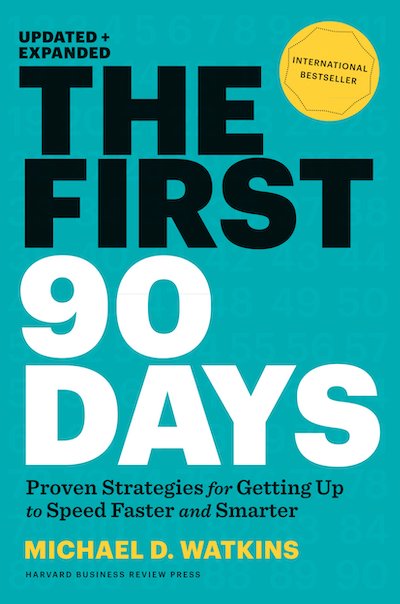
The First 90 Days Book Summary
This The First 90 Days Book Summary covers the key ideas, lessons, and takeaways in about 20 minutes.
Helps with these goals
Want the complete 20-minute summary?
- Full structured summary
- Video Summary
- Podcast Summary
- Audio summary
- Infographic
- Key takeaways
- Exercises
- Quiz
- Highlights and notes
- Ask the book with AI
What is in the The First 90 Days book summary?
Below is a preview of Sumizeit’s expert-written summary of The First 90 Days by Michael D. Watkins. The full summary covers the book’s key ideas in text, audio, and video.
When executives transition into a new role, the first 90 days are essential for shaping their long term success in the position and the company. An executive who makes a positive first impression and achieves early wins in the first 90 days will establish trust with his team and generate momentum that will lead to long term success. However, missteps and mistakes can spiral and harm the executive’s ability to form a positive relationship with employees and create successful change. The first 90 days are vital because failure to make a strong transition can harm a leader’s professional reputation, and lead to long-lasting negative effects over the course of their career.
To be successful, new leaders should not jump into action but should use the first 90 days to listen, learn, and understand their new role, their employees, and the goals and organization of the company. While leaders often face pressure to act quickly, they should understand the current status quo, take time to meet with and assess their employees, and work with their bosses to align on a vision for success, before implementing any changes. At first, leaders should aim to secure early wins that are in line with the executive team’s goals and are tailored to the company’s specific challenges. It is important for new executives to align and adjust the company’s organizational structure, establish a strong relationship with their bosses and the executive team, and understand the company’s overall public perception. Focusing on these areas in the first 90 days of transition will lead to long term success for a new leader.
First Impressions Are Vital For Long Term Success
When leaders enter a new role, their first actions are critical. If they utilize their positive moment, they can achieve early wins and set themselves up for long term success, but any negative actions will have far-reaching negative repercussions for themselves and their team.
Like it or not, first impressions matter a great deal. According to Harvard Business School professor and social psychologist Amy Cuddy, new professional relationships begin with two questions. First, employees ask themselves, can I trust this person? Then, they ask, can I respect this person? If leaders want to develop long-lasting, successful professional relationships with their team, providing positive answers to these questions is essential. However, first impressions take only seconds to form. According to some studies, many people even form their first impressions of someone simply by looking at a photograph of them, without even meeting them in person. However, it is up to a leader to take control of the narrative of his own first impression.
For example, a new executive may at first seem competent and intelligent, but if they begin making ill-received and poorly executed changes to the organization and teams without doing their research into the company first, then their employees will quickly change their perception of them.
Want the complete 20-minute summary?
- Full structured summary
- Video Summary
- Podcast Summary
- Audio summary
- Infographic
- Key takeaways
- Exercises
- Quiz
- Highlights and notes
- Ask the book with AI
Who should read The First 90 Days?
The First 90 Days is essential for executives, managers, and leaders stepping into new roles who want to establish credibility and momentum from day one. Whether you're a first-time executive, transitioning to a larger leadership position, or taking on a new role within your organization, this book provides a strategic framework for making a strong start. It's also valuable for anyone undergoing significant career transitions who recognizes that their early actions will shape their long-term professional reputation and success.
Why does The First 90 Days matter?
In today's mobile workforce, how you transition into a new leadership role can make or break your career trajectory. Michael D. Watkins demonstrates that the first 90 days are critical—mistakes made early can create lasting damage to your reputation and relationships with employees, while thoughtful, strategic action builds trust and momentum that compounds over time. As career moves happen more frequently and are more visible than ever, mastering the transition period has become a competitive advantage that separates successful leaders from those who struggle.
What are the key themes in The First 90 Days?
- The power of first impressions in establishing trust and credibility
- Strategic learning and listening before taking action
- Aligning personal goals with organizational priorities and your boss's vision
- Tailoring leadership strategies to your organization's specific challenges
- Building early wins that are meaningful, not just easy
- Organizational structure alignment across vision, skills, processes, and rewards
What are the key lessons from the The First 90 Days book summary?
First Impressions Form in Seconds
Employees assess trust and respect within moments of meeting you. Your early actions—whether you listen and learn or rush to implement changes—define how you're perceived long-term, and that perception is difficult to change once established.
Your Reputation Precedes and Follows You
Professional reputation shapes hiring decisions, career advancement, and how your ideas are received. Mistakes or missteps in any role can follow you to your next opportunity, making intentional transition management critical to career longevity.
Alignment with Your Boss Is Non-Negotiable
Success is measured by your boss's definition, not yours. You must explicitly discuss and agree on what success looks like, what resources you have, and how your work style fits with their expectations—ideally before you start implementing initiatives.
The STARS Framework Defines Your Strategy
Organizations fall into five categories—Startup, Turnaround, Accelerated Growth, Realignment, or Sustaining Success—and each demands different leadership approaches. Identify your organization's position and tailor your strategy accordingly rather than applying a one-size-fits-all approach.
Action Imperative Is a Trap
New leaders often feel pressure to act quickly and make visible changes, but this impulse leads to mistakes. Spending your first 90 days learning prevents costly errors and demonstrates sound judgment to your team.
Listening Is a Structured Process, Not Casual Conversation
Free-flowing conversations with employees can be biased or focus on minor issues. Conduct structured one-on-one meetings with standardized questions to understand the organization's real challenges and opportunities systematically.
Early Wins Must Align with Organizational Goals
Easy victories that don't align with your boss's priorities or your organization's position may actually be viewed as failures. Choose wins that are meaningful to the company's core challenges and strategic direction, even if they're harder to achieve.
Past Success Doesn't Guarantee Future Success
Strategies that worked brilliantly in your previous role may fail in your new context. Take time to understand the unique dynamics, culture, and constraints of your new organization before transplanting old solutions.
Understand Performance Before Making Personnel Changes
An underperforming employee may lack resources, face structural barriers, or have been underutilized by previous leadership. Investigate root causes before firing anyone, as you may discover system problems rather than people problems.
Organizational Structure Must Align Four Core Elements
Strategic direction, skill sets, organizational units with processes, and reward systems must work together. Misalignment in any of these areas creates bottlenecks and failure points that restructuring can solve.
Your Break-Even Point Marks True Integration
Success in your first 90 days means reaching the break-even point—the moment when your contributions exceed what you've consumed in learning and resources. This milestone signals you've fully transitioned and added value.
Build Alliances Across the Organization
Success requires more than managing your direct reports. Form strategic relationships across the company with people who influence decisions and can advance your initiatives.
Negative Reputations Can Be Overwritten by Actions
If you arrive with a negative reputation, your first actions can quickly reshape how people perceive you. Demonstrating that you listen, value input, and do your homework builds new trust despite earlier impressions.
Quiet Transitions Matter as Much as Visible Ones
Career moves within your current company or new responsibilities without title changes are less visible but equally important to your reputation and development. Apply transition principles to all significant role changes.
Communication Between Teams Prevents Bottlenecks
Structural changes that improve cross-team communication and coordination solve many operational problems. Ensure teams understand each other's constraints and can collaborate to meet organizational goals.
External Support Structures Enable Performance
Cultivating strong relationships outside of work and maintaining personal balance helps you perform at your best. A solid support structure reduces burnout and improves decision-making during the critical first 90 days.
Success in Sustaining Organizations Means No Mistakes
For established, successful organizations, your job is to maintain excellence without errors. Mistakes that might be recoverable elsewhere can damage reputation and trust severely in high-stakes environments.
Define Expectations Along the Entire Chain of Command
Alignment on success shouldn't stop at your relationship with your boss. Ensure your direct reports understand their goals, success metrics, and how their work connects to broader organizational objectives.
Incentive Structures Must Support Strategic Goals
Employees follow incentives. Reward systems that don't align with your organization's priorities and strategic direction will undermine your goals, no matter how clearly you communicate them.
The First 90 Days Set the Trajectory for Your Entire Tenure
How you handle the transition period creates momentum—positive or negative—that compounds throughout your time in the role. Invest heavily in getting this period right because it shapes everything that follows.
Want the complete 20-minute summary?
- Full structured summary
- Video Summary
- Podcast Summary
- Audio summary
- Infographic
- Key takeaways
- Exercises
- Quiz
- Highlights and notes
- Ask the book with AI
How can you apply ideas from The First 90 Days?
- Before your first day, research your organization's STARS position and develop a tailored 90-day learning plan that prioritizes the areas most critical to success
- Schedule structured one-on-one interviews with key stakeholders using consistent questions to understand organizational challenges, employee dynamics, and strategic priorities
- Meet with your boss in the first week to explicitly define success metrics, expectations, resources, and how your work will be evaluated in your new role
- Identify and pursue early wins that meaningfully address your organization's core challenges and align with your boss's priorities, not just popular quick fixes
- Conduct a skills and performance assessment of your direct reports to understand their capabilities and constraints before making any personnel decisions
- Map your organization's structure against its strategic direction, skill distribution, and reward systems to identify misalignments that need correction
- Establish cross-functional communication channels and structural changes that break down silos and improve collaboration on shared goals
What common mistakes do readers make with The First 90 Days?
- Rushing to implement changes based on what worked at your previous employer without understanding the unique context of your new organization
- Pursuing easy, popular wins with employees that don't align with your boss's priorities or organizational strategy
- Making personnel decisions too quickly without investigating whether performance problems stem from individuals, systems, or resource constraints
- Failing to explicitly align with your boss on what success looks like, leading to wasted effort on initiatives your leadership doesn't value
Sumizeit Exercises Apply what you've learned
Turn ideas from The First 90 Days into action with a short guided reflection: identify the biggest takeaway, connect it to your life, and commit to one step you can take in the next 24 hours.
What is the expert analysis of The First 90 Days?
Overview
The First 90 Days by Michael D. Watkins stands as a seminal work in the domain of leadership transition and organizational success. Watkins, a distinguished scholar and practitioner with a robust academic pedigree including Harvard Business School and IMD, brings a rigorous, research-informed perspective to the challenges faced by leaders stepping into new roles. His expertise is reflected in the book’s practical framework, which has become a touchstone for executives navigating the precarious early phase of leadership change. The book’s significance lies in its synthesis of psychological insight, strategic acumen, and organizational theory, making it indispensable for leaders intent on accelerating their effectiveness and securing long-term impact.
Core Thesis
Watkins’ central argument is that the initial 90 days in a new leadership role are critical for establishing momentum, trust, and credibility, which collectively determine a leader’s trajectory within the organization. He posits that successful transitions hinge not on immediate action but on deliberate learning, listening, and alignment with organizational realities and stakeholder expectations. The book introduces the STARS model—categorizing organizations as Startups, Turnarounds, Accelerated Growth, Realignment, or Sustaining Success—to underscore the necessity of tailoring strategies to specific organizational contexts. Early wins, carefully chosen and aligned with broader corporate goals, serve as pivotal milestones that reinforce a leader’s legitimacy and pave the way for sustained success.
Strengths
- Practical Framework: The book excels in providing a clear, actionable roadmap that leaders can follow, demystifying the complex process of transition with structured steps and checkpoints.
- Integration of Psychological and Organizational Insights: Watkins skillfully blends social psychology—such as the importance of first impressions and trust—with organizational strategy, offering a holistic view of leadership challenges.
- Contextual Sensitivity: The STARS model is a notable strength, encouraging leaders to diagnose their organizational environment accurately and adapt their approach accordingly, rather than applying one-size-fits-all solutions.
- Emphasis on Relationship Building: The focus on aligning with bosses, peers, and direct reports highlights the relational dynamics that underpin effective leadership, moving beyond purely technical or strategic considerations.
- Rich Use of Examples: Real-world illustrations, such as the Apple turnaround under Steve Jobs, ground the theory in tangible scenarios, enhancing the book’s credibility and relatability.
Critiques & Counterarguments
- Potential Oversimplification of Complex Transitions: While the 90-day framework offers clarity, some transitions—particularly in highly volatile or politically charged organizations—may defy such neat temporal boundaries, requiring more nuanced, ongoing adaptation.
- Limited Attention to Cultural and Global Variability: The book primarily reflects Western corporate contexts and may underemphasize how cultural differences influence leadership transitions, especially in multinational or non-Western settings.
- Risk of Overemphasizing Early Wins: The prioritization of early wins might inadvertently encourage short-termism, where leaders focus on visible but potentially superficial successes at the expense of deeper systemic change.
- Competing Research on Leadership Adaptability: Alternative schools of thought, such as adaptive leadership theory, stress ongoing learning and flexibility beyond fixed initial periods, suggesting that leadership effectiveness is less about a defined timeframe and more about continuous responsiveness.
- Empirical Evidence on Transition Outcomes: Some longitudinal studies indicate that leadership success is influenced by factors beyond initial actions, including organizational inertia, external market forces, and team dynamics, which may limit the predictive power of the 90-day focus.
Who Should Read This
The First 90 Days is essential reading for first-time executives, newly appointed leaders, and anyone undergoing significant role transitions within organizations. Its insights are invaluable for CEOs, senior managers, and high-potential leaders who seek to navigate the complexities of new environments with strategic clarity and relational intelligence. Additionally, leadership coaches, organizational consultants, and HR professionals will find Watkins’ framework a useful tool for guiding clients and designing onboarding processes. The book’s blend of theory and practice makes it equally relevant for seasoned leaders aiming to refresh their approach to transitions and for emerging leaders preparing for future challenges.
Frequently asked questions about the The First 90 Days book summary
What is The First 90 Days about?
The First 90 Days by Michael D. Watkins is a strategic guide for leaders transitioning into new roles. It explains why the first 90 days of a leadership transition are critical to long-term success and provides a framework for establishing credibility, building trust, and creating momentum through listening, learning, and strategic action rather than rushing to make changes.
Who should read The First 90 Days?
The First 90 Days is essential for executives, managers, and leaders at any level taking on new roles. It's particularly valuable for first-time executives, those moving into larger or more visible positions, leaders transitioning between companies, and anyone undergoing significant career changes who wants to maximize their impact and protect their professional reputation.
What are the main takeaways from The First 90 Days?
The main takeaways include: first impressions form quickly and are difficult to change, so intentional early actions matter greatly; you must align with your boss on what success looks like before pursuing initiatives; tailor your strategy to your organization's specific position using the STARS framework; listen, learn, and understand before implementing changes; and pursue early wins that are strategically meaningful, not just easy, to build trust and momentum.
What is the STARS framework in The First 90 Days?
The STARS framework identifies five organizational types: Startup (new organizations struggling to build team and define roles), Turnaround (organizations in decline requiring major restructuring), Accelerated Growth (scaling up operations), Realignment (making significant changes but not a complete turnaround), and Sustaining Success (maintaining established excellence). Each type requires different leadership strategies tailored to its unique challenges.
Why does Watkins emphasize listening over action in the first 90 days?
Watkins emphasizes listening because new leaders often suffer from the 'action imperative'—the urge to make visible changes quickly. However, rushing to implement changes based on assumptions or past experience leads to costly mistakes that damage credibility. Structured listening and learning prevent errors, demonstrate sound judgment, and help you understand root causes before taking action.
How does The First 90 Days address organizational structure?
The book explains that organizational success requires alignment of four elements: strategic direction and vision, skill sets, organizational units and work processes, and reward systems. Leaders should assess these elements in their first 90 days and make structural changes—like improving cross-team communication or realigning roles—to eliminate misalignments that create bottlenecks and prevent goal achievement.
What does 'break-even point' mean in The First 90 Days?
The break-even point is the moment when your contributions to the organization equal or exceed what you have consumed in terms of learning, training, and resources. Reaching this milestone signals that you have fully transitioned into your role and are actively adding value rather than still in the onboarding phase.
How important is aligning with your boss according to The First 90 Days?
Aligning with your boss is critical. Watkins emphasizes that success is ultimately defined by your boss's expectations, not your own. You must explicitly discuss and agree on what success looks like, what resources you have available, your work style, and how your performance will be evaluated. Without this alignment, you may work toward goals your leadership doesn't value, resulting in being perceived as unsuccessful.
About Sumizeit
Sumizeit is a profitable Scomy LLC company based in Miami, Florida. It has been helping readers learn from nonfiction books for 7 years with expert-written summaries in text, audio, podcast, and video.
Want the complete 20-minute summary?
- Full structured summary
- Video Summary
- Podcast Summary
- Audio summary
- Infographic
- Key takeaways
- Exercises
- Quiz
- Highlights and notes
- Ask the book with AI
Here's why readers love Sumizeit
Join thousands of learners getting smarter every day
"Great experience. Detailed summaries. Loved the gamification feature. Makes learning fun. Good customer service. I recommend Sumizeit to anyone. You'll learn a lot."
"I always felt busy but still wanting to keep up with the book discussion in my friend group. This was a great supplement to help me keep reading the books I find fun while keeping up with important books."
"I love this website. Instead of scrolling social media, I find myself learning a lot. I use it everyday. I recommend this app for anyone who is too busy and wants to get up to speed with their favorite books."
The First 90 Days Book Summary PDF
Looking for a The First 90 Days Book Summary PDF you can save and revisit offline? Our The First 90 Days Book Summary PDF captures the book’s core ideas in a clean, printable format — the key frameworks, takeaways, and structure without the fluff. Download the The First 90 Days Book Summary PDF when you want a reference you can annotate, share with your team, or review on the go. Get your The First 90 Days Book Summary PDF from the download page below.
Download The First 90 Days Book Summary PDFPeople also liked these summaries
Readers who explored The First 90 Days often enjoyed these titles next.




Want the complete 20-minute summary?
- Full structured summary
- Video Summary
- Podcast Summary
- Audio summary
- Infographic
- Key takeaways
- Exercises
- Quiz
- Highlights and notes
- Ask the book with AI
Featured Book Titles
Popular Book Summaries at sumizeit, leading book summary app