


As an Amazon Associate, Sumizeit earns from qualifying purchases.
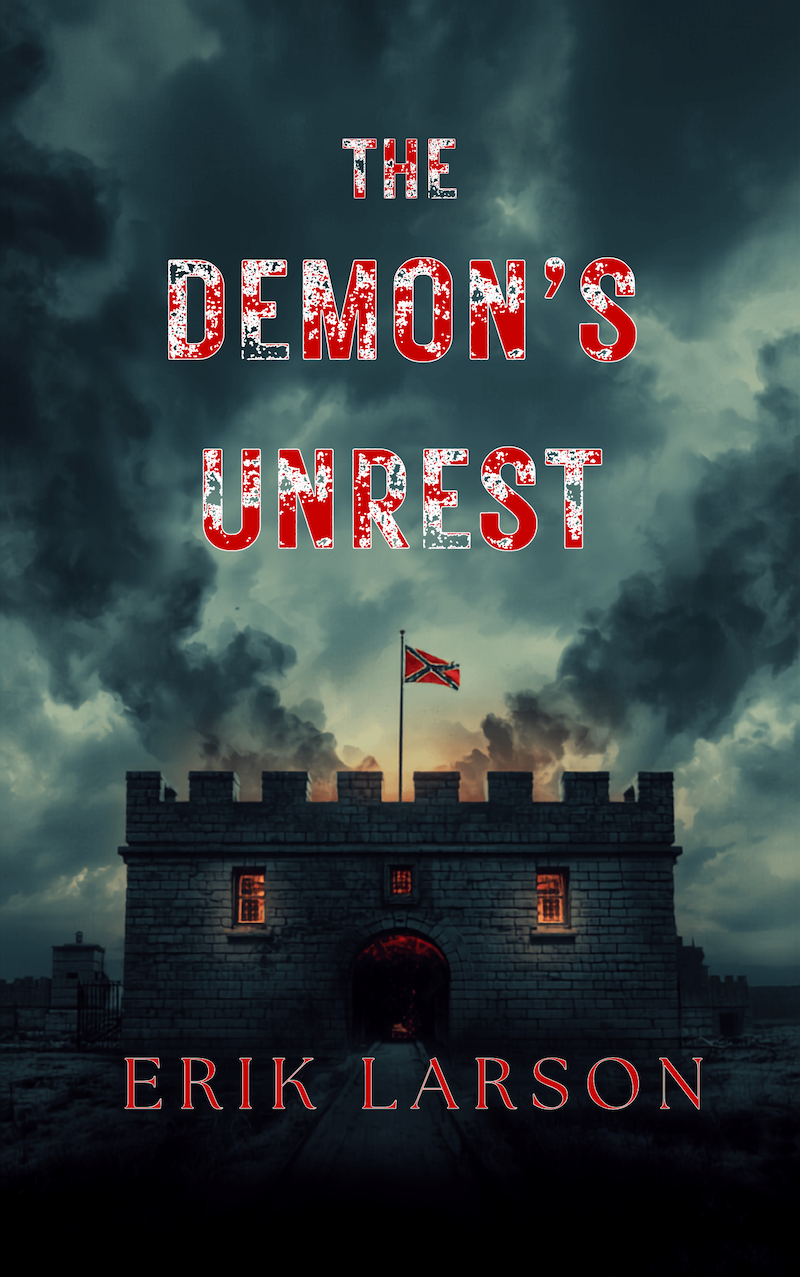
The Demon of Unrest Book Summary
This The Demon of Unrest Book Summary covers the key ideas, lessons, and takeaways in about 20 minutes.
Helps with these goals
Want the complete 20-minute summary?
- Full structured summary
- Video Summary
- Podcast Summary
- Audio summary
- Key takeaways
- Exercises
- Quiz
- Highlights and notes
- Ask the book with AI
What is in the The Demon of Unrest book summary?
Below is a preview of Sumizeit’s expert-written summary of The Demon of Unrest by Erik Larson. The full summary covers the book’s key ideas in text, audio, and video.
Erik Larson's The Demon of Unrest reconstructs the strange, suspended months between Abraham Lincoln's election in November 1860 and the opening cannon fire at Fort Sumter in April 1861 — the brief window in which a single nation quietly came apart. Rather than narrating the Civil War itself, Larson zeroes in on the slow-motion collapse that preceded it, showing how a country built on the language of unity and self-government drifted, almost sleepwalking, into the bloodiest conflict in its history. The book treats the secession winter not as an inevitable march but as a series of choices, miscalculations, wounded prides, and missed opportunities, any one of which might have bent the outcome differently.
At the core of the story sits a single, inescapable cause: human bondage. While the participants dressed their arguments in the vocabulary of states' rights, constitutional principle, regional honor, and economic survival, Larson keeps returning to the institution that animated all of it. Every thread — the rhetoric, the duels, the cotton fortunes, the fortifications in Charleston Harbor — eventually loops back to slavery and the determination of one half of the country to preserve and expand it against the rising conviction of the other half that it could not be allowed to continue.
A Nation Splitting Along a Single Fault Line
Larson frames the late 1850s and early 1860s as the moment when decades of accumulated grievance finally exceeded the country's capacity to absorb it. The disagreements were never purely about one issue in isolation; slavery was knotted together with questions of money, political power, religious justification, and social identity, so that an attack on the institution felt, to many Southerners, like an attack on their entire way of life. This entanglement made compromise nearly impossible, because surrendering ground on slavery meant surrendering ground on everything that the planter class believed defined them.
The result was a country in which two regions had stopped speaking the same moral language. What the North increasingly described as a sin, the South increasingly described as a blessing. That gap could not be split down the middle, and the deeper the two sides dug in, the harder it became for any political mechanism — election, convention, or congressional bargain — to bridge it.
The Hardening of Northern Opposition
In the Northern states, hostility toward slavery sharpened into organized conviction. A growing number of citizens came to see the institution as fundamentally cruel and indefensible, and that belief expressed itself in concrete forms. Antislavery societies multiplied, dedicated publications appeared, and resistance to slavery's expansion into newly acquired western territories became a defining political demand.
One of the most influential voices belonged to William Lloyd Garrison, whose newspaper The Liberator gave abolitionism a relentless and uncompromising platform. Activists flooded the country with pamphlets and tracts condemning slavery as a moral catastrophe, and they often aimed their persuasion directly at lawmakers and prominent citizens in the slaveholding states.
Want the complete 20-minute summary?
- Full structured summary
- Video Summary
- Podcast Summary
- Audio summary
- Key takeaways
- Exercises
- Quiz
- Highlights and notes
- Ask the book with AI
Who should read The Demon of Unrest?
The Demon of Unrest is essential for readers interested in American history, Civil War scholarship, and the human dynamics of political collapse. It appeals to those who want to understand how nations splinter not through sudden rupture but gradual moral and political failure, and to anyone seeking insight into how honor, ideology, and fear can override reason during moments of national crisis.
Why does The Demon of Unrest matter?
This book matters because it reveals how the Civil War emerged not from inevitability but from a cascade of choices, miscalculations, and moral failures by ordinary political leaders facing unprecedented circumstances. In our own era of political polarization and institutional strain, Larson's account of how a nation sleepwalked toward catastrophe offers a sobering lesson about the fragility of democratic consensus and the dangers of treating existential disagreements as negotiable.
What are the key themes in The Demon of Unrest?
- The incompatibility of slavery and free labor as the irreconcilable core of the crisis
- How honor culture and wounded pride escalated political disputes into calls for violence
- The widening economic and social gap between industrial North and agrarian South
- Political leadership's paralysis and evasion in the face of existential threats
- The power of rhetoric and ideology to obscure material causes and justify radical action
- How symbols and physical spaces become flashpoints for deeper ideological conflicts
What are the key lessons from the The Demon of Unrest book summary?
Moral language matters more than compromise
When two regions stop speaking the same moral language—when one describes something as sin and another as blessing—traditional political bargaining becomes nearly impossible because no middle ground exists.
Institutions matter less than the will to sustain them
Constitutional provisions and political structures only work when leaders and citizens believe in maintaining them; Buchanan's passivity revealed that federal authority depends on active defense, not mere legal existence.
Economic entanglement runs deeper than money
Slavery structured not just Southern finances but the entire social hierarchy, culture, and self-identity of the planter class, making any attack on the institution feel like existential threat rather than policy debate.
Personal honor can drive national policy
The Southern Code Duello, which demanded forceful response to insult, transformed abolitionist arguments from policy disagreements into affronts that required defiance and, eventually, military action.
Delay and evasion compound rather than resolve crises
Buchanan's attempt to avoid confrontation through inaction and ambiguous promises only emboldened secessionists and deepened mutual distrust, making eventual conflict more likely and more violent.
Symbols can become more important than substance
Control of Fort Sumter mattered less for its military value than for what it represented—federal authority versus Confederate sovereignty—making compromise on the physical fort nearly impossible despite its tactical insignificance.
Fear of obsolescence drives radical action
Southern anxiety about being left behind economically and politically by an industrializing North wasn't merely defensive but actively pushed toward secession as a way to preserve an older order.
Counter-narratives can entrench rather than persuade
The South's response to abolitionist literature was not to engage with the moral arguments but to suppress the literature and develop competing narratives that recast slavery as positive, further hardening ideological lines.
Wars rarely unfold as anticipated
Both North and South shared a dangerous illusion that conflict would be brief and nearly bloodless, badly underestimating the destructive power of industrialized warfare and the commitment each side would show.
Individual decisions can reshape historical trajectories
Major Anderson's decision to move to Fort Sumter without explicit orders from Washington, intended to prevent bloodshed, instead enraged Southern leaders and accelerated the path to war.
Silencing opponents hardens extremism
Charleston authorities' destruction of antislavery materials and suppression of dissenting voices didn't kill the abolitionist movement but pushed it toward more radical forms and convinced secessionists they had no choice but to leave.
Great catastrophes often follow small, reversible decisions
The Fort Sumter bombardment itself was militarily minor and nearly bloodless, yet unleashed a conflict that would kill hundreds of thousands, illustrating how small pivot points can lead to disproportionate consequences.
Ambiguous communication creates dangerous assumptions
Seward's vague assurances about withdrawing from Fort Sumter without explicit commitment created false expectations that, when unfulfilled, were interpreted as betrayal and hardened Southern resolve.
Legitimacy matters as much as power
The Confederacy's obsession with obtaining formal recognition from Washington reveals how new political entities seek validation from established authorities to solidify their claim to existence.
Proximity to power doesn't guarantee wisdom
Political figures present at the center of events—cabinet members, state governors, military officers—often misread situations and miscalculate consequences because they operate within their own assumptions and information bubbles.
Ideology can justify and mask material interests
While Southern leaders dressed their arguments in constitutional and honor-based language, slavery remained the material foundation animating all their political choices and determining their social identity.
The press amplifies and interprets rather than simply reports
Newspapers and correspondents didn't merely convey information but shaped its meaning, with coverage of events like Bull Run influencing public mood and political calculations on both sides.
Personal diaries reveal what official records conceal
Mary Boykin Chesnut's diary captured the disorientation and moral complexity of living through the crisis in ways that political statements and military records could not express.
Want the complete 20-minute summary?
- Full structured summary
- Video Summary
- Podcast Summary
- Audio summary
- Key takeaways
- Exercises
- Quiz
- Highlights and notes
- Ask the book with AI
How can you apply ideas from The Demon of Unrest?
- Study how ideological divisions form and harden by examining moments when rhetoric shifts from negotiation to condemnation, allowing you to recognize similar patterns in contemporary politics
- Assess institutional health by evaluating whether leaders actively defend or passively abandon the rules and structures they're sworn to protect
- Recognize how economic anxiety and relative decline fuel political radicalism, helping explain modern secessionist or separatist movements
- Examine the role of personal honor codes and cultural values in driving political actors toward positions they might rationally avoid, informing analysis of honor-based cultures today
- Analyze how small decisions by mid-level officials—like Anderson's move to Sumter—can reshape history more than grand strategic pronouncements
- Evaluate competing narratives and counter-stories in political debates to understand how populations construct justifications for radical action
- Track how suppression of dissent and contrary viewpoints fails to eliminate opposition but instead drives it toward more extreme forms
What common mistakes do readers make with The Demon of Unrest?
- Assuming that constitutional rules and political institutions operate independently of leaders' willingness to defend them—they only work when actively maintained
- Treating ideological disputes as policy disagreements amenable to compromise when they actually involve irreconcilable moral frameworks
- Believing that delay and avoidance reduce crisis when they typically amplify it by emboldening radical actors and deepening mutual distrust
- Underestimating how deeply institutions and ideologies interweave with personal and collective identity, making compromise feel like existential surrender
Sumizeit Exercises Apply what you've learned
Turn ideas from The Demon of Unrest into action with a short guided reflection: identify the biggest takeaway, connect it to your life, and commit to one step you can take in the next 24 hours.
What is the expert analysis of The Demon of Unrest?
Overview
The Demon of Unrest is a meticulously researched narrative nonfiction work by Erik Larson, an acclaimed American author known for his ability to blend rigorous historical scholarship with compelling storytelling. Larson’s reputation rests on his skillful reconstruction of pivotal historical moments through vivid character-driven narratives, as seen in his previous works like The Devil in the White City and The Splendid and the Vile. In this book, Larson focuses on the fraught months between Abraham Lincoln’s election and the opening shots at Fort Sumter, a critical yet often underexplored period that set the stage for the American Civil War. By illuminating the complex interplay of ideology, honor culture, economic anxiety, and political paralysis, Larson offers a fresh lens on the unraveling of the Union, emphasizing the human and moral dimensions behind the historical facts.
Core Thesis
Larson’s central argument is that the collapse of the United States in late 1860 and early 1861 was not an inevitable, singular event but rather the cumulative result of intertwined social, economic, and ideological forces, all rooted fundamentally in the institution of slavery. He contends that while the rhetoric of states’ rights and constitutional principle dominated public discourse, slavery remained the inescapable fault line that divided the nation. The book underscores how honor culture, economic disparities, political indecision, and mutual misperceptions magnified tensions, creating a volatile environment where compromise became impossible and conflict unavoidable. The bombardment of Fort Sumter, though minor in immediate terms, symbolized the eruption of these festering contradictions into open warfare.
Strengths
- Nuanced Historical Contextualization: Larson excels at situating the secession crisis within a broader matrix of cultural, economic, and political factors, moving beyond reductive explanations to reveal the complexity of motivations on both sides.
- Character-Driven Narrative: By focusing on individuals such as Major Robert Anderson, Edmund Ruffin, and Mary Boykin Chesnut, Larson humanizes the epochal events, making the abstract forces tangible and immediate.
- Integration of Diverse Sources: The use of diaries, letters, newspapers, and political documents enriches the narrative, providing multiple perspectives and a textured sense of the period’s atmosphere.
- Insight into Honor Culture: The exploration of Southern honor and the Code Duello offers a sophisticated cultural analysis that deepens understanding of why political insults escalated into violence.
- Balanced Portrayal of Leadership: Larson’s critical yet empathetic depiction of figures like Buchanan and Lincoln captures the fraught dilemmas of leadership amid crisis, avoiding simplistic hero-villain binaries.
Critiques & Counterarguments
- Potential Overemphasis on Slavery as the Sole Root Cause: While slavery was undeniably central, some historians argue that economic modernization, political realignment, and constitutional ambiguities also independently contributed to sectional tensions. Larson’s focus may underplay these other structural dynamics.
- Limited Engagement with Northern Political Diversity: The book foregrounds abolitionist fervor and moral opposition to slavery in the North but gives less attention to the complex spectrum of Northern attitudes, including those prioritizing unionism over abolition or harboring racial prejudices.
- Romanticizing Honor Culture: The detailed treatment of Southern honor and dueling risks attributing too much causal weight to cultural codes, potentially overshadowing pragmatic political and economic calculations that also influenced secessionist decisions.
- Underexplored Role of African Americans: The narrative centers on white actors and debates but offers limited insight into the perspectives and agency of enslaved and free Black people, whose resistance and aspirations were crucial to the conflict’s context.
- Competing Interpretations of Buchanan’s Presidency: Some scholars contend that Buchanan’s inaction was less about paralysis and more a constitutionalist stance reflecting contemporary legal interpretations, suggesting Larson’s critique may reflect hindsight bias.
Who Should Read This
The Demon of Unrest is ideally suited for readers with an interest in American history who seek a richly detailed yet accessible account of the immediate prelude to the Civil War. It appeals to those who appreciate narrative nonfiction that combines scholarly rigor with vivid storytelling. Historians, students, and general readers fascinated by the interplay of culture, politics, and ideology in moments of national crisis will find Larson’s work illuminating. Additionally, readers interested in the moral and psychological dimensions of political conflict, as well as the role of leadership under pressure, will benefit from this nuanced exploration. It is less suited for those seeking a comprehensive military history or a detailed political analysis of the entire Civil War period, as its focus is tightly concentrated on the secession winter and the origins of the conflict.
Frequently asked questions about the The Demon of Unrest book summary
What is The Demon of Unrest about?
The Demon of Unrest by Erik Larson reconstructs the strange, suspended months between Abraham Lincoln's election in November 1860 and the opening cannon fire at Fort Sumter in April 1861. Rather than narrating the Civil War itself, the book examines the slow-motion collapse of the United States—a period when a nation built on democratic ideals and unified language gradually came apart through a cascade of choices, miscalculations, wounded pride, and moral failures.
Who should read The Demon of Unrest?
This book is essential for anyone interested in American history, Civil War origins, and how nations can unravel through political and moral failure. It appeals to readers seeking to understand political collapse, the role of honor and ideology in driving nations toward conflict, and the human dynamics behind historical pivotal moments. It's also valuable for those concerned with modern political polarization and institutional fragility.
What are the main takeaways from The Demon of Unrest?
The central lesson is that great nations can unravel not through sudden dramatic strokes but through accumulating pride, fear, evasion, and moral failure by ordinary leaders. Slavery was unmistakably the root cause, yet honor culture, economic anxiety, political cowardice, and failure to imagine the war's true cost combined to push the country toward catastrophe. Small, seemingly reversible decisions—like Major Anderson's move to Fort Sumter—can unleash disproportionate consequences.
Why did slavery cause the Civil War if there were other disagreements between North and South?
Slavery wasn't isolated as a single issue but was deeply entangled with money, political power, religious justification, and social identity. For the planter class, slavery structured the entire social hierarchy and way of life, so attacking the institution felt like an existential threat to everything they believed defined them. The North and South had stopped speaking the same moral language about slavery, making compromise impossible.
What role did honor culture play in the lead-up to the Civil War?
Southern honor culture, governed by the Code Duello, treated insult as an affront requiring forceful response. Since Northerners characterized slavery as immoral, Southerners experienced this as a personal and collective humiliation that demanded defiance rather than negotiation. This cultural framework transformed policy disagreements into matters of honor that could only be satisfied through confrontation.
What happened at Fort Sumter and why did it matter?
On April 12, 1861, after Major Anderson refused a demand to surrender, Confederate artillery bombardment of Fort Sumter lasted roughly thirty-four hours with minimal casualties. Though militarily minor, the attack crystallized public opinion on both sides, shattered illusions of peaceful resolution, and unleashed the Civil War. Lincoln's call for troops in response pushed wavering states into the Confederacy, consolidating Southern unity.
How did President Buchanan contribute to the outbreak of war?
Buchanan was so committed to avoiding conflict that he could not act decisively against secession, effectively giving secessionists room to maneuver. His belief that the federal government lacked constitutional power to stop states from leaving, combined with his cabinet's Southern sympathies and his ambiguous statements about Fort Sumter, emboldened radicals while paralyzing federal authority.
About Sumizeit
Sumizeit is a profitable Scomy LLC company based in Miami, Florida. It has been helping readers learn from nonfiction books for 7 years with expert-written summaries in text, audio, podcast, and video.
Want the complete 20-minute summary?
- Full structured summary
- Video Summary
- Podcast Summary
- Audio summary
- Key takeaways
- Exercises
- Quiz
- Highlights and notes
- Ask the book with AI
Here's why readers love Sumizeit
Join thousands of learners getting smarter every day
"Great experience. Detailed summaries. Loved the gamification feature. Makes learning fun. Good customer service. I recommend Sumizeit to anyone. You'll learn a lot."
"I always felt busy but still wanting to keep up with the book discussion in my friend group. This was a great supplement to help me keep reading the books I find fun while keeping up with important books."
"I love this website. Instead of scrolling social media, I find myself learning a lot. I use it everyday. I recommend this app for anyone who is too busy and wants to get up to speed with their favorite books."
The Demon of Unrest Book Summary PDF
Looking for a The Demon of Unrest Book Summary PDF you can save and revisit offline? Our The Demon of Unrest Book Summary PDF captures the book’s core ideas in a clean, printable format — the key frameworks, takeaways, and structure without the fluff. Download the The Demon of Unrest Book Summary PDF when you want a reference you can annotate, share with your team, or review on the go. Get your The Demon of Unrest Book Summary PDF from the download page below.
Download The Demon of Unrest Book Summary PDFPeople also liked these summaries
Readers who explored The Demon of Unrest often enjoyed these titles next.


Want the complete 20-minute summary?
- Full structured summary
- Video Summary
- Podcast Summary
- Audio summary
- Key takeaways
- Exercises
- Quiz
- Highlights and notes
- Ask the book with AI
Featured Book Titles
Popular Book Summaries at sumizeit, leading book summary app