


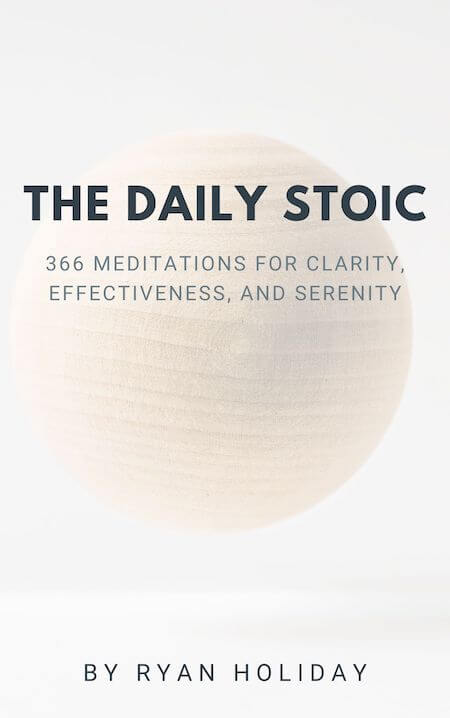
Prefer the print book? Buy on Amazon
As an Amazon Associate, Sumizeit earns from qualifying purchases.
The Daily Stoic Book Summary
This The Daily Stoic Book Summary covers the key ideas, lessons, and takeaways in about 20 minutes.
Short Description:
Ancient philosophers teach virtue and intention for success.
Preview the The Daily Stoic book summary
Below is a preview of Sumizeit’s comprehensive human-written summary of The Daily Stoic by Ryan Holiday. The full summary is 15-20 minutes long and covers the book’s key ideas in text, audio, visual, and video formats. Unlock the full 20 Minute Summary
The Daily Stoic
Drawing from the greats of classic philosophy, including Roman Emperor Marcus Aurelius, playwright Seneca the Younger, and slave-turned-teacher Epictetus, The Daily Stoic presents a variety of strategies for managing thoughts, seeking clarity, cultivating awareness, and applying logic and reason in your day-to-day life. Focusing on motivation rather than fear, authors Stephen Hanselman and Ryan Holiday introduce practical tips for improving your relationships, achieving your goals, and finding inner joy.
Seeking Clarity
Each day, we wake up and find ourselves pulled in a hundred different directions well before the morning haze has lifted. If we do not feel this way, we are the anomaly rather than the majority.
So, how can we best manage the lure of distraction in our day-to-day lives?
Bill Belichick, coach of the New England Patriots, answers this question on a regular basis by succinctly telling his players, “Do your job.”
While this may sound obvious at first, the underlying message is that in order to be effective at any one task, you must reduce your focus to that activity alone. Then, when the first task is complete, you can move onto the second one. When you multi-task and split your attention, nothing is getting done to the full extent of your ability.
Roman Emperor Marcus Aurelius believed in the importance of prioritization as well. He felt that each responsibility an individual took on should be treated as though it were their last task on Earth.
To activate this mindset, Aurelius suggested that people adopt personal mantras in order to stay productive and focused during challenging times. An example of a mantra he may have used is the following:
“I am capable of giving 100% of my attention to the task at hand, and, in doing so, I can be satisfied that I am creating my best work.”
In case mantras are not your thing, Aurelius also reminded his pupils that certain occurrences are within your control and others are not. It is important to know this distinction and only feed what you have the ability to change.
One actionable way to embrace your personal power in addition to mantras is by creating a daily schedule that includes the tasks you need to accomplish and nothing else.
Biases
While we like to think that each decision we make is carefully crafted in our minds before it is spoken aloud, this tends not to be the case.
Instead, as Malcolm Gladwell discusses in Blink, our brains are hard-wired to make choices quickly, based on past experiences. While it is certainly important to consider personal history in the decision-making process, in doing so, we end up incorporating our unconscious biases into the outcomes we create.
In order to mitigate the potential of unintended prejudice in our decisions, we must make a conscious effort to pause before we speak.
Pause.
And during this pause, we must ask ourselves two questions:
While this extra moment of self-reflection might seem minor, it can make a huge difference in how…
Want the complete 20-minute summary?
- Full structured summary
- Video Summary
- Podcast Summary
- Audio summary
- Key takeaways
- Exercises
- Quiz
- Highlights and notes
- Ask the book with AI
Who should read The Daily Stoic?
The Daily Stoic is ideal for anyone seeking practical wisdom to navigate modern life's challenges with greater clarity and resilience. Whether you're a professional juggling competing priorities, someone struggling with procrastination, or simply looking to live with more intention and purpose, this book offers timeless strategies from ancient philosophers that apply directly to contemporary problems.
Why does The Daily Stoic matter?
In an age of constant distraction, emotional reactivity, and information overload, The Daily Stoic by Ryan Holiday and Stephen Hanselman provides evidence-based philosophical tools to regain control over what matters most. The book demonstrates that ancient Stoic principles aren't just academic—they're actionable frameworks for managing stress, making better decisions, and building the resilience needed to thrive when life doesn't go as planned.
What are the key themes in The Daily Stoic?
- Focus and clarity in a distracted world
- The power of logic over emotional impulse
- Accepting what you cannot control
- Virtue and duty as life's ultimate purpose
- Resilience through adversity
- Breaking procrastination through deliberate action
- Flexibility and adaptability in planning
- Self-awareness and overcoming unconscious bias
How can you apply ideas from The Daily Stoic?
- Create a daily schedule with only essential tasks and review it each morning to maintain focus and eliminate distractions
- Develop personal mantras related to your biggest challenges and repeat them during stressful moments to regain clarity
- Implement a two-question pause practice before important conversations: 'What could I be overlooking?' and 'Is it possible I'm wrong?'
- Break your largest projects or goals into weekly and daily micro-actions to overcome procrastination and build momentum
- Write down your core values and virtues, then use them to evaluate decisions—ensuring goals align with your highest principles
- Create backup plans for your major initiatives so you can pivot quickly without losing motivation when obstacles arise
- Practice identifying which aspects of your situations are within your control versus external, then direct your energy accordingly
What common mistakes do readers make with The Daily Stoic?
- Attempting to multitask while believing you're being productive—when in reality, split focus delivers lower-quality results across all tasks
- Waiting for the perfect moment, place, or person to take action—ignoring that ideal conditions rarely materialize on their own
- Making quick judgments based on incomplete information or unconscious bias without pausing to question your assumptions
- Treating goals as more important than virtue and duty, which leads to success that feels hollow or ethically compromised
Sumizeit Exercises Apply what you've learned
Turn ideas from The Daily Stoic into action with a short guided reflection: identify the biggest takeaway, connect it to your life, and commit to one step you can take in the next 24 hours.
What is the expert analysis of The Daily Stoic?
Overview
The Daily Stoic, authored by Ryan Holiday with Stephen Hanselman, stands as a contemporary gateway to the ancient philosophy of Stoicism, drawing heavily on the wisdom of classical figures such as Marcus Aurelius, Seneca, and Epictetus. Holiday, a prolific writer known for his works on Stoicism and media strategy, collaborates with Hanselman, a seasoned publisher and scholar of theological studies, to distill Stoic principles into daily meditations aimed at modern readers. This book’s significance lies in its accessible format and practical application of Stoic teachings, making a centuries-old philosophy relevant to today’s challenges in personal discipline, emotional resilience, and ethical living.
Core Thesis
The central argument of The Daily Stoic is that Stoicism, far from being an abstract or purely theoretical philosophy, offers actionable strategies for managing one’s thoughts, emotions, and behaviors in everyday life. It asserts that by cultivating clarity, focus, resilience, and virtue, individuals can navigate distractions, biases, procrastination, setbacks, and even mortality with greater equanimity and purpose. The book emphasizes the importance of living intentionally—prioritizing what is within one’s control, embracing flexibility, and acting with moral integrity—as the path to achieving inner peace and effective action.
Strengths
- Practical Accessibility: The book excels in translating dense philosophical concepts into concise daily reflections and mantras, making Stoicism approachable for a broad audience.
- Historical Depth and Contemporary Relevance: By weaving in stories of historical figures like Marcus Aurelius and James Stockdale alongside modern examples such as Bill Belichick, the book bridges ancient wisdom with present-day applicability.
- Focus on Psychological Insight: It thoughtfully addresses cognitive biases, emotional regulation, and procrastination, integrating Stoic thought with contemporary psychological understanding.
- Emphasis on Virtue and Resilience: The work underscores the primacy of virtue over mere goal attainment, advocating a life oriented toward ethical duty and moral character.
- Encouragement of Critical Thinking: Through Epictetus’s teaching style, the book promotes self-sufficiency and independent reasoning rather than passive acceptance of dogma.
Critiques & Counterarguments
- Oversimplification of Complex Philosophy: The book’s daily meditation format, while accessible, sometimes reduces Stoicism to platitudes or motivational slogans, potentially glossing over the nuanced debates and tensions within Stoic philosophy.
- Selective Historical Interpretation: The portrayal of figures like Cato the Younger and Marcus Aurelius tends to idealize their stoic practices without fully grappling with their historical contradictions or moral complexities.
- Limited Engagement with Competing Philosophies: The book does not sufficiently address alternative ethical frameworks or psychological models that challenge Stoic assumptions, such as existentialist emphasis on absurdity or modern cognitive-behavioral critiques.
- Potential Neglect of Emotional Complexity: While advocating emotional restraint, the book may understate the value of emotional expression and the role of affect in human flourishing, as highlighted in contemporary affective science.
- Real-World Application Challenges: The ideal of unwavering virtue and resilience may be difficult to sustain for individuals facing systemic injustices or mental health struggles, contexts where Stoicism’s emphasis on individual control might seem insufficient or even dismissive.
Who Should Read This
The Daily Stoic is ideally suited for readers seeking a structured, daily philosophical practice that integrates ancient wisdom with modern self-improvement. It appeals to those interested in personal development, leadership, and emotional regulation who appreciate historical context and practical guidance. Additionally, individuals facing stress, distraction, or ethical dilemmas may find its meditations grounding and clarifying. However, readers looking for a rigorous academic treatment of Stoicism or those who favor more expressive emotional frameworks might find the book less satisfying.
Frequently asked questions about the The Daily Stoic book summary
What is The Daily Stoic about?
The Daily Stoic by Ryan Holiday and Stephen Hanselman is a practical guide to ancient Stoic philosophy applied to modern life. It draws from the wisdom of Roman Emperor Marcus Aurelius, Epictetus, and other classical philosophers to offer concrete strategies for managing focus, overcoming bias, building resilience, and living with virtue and intention.
Who should read The Daily Stoic?
Anyone struggling with distraction, procrastination, emotional decision-making, or simply wanting to live with greater clarity and purpose will benefit from this book. It's especially valuable for professionals managing competing priorities, people facing adversity, and readers seeking timeless wisdom applicable to contemporary challenges.
What are the main takeaways from The Daily Stoic?
The core takeaways include: focusing on one task at a time, distinguishing what you can control from what you cannot, pausing before acting to examine your biases, breaking procrastination through deliberate action, embracing flexibility in planning, and prioritizing virtue over external goals. The book teaches that living with intention and relying on reason rather than emotion produces better outcomes and a more meaningful life.
How does Stoicism help with procrastination?
The Daily Stoic teaches that procrastination—saying 'I'll do it tomorrow'—is often a form of denial and self-deception. The Stoic approach is to break large, overwhelming projects into smaller, manageable steps and take action now. Even small forward progress counts, and this method makes daunting tasks feel achievable.
How can I apply Stoic principles to modern workplace challenges?
You can apply Stoicism by creating a focused daily schedule with only essential tasks, using mantras to maintain motivation under pressure, pausing before meetings or decisions to identify your biases, and focusing your energy only on what you can directly influence. This approach increases productivity and decision quality while reducing stress.
Does The Daily Stoic teach you to suppress emotions?
The Daily Stoic doesn't advocate suppressing emotions but rather preventing them from dictating your decisions. The book encourages using logic and reason to guide your choices while acknowledging emotions exist. This balance produces better outcomes than either pure emotion or total emotional suppression.
What does The Daily Stoic mean by virtue?
In The Daily Stoic, virtue refers to living with a sense of duty that emphasizes high moral standards and concern for the common good. According to Stoic teaching, virtue is more important than achieving specific goals and serves as the foundation under which all your objectives should operate. It represents the ultimate reason for living.
About Sumizeit
Sumizeit is a profitable Scomy LLC company based in Miami, Florida. Our founders, Clemens Raemy and Weina Scott, are successful entrepreneurs with several exits. Sumizeit is a popular book summary app / micro learning app used by busy professionals and entrepreneurs with over 2,500 non-fiction book summaries and 10,000 podcast summaries in text, audio, visual, podcast, and video format. We also have stellar retention tools to make ideas stick - such as flashcards with spaced repetition, quizzes, streaks, highlighting and notes, daily challenges, riddles, mini-courses, meditation, and more. You won't only learn the idea, but also remember it. Over 90% of our users change their habits with Sumizeit.
Upgrade Now
Here's why readers love Sumizeit
Join thousands of learners getting smarter every day
"Great experience. Detailed summaries. Loved the gamification feature. Makes learning fun. Good customer service. I recommend Sumizeit to anyone. You'll learn a lot."
"I always felt busy but still wanting to keep up with the book discussion in my friend group. This was a great supplement to help me keep reading the books I find fun while keeping up with important books."
"I love this website. Instead of scrolling social media, I find myself learning a lot. I use it everyday. I recommend this app for anyone who is too busy and wants to get up to speed with their favorite books."
The Daily Stoic Book Summary PDF
Looking for a The Daily Stoic Book Summary PDF you can save and revisit offline? Our The Daily Stoic Book Summary PDF captures the book’s core ideas in a clean, printable format — the key frameworks, takeaways, and structure without the fluff. Download the The Daily Stoic Book Summary PDF when you want a reference you can annotate, share with your team, or review on the go. Get your The Daily Stoic Book Summary PDF from the download page below.
Download The Daily Stoic Book Summary PDFPeople also liked these summaries
Readers who explored The Daily Stoic often enjoyed these titles next.



Ready to read the whole thing?
- Full structured summary
- Video Summary
- Podcast Summary
- Audio summary
- Key takeaways
- Exercises
- Quiz
- Highlights and notes
- Ask the book with AI
Featured Book Titles
Popular Book Summaries at sumizeit, leading book summary app