


Prefer the print book? Buy on Amazon
As an Amazon Associate, Sumizeit earns from qualifying purchases.
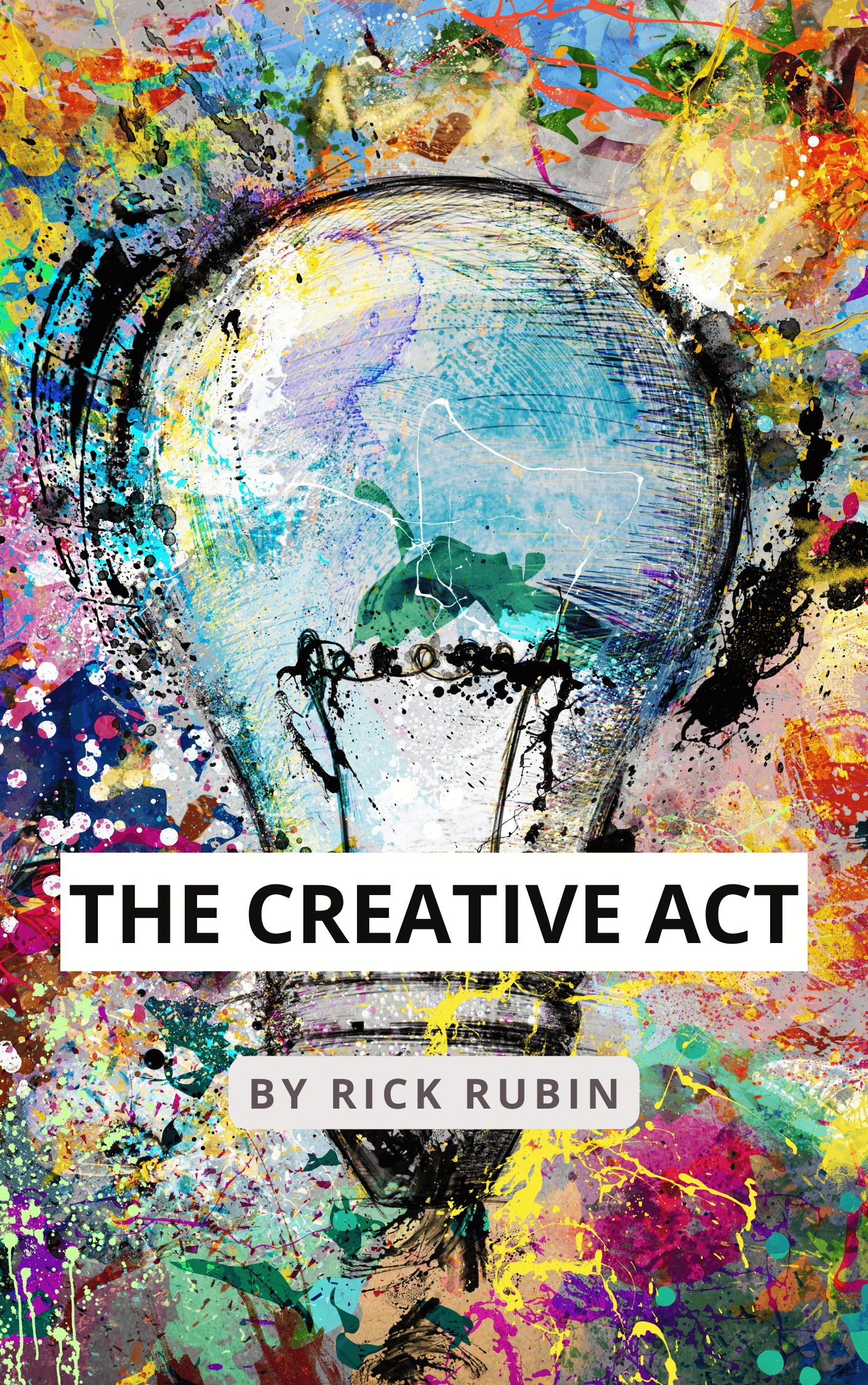
The Creative Act Book Summary
This The Creative Act Book Summary covers the key ideas, lessons, and takeaways in about 20 minutes.
Short Description:
The Creative Act teaches creativity thrives through openness and patience.
Want a Free Weekly Read?
Get a free summary every week straight to your mailbox.
Preview the The Creative Act book summary
Below is a preview of Sumizeit’s comprehensive human-written summary of The Creative Act by Rick Rubin with Neil Strauss. The full summary is 15-20 minutes long and covers the book’s key ideas in text, audio, visual, and video formats. Unlock the full 20 Minute Summary
"The Creative Act" is a book written by music producer Rick Rubin with the help of Neil Strauss. The book is a collection of insights and wisdom from Rubin on the creative process, based on his decades of experience working with some of the most successful musicians of our time. The book is divided into three sections, each focused on a different aspect of the creative process.
The first section, "Creating the Space," is all about creating the right environment for creativity to thrive. Rubin stresses the importance of finding a physical space that allows for uninterrupted focus, as well as a mental space that is open to new ideas and willing to take risks. He also emphasizes the importance of creating a culture within the space that supports creativity, including hiring the right people and establishing clear goals and values.
The second section, "The Creative Process," delves deeper into the actual process of creating art. Rubin discusses the importance of having a clear vision for the project, while also remaining open to experimentation and happy accidents. He also stresses the importance of being present in the moment and fully engaged in the creative process, rather than being distracted by outside pressures or expectations.
The third and final section, "Sharing the Work," is all about bringing the creative work into the world. Rubin stresses the importance of being true to one's own artistic vision and not compromising in order to please others. He also emphasizes the importance of collaboration and finding the right team to bring the work to its fullest potential.
Throughout the book, Rubin shares personal anecdotes and insights from his work with musicians such as Johnny Cash, Jay-Z, and Adele. He also includes exercises and prompts to help readers apply his insights to their own creative projects.
Overall, "The Creative Act" is a valuable resource for anyone looking to unlock their own creativity and bring their artistic vision to life. Rubin's insights are both practical and inspirational, and his emphasis on creating the right environment and staying true to one's own vision is a powerful reminder of the importance of staying focused on the creative process, rather than external validation or success.
The section begins with a chapter titled "The Source of Creativity," in which Rubin and Strauss discuss the idea that creativity comes from a place beyond the conscious mind. They argue that creativity is not something that can be forced or controlled, but rather something that flows naturally when the conditions are right.
The second chapter, "The Conditions for Creativity," delves deeper into what those conditions are. According to Rubin and Strauss, creativity requires a combination of freedom, focus, and discipline. Freedom allows the mind to wander and explore new ideas, while focus keeps it on track and prevents it from getting lost. Discipline is necessary to take action on those ideas and turn them into something tangible.
In the third chapter, "The Creative Process," Rubin and Strauss break down the creative process into four…
Want the complete 20-minute summary?
- Full structured summary
- Video Summary
- Podcast Summary
- Audio summary
- Key takeaways
- Exercises
- Quiz
- Highlights and notes
- Ask the book with AI
Who should read The Creative Act?
The Creative Act is for anyone seeking to unlock their creative potential—whether you're an artist, entrepreneur, writer, or professional in any field. This book speaks to those who want to move beyond creative blocks and understand the deeper principles that guide authentic creative work. It's especially valuable for people who feel stuck or uncertain about how to bring their vision to life.
Why does The Creative Act matter?
In a world obsessed with immediate results and commercial success, The Creative Act reminds us that true creativity comes from the process itself, not from external validation. Rick Rubin's decades of experience producing transformative work across genres offers timeless wisdom on how to create meaningful work in any field. This book cuts through industry noise to reveal the fundamental conditions and mindsets that distinguish exceptional creative work from ordinary output.
What are the key themes in The Creative Act?
- Creating the right physical and mental environment for creativity
- The four-stage creative process: preparation, incubation, illumination, and verification
- Balancing freedom, focus, and discipline in creative work
- The power of constraints and limitations as catalysts for innovation
- Trust, intuition, and the subconscious aspects of creativity
- Vulnerability and authenticity as pathways to powerful expression
- Collaboration as a source of unexpected creative breakthroughs
- Embracing failure as essential learning rather than defeat
How can you apply ideas from The Creative Act?
- Design your creative workspace to minimize distractions and support focus, then establish cultural norms that encourage experimentation and healthy risk-taking
- Apply the four-stage creative process (preparation, incubation, illumination, verification) to your next project, ensuring you allocate time for each phase rather than rushing to completion
- Set deliberate constraints for your creative work—limit your tools, time, or resources—then observe how limitations push you toward unexpected and innovative solutions
- Build a diverse collaborative team or circle that brings different perspectives and skills, actively seeking out viewpoints that challenge your assumptions
- Establish a regular practice of seeking new experiences and consuming art outside your primary field to continuously refresh your creative inspiration
- Practice trusting your intuition by journaling about initial instincts on creative decisions and later reviewing which gut feelings led to strong outcomes
- Create a post-project reflection practice where you document lessons learned, celebrate wins, and consciously release the work to move forward to new creative endeavors
What common mistakes do readers make with The Creative Act?
- Confusing busyness with productivity—staying overly busy prevents the incubation and mental space necessary for creativity to flourish
- Surrounding yourself only with people who think like you—homogeneous teams produce safer but less innovative work than diverse collaborations
- Letting external expectations and commercial pressures override your authentic vision and artistic intuition
- Treating failure as a personal failure rather than as valuable data and feedback that guides you toward better creative solutions
- Holding onto projects that aren't working instead of recognizing when to let go and start fresh with new energy
Sumizeit Exercises Apply what you've learned
Turn ideas from The Creative Act into action with a short guided reflection: identify the biggest takeaway, connect it to your life, and commit to one step you can take in the next 24 hours.
What is the expert analysis of The Creative Act?
Overview
The Creative Act is a collaborative work by Rick Rubin, an iconic music producer renowned for shaping contemporary music across genres, and Neil Strauss, a seasoned journalist and author known for his incisive cultural commentary. This book stands out as a profound exploration of creativity, drawing on Rubin’s decades of experience working intimately with legendary artists such as Johnny Cash, Jay-Z, and Adele. Together, Rubin and Strauss synthesize practical wisdom and philosophical reflections on the creative process, making the book a significant contribution to the discourse on artistic innovation and creative psychology.
Core Thesis
The central argument of The Creative Act is that creativity is a dynamic interplay between environment, mindset, and process—one that cannot be forced but rather cultivated through intentional conditions and openness to intuition. Rubin posits that creativity emerges from a delicate balance of freedom, focus, and discipline, supported by a nurturing physical and psychological space. The book underscores the importance of embracing failure, trusting instincts, and fostering collaboration, while maintaining fidelity to one’s artistic vision. Ultimately, creativity is framed not merely as an outcome but as an ongoing, evolving act that thrives on presence, vulnerability, and the willingness to take risks.
Strengths
- Authentic Insider Perspective: Rubin’s unparalleled career lends the book an authoritative voice grounded in real-world artistic success and experimentation.
- Holistic Approach: The text thoughtfully integrates psychological, environmental, and interpersonal dimensions of creativity, offering a multifaceted framework.
- Practical Guidance: By including exercises, prompts, and actionable advice, the book transcends abstract theory and serves as a usable manual for creatives.
- Emphasis on Process Over Product: Rubin’s focus on the journey rather than external validation challenges prevailing cultural narratives about success.
- Collaborative Synergy: The partnership with Strauss enriches the narrative, blending journalistic clarity with experiential insight.
Critiques & Counterarguments
- Potential Oversimplification: While the book admirably distills creativity into accessible principles, some readers may find the four-stage creative process (preparation, incubation, illumination, verification) somewhat reductive given the complexity of creative cognition documented in cognitive science.
- Limited Empirical Foundation: The insights are largely anecdotal and experiential, lacking rigorous empirical validation or engagement with contemporary creativity research, which might limit applicability across diverse creative domains.
- Romanticizing Intuition: Rubin’s emphasis on intuition and subconscious processes risks underplaying the role of deliberate practice and structured methodologies highlighted by cognitive psychologists like Anders Ericsson.
- Challenges of Collaboration: Although collaboration is praised, the book may understate the difficulties inherent in creative partnerships, such as conflicts of vision or power dynamics, which are well-documented in organizational psychology.
- Contextual Limitations: The focus on music production and Rubin’s personal milieu may not fully translate to other creative fields, potentially narrowing the book’s universal relevance.
Who Should Read This
The Creative Act is ideally suited for artists, musicians, writers, and creative professionals seeking a deeply reflective yet practical guide to nurturing their creative potential. It will also appeal to students and scholars of creativity studies, as well as leaders and innovators interested in fostering creative cultures within organizations. Readers who appreciate a blend of philosophical insight and hands-on advice, particularly those open to exploring the psychological and environmental conditions that facilitate creativity, will find this book especially valuable. However, those looking for a heavily research-based or scientifically rigorous treatise on creativity may need to supplement it with academic texts.
Frequently asked questions about the The Creative Act book summary
What is The Creative Act about?
The Creative Act by Rick Rubin with Neil Strauss is a guide to understanding and mastering the creative process across all fields. Drawing from Rubin's decades of experience producing music with legendary artists, the book explores how to create the conditions for creativity, navigate the creative process itself, and bring authentic work into the world. It combines practical philosophy with actionable insights for anyone seeking to unlock their creative potential.
Who should read The Creative Act?
Anyone pursuing creative work—artists, musicians, entrepreneurs, writers, designers, and professionals in any field—should read this book. It's particularly valuable for people struggling with creative blocks, perfectionism, or the gap between their vision and execution. The book appeals to both experienced creators seeking deeper understanding and those beginning their creative journey.
What are the main takeaways from The Creative Act?
The main takeaways include: embrace the creative process rather than obsessing over results; trust your intuition and instincts; use constraints as catalysts for innovation; collaborate with diverse perspectives; vulnerability and authenticity produce powerful work; failure is essential learning; simplicity often communicates more powerfully than complexity; and creativity is an ongoing evolution, not a destination. Rubin emphasizes that the right environment, mindset, and cultural support are as important as talent.
What is Rick Rubin's approach to working with artists?
Rick Rubin creates a safe, supportive studio environment where artists feel free to explore and take risks without judgment. He emphasizes building trust, understanding individual needs and motivations, setting clear goals and boundaries, and using limitations to push creative thinking. He also values intuition, vulnerability, and the willingness to embrace failure as part of the process.
How does The Creative Act address creative blocks and fear?
The book identifies common obstacles including fear of failure, self-doubt, and pressure to conform to societal norms. Rubin suggests overcoming these blocks by taking small manageable steps, surrounding yourself with supportive people who encourage risk-taking, and practicing self-compassion. The book emphasizes that these challenges are universal and that embracing vulnerability and authenticity helps you move through them.
What role do constraints and limitations play in The Creative Act?
Rubin argues that constraints are powerful catalysts for creativity rather than obstacles. Limitations force you to think outside conventional approaches and lead to innovative solutions. Whether time constraints, limited resources, or restricted tools, these boundaries push creators to discover unique possibilities they might not otherwise explore.
How does The Creative Act define the creative process?
Rubin breaks the creative process into four stages: preparation (gathering information and ideas), incubation (allowing ideas to develop and gestate), illumination (the breakthrough moment when everything clicks), and verification (refining and polishing the final work). The book emphasizes that each stage is essential and that rushing through or skipping any stage undermines the final result.
What does The Creative Act say about collaboration?
The book emphasizes that collaboration with diverse artists and thinkers brings fresh perspectives and unexpected creative breakthroughs. Rubin stresses the importance of effective communication, finding common ground, building trust, and creating psychological safety for all collaborators. Diverse teams produce richer and more innovative work than homogeneous ones.
About Sumizeit
Sumizeit is a profitable Scomy LLC company based in Miami, Florida. Our founders, Clemens Raemy and Weina Scott, are successful entrepreneurs with several exits. Sumizeit is a popular book summary app / micro learning app used by busy professionals and entrepreneurs with over 2,500 non-fiction book summaries and 10,000 podcast summaries in text, audio, visual, podcast, and video format. We also have stellar retention tools to make ideas stick - such as flashcards with spaced repetition, quizzes, streaks, highlighting and notes, daily challenges, riddles, mini-courses, meditation, and more. You won't only learn the idea, but also remember it. Over 90% of our users change their habits with Sumizeit.
Upgrade Now
Here's why readers love Sumizeit
Join thousands of learners getting smarter every day
"Great experience. Detailed summaries. Loved the gamification feature. Makes learning fun. Good customer service. I recommend Sumizeit to anyone. You'll learn a lot."
"I always felt busy but still wanting to keep up with the book discussion in my friend group. This was a great supplement to help me keep reading the books I find fun while keeping up with important books."
"I love this website. Instead of scrolling social media, I find myself learning a lot. I use it everyday. I recommend this app for anyone who is too busy and wants to get up to speed with their favorite books."
The Creative Act Book Summary PDF
Looking for a The Creative Act Book Summary PDF you can save and revisit offline? Our The Creative Act Book Summary PDF captures the book’s core ideas in a clean, printable format — the key frameworks, takeaways, and structure without the fluff. Download the The Creative Act Book Summary PDF when you want a reference you can annotate, share with your team, or review on the go. Get your The Creative Act Book Summary PDF from the download page below.
Download The Creative Act Book Summary PDFPeople also liked these summaries
Readers who explored The Creative Act often enjoyed these titles next.


Ready to read the whole thing?
- Full structured summary
- Video Summary
- Podcast Summary
- Audio summary
- Key takeaways
- Exercises
- Quiz
- Highlights and notes
- Ask the book with AI
Featured Book Titles
Popular Book Summaries at sumizeit, leading book summary app