Question 1 of 5
According to the summary, what is the primary job of copy?
The summary states copy has one job: move a person from doing nothing to doing something, usually buying; everything else is decoration.


Prefer the print book? Buy on Amazon
As an Amazon Associate, Sumizeit earns from qualifying purchases.
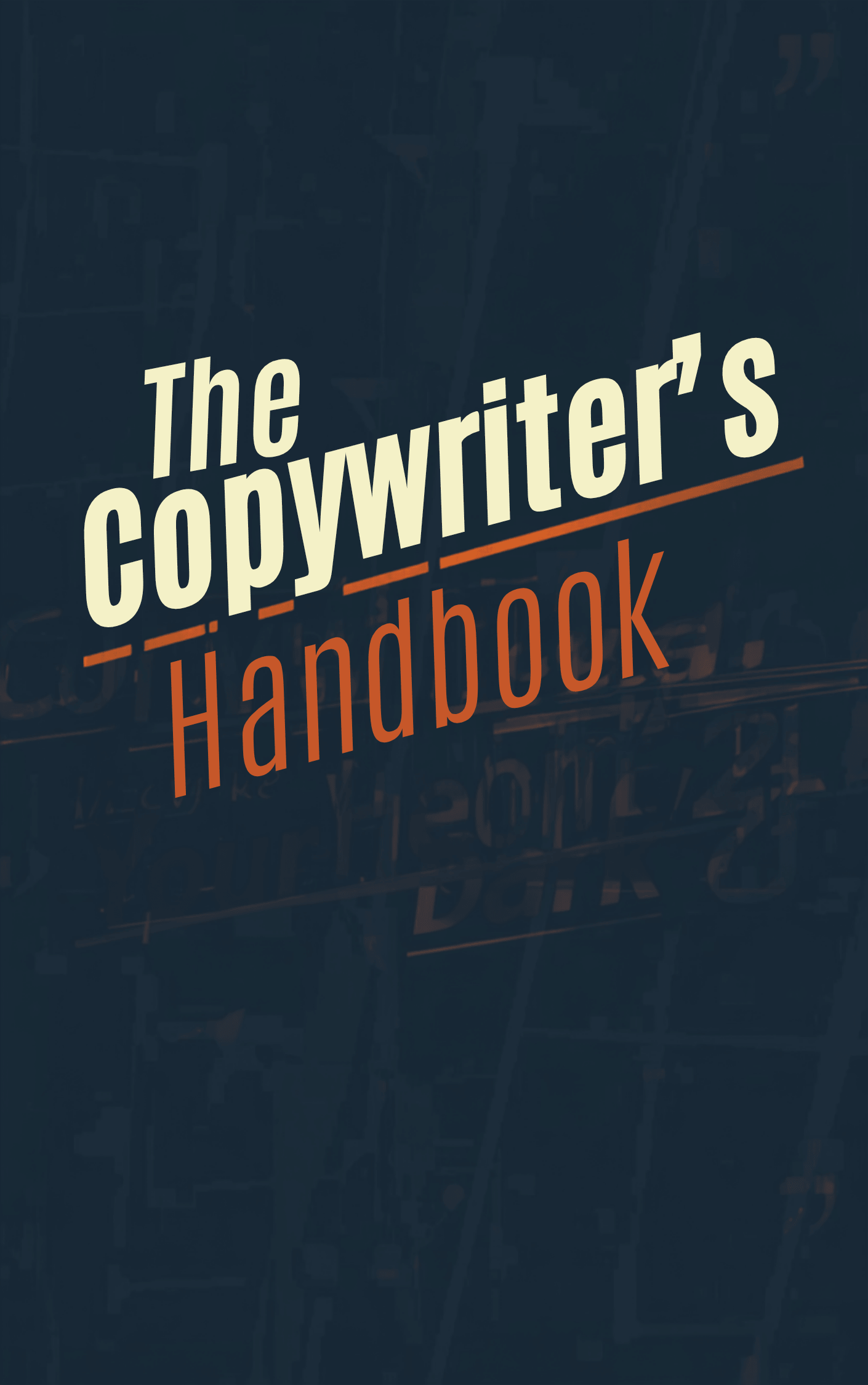
This The Copywriter's Handbook Book Summary covers the key ideas, lessons, and takeaways in about 20 minutes.
Want a Free Weekly Read?
Get a free summary every week straight to your mailbox.
Below is a preview of Sumizeit’s comprehensive human-written summary of The Copywriter's Handbook by Robert W. Bly. The full summary is 15-20 minutes long and covers the book’s key ideas in text, audio, visual, and video formats. Unlock the full 20 Minute Summary
Most people who write ads want to be liked. Bly thinks that instinct ruins more campaigns than bad grammar ever will. Copy has one job. Move a person from doing nothing to doing something, usually buying. Everything else is decoration.
He compares the copywriter to a salesperson who happens to work in print or pixels instead of face to face. A good salesperson knows the product cold. She knows what makes a buyer nervous, what makes a buyer curious, and what finally makes a buyer reach for a wallet. The writer has to know all of that too, except she gets one shot and no chance to answer objections in real time.
This is where Bly draws a hard line between advertising and art. An ad can be gorgeous and still fail. It can win awards, hang in a portfolio, and sell nothing. He warns writers against using their own taste as the measuring stick, because what you personally find clever has almost no connection to what makes a stranger buy. The scoreboard is response. Orders, leads, calls, signups. Judge the work by that or you are just guessing.
He also pushes back on the idea that persuasion is manipulation. Good copy studies how people actually think and feel, then tells a true story that lands with the right group of readers. You are not tricking anyone. You are translating a product into terms a busy human being can care about in four seconds.
Here is the distinction Bly keeps coming back to. A feature is a fact about the thing you sell. A benefit is what that fact does for the person reading. Buyers care about the second one almost exclusively.
His computer example makes it plain. Word processing capability is a feature. Getting your reports done faster and with less hassle is a benefit. Same product, two very different sentences, and only one of them gives a reader a reason to keep going.
The practical fix he recommends is almost mechanical. Make two columns. List every feature on the left. Next to each one, write what it actually gives the customer. Then build your copy out of the right column. Any feature you cannot translate into a benefit probably does not belong in the ad at all.
This sounds obvious until you read most marketing material, which is stuffed with specifications and silent on outcomes. Engineers and founders love their features because they built them. Readers do not care how the sausage gets made. They want to know if it tastes good and whether it will make dinner easier tonight.
If the headline fails, nothing else in the ad gets read. Bly treats this as settled. Your reader is scanning, distracted, and already ignoring a few hundred other messages that day. The headline has to stop the scan and promise something worth the next ten seconds.
What works, according to him, is a…
The Copywriter's Handbook is essential for anyone who writes to persuade: marketing professionals, copywriters, entrepreneurs, content creators, and business owners. Whether you're crafting ads, emails, landing pages, or social media posts, this book teaches you how to write copy that actually converts rather than just sounds good. If your words need to move people from inaction to action, this guide gives you the practical framework to make it happen.
In a world drowning in marketing messages, most copy fails because it talks about products instead of solving reader problems. Robert W. Bly cuts through the noise by teaching the timeless principles that separate copy that sells from copy that looks impressive but generates nothing. His method works across every channel—from print to email to social to video—making this book as relevant today as it was when first published, with updated guidance for modern platforms. Understanding these fundamentals gives you an unfair advantage in any competitive market.
Turn ideas from The Copywriter's Handbook into action with a short guided reflection: identify the biggest takeaway, connect it to your life, and commit to one step you can take in the next 24 hours.
The Copywriter's Handbook is a seminal work in the field of direct response copywriting, authored by Robert W. Bly, a veteran with over four decades of experience crafting copy that delivers measurable results. Bly’s extensive background in technical writing and business-to-business marketing imbues the book with a pragmatic rigor that distinguishes it from more stylistically driven or abstract treatments of advertising. First published in the 1980s and continually updated to reflect evolving media landscapes—from print to digital, email, and social platforms—the book remains a cornerstone for professionals seeking to master the craft of persuasive writing grounded in evidence and clear strategy.
Bly’s central argument is that copywriting is a disciplined craft governed by clear, teachable rules rather than an innate talent or an art form. The primary purpose of copy is singular and pragmatic: to move a reader from inertia to action, typically a purchase or lead generation. Success hinges on understanding the audience’s beliefs, desires, and emotions, translating product features into tangible benefits, and structuring arguments to mirror the buyer’s decision-making process. Bly insists on rigorous proof for every claim and emphasizes clarity and simplicity over cleverness. The book’s enduring insight is that effective copywriting is less about creative flourish and more about methodical persuasion aligned with human psychology and market realities.
The Copywriter's Handbook is essential reading for aspiring and experienced copywriters who seek a rigorous, no-nonsense methodology to improve the effectiveness of their writing. It is particularly valuable for those working in direct response marketing, B2B communications, and technical product promotion, where clarity, proof, and measurable outcomes are paramount. Marketing professionals, content strategists, and freelancers will also benefit from Bly’s comprehensive coverage of multiple media and his practical advice on client collaboration and project management. While creative marketers may find some prescriptions restrictive, the book’s foundational principles serve as a vital grounding in the craft of persuasive communication.
Try a few questions from the The Copywriter's Handbook quiz. Unlock the full summary for the full quiz and answers that will help the ideas stick.
Question 1 of 5
The summary states copy has one job: move a person from doing nothing to doing something, usually buying; everything else is decoration.
Question 2 of 5
The summary says Bly compares the copywriter to a salesperson who happens to work in print or pixels instead of face to face.
Question 3 of 5
The summary explains features describe the product, while benefits describe the reader's life; buyers care about benefits.
Question 4 of 5
The summary states the headline must stop the scan and promise something worth the next ten seconds because if it fails nothing else gets read.
Question 5 of 5
The summary lists Direct, Indirect, News, How to, Question, Command, Reason why, and Testimonial; rhyming headline is not among them.
The Copywriter's Handbook by Robert W. Bly is a practical guide to writing copy that sells. It teaches the fundamentals of persuasive writing across all channels—print ads, email, websites, social media, video—by showing you how to focus on reader benefits instead of product features, structure arguments that persuade, provide proof for claims, and use plain language that compels action. The book treats copywriting as a learnable craft with rules and methods, not a talent you either possess or don't.
The Copywriter's Handbook is essential for copywriters, marketing professionals, entrepreneurs, business owners, and anyone whose words need to move people to action. If you write ads, emails, landing pages, sales letters, social posts, or any content meant to persuade, this book gives you a proven framework that works. It's equally valuable for people learning copywriting professionally and for business leaders who want to understand why some marketing works and why most doesn't.
The core insights are: (1) Write about what the reader gains, not what the product contains; (2) Prove every claim with evidence because people don't believe advertisers; (3) Organize your argument to follow how people actually decide—grab attention, establish the problem, present the solution, back it up, and ask for action; (4) Understand your audience's beliefs, desires, and feelings before you write; and (5) Find the one honest thing your competitor can't say and build your entire case around it. Apply these principles consistently and your copy gets measurably better.
Features describe the product itself—what it has or does technically. Benefits describe what those features do for the reader's life—the outcome they experience. A word processor is a feature; finishing reports faster with less hassle is a benefit. Bly recommends listing every feature in one column, then writing what it actually gives the customer in the next column, and building your entire copy from that benefits column. Readers care almost exclusively about the second one.
People are naturally skeptical of advertising claims. Bly treats this not as an obstacle but as a fact of the job: your claims are guilty until proven innocent. Testimonials from real customers carry credibility your polished copy never will, while demonstrations, test results, research findings, industry awards, and track record all function as third-party validation. Every claim in your copy should be followed, somewhere, by a reason to believe it.
AIDA stands for Attention, Interest, Desire, Action—the path a buyer's mind actually travels. You grab attention with a strong headline or visual; build interest by talking about something the reader cares about; create desire by helping them picture life improved by your product; then ask for action while desire is warm. Bly shows how this maps across different media, with different elements carrying each beat, but any piece of copy should hit all four steps to be complete.
Each channel demands different adaptation because readers arrive in different moods and attention spans. Email subject lines are headlines with fewer characters and more competition, requiring specificity and interest; email bodies need to get to the point immediately with scannable chunks and asks at both top and bottom. Social posts need hooks to stop scrolling, useful content, and platform-specific voice—what works on LinkedIn fails on Twitter. The Copywriter's Handbook covers print, direct mail, email, websites, social, and video with specific guidance for each.
Sumizeit is a profitable Scomy LLC company based in Miami, Florida. It has been helping readers learn from nonfiction books for 7 years with expert-written summaries in text, audio, podcast, and video.
Join thousands of learners getting smarter every day
"Great experience. Detailed summaries. Loved the gamification feature. Makes learning fun. Good customer service. I recommend Sumizeit to anyone. You'll learn a lot."
"I always felt busy but still wanting to keep up with the book discussion in my friend group. This was a great supplement to help me keep reading the books I find fun while keeping up with important books."
"I love this website. Instead of scrolling social media, I find myself learning a lot. I use it everyday. I recommend this app for anyone who is too busy and wants to get up to speed with their favorite books."
Looking for a The Copywriter's Handbook Book Summary PDF you can save and revisit offline? Our The Copywriter's Handbook Book Summary PDF captures the book’s core ideas in a clean, printable format — the key frameworks, takeaways, and structure without the fluff. Download the The Copywriter's Handbook Book Summary PDF when you want a reference you can annotate, share with your team, or review on the go. Get your The Copywriter's Handbook Book Summary PDF from the download page below.
Download The Copywriter's Handbook Book Summary PDFReaders who explored The Copywriter's Handbook often enjoyed these titles next.
Popular Book Summaries at sumizeit, leading book summary app