
Question 1 of 10


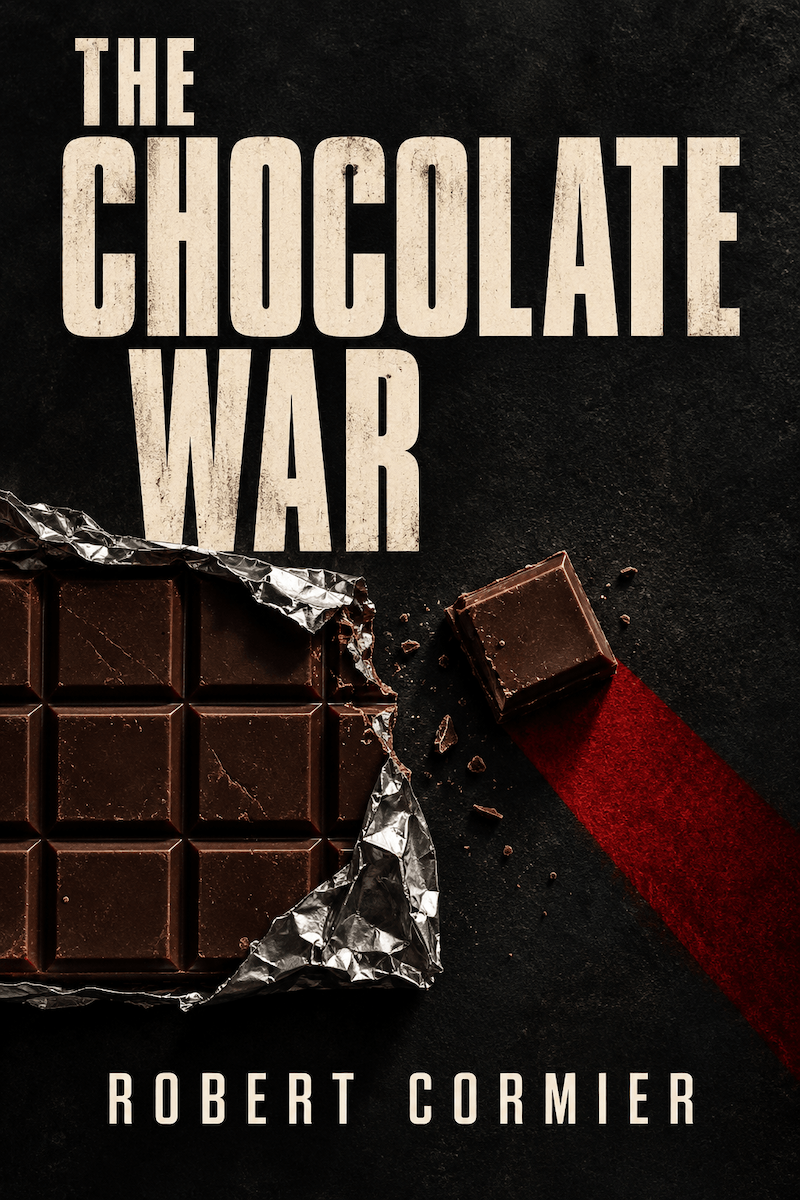
Prefer the print book? Buy on Amazon
As an Amazon Associate, Sumizeit earns from qualifying purchases.
Book Summary
The Chocolate War Book Summary
This The Chocolate War Book Summary covers the key ideas, lessons, and takeaways in about 20 minutes.
Short Description:
Cormier’s novel about a boy who defies a school’s bullies.
The Chocolate War is about what happens when a person refuses to go along with a system that depends on everyone going along. Cormier doesn't give Jerry a victory, because he wants you to see how power really works. Cruelty thrives when the people in charge look away and the people around them stay quiet to protect themselves. The book doesn't tell you that standing up is wrong. It tells you that standing up can cost everything, and that most of us let someone else pay that price.
Helps with these goals
Preview the The Chocolate War book summary
Below is a preview of Sumizeit’s comprehensive human-written summary of The Chocolate War by Robert Cormier. The full summary is 15-20 minutes long and covers the book’s key ideas in text, audio, visual, and video formats. Unlock the full 20 Minute Summary
Trinity is a Catholic boys' school in a New England town. The Brothers who run it teach the classes, coach the teams, and keep the discipline. On paper, that's the whole story. In practice, the school has a second set of rulers, and they are students.
The book opens on a football field. Jerry Renault, a freshman, is trying out for quarterback. A bigger player flattens him, and Jerry gets up and keeps going. That moment tells you what kind of kid he is before anyone says a word about him. He is quiet, stubborn, and carrying a lot. His mother recently died, and his father, a pharmacist who works long hours, barely speaks about it. Jerry's home is silent. He mostly goes through the days half numb, trying to find a way to be a person again.
The Vigils and Archie Costello
Trinity has a secret group called the Vigils. Its members are mostly seniors, and it works like a small, private government. The Vigils hand out "assignments" to other students. An assignment can be a prank, a humiliation, or a dare, and the target almost never says no. The group's real power is fear. Everyone knows someone who refused once.
The man behind the assignments is Archie Costello. He holds the title of assigner, and he is the smartest and meanest person in the room. Archie doesn't need to raise his voice or throw a punch. He studies people, finds what scares them, and uses it. He enjoys the game more than the result. Next to him, the Vigils' president, Carter, looks like a figurehead who exists to be seen. Obie, the group's secretary, is Archie's willing helper and also his unwilling conscience. Obie records everything, and the more he writes down, the less he likes it. There's also Emile Janza, a freshman bully with a mean streak, who gets pulled into Archie's orbit because Archie can always use someone cruel.
Early in the book, a Vigils assignment goes badly wrong. A student named Goober is pushed into helping wreck a teacher's classroom, and the damage is worse than anyone expected. The teacher, Brother Eugene, falls apart. Goober feels sick about it for the rest of the story. It's a small event, but it shows you what Archie's system really does to people.
Brother Leon and the chocolate sale
Trinity's headmaster is out sick, so Brother Leon, the assistant headmaster, is running the school. Leon is a nervous, ambitious man who badly wants to prove himself. He has a plan to do it. The school holds an annual fundraiser where students sell boxes of chocolates, and this year Leon wants a record. He sets a big quota and doubles the price on the box.
There's one problem. Selling that many chocolates will be hard. Leon knows he can't count on pure school spirit, so he makes a deal. He asks Archie to help.
Want the complete 20-minute summary?
- Full structured summary
- Video Summary
- Podcast Summary
- Audio summary
- Key takeaways
- Exercises
- Quiz
- Highlights and notes
- Ask the book with AI
Who should read The Chocolate War?
The Chocolate War is essential reading for young adults, educators, and anyone interested in understanding how power and conformity operate in institutional settings. This novel resonates with readers who have felt pressure to conform, questioned authority, or witnessed injustice in their own communities. It's particularly valuable for those seeking realistic portrayals of adolescent struggle without sanitized endings.
Why does The Chocolate War matter?
Published in 1974, The Chocolate War remains profoundly relevant because it exposes the mechanisms of institutional control and mob psychology that persist in schools and organizations today. Robert Cormier's unflinching portrayal of how cruelty spreads when authority figures enable it offers crucial insights into bullying, peer pressure, and the personal cost of resistance. The novel challenges readers to confront uncomfortable truths about complicity and the price of standing alone against systemic wrongdoing.
What are the key themes in The Chocolate War?
- The corrupting nature of institutional power and authority
- How conformity and peer pressure override individual conscience
- The cost of resistance and nonconformance
- Complicity through silence and inaction
- Grief, isolation, and vulnerability in adolescence
- The corruption of good intentions by those in power
- Mob mentality and crowd cruelty
How can you apply ideas from The Chocolate War?
- Recognize the warning signs of institutional pressure and how organizations use fear rather than legitimate authority to maintain control
- Identify moments when you're being pressured to conform and consciously examine whether compliance serves your values
- Understand the real costs of resistance before taking a stand, rather than romanticizing dissent as consequence-free
- Build support networks with others who share your values before facing institutional pressure, so you're not standing alone
- Practice moral courage in small ways before facing larger ethical challenges that demand courage
- Question authority figures who propose arrangements that harm others, especially those based on silence and looking the other way
- Recognize your own complicity when you benefit from systems that harm others, and actively choose whether to participate or resist
What common mistakes do readers make with The Chocolate War?
- Assuming that standing up for principle will be rewarded or that moral clarity guarantees positive outcomes
- Underestimating how thoroughly institutions will punish those who threaten their control systems
- Believing that individual resistance alone can transform corrupt systems without collective action
- Expecting support from friends when personal safety is threatened; misunderstanding the difficulty of solidarity under pressure
Sumizeit Exercises Apply what you've learned
Turn ideas from The Chocolate War into action with a short guided reflection: identify the biggest takeaway, connect it to your life, and commit to one step you can take in the next 24 hours.
What is the expert analysis of The Chocolate War?
Overview
The Chocolate War, authored by Robert Cormier in 1974, is a seminal work in young adult literature that transcends its genre through a stark exploration of power, conformity, and moral courage within the microcosm of a Catholic boys’ school. Cormier, a former journalist with a keen eye for social dynamics, crafts a narrative that is both a psychological study and a social critique. Its significance lies not only in its unflinching portrayal of adolescent cruelty and institutional complicity but also in its refusal to offer comforting resolutions, making it a provocative and enduring text in discussions of authority and resistance.
Core Thesis
At the heart of The Chocolate War is the argument that systems of power—whether institutional or social—rely fundamentally on the compliance of individuals, and that refusal to conform often incurs severe personal costs without guaranteeing systemic change. Cormier posits that cruelty and oppression flourish when those in authority deliberately look away and when peers choose self-preservation over solidarity. Through Jerry Renault’s solitary stand against the school’s coercive chocolate sale and the shadowy Vigils, the novel interrogates the price of dissent and the pervasive nature of fear as a tool of control.
Strengths
- Complex Characterization: Cormier’s characters, from the quietly defiant Jerry to the manipulative Archie Costello, are rendered with psychological depth, avoiding simplistic binaries of good and evil.
- Unvarnished Realism: The novel’s candid depiction of institutional corruption, peer pressure, and adolescent violence challenges sanitized narratives often found in young adult fiction.
- Atmospheric Setting: The insular world of Trinity School serves as a potent allegory for broader societal structures, with its dual layers of overt authority and covert domination.
- Philosophical Ambiguity: By denying Jerry a triumphant victory, Cormier invites readers to grapple with uncomfortable truths about power dynamics and the limits of individual agency.
- Enduring Relevance: The themes of conformity, bullying, and moral courage resonate across generations, maintaining the book’s place in educational and literary discussions.
Critiques & Counterarguments
- Deterministic Outlook: The novel’s bleak conclusion, while powerful, may be criticized for its implicit fatalism, suggesting that resistance is ultimately futile. This perspective contrasts with more optimistic philosophies of social change that emphasize collective action and systemic reform.
- Limited Female Representation: The all-male setting and absence of female characters restrict the narrative’s exploration of power dynamics to a specific gendered context, potentially overlooking how similar mechanisms operate differently across gender lines.
- Psychological Simplification: While characters are complex, some critics might argue that Archie’s near-sociopathic manipulation and the Vigils’ monolithic evil lack nuanced motivation, reducing institutional evil to individual villainy rather than systemic pathology.
- Opposing Views on Conformity: Social psychologists like Solomon Asch and Stanley Milgram have documented the power of conformity and obedience, but also the conditions under which individuals resist. The novel’s depiction of universal capitulation may underplay the variability of human responses to authority.
- Historical Context: Written in the early 1970s, the novel reflects specific cultural anxieties of its time, including distrust of institutions and authority, which may not fully capture contemporary complexities such as digital surveillance or intersectional identities.
Who Should Read This
The Chocolate War is essential reading for educators, psychologists, sociologists, and anyone interested in the dynamics of power, conformity, and resistance within social groups. It is particularly valuable for those working with adolescents or studying institutional behavior, as it provides a raw, unfiltered lens on bullying and moral courage. Readers who appreciate literature that challenges comfort zones and provokes critical reflection on societal complicity will find Cormier’s work both unsettling and enlightening.
Discussion questions for The Chocolate War Short questions you can actually use in a conversation
Frequently asked questions about the The Chocolate War book summary
What is The Chocolate War about?
The Chocolate War by Robert Cormier is a young adult novel about Jerry Renault, a freshman at Trinity, a Catholic boys' school where a secret student society called the Vigils controls school life through fear and assignments. When Jerry refuses to participate in the school's chocolate sale fundraiser, he becomes the target of institutional pressure and mob cruelty. The novel explores what happens when one person refuses to conform to a system that depends on universal compliance.
Who should read The Chocolate War?
The Chocolate War is essential for young adults navigating peer pressure and institutional authority, as well as educators and parents seeking to understand adolescent dynamics and institutional psychology. Anyone interested in how power operates through systems of control, or those who have questioned whether standing up for principle is worth the cost, will find this novel deeply relevant. The book challenges readers to confront uncomfortable truths about complicity and conformity.
What are the main takeaways from The Chocolate War?
The novel reveals that power in institutions operates through fear and complicity rather than force alone, that standing alone against systemic wrongdoing carries real consequences, and that most people will prioritize safety over solidarity. Robert Cormier demonstrates that cruelty thrives when authority figures enable it through inaction and when potential allies choose self-protection. The book refuses to offer comfort about individual resistance, instead showing how systems persist even when individuals are destroyed by opposing them.
Does Jerry Renault win in The Chocolate War?
No. Jerry does not win in The Chocolate War. He is brutally beaten in a rigged boxing match orchestrated by Archie Costello, physically and emotionally destroyed by the school's persecution. After the fight, Jerry tells his friend Goober to accept the universe rather than try to change it, suggesting he has internalized his defeat. The novel ends with the school's power structure intact and unchanged, offering no redemption for Jerry's stand.
Why is The Chocolate War controversial?
The Chocolate War has been challenged and banned in schools primarily because of its dark, unflinching portrayal of violence, sexual innuendo, and abuse of power among teenagers, combined with its refusal to provide a redemptive ending. The novel doesn't celebrate Jerry's resistance or punish those responsible for his harm, instead presenting a realistic picture of how institutional cruelty operates and persists. Critics argue the book is too bleak for young readers, while supporters praise this honesty about how the world actually works.
What role does Brother Leon play in The Chocolate War?
Brother Leon, the assistant headmaster, represents institutional authority corrupted by ambition. He strikes a deal with Archie Costello to use the Vigils' fear and control to boost chocolate sales, then deliberately looks the other way as Jerry is persecuted for refusing to comply. Leon's actions demonstrate how authority figures enable cruelty not through active participation but through complicit silence and inaction.
How does Robert Cormier portray the Vigils in The Chocolate War?
The Vigils function as a shadow government within Trinity, operating through fear, psychological manipulation, and assigned humiliations rather than physical force. Led by Archie Costello, an intelligent and cruel strategist, the Vigils maintain control by studying what frightens people and exploiting their vulnerabilities. The novel presents them as a microcosm of how power actually operates in institutions: through psychological dominance and the complicity of those who benefit from the system.
About Sumizeit
Sumizeit is a profitable Scomy LLC company based in Miami, Florida. Our founders, Clemens Raemy and Weina Scott, are successful entrepreneurs with several exits. Sumizeit is a popular book summary app / micro learning app used by busy professionals and entrepreneurs with over 2,500 non-fiction book summaries and 10,000 podcast summaries in text, audio, visual, podcast, and video format. We also have stellar retention tools to make ideas stick - such as flashcards with spaced repetition, quizzes, streaks, highlighting and notes, daily challenges, riddles, mini-courses, meditation, and more. You won't only learn the idea, but also remember it. Over 90% of our users change their habits with Sumizeit.
Upgrade Now
Here's why readers love Sumizeit
Join thousands of learners getting smarter every day
"Great experience. Detailed summaries. Loved the gamification feature. Makes learning fun. Good customer service. I recommend Sumizeit to anyone. You'll learn a lot."
"I always felt busy but still wanting to keep up with the book discussion in my friend group. This was a great supplement to help me keep reading the books I find fun while keeping up with important books."
"I love this website. Instead of scrolling social media, I find myself learning a lot. I use it everyday. I recommend this app for anyone who is too busy and wants to get up to speed with their favorite books."
The Chocolate War Book Summary PDF
Looking for a The Chocolate War Book Summary PDF you can save and revisit offline? Our The Chocolate War Book Summary PDF captures the book’s core ideas in a clean, printable format — the key frameworks, takeaways, and structure without the fluff. Download the The Chocolate War Book Summary PDF when you want a reference you can annotate, share with your team, or review on the go. Get your The Chocolate War Book Summary PDF from the download page below.
Download The Chocolate War Book Summary PDFPeople also liked these summaries
Readers who explored The Chocolate War often enjoyed these titles next.


Ready to read the whole thing?
- Full structured summary
- Video Summary
- Podcast Summary
- Audio summary
- Key takeaways
- Exercises
- Quiz
- Highlights and notes
- Ask the book with AI
Featured Book Titles
Popular Book Summaries at sumizeit, leading book summary app
Atomic Habits Book Summary Rich Dad Poor Dad Book Summary The Four Agreements Book Summary The 48 Laws of Power Book Summary When Breath Becomes Air Book Summary Think and Grow Rich Book Summary