
Question 1 of 10


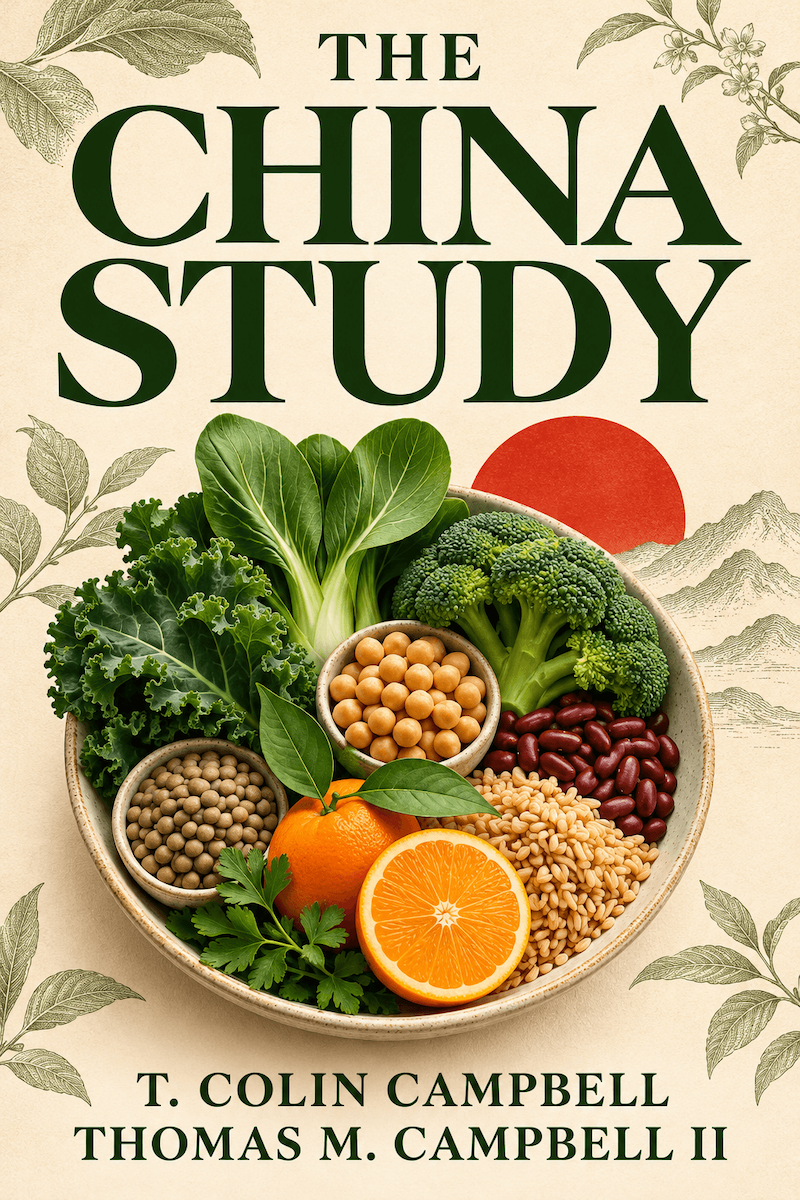
Prefer the print book? Buy on Amazon
As an Amazon Associate, Sumizeit earns from qualifying purchases.
Book Summary
The China Study Book Summary
This The China Study Book Summary covers the key ideas, lessons, and takeaways in about 20 minutes.
Short Description:
A father and son argue that plant foods prevent disease and animal foods cause it
The Campbells want you to treat food as the strongest medicine you have and to judge it by your whole eating pattern, not by single nutrients or marketing claims. Their central argument is that whole, unrefined plant foods can prevent and often reverse the diseases that kill most Americans, while animal foods drive those diseases, and a web of industry money, political pressure, thin medical training, and shrinking academic freedom keeps that message quiet. They admit nutrition can't offer proof, and critics have raised fair questions about correlation versus causation, about how well rat studies carry over to people, and about how much weight a few small trials can bear. So the sensible way to read the book is as a case built from evidence for you to weigh, ideally with your own doctor, and then to test for yourself, perhaps with one month of eating this way.
Helps with these goals
Preview the The China Study book summary
Below is a preview of Sumizeit’s comprehensive human-written summary of The China Study by T. Colin Campbell and Thomas M. Campbell. The full summary is 15-20 minutes long and covers the book’s key ideas in text, audio, visual, and video formats. Unlock the full 20 Minute Summary
Americans love diets. We spend billions on them and still rank among the heaviest and sickest people on earth. The Campbells say the usual villains, sugar and fat, aren't the real story. They point to animal foods instead. Meat, fish, eggs, and dairy, in their view, push up your odds of obesity, diabetes, heart disease, cancer, and autoimmune illness. A whole foods, plant based diet, which they shorten to WFPB, can prevent those diseases and in some cases reverse them.
The book does two things. It lays out the research behind that claim, and it explains why most of us have never heard it. The name comes from a huge project run by Cornell, Oxford, and the Chinese Academy of Preventive Medicine, which compared diet and disease across rural China. The authors add more than 800 peer reviewed studies and four decades of Campbell's own lab work.
What do you get if you follow the plan? The authors promise weight loss, a longer life, more energy, lower cholesterol and blood pressure, fewer surgeries, and lower risk of heart disease, cancer, diabetes, autoimmune disease, Alzheimer's, and osteoporosis. The advice never changes from one disease to the next. Eat more plants and skip the animal foods.
What the diet actually means
"Whole" means food in its least processed form. Eat the potato, not the chips. Swap white pasta for whole grain. "Plant based" means no meat, fish, dairy, or eggs, and lots of fruit, vegetables, and grains, which bring fiber and antioxidants.
If it's that simple, why are we so lost? The authors give two answers. The health industry wants profit, so real findings get buried under fads, pills, and marketing. And we're sure we know more than we do. They list myths they want to knock down. Synthetic chemicals aren't the top cause of cancer. Genes don't decide most deaths from the ten leading killers. Vitamin and mineral pills don't protect you. Your doctor probably knows little about nutrition. And low fat milk and lean meat aren't health foods.
Where the research came from
Campbell spent ten years in the Philippines on a project funded by the US Agency for International Development. The mission was to fight child malnutrition by getting kids to eat more protein, since everyone believed protein shortage caused it. Peanuts looked like the easy answer because they grow nearly anywhere. The trouble was aflatoxin, a mold toxin in the local peanuts and one of the strongest carcinogens known.
Then came a surprise. Filipino children were getting liver cancer, a disease that's rare in kids, and some died before turning 10. The sick ones weren't the most malnourished. They came from the richest families, the ones eating the most animal protein. That ran against everything medicine taught.
Campbell soon read an Indian study on rats. Both groups got aflatoxin. One ate a 20% protein diet, close to a typical Western diet, and the other ate 5%. Every rat on the 20% diet showed liver cancer signs.
Want the complete 20-minute summary?
- Full structured summary
- Video Summary
- Podcast Summary
- Audio summary
- Key takeaways
- Exercises
- Quiz
- Highlights and notes
- Ask the book with AI
Who should read The China Study?
The China Study is for anyone concerned about preventing or reversing chronic diseases like heart disease, diabetes, cancer, and obesity. It's particularly valuable for people interested in understanding the scientific evidence behind plant-based nutrition and those skeptical of conventional medical and dietary advice.
Why does The China Study matter?
Despite spending more on healthcare than any other nation, Americans remain among the sickest and heaviest people globally. This book presents decades of research suggesting that the foods we eat—not genetics or bad luck—drive most chronic diseases, and that changing diet can prevent and even reverse these conditions without drugs or surgery.
What are the key themes in The China Study?
- Whole plant-based foods prevent and can reverse chronic disease
- Animal products are linked to obesity, heart disease, cancer, and diabetes
- Industry profit motives suppress nutrition research and shape health policy
- Medical education and practice lack adequate nutrition training
- Reductionist science focusing on single nutrients misleads the public
- Genes determine a small fraction of disease risk; diet and lifestyle matter far more
How can you apply ideas from The China Study?
- Transition to a whole food, plant-based diet by eating unlimited amounts of fruits, vegetables, legumes, nuts, seeds, and whole grains while eliminating meat, fish, dairy, and eggs
- Monitor your progress with blood tests before and after dietary change to track cholesterol, blood pressure, blood sugar, and weight—most people see dramatic improvements within weeks
- Experiment with Asian and Middle Eastern cuisines, which naturally emphasize plant foods and spices, making the transition easier and more enjoyable
- Plan for five common adjustment hurdles: temporary digestive discomfort, learning new recipes, dining-out challenges, cultural meal expectations, and social pressure from family and friends
- Commit to a full month of complete plant-based eating rather than attempting moderation, since willpower diminishes with small amounts and cravings fade completely with full commitment
- Supplement only vitamin B12 and vitamin D (if sun-deprived); avoid other supplements that encourage poor eating habits and lack the nutrient synergy of whole foods
- Discuss dietary change with your doctor and seek out physicians trained in plant-based nutrition, since most doctors lack adequate nutrition training and may dismiss diet's power to reverse disease
What common mistakes do readers make with The China Study?
- Assuming you need animal protein for strength or to build muscle, when plant proteins provide all essential amino acids and plants build stronger, healthier bodies when eaten in variety
- Following a vegan diet that relies on processed plant-based junk foods like refined pasta, chips, and vegan desserts instead of whole plant foods, which negates all health benefits
- Attempting moderation by eating small amounts of animal products, which requires more willpower and maintains cravings compared to complete elimination after one month
- Focusing on individual nutrients like fat or cholesterol rather than eating whole foods, which leads to confusion from contradictory studies and marketing claims based on isolated research
Sumizeit Exercises Apply what you've learned
Turn ideas from The China Study into action with a short guided reflection: identify the biggest takeaway, connect it to your life, and commit to one step you can take in the next 24 hours.
What is the expert analysis of The China Study?
Overview
The China Study, authored by T. Colin Campbell and Thomas M. Campbell II, stands as a landmark work at the intersection of nutrition science, public health, and chronic disease prevention. T. Colin Campbell, a distinguished biochemist with over four decades of research experience at Cornell University, brings unparalleled scientific authority, while his son Thomas, a medical doctor, complements the narrative with clinical insight and practical application. The book’s significance lies in its comprehensive synthesis of epidemiological data from the expansive China Study project—collaboratively conducted by Cornell, Oxford, and the Chinese Academy of Preventive Medicine—alongside decades of experimental and clinical research. It challenges prevailing dietary paradigms by positing that whole-food, plant-based nutrition is fundamental to preventing and even reversing many chronic diseases that dominate Western morbidity and mortality profiles.
Core Thesis
The central argument of The China Study is that diets rich in animal-based proteins and fats are primary drivers of chronic illnesses such as heart disease, cancer, diabetes, and autoimmune disorders. Conversely, a whole foods, plant-based (WFPB) diet—emphasizing minimally processed fruits, vegetables, legumes, whole grains, and nuts—provides protective nutrients, antioxidants, and fiber that can prevent and often reverse these diseases. The authors contend that the entrenched consumption of animal products is perpetuated not by scientific consensus but by a complex web of industrial interests, political influence, medical education deficiencies, and reductionist research approaches that obscure the holistic impact of diet on health.
Strengths
- Comprehensive Integration of Data: The book masterfully weaves together epidemiological findings from the China Study with extensive peer-reviewed research and long-term animal studies, providing a robust multidisciplinary foundation.
- Challenging Conventional Wisdom: It provocatively reexamines entrenched beliefs about protein quality, fat, and nutrient supplementation, encouraging readers to question the status quo and consider the broader implications of dietary patterns.
- Holistic Perspective: By emphasizing whole foods over isolated nutrients, the authors advocate for a systems-based understanding of nutrition that aligns with contemporary calls for integrative health approaches.
- Clarity and Accessibility: Despite the complexity of biochemical and epidemiological evidence, the narrative remains accessible, empowering readers to make informed dietary choices.
- Addressing Institutional Barriers: The critique of industry influence, government policy, and medical education highlights systemic obstacles to public health progress, adding a socio-political dimension often absent in nutrition literature.
Critiques & Counterarguments
- Correlation Versus Causation: While the China Study’s epidemiological data reveal strong associations between animal protein consumption and disease, critics argue that observational studies cannot definitively establish causality, and confounding lifestyle factors may play a significant role.
- Generalizability of Animal Studies: The extrapolation from rat models to human physiology, particularly regarding casein’s role in cancer promotion, remains contentious. Human metabolism and disease etiology are more complex, and some scholars caution against overreliance on such models.
- Reductionism Versus Holism Debate: The authors critique nutrient-centric research, yet some reductionist studies have yielded valuable mechanistic insights. Balancing both approaches may be necessary rather than dismissing one entirely.
- Opposing Dietary Schools: Competing nutritional frameworks, such as Mediterranean, low-carbohydrate, or even certain Paleo diets, present evidence of cardiovascular and metabolic benefits, challenging the universality of the WFPB prescription.
- Practicality and Adherence: The book acknowledges but perhaps underestimates cultural, social, and psychological barriers to adopting strict plant-based diets, which may limit real-world applicability and long-term adherence.
Who Should Read This
The China Study is essential reading for health professionals, nutritionists, researchers, and informed laypersons seeking a rigorous, evidence-based critique of modern dietary patterns and their health consequences. It appeals especially to those interested in preventive medicine, chronic disease management, and the socio-political dimensions of food systems. Readers open to reexamining conventional dietary dogmas and willing to engage with complex scientific data will find it both challenging and enlightening. Additionally, individuals considering a plant-based lifestyle for health or ethical reasons will benefit from its comprehensive rationale and practical guidance.
Discussion questions for The China Study Short questions you can actually use in a conversation
Frequently asked questions about the The China Study book summary
What is The China Study about?
The China Study by T. Colin Campbell and Thomas M. Campbell presents evidence that whole plant-based foods prevent and can reverse chronic diseases like heart disease, diabetes, cancer, and obesity, while animal products drive these diseases. The book combines findings from a massive epidemiological study of rural Chinese populations with Campbell's decades of laboratory research and hundreds of peer-reviewed studies to argue that diet—not genetics or bad luck—determines most disease risk.
Who should read The China Study?
The China Study is essential for anyone with chronic health conditions, anyone interested in disease prevention, and anyone skeptical of conventional medical and dietary advice. It's particularly valuable for people frustrated with fad diets, those managing heart disease or diabetes, parents concerned about their children's health, and anyone curious about why nutrition is absent from medical training and health policy.
What are the main takeaways from The China Study?
The main takeaways are: whole plant-based foods prevent and reverse most chronic disease; animal products—especially dairy—drive obesity, heart disease, cancer, and autoimmune disease; genes determine only 2-3% of disease risk; industry money, weak government policy, and poor medical training suppress evidence supporting plant-based nutrition; and adopting a plant-based diet is the most powerful health intervention available, often producing dramatic improvements within weeks.
Does The China Study prove that meat and dairy cause disease?
The China Study does not claim proof, which is impossible in nutrition science where diet, lifestyle, and genetics are deeply entangled. Instead, it presents a mountain of evidence—from epidemiological studies, laboratory research, and clinical trials—all pointing the same direction. The strongest evidence comes from clinical trials showing that plant-based diets can reverse advanced heart disease and diabetes, making the practical case powerful even without absolute proof of causation.
Can you reverse disease with a plant-based diet?
Yes, according to The China Study, heart disease and Type 2 diabetes can be reversed with a plant-based diet; cancer can be stopped at the promotion stage and prevented in the first place; and many other chronic conditions improve dramatically. However, autoimmune diseases are mostly irreversible, though diet can slow progression. The book documents cases where patients eliminated the need for insulin, medications, and even bypass surgery through diet alone.
What does WFPB mean and what can you eat on this diet?
WFPB stands for Whole Food, Plant-Based. You can eat unlimited amounts of fruits, vegetables, legumes (beans, lentils, peas), nuts, seeds, and whole grains, including whole grain bread and pasta. Avoid meat, poultry, fish, dairy, eggs, refined carbohydrates like white bread and sugary foods, and added oils. The diet is simple—no calorie counting or macro calculations—and you can eat as much as you want of whole plant foods.
Is The China Study scientifically credible?
The China Study draws on the China-Cornell-Oxford research project involving 6,500 people, T. Colin Campbell's 40 years of laboratory work, over 800 peer-reviewed studies, and major clinical trials by respected physicians like Caldwell Esselstyn and Dean Ornish. Campbell holds a doctorate and is Professor Emeritus of Nutritional Biochemistry at Cornell University who won the American Institute for Cancer Research's Research Achievement award. However, critics note limitations: some findings are correlational rather than causally proven, rat studies don't always predict human outcomes, and the book itself acknowledges that absolute proof is impossible in nutrition science.
Why haven't doctors told me about this research?
The China Study identifies four reasons most doctors don't recommend plant-based diets: medical schools teach only about 20 hours of nutrition, often funded by food companies; doctors learn from drug company marketing that there's a pill for every problem; many believe patients won't follow dietary advice and prefer prescribing medications; and powerful industries—dairy, meat, pharmaceutical—have financial incentives to suppress nutrition research and influence government, medical education, and academia to protect their profits.
About Sumizeit
Sumizeit is a profitable Scomy LLC company based in Miami, Florida. Our founders, Clemens Raemy and Weina Scott, are successful entrepreneurs with several exits. Sumizeit is a popular book summary app / micro learning app used by busy professionals and entrepreneurs with over 2,500 non-fiction book summaries and 10,000 podcast summaries in text, audio, visual, podcast, and video format. We also have stellar retention tools to make ideas stick - such as flashcards with spaced repetition, quizzes, streaks, highlighting and notes, daily challenges, riddles, mini-courses, meditation, and more. You won't only learn the idea, but also remember it. Over 90% of our users change their habits with Sumizeit.
Upgrade Now
Here's why readers love Sumizeit
Join thousands of learners getting smarter every day
"Great experience. Detailed summaries. Loved the gamification feature. Makes learning fun. Good customer service. I recommend Sumizeit to anyone. You'll learn a lot."
"I always felt busy but still wanting to keep up with the book discussion in my friend group. This was a great supplement to help me keep reading the books I find fun while keeping up with important books."
"I love this website. Instead of scrolling social media, I find myself learning a lot. I use it everyday. I recommend this app for anyone who is too busy and wants to get up to speed with their favorite books."
The China Study Book Summary PDF
Looking for a The China Study Book Summary PDF you can save and revisit offline? Our The China Study Book Summary PDF captures the book’s core ideas in a clean, printable format — the key frameworks, takeaways, and structure without the fluff. Download the The China Study Book Summary PDF when you want a reference you can annotate, share with your team, or review on the go. Get your The China Study Book Summary PDF from the download page below.
Download The China Study Book Summary PDFPeople also liked these summaries
Readers who explored The China Study often enjoyed these titles next.



Ready to read the whole thing?
- Full structured summary
- Video Summary
- Podcast Summary
- Audio summary
- Key takeaways
- Exercises
- Quiz
- Highlights and notes
- Ask the book with AI
Featured Book Titles
Popular Book Summaries at sumizeit, leading book summary app
Atomic Habits Book Summary Rich Dad Poor Dad Book Summary The Four Agreements Book Summary The 48 Laws of Power Book Summary When Breath Becomes Air Book Summary Think and Grow Rich Book Summary