
Question 1 of 10


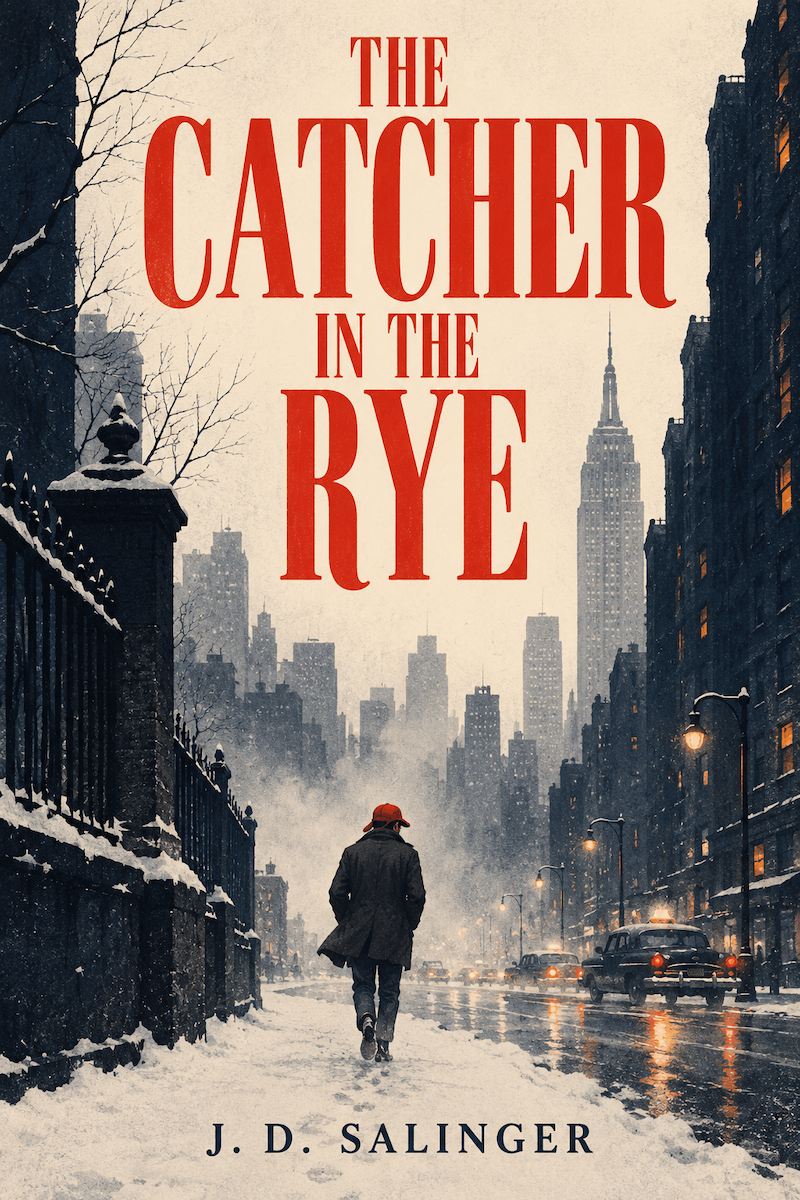
Prefer the print book? Buy on Amazon
As an Amazon Associate, Sumizeit earns from qualifying purchases.
Book Summary
The Catcher in the Rye Book Summary
This The Catcher in the Rye Book Summary covers the key ideas, lessons, and takeaways in about 20 minutes.
Short Description:
Holden Caulfield’s three days alone in New York City
The Catcher in the Rye is about a boy who is grieving and doesn't know how to say so, so he turns his pain into judgment and runs from everyone who might help him. Holden calls the adult world phony because he can't stand how it forgets people like Allie, and because he is terrified of becoming one of those adults himself. His dream of catching children at the edge of a cliff is really a wish to save the innocence he lost when his brother died. The book's quiet answer is that you can't stop anyone from growing up, and that trying to freeze people in time only keeps you stuck. Real healing starts when Holden watches his sister ride the carousel and finally lets her reach for the gold ring on her own.
Helps with these goals
Preview the The Catcher in the Rye book summary
Below is a preview of Sumizeit’s comprehensive human-written summary of The Catcher in the Rye by J. D. Salinger. The full summary is 15-20 minutes long and covers the book’s key ideas in text, audio, visual, and video formats. Unlock the full 20 Minute Summary
Holden Caulfield is sixteen, and he tells this story from a rest home in California. He doesn't say exactly what's wrong with him. He only says he got really run down and was sent there to recover. What he does tell you is what happened to him over a few days the previous December, when he was kicked out of school and wandered around New York City by himself.
Holden talks like a teenager who has no filter. He swears, he exaggerates, he rambles, and he calls almost everything and everyone "phony." That word is the center of his world. To Holden, phony means fake, showy, and dishonest, and he sees it everywhere. The voice is funny and often unfair, but underneath it you can hear a kid who is hurting.
Pencey Prep and the history teacher
The book opens at Pencey Prep, a boarding school in Pennsylvania. Holden is about to be expelled. He is failing four of his five classes, and this is not the first school he has flunked out of. On the day of the big football game, he skips it and stands on a hill overlooking the field, feeling disconnected from everyone below him. He has also just lost the fencing team's equipment by leaving it on a subway, so his teammates are furious with him too.
He goes to say goodbye to his history teacher, Mr. Spencer, who is old and sick with the flu. Spencer means well, but he gives Holden a lecture about taking life seriously and reads Holden's terrible exam answer aloud. He says life is a game you have to play by the rules. Holden thinks that's fine for people on the winning side. Holden leaves feeling worse, and he's relieved to get out of there.
Ackley, Stradlater, and the fight
Back in the dorm, Holden deals with two very different neighbors. Ackley is the pimply kid next door who drops by uninvited, picks at his nails, and never takes a hint. Stradlater is Holden's roommate, a handsome and confident guy who is also, Holden suspects, a bit of a fraud who cares only about his looks. Stradlater has a date that night with a girl named Jane Gallagher, and Holden knows her. They spent a summer as neighbors and used to play checkers. Jane always kept her kings in the back row, which Holden found strange and sweet.
Stradlater asks Holden to write an English essay for him while he's out. Holden writes about his younger brother Allie's baseball glove, which had poems written all over it in green ink so Allie would have something to read in the field. Allie died of leukemia when he was eleven. On the night he died, Holden was so upset that he slept in the garage and smashed all the windows with his fist. His hand never healed properly. This is the real wound behind the whole book, though Holden rarely says so directly.
When Stradlater comes back, he hates the essay…
Want the complete 20-minute summary?
- Full structured summary
- Video Summary
- Podcast Summary
- Audio summary
- Key takeaways
- Exercises
- Quiz
- Highlights and notes
- Ask the book with AI
Who should read The Catcher in the Rye?
The Catcher in the Rye speaks to anyone grappling with adolescence, loss, or the challenge of growing up in a world that feels dishonest. Readers seeking to understand teenage alienation, grief, and the search for authenticity will find Holden's voice both deeply relatable and painfully honest. It resonates especially with those who have experienced sudden trauma or struggled to trust the adults around them.
Why does The Catcher in the Rye matter?
Published in 1951, this novel remains essential because it captures the universal struggle between childhood innocence and adult compromise in unforgettable terms. Holden's critique of phoniness and his desperate desire to protect what matters most speak to contemporary anxieties about authenticity and belonging. The book offers profound insights into how unprocessed grief shapes behavior and how letting go is necessary for healing and growth.
What are the key themes in The Catcher in the Rye?
- Grief and loss hidden beneath cynicism
- The loss of innocence and fear of adulthood
- Phoniness versus authenticity
- Isolation and the failure to connect
- The protective impulse and its limits
- How trauma shapes perception and behavior
How can you apply ideas from The Catcher in the Rye?
- Recognize when your criticism of others reflects your own unhealed wounds rather than legitimate moral concerns
- Notice patterns of defensive lying in your own life and consider what you're protecting yourself from feeling
- Seek out genuine mentors and be honest about what you need, rather than testing adults with hostility
- Accept that you cannot shield loved ones from life's difficulties—your job is to support them, not control their experiences
- Look for small moments of authentic connection as antidotes to isolation and cynicism
- When tempted to retreat into fantasy or avoidance, pause and ask what reality you're trying to escape
- Practice vulnerability by admitting what you actually care about rather than hiding behind sarcasm and judgment
What common mistakes do readers make with The Catcher in the Rye?
- Assuming Holden's cynicism reflects the book's actual values rather than recognizing it as a symptom of his breakdown
- Missing the grief beneath Holden's judgment and taking his criticisms of other characters at face value
- Treating the ending as redemptive when it remains deliberately ambiguous about whether Holden has actually changed
- Overlooking the specific cultural and historical context of 1951 and seeing Holden as a timeless rebel rather than a product of his era
Sumizeit Exercises Apply what you've learned
Turn ideas from The Catcher in the Rye into action with a short guided reflection: identify the biggest takeaway, connect it to your life, and commit to one step you can take in the next 24 hours.
What is the expert analysis of The Catcher in the Rye?
Overview
The Catcher in the Rye, penned by J. D. Salinger and published in 1951, stands as a seminal work in American literature. Its significance lies not only in its raw and candid portrayal of adolescent turmoil but also in its profound exploration of themes such as innocence, identity, and alienation. Salinger, a reclusive figure who drew heavily on his personal experiences, crafted a narrative voice that has resonated across generations, capturing the complexities of teenage angst with unparalleled authenticity.
Core Thesis
At its heart, The Catcher in the Rye articulates a central insight into the human condition through the eyes of Holden Caulfield, a grieving and disillusioned adolescent. The novel posits that the transition from childhood innocence to adult experience is fraught with pain and loss, and that attempts to arrest this natural progression—symbolized by Holden’s fantasy of being the “catcher in the rye” who saves children from falling off a cliff—are ultimately futile. The narrative suggests that true healing and maturity begin when one accepts the inevitability of growth and the imperfections of the adult world.
Strengths
- Authentic Narrative Voice: Salinger’s use of Holden’s colloquial, unfiltered, and often contradictory voice lends the novel an immediacy and intimacy that captures the adolescent psyche with remarkable fidelity.
- Psychological Depth: The novel deftly explores complex emotional states such as grief, loneliness, and alienation without resorting to melodrama, offering nuanced insights into the struggles of mental health and identity formation.
- Symbolism and Imagery: Recurring motifs—such as the ducks in Central Park, the broken record, and the carousel—serve as powerful metaphors for change, loss, and acceptance, enriching the text’s thematic resonance.
- Timeless Themes: The exploration of innocence, authenticity, and the critique of “phoniness” transcends its postwar context, maintaining relevance in contemporary discussions about societal conformity and personal integrity.
- Literary Influence: The book’s stylistic innovations and thematic concerns have profoundly influenced both literary fiction and cultural perceptions of adolescence.
Critiques & Counterarguments
- Over-Reliance on Subjectivity: The novel’s deep immersion in Holden’s perspective, while a strength, also limits the scope of understanding. His judgments of others as “phony” can seem one-dimensional, potentially oversimplifying the complexity of adult behavior and social dynamics.
- Idealization of Childhood Innocence: The romanticization of childhood as a pure, unblemished state may be critiqued from developmental psychology perspectives that view growth and change as essential and inherently valuable rather than loss-laden.
- Questionable Portrayal of Mental Health: While pioneering in its depiction of adolescent distress, the book skirts explicit engagement with clinical mental health frameworks, which modern readers might find lacking in nuance or therapeutic insight.
- Competing Views on Maturity: Philosophical traditions, such as existentialism and pragmatism, might challenge Holden’s resistance to adulthood by emphasizing the necessity of embracing freedom and responsibility rather than retreating from them.
- Historical Context and Dated Elements: Some cultural references and social attitudes embedded in the text reflect the 1950s milieu and may not fully align with contemporary understandings of gender, race, and class, potentially limiting its universality.
Who Should Read This
The Catcher in the Rye is essential reading for those interested in the psychological and philosophical dimensions of adolescence, identity, and societal critique. It appeals to literary scholars, psychologists, educators, and thoughtful readers who appreciate character-driven narratives that probe the tensions between innocence and experience. Moreover, anyone grappling with the universal challenges of growing up or seeking a profound exploration of grief and authenticity will find Holden Caulfield’s journey both illuminating and deeply affecting.
Discussion questions for The Catcher in the Rye Short questions you can actually use in a conversation
Frequently asked questions about the The Catcher in the Rye book summary
What is The Catcher in the Rye about?
The Catcher in the Rye by J. D. Salinger is the story of sixteen-year-old Holden Caulfield, who wanders New York City alone after being expelled from his boarding school, struggling with grief, alienation, and his inability to accept the adult world's phoniness. Through his cynical observations and desperate attempts to find authentic connection, the novel explores how unprocessed trauma shapes behavior and how we must eventually accept that we cannot protect others—or ourselves—from growing up.
Who should read The Catcher in the Rye?
This novel is essential for anyone seeking to understand adolescent psychology, grief, and the struggle for authenticity in an imperfect world. Readers who have experienced loss, alienation, or difficulty trusting adults will find Holden's voice profoundly relatable, while those interested in literary classics and character-driven narratives will appreciate Salinger's complex portrayal of a boy in crisis.
What are the main takeaways from The Catcher in the Rye?
The central insight is that Holden's harsh judgment of others masks his ungrieved loss of his brother Allie, and that his fantasy of protecting children from adulthood reflects an impossible desire to freeze time and prevent pain. The book teaches that healing requires accepting impermanence, letting go of control, and recognizing that the people we criticize are real and worth missing, even when they disappoint us.
Why does Holden call everyone phony?
Holden uses the word phony to describe anything he perceives as fake, showy, or dishonest in the adult world, but his constant criticism reveals deeper pain rather than genuine moral clarity. His dismissal of phoniness is a defense mechanism that allows him to keep his distance from people and avoid the vulnerability required for real connection, ultimately isolating him further.
What does the catcher in the rye symbolize?
Holden's vision of standing in a rye field to catch children before they fall off a cliff represents his desire to protect innocence and prevent the loss and disillusionment he experienced when his brother died. This fantasy is ultimately revealed as impossible and even harmful—the book's quiet message is that we must accept that people will reach for life's opportunities and sometimes fall, and that our job is to let them try.
What happened to Holden at the end of The Catcher in the Rye?
Holden refuses to reveal the full details, saying only that he went home, got sick, and was sent to a rest home in California where he tells this story. The ending remains deliberately ambiguous about whether he has genuinely changed or simply recovered enough to return to school, leaving readers to decide whether his experience at the carousel carousel truly shifted his perspective.
Why is The Catcher in the Rye considered important literature?
Published in 1951, the novel revolutionized how adolescent experience is portrayed in literature through its authentic teenage voice, complex exploration of grief and alienation, and unflinching examination of how trauma shapes behavior. Its themes of authenticity, belonging, and the painful transition to adulthood remain profoundly relevant, making it an enduring study of the human struggle to connect and grow.
About Sumizeit
Sumizeit is a profitable Scomy LLC company based in Miami, Florida. Our founders, Clemens Raemy and Weina Scott, are successful entrepreneurs with several exits. Sumizeit is a popular book summary app / micro learning app used by busy professionals and entrepreneurs with over 2,500 non-fiction book summaries and 10,000 podcast summaries in text, audio, visual, podcast, and video format. We also have stellar retention tools to make ideas stick - such as flashcards with spaced repetition, quizzes, streaks, highlighting and notes, daily challenges, riddles, mini-courses, meditation, and more. You won't only learn the idea, but also remember it. Over 90% of our users change their habits with Sumizeit.
Upgrade Now
Here's why readers love Sumizeit
Join thousands of learners getting smarter every day
"Great experience. Detailed summaries. Loved the gamification feature. Makes learning fun. Good customer service. I recommend Sumizeit to anyone. You'll learn a lot."
"I always felt busy but still wanting to keep up with the book discussion in my friend group. This was a great supplement to help me keep reading the books I find fun while keeping up with important books."
"I love this website. Instead of scrolling social media, I find myself learning a lot. I use it everyday. I recommend this app for anyone who is too busy and wants to get up to speed with their favorite books."
The Catcher in the Rye Book Summary PDF
Looking for a The Catcher in the Rye Book Summary PDF you can save and revisit offline? Our The Catcher in the Rye Book Summary PDF captures the book’s core ideas in a clean, printable format — the key frameworks, takeaways, and structure without the fluff. Download the The Catcher in the Rye Book Summary PDF when you want a reference you can annotate, share with your team, or review on the go. Get your The Catcher in the Rye Book Summary PDF from the download page below.
Download The Catcher in the Rye Book Summary PDFPeople also liked these summaries
Readers who explored The Catcher in the Rye often enjoyed these titles next.




Ready to read the whole thing?
- Full structured summary
- Video Summary
- Podcast Summary
- Audio summary
- Key takeaways
- Exercises
- Quiz
- Highlights and notes
- Ask the book with AI
Featured Book Titles
Popular Book Summaries at sumizeit, leading book summary app
Atomic Habits Book Summary Rich Dad Poor Dad Book Summary The Four Agreements Book Summary The 48 Laws of Power Book Summary When Breath Becomes Air Book Summary Think and Grow Rich Book Summary