


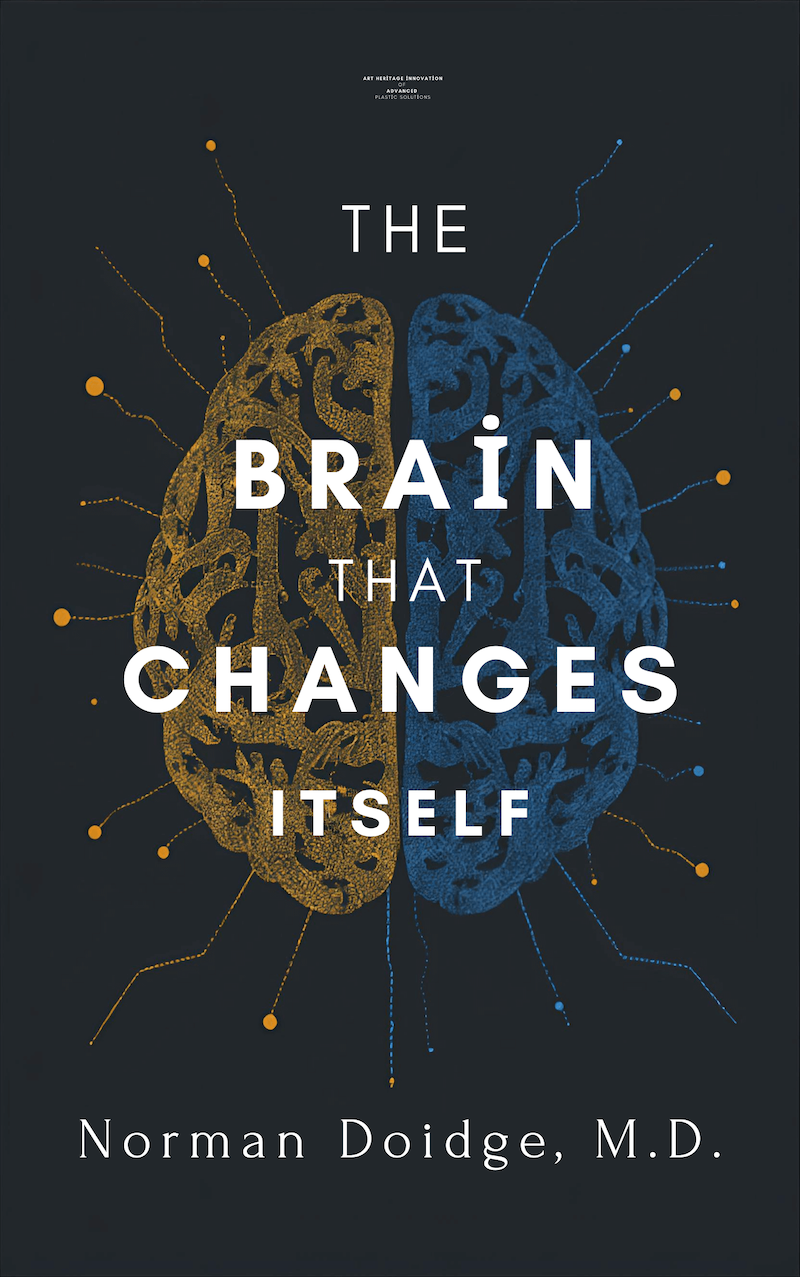
Prefer the print book? Buy on Amazon
As an Amazon Associate, Sumizeit earns from qualifying purchases.
The Brain That Changes Itself Book Summary
This The Brain That Changes Itself Book Summary covers the key ideas, lessons, and takeaways in about 20 minutes.
Short Description:
The Brain That Changes Itself proves brain plasticity enables lifelong change.
Neuroplasticity is a double-edged force—it strengthens whatever we repeatedly do. It can free us from limitation or reinforce dysfunction. The key is intentional practice. Change is not only possible—it is inevitable. The question is whether we shape our brains consciously or unconsciously.
The discovery of neuroplasticity invites a new model of human potential: we become what we repeatedly think, feel, and practice. The future of personal transformation lies in understanding and harnessing the biology of change.
Helps with these goals
Want a Free Weekly Read?
Get a free summary every week straight to your mailbox.
Preview the The Brain That Changes Itself book summary
Below is a preview of Sumizeit’s comprehensive human-written summary of The Brain That Changes Itself by Norman Doidge, M.D.. The full summary is 15-20 minutes long and covers the book’s key ideas in text, audio, visual, and video formats. Unlock the full 20 Minute Summary
For centuries, the dominant belief in neuroscience was that the brain was structurally immutable—that it matured in early childhood and then remained fixed for the rest of a person’s life. According to that outdated model, the only changes that occurred after development were degenerative ones: neurons died, brain cells eroded, and abilities steadily declined. Patients who suffered strokes or traumatic injuries were believed to have minimal chance of recovering lost functions. Those born with learning disabilities were expected to adapt around their limitations rather than overcome them. The prevailing message was clear: brain function was predetermined, and change was impossible.
Norman Doidge’s The Brain That Changes Itself dismantles this rigid view, introducing readers to the groundbreaking science of neuroplasticity, the discovery that the brain is capable of altering its own structure and function throughout life. Rather than being a static machine with preassigned parts working independently, the brain is a dynamic network that reorganizes itself in response to experience, training, injury, and thought. Doidge compiles cutting-edge scientific research with remarkable personal stories of individuals who recovered abilities once deemed permanently lost, illustrating the extraordinary adaptive power of the human nervous system.
Doidge’s central argument is that neuroplasticity is the most significant shift in the understanding of the brain since scientists first mapped the existence of neurons. His work shows that change is not only possible but constantly occurring. Our thoughts, habits, beliefs, and actions shape the neurological architecture that determines who we become.
Breaking the Myth of the Fixed Brain
Neuroscientists historically believed that once the brain completed its early development, it hardened into a final form. This assumption arose from observing that individuals with severe brain injuries rarely recovered lost functions. Doctors rarely saw dramatic improvement in stroke patients or trauma victims, so they concluded that brain cells could not regenerate or adapt. These observations led to the doctrine of localizationism, which held that particular cognitive or motor functions were permanently anchored to specific brain regions. If those regions were destroyed, the associated abilities were presumed lost forever.
Localizationism created a framework that treated the brain as a precisely engineered machine rather than a living, adaptive organism. Although localization has truth—certain regions specialize in certain tasks—the theory was interpreted too rigidly. Doidge explains that scientists concluded specialization meant exclusivity: that no other region could ever assume a lost function. Because neurological tools were limited centuries ago, this interpretation went unchallenged for generations.
Yet new research revealed that localization is fluid, not absolute. When a part of the brain is damaged, other regions can reroute signals, repurpose neurons, strengthen new pathways, and even develop entirely new neural circuitry. This discovery changed everything—from rehabilitation techniques to education, sports training, psychology, and the philosophy of human potential.
How Neuroplasticity Works at the Cellular Level
Doidge explains that neuroplastic change occurs through coordinated firing patterns among neurons, the brain’s signaling cells. Neural communication occurs through synapses—microscopic gaps across which neurons release chemicals called neurotransmitters.
Want the complete 20-minute summary?
- Full structured summary
- Video Summary
- Podcast Summary
- Audio summary
- Key takeaways
- Exercises
- Quiz
- Highlights and notes
- Ask the book with AI
Who should read The Brain That Changes Itself?
The Brain That Changes Itself is essential reading for anyone interested in personal growth, recovery, or understanding how the mind works. It appeals to people recovering from stroke or brain injury, students with learning disabilities, athletes seeking performance improvement, and those struggling with habits or mental health challenges. Anyone curious about the science of human potential will find Doidge's work transformative and deeply relevant.
Why does The Brain That Changes Itself matter?
For decades, neuroscience taught that the adult brain was fixed and unchangeable—a belief that limited medical treatment and human potential. Norman Doidge's groundbreaking exploration of neuroplasticity shatters this myth, revealing that the brain can rewire itself throughout life. This discovery fundamentally changes how we approach rehabilitation, education, mental health, and personal development, offering hope to millions once told their conditions were permanent.
What are the key themes in The Brain That Changes Itself?
- The brain's capacity to reorganize and rewire itself at any age
- How repeated thought, action, and practice physically reshape neural pathways
- The principle of competitive plasticity and the use-it-or-lose-it rule
- Mental practice and imagination as tools for neurological change
- The double-edged nature of neuroplasticity in building beneficial or harmful patterns
- Sensory substitution and the brain's ability to reassign functions across systems
- The role of intentional practice in overcoming disabilities and trauma
How can you apply ideas from The Brain That Changes Itself?
- Use mental visualization to improve athletic performance, musical skill, or cognitive abilities without requiring physical practice time
- Break destructive habits by consciously redirecting repetitive thought patterns and replacing them with constructive neural pathways through sustained practice
- Recover function after stroke or brain injury through constraint-induced therapy and intensive, repetitive retraining of damaged pathways
- Strengthen specific cognitive skills—such as reading, spatial reasoning, or memory—through targeted mental exercises and drills designed for your weakness
- Manage obsessive-compulsive disorder and anxiety by identifying unhelpful thought loops and systematically redirecting attention to interrupt their neural reinforcement
- Learn languages, musical instruments, or new skills more effectively by understanding that repetition literally builds the neural circuits required for mastery
- Optimize your environment and digital habits to support beneficial neuroplastic change rather than reinforce distraction, dependency, or cognitive decline
What common mistakes do readers make with The Brain That Changes Itself?
- Assuming that brain injuries or learning disabilities are permanent because the brain cannot change, when neuroplasticity offers genuine paths to recovery and improvement
- Believing that mental practice is less effective than physical practice, when visualization activates identical neural pathways and produces measurable skill improvement
- Underestimating the power of repetition and habit formation, thinking willpower alone can overcome patterns that have been neurologically reinforced through thousands of repetitions
- Failing to recognize that neuroplasticity amplifies whatever patterns you practice, so passive or unconscious repetition of unhelpful thoughts, behaviors, or media consumption strengthens neural pathways you may want to weaken
- Expecting quick transformation without sustained, intentional practice, when neuroplastic change requires consistent, repetitive engagement over time to rewire brain circuits
Sumizeit Exercises Apply what you've learned
Turn ideas from The Brain That Changes Itself into action with a short guided reflection: identify the biggest takeaway, connect it to your life, and commit to one step you can take in the next 24 hours.
What is the expert analysis of The Brain That Changes Itself?
Overview
The Brain That Changes Itself by Norman Doidge, M.D., stands as a landmark contribution to contemporary neuroscience literature. Doidge, a psychiatrist and psychoanalyst with a robust background in mental health and neurological research, synthesizes decades of scientific discovery with compelling clinical anecdotes to challenge the long-held dogma of a fixed, immutable brain. This work is significant not only for popularizing the concept of neuroplasticity but also for reframing our understanding of human potential, recovery, and cognitive development. By bridging rigorous science with accessible narrative, Doidge has made complex neurological phenomena comprehensible and hopeful to a broad audience, thus influencing fields as diverse as rehabilitation medicine, psychology, education, and self-improvement.
Core Thesis
At its core, the book advances the revolutionary thesis that the brain is not a static organ predetermined at early development but a dynamic, malleable system capable of continuous structural and functional reorganization throughout life. Doidge argues that neuroplasticity—the brain’s ability to rewire itself in response to experience, injury, and intentional practice—fundamentally overturns previous neuroscientific paradigms rooted in localizationism and biological determinism. This plasticity implies that cognitive abilities, habits, and even personality traits are not fixed but can be reshaped by targeted interventions, environmental influences, and mental effort. The book posits that understanding and harnessing this capacity for change opens new horizons for healing, learning, and personal transformation.
Strengths
- Integration of Science and Storytelling: Doidge excels at weaving rigorous scientific research with vivid case studies, making abstract neuroscientific concepts tangible and emotionally resonant. The personal stories of stroke survivors, individuals overcoming learning disabilities, and patients with phantom limb pain provide compelling evidence of neuroplasticity’s practical impact.
- Comprehensive Coverage of Neuroplasticity: The book thoroughly explores multiple dimensions of brain plasticity, including cellular mechanisms (synaptic strengthening, myelination), competitive plasticity, sensory substitution, mental imagery, and psychological disorders. This breadth offers readers a holistic understanding of the phenomenon.
- Challenging Established Neuroscientific Dogma: By dismantling the outdated notion of a fixed brain, Doidge encourages a paradigm shift that has influenced clinical practice, rehabilitation strategies, and educational approaches worldwide.
- Accessible yet Nuanced: The prose balances accessibility with intellectual rigor, making complex neuroscience approachable without oversimplification. This makes the book valuable for both lay readers and professionals seeking an overview of neuroplasticity.
- Emphasis on Agency and Hope: The narrative empowers readers by emphasizing that intentional mental and behavioral practices can reshape the brain, fostering a hopeful message about recovery and self-improvement.
Critiques & Counterarguments
- Overgeneralization of Neuroplasticity’s Benefits: While Doidge highlights remarkable recoveries, some critics argue that the book occasionally overstates the ease and universality of neuroplastic change. Not all neurological conditions or cognitive deficits respond equally to plasticity-based interventions, and some may have biological constraints that limit recovery.
- Selective Case Presentation: The compelling case studies, while illustrative, represent exceptional outcomes. The book could benefit from a more critical discussion of failures or limitations in neuroplastic therapies to avoid creating unrealistic expectations.
- Limited Engagement with Contrasting Neuroscientific Views: The book tends to present neuroplasticity as a near-panacea without sufficiently addressing competing models that emphasize genetic, epigenetic, or structural constraints on brain change. For example, some research in developmental neuroscience underscores critical periods beyond which plasticity is significantly reduced.
- Potential Oversimplification of Complex Mechanisms: The popularization of the “neurons that fire together wire together” mantra, while effective pedagogically, risks glossing over the intricate biochemical and network-level dynamics that govern plasticity, including inhibitory processes and homeostatic mechanisms.
- Emerging Research on Negative Plasticity: Although Doidge acknowledges negative neuroplasticity, the book could delve deeper into how maladaptive rewiring contributes to chronic mental health disorders, addiction, and neurodegeneration, areas where plasticity may exacerbate rather than alleviate dysfunction.
Who Should Read This
The Brain That Changes Itself is ideally suited for readers who seek a profound yet accessible exploration of how neuroscience reshapes our understanding of human potential and recovery. This includes:
- Healthcare Professionals and Rehabilitation Specialists: Those involved in neurological rehabilitation, psychiatry, and occupational therapy will find valuable insights into innovative treatment approaches grounded in neuroplasticity.
- Educators and Psychologists: Professionals interested in cognitive development, learning disabilities, and behavioral change will benefit from the book’s implications for pedagogy and intervention.
- Philosophers and Scholars of Mind: Readers engaged in the philosophy of mind and consciousness will appreciate the challenge posed to deterministic views of brain function and identity.
- Self-Improvement Enthusiasts and General Readers: Anyone curious about the brain’s capacity for change, personal transformation, and overcoming limitations will find inspiration and practical understanding.
- Researchers and Students in Neuroscience: While not a technical textbook, the book provides a comprehensive overview of neuroplasticity’s key concepts and landmark studies, serving as a useful primer.
Frequently asked questions about the The Brain That Changes Itself book summary
What is The Brain That Changes Itself about?
The Brain That Changes Itself by Norman Doidge, M.D., presents the science of neuroplasticity—the discovery that the brain can rewire and reorganize itself throughout life in response to experience, training, and intentional practice. Through compelling case studies and cutting-edge research, Doidge shows that abilities once thought permanently lost to injury or disability can often be recovered, and that the brain is far more adaptable than neuroscience once believed.
Who should read The Brain That Changes Itself?
This book is valuable for anyone interested in personal growth, brain science, or human potential. It's particularly relevant for people recovering from stroke or traumatic brain injury, those with learning disabilities, athletes seeking performance improvement, individuals struggling with habits or mental health challenges, and anyone curious about how the mind actually works. Educators, therapists, and healthcare professionals also find it transformative.
What are the main takeaways from The Brain That Changes Itself?
The core message is that the brain is plastic and changeable at any age, and that repeated thought, action, and practice physically reshape neural pathways. Key insights include the principle that neurons firing together wire together, the use-it-or-lose-it rule governing neural real estate, the power of mental practice to create neural change, and the critical understanding that neuroplasticity is neutral—it amplifies whatever patterns you consistently practice, whether beneficial or harmful.
Can the brain really recover from stroke or brain injury?
Yes, according to Doidge's research, the brain retains remarkable recovery capacity throughout life. Case studies in the book demonstrate that stroke patients who regained movement through constraint-induced therapy, individuals who restored balance through sensory substitution devices, and people who overcame severe learning disabilities all prove that the brain can reorganize and restore lost functions. Recovery requires intentional, repeated practice, but the neurological potential exists.
How does neuroplasticity work at the biological level?
Neuroplasticity operates through the principle that when neurons repeatedly fire signals together, their synaptic connections strengthen. Over time, frequently used neural pathways become insulated with myelin, turning weak connections into high-speed processing highways. Unused pathways weaken and are reallocated to other functions—a process called competitive plasticity. This biological mechanism means that consistent practice literally builds the brain circuits required for any skill or behavior.
Can mental practice alone change the brain without physical practice?
Yes, research cited by Doidge shows that visualizing or imagining an action activates the same neural pathways as physically performing it. Athletes improve through mental rehearsal, musicians strengthen circuits through visualization, and stroke patients rebuild motor function through imagined movement. Mental practice is a legitimate and powerful tool for neurological change, though combining it with physical practice often produces optimal results.
Is neuroplasticity always positive, or can it work against us?
Neuroplasticity is neutral and can work both ways. It strengthens whatever patterns you repeatedly practice—whether beneficial skills or harmful habits. Digital overstimulation weakens attention circuits, rumination strengthens anxiety pathways, and reliance on external tools like GPS shrinks navigation abilities. Understanding this double-edged nature is crucial: change is inevitable, but the direction depends on whether you engage in conscious, intentional practice or allow unconscious repetition to shape your brain.
About Sumizeit
Sumizeit is a profitable Scomy LLC company based in Miami, Florida. Our founders, Clemens Raemy and Weina Scott, are successful entrepreneurs with several exits. Sumizeit is a popular book summary app / micro learning app used by busy professionals and entrepreneurs with over 2,500 non-fiction book summaries and 10,000 podcast summaries in text, audio, visual, podcast, and video format. We also have stellar retention tools to make ideas stick - such as flashcards with spaced repetition, quizzes, streaks, highlighting and notes, daily challenges, riddles, mini-courses, meditation, and more. You won't only learn the idea, but also remember it. Over 90% of our users change their habits with Sumizeit.
Upgrade Now
Here's why readers love Sumizeit
Join thousands of learners getting smarter every day
"Great experience. Detailed summaries. Loved the gamification feature. Makes learning fun. Good customer service. I recommend Sumizeit to anyone. You'll learn a lot."
"I always felt busy but still wanting to keep up with the book discussion in my friend group. This was a great supplement to help me keep reading the books I find fun while keeping up with important books."
"I love this website. Instead of scrolling social media, I find myself learning a lot. I use it everyday. I recommend this app for anyone who is too busy and wants to get up to speed with their favorite books."
The Brain That Changes Itself Book Summary PDF
Looking for a The Brain That Changes Itself Book Summary PDF you can save and revisit offline? Our The Brain That Changes Itself Book Summary PDF captures the book’s core ideas in a clean, printable format — the key frameworks, takeaways, and structure without the fluff. Download the The Brain That Changes Itself Book Summary PDF when you want a reference you can annotate, share with your team, or review on the go. Get your The Brain That Changes Itself Book Summary PDF from the download page below.
Download The Brain That Changes Itself Book Summary PDFPeople also liked these summaries
Readers who explored The Brain That Changes Itself often enjoyed these titles next.




Ready to read the whole thing?
- Full structured summary
- Video Summary
- Podcast Summary
- Audio summary
- Key takeaways
- Exercises
- Quiz
- Highlights and notes
- Ask the book with AI
Featured Book Titles
Popular Book Summaries at sumizeit, leading book summary app