


As an Amazon Associate, Sumizeit earns from qualifying purchases.
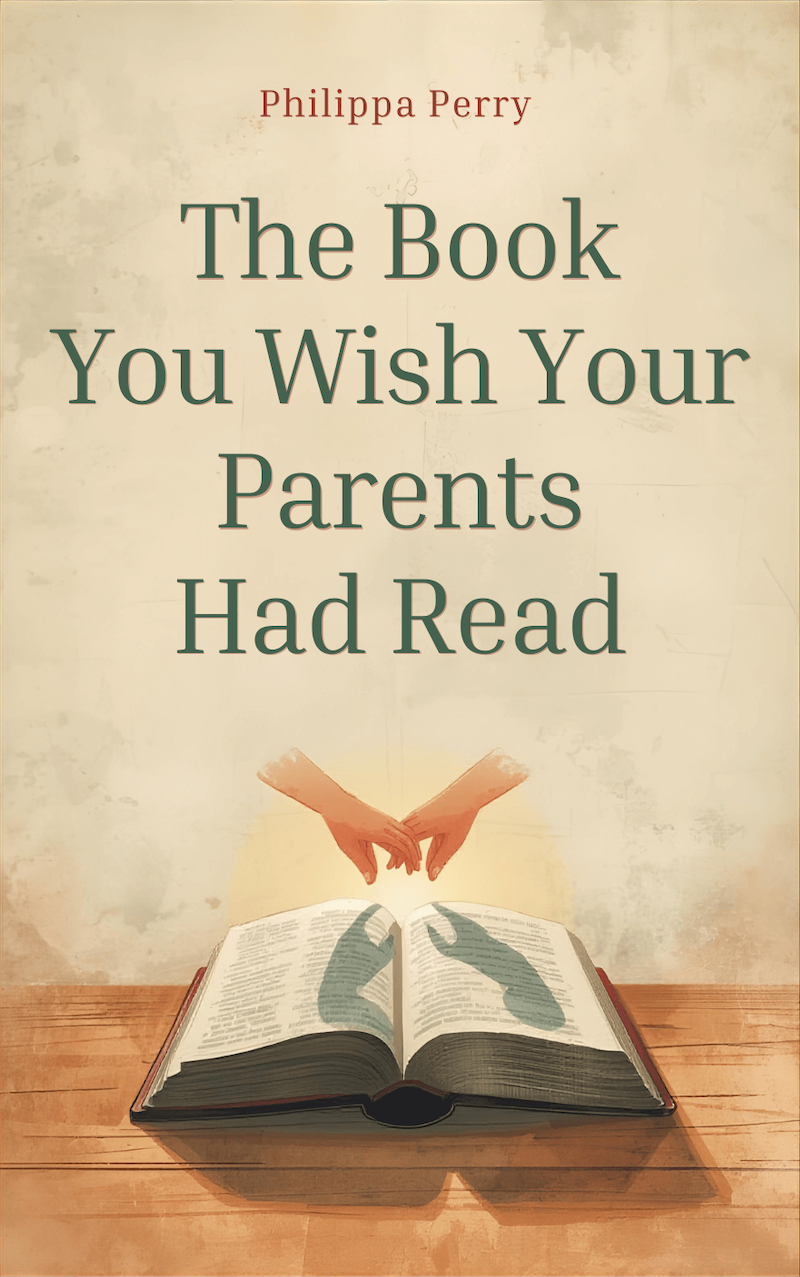
The Book You Wish Your Parents Had Read Book Summary
This The Book You Wish Your Parents Had Read Book Summary covers the key ideas, lessons, and takeaways in about 20 minutes.
By examining their own emotional histories, parents can prevent old wounds from shaping their responses. By responding consistently to distress, naming emotions, and making amends for mistakes, they create a foundation of trust that supports a child’s lifelong emotional health. Perry reminds readers that children do not need flawless parents; they need honest, responsive ones.
Ultimately, the book reframes parenting as an opportunity for mutual growth. As parents learn to regulate themselves, communicate openly, and treat their children with respect, they not only raise emotionally secure individuals but also heal parts of themselves. The result is not just better-behaved children, but stronger, more compassionate relationships that endure well beyond childhood.
Helps with these goals
Want the complete 20-minute summary?
- Full structured summary
- Video Summary
- Podcast Summary
- Audio summary
- Key takeaways
- Exercises
- Quiz
- Highlights and notes
- Ask the book with AI
What is in the The Book You Wish Your Parents Had Read book summary?
Below is a preview of Sumizeit’s expert-written summary of The Book You Wish Your Parents Had Read by Philippa Perry. The full summary covers the book’s key ideas in text, audio, and video.
In The Book You Wish Your Parents Had Read, Philippa Perry invites parents to rethink what it truly means to raise a child. Rather than framing parenting as a series of strategies designed to control behavior or achieve outcomes, she reframes it as the careful cultivation of a lifelong relationship. From this perspective, parenting is not about producing a “well-behaved” child but about nurturing a human being who feels emotionally safe, understood, and capable of forming healthy relationships throughout life.
Perry’s approach dismantles the idea that there is a perfect formula for raising children. Instead, she emphasizes emotional awareness, self-reflection, and repair. At the heart of her philosophy is the belief that how parents relate to their children matters far more than any specific rule or discipline technique. Children learn not from lectures, but from lived emotional experiences—how they are treated when they are distressed, misunderstood, or inconvenient.
This book does not promise easy answers or quick fixes. Instead, it challenges parents to turn inward, examine their own emotional histories, and recognize how those histories shape their reactions. Perry argues that parenting is as much about personal growth as it is about child development. By understanding ourselves more clearly, we can offer our children something profoundly valuable: a relationship grounded in empathy, respect, and emotional honesty.
Seeing Children as Whole People, Not Problems to Solve
One of Perry’s central arguments is that children should not be approached as projects to manage or problems to fix. She encourages parents to see children as complete individuals from the very beginning—people with inner worlds, emotions, preferences, and boundaries of their own.
When parents focus primarily on controlling behavior, they often lose sight of the child’s emotional experience. Perry argues that behavior is communication. A tantrum, withdrawal, defiance, or excessive compliance is rarely random; it is a signal that something is happening internally. If parents focus only on stopping the behavior, they miss the opportunity to understand what the child is trying to express.
By shifting attention from “How do I stop this?” to “What is my child experiencing right now?”, parents can respond in ways that strengthen trust rather than erode it. This approach requires patience and curiosity. It also requires parents to tolerate discomfort, since children’s emotions—especially anger, sadness, or fear—can be challenging to witness.
Perry emphasizes that respect is not something children must earn through good behavior. It is the foundation upon which healthy relationships are built. Respecting a child does not mean agreeing with everything they do or removing all boundaries. It means acknowledging their feelings, listening seriously to their perspective, and treating them as someone whose inner life matters.
How Your Own Childhood Shows Up in Your Parenting
A recurring theme throughout the book is the idea that parenting inevitably awakens unresolved emotions from our own upbringing. Perry explains that many intense reactions parents have toward their children are not truly about the present moment but about the past being replayed.
Certain behaviors in children can trigger memories…
Want the complete 20-minute summary?
- Full structured summary
- Video Summary
- Podcast Summary
- Audio summary
- Key takeaways
- Exercises
- Quiz
- Highlights and notes
- Ask the book with AI
Who should read The Book You Wish Your Parents Had Read?
This book is for parents who want to move beyond behavior-focused strategies and build a deeper emotional connection with their children. Whether you're struggling with challenging moments, repeating patterns from your own childhood, or simply seeking a more compassionate approach to parenting, Philippa Perry's work offers guidance grounded in attachment theory and emotional awareness.
Why does The Book You Wish Your Parents Had Read matter?
In a culture obsessed with raising 'well-behaved' children and quick-fix parenting solutions, The Book You Wish Your Parents Had Read reminds us that what children truly need is emotional safety and authentic relationship. This perspective shift is essential today, when parents are often overwhelmed, anxious about outcomes, and disconnected from their own emotional needs.
What are the key themes in The Book You Wish Your Parents Had Read?
- Parenting as relationship, not control
- Understanding your own childhood wounds and how they shape your parenting
- Emotional awareness and self-regulation over behavior management
- Attachment theory and emotional safety as foundations for development
- Repair and accountability as relationship builders
- Emotional literacy and naming feelings
- The distinction between validating emotions and approving behaviors
- Breaking intergenerational cycles of emotional harm
What are the key lessons from the The Book You Wish Your Parents Had Read book summary?
Behavior is communication
A child's tantrum, withdrawal, or defiance is a signal about their internal experience, not a problem to simply eliminate. Understanding what a child is trying to express builds trust far more effectively than suppressing the behavior.
Children are whole people, not projects
Viewing children as complete individuals with their own inner worlds, preferences, and boundaries from the start shifts parenting from control-oriented to connection-oriented.
Your childhood lives in your parenting reactions
Strong emotional reactions to your child's behavior often echo unresolved pain from your own upbringing. Recognizing this pattern allows you to respond to what's actually happening rather than what happened to you.
Pausing creates space for intentional response
Treating emotional spikes as signals rather than commands allows parents to create distance between feeling and reaction, enabling more thoughtful, values-aligned responses.
Secure attachment begins with responsiveness
Responding consistently and lovingly to a baby's needs builds a sense of safety and teaches them the world is trustworthy, not creating dependence but rather the foundation for healthy independence.
Emotional validation differs from behavioral approval
All feelings are acceptable and worthy of acknowledgment, while not all behaviors are acceptable. This distinction helps children feel accepted while maintaining necessary boundaries.
Repair is more powerful than perfection
No parent responds perfectly, but acknowledging mistakes, apologizing genuinely, and changing behavior demonstrates respect and teaches children that relationships can recover from conflict.
Emotional literacy is a teachable skill
By naming emotions, validating feelings, and helping children understand their internal experiences, parents equip them with tools for lifelong emotional health and resilience.
Consistency creates emotional safety
Children thrive when they can predict their caregivers' emotional responses and reliability. This consistency builds trust and confidence more than any specific parenting technique.
Self-compassion teaches self-worth
Children absorb how parents speak about and treat themselves. Demonstrating self-compassion and realistic self-acceptance models an alternative to shame and perfectionism.
Play reveals a child's inner world
Through imaginative play, children process experiences and explore feelings they cannot yet articulate. Observing play offers valuable insight into what a child is experiencing emotionally.
Conflict resolution teaches relationship skills
How families handle disagreement matters more than avoiding conflict. Calm, respectful resolution teaches children that relationships can weather tension and return to safety.
Emotional suppression is not resilience
Teaching children to ignore or suppress their emotions in the name of 'toughness' often leads to anxiety and difficulty expressing needs. True resilience includes emotional awareness and processing.
Respect is the foundation, not the reward
Respect is not something a child must earn through good behavior but rather the relational foundation that allows healthy boundaries and communication to exist.
Developmental stages require adjusted expectations
Meeting children where they are developmentally rather than where adults wish they were prevents frustration and allows parents to provide appropriately attuned guidance.
Your presence matters more than your perfection
Children need emotionally available, responsive parents more than they need flawless ones. Honest, attentive presence builds security that endures throughout life.
Early relationships shape lifelong expectations
Attachment patterns from infancy create a blueprint for how people expect to be treated and how they relate to others, making secure early attachment profoundly influential.
Pausing before reacting prevents projection
By noticing strong emotional responses and questioning where they truly belong, parents can avoid projecting their own unresolved wounds onto their children's current behavior.
Small interactions build emotional safety
Emotional safety develops through countless small moments of listening, acknowledging, and repairing rather than through grand gestures or perfect responses.
Parenting offers mutual growth
As parents examine themselves, regulate their emotions, and relate to children with respect, they heal aspects of their own past while raising emotionally secure individuals.
Want the complete 20-minute summary?
- Full structured summary
- Video Summary
- Podcast Summary
- Audio summary
- Key takeaways
- Exercises
- Quiz
- Highlights and notes
- Ask the book with AI
How can you apply ideas from The Book You Wish Your Parents Had Read?
- When your child has a meltdown, pause before reacting and ask yourself: What might they be experiencing? What are they trying to communicate? This shifts focus from stopping behavior to understanding need.
- Notice your strongest emotional reactions to your child's behavior and journal about them. Ask: Does this remind me of something from my own childhood? Separating past from present improves your responses.
- Create a 'pause practice' by stepping away for even 30 seconds when you feel overwhelmed, naming your emotion, and asking if your reaction fits the current situation or echoes something older.
- Deliberately name your child's emotions throughout the day: 'You seem frustrated,' 'That made you angry,' 'You feel proud of that.' This builds emotional vocabulary and shows you're paying attention to their inner life.
- After you've reacted harshly or unjustly, practice genuine repair: acknowledge the hurt you caused, explain (not justify) what happened with you, and commit to responding differently next time.
- Model self-compassion by speaking about yourself kindly in front of your children. When you make mistakes, acknowledge them without harsh self-criticism and focus on what you'll do differently.
- During calm moments, use 'I' statements to talk about family disagreements: 'I felt frustrated when...' and invite your child's perspective. This teaches conflict resolution skills through modeling.
- Observe your child's play without interrupting or directing it. Notice what themes emerge—this reveals what they're processing emotionally and what's on their mind.
What common mistakes do readers make with The Book You Wish Your Parents Had Read?
- Focusing solely on stopping behavior without understanding what the child is experiencing, which misses the opportunity to build trust and address underlying needs.
- Assuming that responding to a child's distress will spoil them or make them dependent, when in fact responsive parenting builds secure attachment and later independence.
- Dismissing or minimizing a child's emotions because the parent feels uncomfortable with feelings, which teaches children to suppress rather than process emotions.
- Denying or insisting on being right after a mistake rather than apologizing, which teaches children to doubt their own perceptions and prioritize others' needs over their own.
- Failing to recognize how your own childhood wounds are influencing your parenting, leading to projection of old pain onto your child's current behavior.
- Attempting to achieve perfect parenting rather than authentic, emotionally present parenting, which creates unnecessary pressure and models perfectionism to children.
Sumizeit Exercises Apply what you've learned
Turn ideas from The Book You Wish Your Parents Had Read into action with a short guided reflection: identify the biggest takeaway, connect it to your life, and commit to one step you can take in the next 24 hours.
What is the expert analysis of The Book You Wish Your Parents Had Read?
Overview
The Book You Wish Your Parents Had Read is authored by Philippa Perry, a British psychotherapist renowned for her accessible and compassionate approach to mental health and relationships. Drawing on decades of clinical experience and personal insight, Perry challenges conventional parenting paradigms by emphasizing emotional connection over behavioral control. This work stands out in the crowded field of parenting literature by focusing not on prescriptive techniques but on the nuanced, lifelong relational dynamics between parent and child. It offers a fresh, psychologically informed perspective that resonates with both professionals and parents seeking deeper understanding.
Core Thesis
Perry’s central argument reframes parenting as the cultivation of an emotionally safe, respectful, and empathetic relationship rather than a project aimed at producing well-behaved children. She posits that children are whole individuals with complex inner lives, and that their behaviors are forms of communication reflecting emotional states. The key to effective parenting lies in parents’ self-awareness—recognizing how their own unresolved childhood experiences influence their reactions—and in the capacity to pause, reflect, and repair relational ruptures. Ultimately, parenting is portrayed as a mutual journey of growth, healing, and emotional attunement.
Strengths
- Emphasis on Emotional Awareness: The book excels in highlighting the importance of parents understanding their own emotional histories and how these shape their parenting, a perspective often overlooked in mainstream parenting advice.
- Integration of Attachment Theory: Perry skillfully incorporates attachment theory to explain the foundational role of early relationships in lifelong emotional health, grounding her arguments in well-established psychological science.
- Focus on Repair and Imperfection: By normalizing parental mistakes and emphasizing repair, the book offers a realistic and humane approach that reduces parental guilt and promotes resilience in family dynamics.
- Accessible yet Nuanced Language: Perry’s writing balances clinical insight with warmth and clarity, making complex psychological concepts approachable without oversimplification.
- Holistic View of the Child: The insistence on seeing children as complete individuals with emotions, boundaries, and agency challenges reductive behavioral models and encourages deeper empathy.
Critiques & Counterarguments
- Potential Overemphasis on Emotional Reflection: While self-awareness is vital, some critics might argue that Perry underestimates the practical challenges parents face, especially those in high-stress or resource-limited environments where emotional labor is difficult to sustain consistently.
- Lack of Cultural Contextualization: The book largely reflects Western psychological frameworks and middle-class parenting norms, potentially limiting its applicability across diverse cultural settings where parenting values and family structures differ significantly.
- Limited Engagement with Behavioral Science: Perry’s de-emphasis on behavior management techniques may neglect evidence-based strategies that effectively address certain behavioral challenges, such as those encountered in neurodiverse children or clinical populations.
- Competing Schools of Thought: Behavioral psychologists and proponents of structured discipline might contest Perry’s skepticism of control-oriented approaches, arguing that clear boundaries and consistent consequences are essential for child development and socialization.
- Real-World Evidence on Emotional Suppression: While Perry rightly critiques emotional suppression, some research suggests that context-dependent emotional regulation strategies—including temporary suppression—can be adaptive, especially in environments where emotional expression is unsafe or counterproductive.
Who Should Read This
This book is ideal for parents, caregivers, and educators seeking a profound, psychologically informed understanding of parenting beyond conventional advice. It is particularly valuable for readers interested in the emotional and relational dimensions of child-rearing, those grappling with intergenerational patterns, and individuals committed to personal growth alongside parenting. Mental health professionals and students of psychology will also find Perry’s integration of theory and practice insightful. However, readers looking for step-by-step behavioral techniques or culturally diverse parenting models may need to supplement this work with other resources.
Frequently asked questions about the The Book You Wish Your Parents Had Read book summary
What is The Book You Wish Your Parents Had Read about?
The Book You Wish Your Parents Had Read by Philippa Perry reframes parenting as the cultivation of a lifelong relationship grounded in emotional safety and authenticity, rather than as a series of behavior-management strategies. The book explores how parents' own childhood experiences shape their reactions, how attachment and emotional awareness form the foundation for a child's development, and how repair and self-reflection allow parents and children to build trust together.
Who should read The Book You Wish Your Parents Had Read?
This book is for parents and caregivers who want to move beyond traditional behavior-focused parenting techniques and develop a deeper emotional connection with their children. It's especially valuable for those who recognize patterns from their own childhood affecting their parenting, feel overwhelmed by parenting challenges, or want to break cycles of emotional harm and raise children who feel secure and understood.
What are the main takeaways from The Book You Wish Your Parents Had Read?
The core takeaways include: parenting is fundamentally about relationship, not control; understanding your own emotional history is essential to responding thoughtfully to your child; emotional safety and consistent responsiveness form the foundation for healthy development; all emotions are valid even when some behaviors aren't; repair and accountability strengthen relationships; and parents' willingness to grow and reflect offers children far more than perfection ever could.
How does Philippa Perry address the parenting mistakes parents make?
Rather than shaming parents for mistakes, Philippa Perry normalizes them as inevitable and emphasizes that repair is what matters. She explains that genuine apologies—acknowledging harm, explaining without justifying, and committing to change—restore trust and teach children that relationships can recover from conflict. She also addresses how parents' unconscious reactions often stem from unresolved childhood experiences rather than the current situation.
What is attachment theory and why does Perry emphasize it?
Attachment theory explains how early relationships shape a person's expectations of themselves and others throughout life. Perry emphasizes it because she argues that when caregivers respond consistently and sensitively to a child's needs, the child develops emotional security that allows them to explore the world, trust others, and form healthy relationships. This foundation is more influential than any specific parenting technique or rule.
Does The Book You Wish Your Parents Had Read offer specific parenting techniques or strategies?
While the book includes practical applications, it is not primarily a technique-focused guide. Instead, it emphasizes the underlying relational principles—emotional awareness, responsiveness, validation, and repair—that should inform a parent's approach. The focus is on helping parents understand themselves and their children deeply, which then naturally shapes how they respond rather than offering step-by-step behavioral strategies.
How does Perry suggest parents handle their own emotional reactions to their children?
Perry encourages parents to treat strong emotional reactions as signals to pause and examine where the feeling truly belongs. She suggests noticing emotions as physical sensations, naming them without judgment, and questioning the automatic thoughts that accompany them. By separating a child's current behavior from unresolved childhood experiences, parents can respond more thoughtfully and avoid projecting old wounds onto their children.
What does Perry say about responding to babies' cries?
Perry challenges the belief that responding to a baby's cries will spoil them. She explains that infants lack the cognitive ability to manipulate and cannot self-soothe, so responsive, loving caregiving teaches them that the world is safe and their needs matter. This external regulation eventually becomes internalized, enabling children to calm themselves—whereas ignoring distress may teach children to suppress emotions rather than process them healthily.
About Sumizeit
Sumizeit is a profitable Scomy LLC company based in Miami, Florida. It has been helping readers learn from nonfiction books for 7 years with expert-written summaries in text, audio, podcast, and video.
Want the complete 20-minute summary?
- Full structured summary
- Video Summary
- Podcast Summary
- Audio summary
- Key takeaways
- Exercises
- Quiz
- Highlights and notes
- Ask the book with AI
Here's why readers love Sumizeit
Join thousands of learners getting smarter every day
"Great experience. Detailed summaries. Loved the gamification feature. Makes learning fun. Good customer service. I recommend Sumizeit to anyone. You'll learn a lot."
"I always felt busy but still wanting to keep up with the book discussion in my friend group. This was a great supplement to help me keep reading the books I find fun while keeping up with important books."
"I love this website. Instead of scrolling social media, I find myself learning a lot. I use it everyday. I recommend this app for anyone who is too busy and wants to get up to speed with their favorite books."
The Book You Wish Your Parents Had Read Book Summary PDF
Looking for a The Book You Wish Your Parents Had Read Book Summary PDF you can save and revisit offline? Our The Book You Wish Your Parents Had Read Book Summary PDF captures the book’s core ideas in a clean, printable format — the key frameworks, takeaways, and structure without the fluff. Download the The Book You Wish Your Parents Had Read Book Summary PDF when you want a reference you can annotate, share with your team, or review on the go. Get your The Book You Wish Your Parents Had Read Book Summary PDF from the download page below.
Download The Book You Wish Your Parents Had Read Book Summary PDFPeople also liked these summaries
Readers who explored The Book You Wish Your Parents Had Read often enjoyed these titles next.


Want the complete 20-minute summary?
- Full structured summary
- Video Summary
- Podcast Summary
- Audio summary
- Key takeaways
- Exercises
- Quiz
- Highlights and notes
- Ask the book with AI
Featured Book Titles
Popular Book Summaries at sumizeit, leading book summary app