


As an Amazon Associate, Sumizeit earns from qualifying purchases.
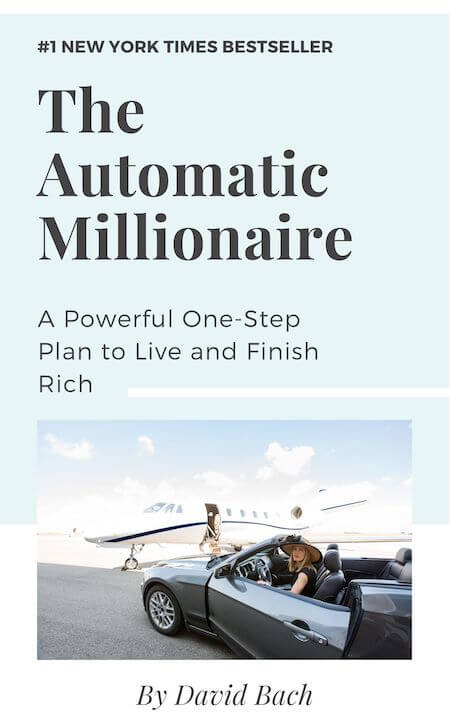
The Automatic Millionaire Book Summary
This The Automatic Millionaire Book Summary covers the key ideas, lessons, and takeaways in about 20 minutes.
Helps with these goals
Want the complete 20-minute summary?
- Full structured summary
- Video Summary
- Podcast Summary
- Audio summary
- Key takeaways
- Exercises
- Quiz
- Highlights and notes
- Ask the book with AI
What is in the The Automatic Millionaire book summary?
Below is a preview of Sumizeit’s expert-written summary of The Automatic Millionaire by David Bach. The full summary covers the book’s key ideas in text, audio, and video.
Millionaire. It’s a word that conjures images of sprawling mansions and colorful yachts. Of snow-capped French chateaus and $500 bottles of wine, table-service style. The term millionaire connotes a pipe dream for many...and reality for a select few.
We spend our lives thinking that in order to achieve this highly sought after outcome, we would need to find a cure for cancer or discover the eighth continent.
But what if there was another, simpler way?
The Automatic Millionaire looks underneath the tightly-fastened lid of wealth and examines what it really takes to achieve millionaire status through practical, deliberate steps.
Let’s say it louder now for those in the back.
Who wants to be a millionaire?
Small Amounts Add Up
If you are one of the many Americans with an annual income hovering around $40,000 or less, you are not prohibited from becoming a millionaire.
In fact, it is entirely feasible to achieve millionaire status from meager means, so long as you are smart in your investment and budgeting strategies.
Consider Jim and Sue McIntyre. The couple relied on a key philosophy in their financial endeavors:
“You can either work for your money or make your money work for you.”
Early in their marriage, the McIntyres began saving. Initially, they were saving four percent of every paycheck, eventually increasing this to 15%. Over time, thanks to compound interest accruing, the value of the McIntyres’ funds increased exponentially.
While Jim McIntyre had never earned a salary of more than $40,00 in a single year, the couple had a net worth of two million by the time they were in their early 50s.
This concept of getting rich gradually over time has a name: the latte factor. Unless you are a Starbucks aficionado, your average latte probably costs around $3.50. Say you get one every single day--you are then looking at a total cost of more than $1,200 per year.
Let’s say you decide to start skipping the lattes and set that money aside each day, plus an additional $6.50, totaling $70 per week. This simple adjustment would leave you with more than $700,000 in 30 years' time and almost two million dollars in 40 years.
Pay Yourself First
Taxes. Rent. Insurance. Most of the time, these life expenses are unavoidable. Once we pay for each line item, we can then set the rest of our paycheck aside for spending money, right? Wrong.
Here is where we need to reverse our logic.
Rather than paying for the necessities and THEN setting aside money for personal expenses, Bach recommends paying yourself first.
This can take the form of a pre-tax retirement account. With a pre-tax retirement account, you are directly depositing money into a savings account, and, because your money will only get taxed once you withdraw it, you will likely be saving significantly. Chances are, the account will be taxed at a lower rate than the one your current income incurs.
Therefore, you will have more money now.
Let’s say you make an…
Want the complete 20-minute summary?
- Full structured summary
- Video Summary
- Podcast Summary
- Audio summary
- Key takeaways
- Exercises
- Quiz
- Highlights and notes
- Ask the book with AI
Who should read The Automatic Millionaire?
The Automatic Millionaire is for anyone who believes becoming wealthy requires extraordinary talent or luck. Whether you earn a modest income, struggle with debt, or simply want a practical roadmap to financial independence, this book shows that ordinary people can build serious wealth through disciplined habits and smart financial decisions.
Why does The Automatic Millionaire matter?
In today's economy, financial security feels increasingly elusive for many people. David Bach's approach cuts through complex financial jargon to reveal that wealth-building isn't about earning a massive income—it's about automating smart decisions and letting compound interest work over time. This timeless philosophy remains relevant as people seek sustainable paths to financial freedom without risky shortcuts.
What are the key themes in The Automatic Millionaire?
- Automation as a wealth-building tool
- The power of small, consistent savings
- Paying yourself before paying others
- Eliminating high-interest debt
- Building equity through homeownership
- Emergency preparedness and financial security
- Generosity as part of wealth building
What are the key lessons from the The Automatic Millionaire book summary?
The Latte Factor
Small daily expenses like coffee add up dramatically over decades. Redirecting just $10 weekly into investments can grow to nearly $2 million in 40 years through compound interest.
Pay Yourself First
Contribute to retirement and savings accounts before covering other expenses, using pre-tax accounts to reduce your tax burden and keep more money working for you immediately.
Automation Eliminates Willpower
Automatically routing money to savings, retirement, and emergency funds removes the temptation to spend and ensures consistent wealth-building regardless of monthly income fluctuations.
Emergency Funds Provide Protection
Building a safety net of five percent of income in accessible accounts prevents financial crises from derailing your wealth-building progress and provides peace of mind.
Homeownership Builds Long-Term Equity
Unlike rent, mortgage payments build ownership stake in an asset that appreciates over time, providing wealth-building collateral and financial security in retirement.
Credit Card Debt is Wealth Destruction
High interest rates mean credit card debt nearly doubles what you originally spend; prioritizing payoff prevents years of financial damage and frees up money for investing.
Debt Renegotiation Saves Thousands
Calling creditors to negotiate lower rates or consolidating multiple debts into one place can significantly reduce the total interest you pay over time.
Income Level Doesn't Determine Millionaire Status
People earning modest salaries can accumulate substantial wealth through consistent saving and investing; the real estate agent and schoolteacher can become millionaires alongside high earners.
Compound Interest is Your Greatest Asset
Money invested early grows exponentially over decades; starting small in your twenties beats starting large in your forties due to the compounding effect.
Fixed-Rate Mortgages Lock in Low Costs
When interest rates are favorable, securing a fixed-rate mortgage protects you from future rate increases and provides predictable payments for automated bi-weekly payments.
Charity and Wealth-Building Can Coexist
Setting aside even one percent of income for charitable donations provides tax deductions while supporting causes you believe in, all without derailing financial goals.
Financial Decisions Don't Need to Be Complex
Building wealth doesn't require sophisticated investment knowledge or complicated strategies—just economically pragmatic decisions applied consistently over time.
Balancing Future and Past Obligations
Dividing your paycheck equally between investing for the future and paying off past debts keeps you moving forward while addressing historical financial mistakes.
Institutional Safety Matters for Emergency Funds
Keeping emergency savings in reputable money market accounts ensures accessibility and growth rather than risking personal cash management or inflation erosion.
Make Your Money Work for You
The ultimate principle is shifting from trading time for money to having invested capital generate returns, creating wealth that grows whether you work or not.
Tax-Advantaged Accounts Multiply Savings
Using pre-tax retirement contributions reduces your taxable income while allowing investments to grow tax-deferred, creating more wealth with the same contribution amount.
Consistency Beats Perfection
Regular, automatic contributions in any amount outperform sporadic large deposits because compound interest rewards sustained discipline rather than grand gestures.
Lifestyle Inflation Kills Wealth Building
Increasing saving rates as your income grows—rather than spending more—accelerates wealth accumulation and compounds your advantage significantly over time.
Want the complete 20-minute summary?
- Full structured summary
- Video Summary
- Podcast Summary
- Audio summary
- Key takeaways
- Exercises
- Quiz
- Highlights and notes
- Ask the book with AI
How can you apply ideas from The Automatic Millionaire?
- Set up automatic transfers from each paycheck to a pre-tax retirement account before other bills are paid
- Calculate your personal 'latte factor' by tracking small daily expenses and redirect that money to investments
- Build an emergency fund by automatically moving five percent of income to a money market account each paycheck
- Refinance or renegotiate credit card rates by calling providers and threatening to switch companies
- Research and obtain a fixed-rate mortgage during low-interest periods, setting up bi-weekly automated payments
- Create a debt consolidation plan dividing your paycheck equally between investing and debt payoff
- Establish automatic charitable giving through paycheck deductions to a vetted nonprofit organization
What common mistakes do readers make with The Automatic Millionaire?
- Waiting for the perfect moment to start investing instead of beginning immediately with small amounts
- Neglecting to establish an emergency fund, leaving yourself vulnerable to job loss or unexpected expenses
- Carrying high-interest credit card debt while trying to invest, losing more to interest than gains
- Renting long-term when homeownership is feasible, missing decades of equity building and wealth accumulation
Sumizeit Exercises Apply what you've learned
Turn ideas from The Automatic Millionaire into action with a short guided reflection: identify the biggest takeaway, connect it to your life, and commit to one step you can take in the next 24 hours.
What is the expert analysis of The Automatic Millionaire?
Overview
The Automatic Millionaire by David Bach stands as a significant contribution to the personal finance genre, authored by a seasoned financial advisor and media personality. Bach’s expertise is grounded in his extensive career at Morgan Stanley and his ability to distill complex financial concepts into accessible, actionable strategies for the average reader. This book’s significance lies in its demystification of wealth accumulation, presenting millionaire status not as an exclusive domain of the ultra-rich or the exceptionally gifted, but as an attainable goal through disciplined, automatic financial habits.
Core Thesis
Bach’s central argument is elegantly simple yet powerful: becoming a millionaire is less about extraordinary income or luck and more about the consistent application of automatic saving and investing strategies. By prioritizing “paying yourself first,” minimizing unnecessary expenditures (exemplified by the “latte factor”), and leveraging the power of compound interest, individuals—even those with modest incomes—can build substantial wealth over time. The book emphasizes practical financial behaviors such as establishing emergency funds, managing debt strategically, and investing in homeownership, all integrated into a system of automation that removes reliance on willpower or timing the market.
Strengths
- Accessibility and Practicality: Bach excels at translating financial jargon into relatable, everyday language, making complex ideas approachable for readers without prior financial literacy.
- Behavioral Focus: The emphasis on automation addresses a key psychological barrier—human inconsistency—thereby enhancing the likelihood of sustained financial discipline.
- Comprehensive Coverage: The book touches on a broad spectrum of personal finance topics—saving, investing, debt management, homeownership, and philanthropy—offering a holistic framework rather than isolated tips.
- Real-Life Illustrations: Stories like that of the McIntyres provide tangible proof points that reinforce the feasibility of Bach’s approach for middle-income earners.
- Encouragement of Social Responsibility: The inclusion of automatic charitable giving integrates ethical considerations into wealth-building, broadening the financial narrative beyond self-interest.
Critiques & Counterarguments
- Oversimplification of Financial Realities: While automation is a powerful tool, the book may understate the complexities faced by individuals with volatile incomes, high living costs, or systemic barriers to wealth accumulation.
- Limited Discussion of Market Risks: The advocacy for long-term investing and homeownership glosses over potential downsides, such as market downturns, housing bubbles, or personal financial emergencies that disrupt plans.
- Potentially Dated Examples: Some financial contexts, such as interest rates and credit card terms, may have evolved since publication, requiring readers to adapt advice to current economic conditions.
- Competing Schools of Thought: Alternative financial philosophies emphasize entrepreneurship, active investment management, or aggressive debt repayment strategies that contrast with Bach’s steady, automated approach.
- Behavioral Economics Nuances: Recent research suggests that automation alone may not overcome deeper psychological biases or socio-economic factors that impede saving, indicating that additional behavioral interventions might be necessary.
Who Should Read This
The Automatic Millionaire is ideally suited for readers who seek a clear, no-nonsense blueprint for financial security without requiring advanced knowledge or high income. It appeals particularly to young professionals, middle-income earners, and those intimidated by traditional financial planning. Additionally, individuals interested in cultivating disciplined money habits through automation will find Bach’s approach both motivating and actionable. However, readers facing complex financial situations or seeking advanced investment strategies may need to supplement this book with more specialized resources.
Frequently asked questions about the The Automatic Millionaire book summary
What is The Automatic Millionaire about?
The Automatic Millionaire by David Bach is a practical guide to building wealth through automated financial decisions and disciplined habits rather than high income or investment complexity. The book demonstrates how ordinary people earning modest salaries can accumulate a million-dollar net worth by automating savings, paying themselves first, eliminating debt, and letting compound interest work over decades.
Who should read The Automatic Millionaire?
Anyone seeking to build lasting wealth without complicated investment strategies or high income should read this book. It's particularly valuable for people earning modest salaries, those struggling with debt, young professionals wanting to start early, and anyone who feels intimidated by financial planning.
What are the main takeaways from The Automatic Millionaire?
The main takeaways include: automate your savings to remove willpower dependency, pay yourself first through pre-tax retirement accounts, redirect small daily expenses into investments, build an emergency fund, prioritize homeownership over renting, eliminate credit card debt, and understand that wealth-building is a marathon of consistent decisions rather than a sprint of complex strategies. Bach proves that millionaire status is achievable on ordinary incomes through these practical, automated habits.
How can I become a millionaire on a modest income?
The Automatic Millionaire demonstrates this through real examples like Jim and Sue McIntyre, who never earned more than $40,000 annually yet accumulated $2 million in net worth by age 50. The strategy involves automatically saving 10-15% of income in pre-tax retirement accounts, investing consistently over decades, eliminating high-interest debt, and letting compound interest multiply your money exponentially over time.
What is the 'latte factor' and why does it matter?
The latte factor refers to small daily expenses (like a $3.50 coffee) that seem insignificant individually but accumulate to hundreds of thousands over decades. Saving just $10 weekly could grow to nearly $2 million in 40 years through compound interest, illustrating how tiny financial decisions compound into massive wealth differences.
Should I rent or buy a home according to The Automatic Millionaire?
Bach strongly advocates for homeownership over renting because mortgage payments build equity in an appreciating asset, while rent payments go directly to a landlord with nothing to show for it. Homeownership accelerates wealth-building and provides collateral for retirement planning, making it the financially superior long-term choice.
How do pre-tax retirement accounts help you save more money?
Pre-tax retirement contributions reduce your taxable income immediately, meaning you're taxed on a lower amount. If you contribute $5,000 before taxes on a $50,000 salary, you get taxed on $45,000 instead, leaving you with significantly more money now while your investments grow tax-deferred until withdrawal.
About Sumizeit
Sumizeit is a profitable Scomy LLC company based in Miami, Florida. It has been helping readers learn from nonfiction books for 7 years with expert-written summaries in text, audio, podcast, and video.
Want the complete 20-minute summary?
- Full structured summary
- Video Summary
- Podcast Summary
- Audio summary
- Key takeaways
- Exercises
- Quiz
- Highlights and notes
- Ask the book with AI
Here's why readers love Sumizeit
Join thousands of learners getting smarter every day
"Great experience. Detailed summaries. Loved the gamification feature. Makes learning fun. Good customer service. I recommend Sumizeit to anyone. You'll learn a lot."
"I always felt busy but still wanting to keep up with the book discussion in my friend group. This was a great supplement to help me keep reading the books I find fun while keeping up with important books."
"I love this website. Instead of scrolling social media, I find myself learning a lot. I use it everyday. I recommend this app for anyone who is too busy and wants to get up to speed with their favorite books."
The Automatic Millionaire Book Summary PDF
Looking for a The Automatic Millionaire Book Summary PDF you can save and revisit offline? Our The Automatic Millionaire Book Summary PDF captures the book’s core ideas in a clean, printable format — the key frameworks, takeaways, and structure without the fluff. Download the The Automatic Millionaire Book Summary PDF when you want a reference you can annotate, share with your team, or review on the go. Get your The Automatic Millionaire Book Summary PDF from the download page below.
Download The Automatic Millionaire Book Summary PDFPeople also liked these summaries
Readers who explored The Automatic Millionaire often enjoyed these titles next.



Want the complete 20-minute summary?
- Full structured summary
- Video Summary
- Podcast Summary
- Audio summary
- Key takeaways
- Exercises
- Quiz
- Highlights and notes
- Ask the book with AI
Featured Book Titles
Popular Book Summaries at sumizeit, leading book summary app