

Considered the essential reference text on military strategy and warfare, The Art of War has been a source of inspiration for military generals, business professionals and multidisciplinary strategists. Five factors govern the art of war: The Moral Code, Heaven, Earth, The Commander and Method & Discipline. A leader who knows these will be successful and one who does not will be doomed to defeat. All warfare is built on a premise of deception: appear weak when strong and strong when weak. The supreme art of war is to dismantle the opponent without fighting at all.
Helps with these goals
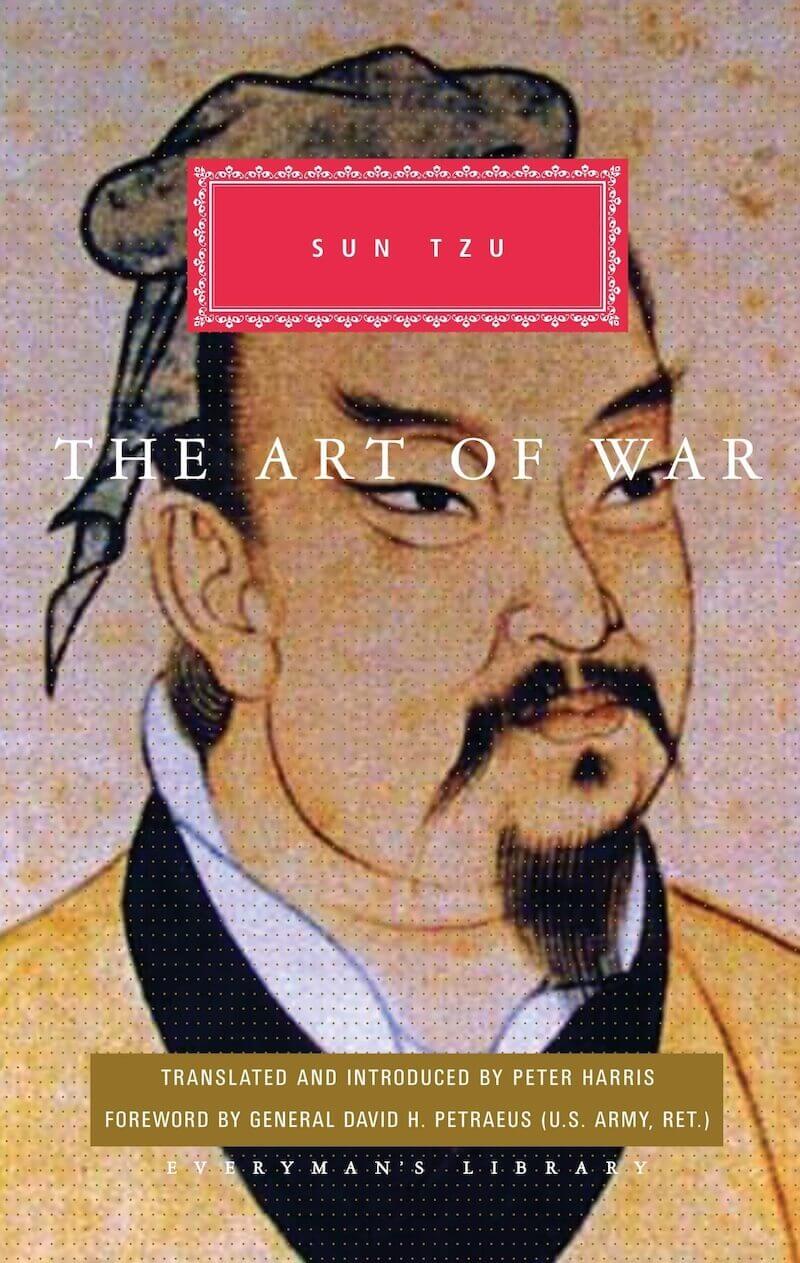
As an Amazon Associate, Sumizeit earns from qualifying purchases.
The Art of War by Sun Tzu is one of the oldest and most influential works on strategy, leadership, and psychology ever written. Composed in ancient China around the 5th century BCE, it remains astonishingly relevant today — studied by military leaders, CEOs, athletes, and even psychologists. At its heart, the book is not about warfare in the literal sense, but about the intelligent management of conflict. It teaches that the highest form of skill is to achieve victory without fighting, to subdue opponents through strategy, patience, and perception.
Sun Tzu’s thinking is deeply rooted in Taoist philosophy, which values harmony, flow, and natural order. He believed that success comes from understanding and aligning oneself with the rhythms of nature — what he called the Tao (“the Way”). Like a river flowing around obstacles, the wise strategist adapts fluidly to circumstance. Forcing outcomes leads to failure; understanding timing and momentum brings effortless victory.
For example, in business, this might mean entering a market only when consumer demand naturally peaks — not through brute marketing spend but by reading patterns of human behavior. In life, it means choosing when to speak, when to act, and when silence itself is a form of power. The strategist wins by observation, not reaction.
Sun Tzu identifies five constant factors that govern the outcome of any battle — physical or metaphorical: Moral Law, Heaven, Earth, the Commander, and Method and Discipline. Each factor interacts with the others, forming a blueprint for success.
Moral Law (The Way):
The Moral Law binds people and leaders through shared purpose and trust. When soldiers believe in their commander’s virtue, they will fight with unity and conviction. Sun Tzu believed morale and legitimacy were stronger than weapons.
Historical Example: During World War II, Winston Churchill’s speeches during the Blitz inspired civilians and soldiers alike to endure hardship. His moral authority unified Britain in a way sheer force could not.
Modern Example: Companies like Patagonia thrive because their moral purpose (protecting the planet) inspires both employees and customers. A strong moral foundation creates loyalty — the ultimate strategic resource.
Heaven:
Heaven represents timing, seasons, and climate — the elements beyond human control. A great strategist chooses moments that align with nature’s rhythm rather than defying it.
Example: Napoleon’s catastrophic invasion of Russia in 1812 showed what happens when timing and climate are ignored — his army was crushed by winter, not the enemy.
In modern terms, a tech startup that launches too early — before infrastructure or demand exists — suffers the same fate. Timing is invisible but decisive.
Earth:
Earth symbolizes geography, environment, and terrain — both literal and figurative. Understanding one’s terrain means knowing one’s operational environment better than anyone else.
Example: The Battle of Red Cliffs (208 CE) perfectly embodied this lesson. Smaller Chinese forces used wind, river currents, and narrow waters to burn and destroy a vastly larger fleet.
Modern Parallel: In marketing, “terrain” might be the competitive landscape. Netflix understood the terrain of digital media and moved to streaming when others clung to DVD sales — mastering the new battlefield.
The Commander:
The Commander represents character — the leader’s wisdom, sincerity, courage, compassion, and discipline. Sun Tzu writes that a good general balances strength with humanity.
Example: Genghis Khan exemplified this ideal. Despite his reputation for ferocity, he led with fairness and rewarded merit over birth. His disciplined leadership united nomadic tribes into an unstoppable empire.
Modern Example: Nelson Mandela’s leadership after apartheid demonstrated Sun Tzu’s principles — strength tempered with forgiveness created peace and moral authority instead of vengeance and chaos.
Method and Discipline:
This factor concerns organization, structure, and resource management. Clear hierarchy, fair systems, and consistent rewards and punishments maintain order and effectiveness.
Example: Alexander the Great’s army functioned like a precision machine because of its logistics and chain of command. He ensured supplies moved as efficiently as troops, allowing long campaigns to succeed.
In business, this principle mirrors the success of companies like Toyota, whose “lean production” philosophy — methodical, disciplined, efficient — has dominated global manufacturing for decades.
Together, these five pillars remind us that victory arises not from chaos, but from balance and preparation.
“All warfare is based on deception.” This single line captures Sun Tzu’s essence — warfare, whether military or corporate, is a battle of perceptions. The goal is not brute force, but psychological manipulation.
Sun Tzu teaches to:
Appear weak when strong, and strong when weak.
Feign disorder to lure the enemy into false confidence.
Create confusion through unexpected maneuvers.
Historical Example:
During the D-Day invasion of 1944, Allied forces executed Operation Fortitude — a brilliant deception campaign. They created a fake army under General Patton, complete with inflatable tanks, false radio transmissions, and double agents. The Germans were so convinced the real invasion would occur at Pas-de-Calais that they left Normandy underdefended. The success of this illusion hastened the end of the war — exactly as Sun Tzu would have prescribed.
Modern Example:
In the business world, Apple’s secrecy around product launches is strategic deception. By controlling leaks and misdirection, they create anticipation while keeping competitors guessing. When the iPhone debuted, rivals were blindsided — Apple had struck like Sun Tzu’s falcon: suddenly, decisively, and without warning.
Deception is not dishonesty; it’s control of narrative. Whoever shapes perception, wins the field.
Sun Tzu insists that information determines victory. “If you know the enemy and know yourself,” he wrote, “you need not fear the result of a hundred battles.” Intelligence eliminates uncertainty — the most dangerous element in conflict.
He describes five types of spies:
Local spies: Residents of enemy territory who report internal conditions.
Inside spies: Officials within the enemy’s organization.
Double agents: Enemy spies turned to your side.
Expendable spies: Used to spread false information.
Surviving spies: Those who return safely with vital data.
Example in Warfare:
During the Battle of Midway (1942), American cryptographers cracked Japan’s naval codes, allowing Admiral Nimitz to ambush the Japanese fleet. This decisive victory turned the tide of the Pacific War — a masterclass in Sun Tzu’s intelligence principle.
Modern Parallel:
In corporate strategy, “spies” are market researchers, analysts, and data scientists. When Netflix used data to predict viewing trends before competitors, it gained the same strategic advantage — victory through knowledge, not size.
Sun Tzu’s insight: victory begins in the mind, long before the battlefield.
A commander’s moral strength shapes the fate of their army. Sun Tzu writes, “Regard your soldiers as your children, and they will follow you into the deepest valleys.” Leadership, therefore, is an emotional art — the ability to inspire faith, loyalty, and discipline simultaneously.
Examples of Effective Leadership:
George Washington shared his soldiers’ suffering at Valley Forge, earning unshakable devotion that carried the Continental Army through impossible odds.
Erwin Rommel, the “Desert Fox,” inspired respect even from enemies through his courage, fairness, and humane conduct.
In business, Herb Kelleher, founder of Southwest Airlines, treated employees with warmth and humor, turning his company into one of the most loyal workforces in America.
In contrast, tyrannical or impulsive leaders destroy morale. Sun Tzu warns against arrogance, cruelty, or indecision — traits that erode unity faster than any enemy attack.
The wise leader knows when to be stern or compassionate, invisible or present, like a general who “moves his army as one man.”
Sun Tzu’s most poetic analogy compares the perfect strategist to water: “Water shapes its course according to the ground.” The key to victory is flexibility — the ability to adapt instantly to shifting circumstances.
Example:
At the Battle of Cannae (216 BCE), the Carthaginian general Hannibal faced a Roman army nearly twice his size. Rather than meeting force with force, he allowed his center to retreat, drawing the Romans inward, then encircling them from both sides. The result was one of the most devastating defeats in Roman history — a triumph of adaptability.
In Modern Times:
Netflix’s transition from DVD rentals to streaming demonstrated adaptability — while Blockbuster clung to old models, Netflix flowed with technological change and conquered the entertainment industry.
In sports, Muhammad Ali embodied the water principle — “float like a butterfly, sting like a bee.” His fluid fighting style adapted to every opponent, making him one of the greatest boxers in history.
Rigidity is fatal. Flexibility is power.
Sun Tzu stresses the importance of understanding both the physical terrain and the psychological terrain of conflict. The best generals turn geography and timing into silent allies.
Example: During the Battle of Austerlitz (1805), Napoleon feigned weakness, luring his enemies onto higher ground. When fog lifted, he struck from below, using the terrain and timing to obliterate superior forces.
In sports, coaches mirror this principle when they conserve energy early in a game, striking only when opponents are fatigued — as Phil Jackson’s Chicago Bulls did with their patient triangle offense.
Momentum — once gained — becomes unstoppable. Sun Tzu likens it to a boulder rolling downhill. Smart leaders build momentum gradually and protect it fiercely, avoiding overextension.
Sun Tzu warns: “There is no instance of a nation benefiting from prolonged warfare.” Long conflicts deplete resources, morale, and focus. Efficiency — doing more with less — is the mark of a true strategist.
Historical Examples:
The Vietnam War illustrates the cost of ignoring this wisdom: despite immense power, America exhausted itself politically and emotionally in an unwinnable conflict.
Alexander’s swift conquests, by contrast, demonstrate efficiency: each campaign was short, decisive, and immediately consolidated before moving to the next.
Sun Tzu advises feeding off the enemy’s supplies and ending battles quickly. In modern business, this translates to lean operations and rapid execution — win fast, sustain strength, and never fight on too many fronts at once.
Though it is a manual for strategy, The Art of War is profoundly ethical. Sun Tzu’s ultimate goal is not destruction but peace through understanding. “The supreme art of war,” he writes, “is to subdue the enemy without fighting.”
He advocates humane treatment of captives, protection of civilians, and respect for conquered lands — recognizing that cruelty only breeds rebellion. The ideal victory leaves room for reconciliation.
Example:
After World War II, the Marshall Plan reflected this principle — the U.S. rebuilt Europe rather than punish it, ensuring peace and prosperity instead of revenge and ruin.
Sun Tzu’s lessons remind us: true power lies in restraint. The wise conqueror wins wars to prevent future ones.
The Art of War is not merely about combat — it is a blueprint for intelligent living. It teaches that victory, in any domain, comes from clarity, preparation, and adaptability. Those who understand themselves, their opponents, and the environment will triumph before conflict even begins.
The greatest battles are internal — against ego, impatience, and ignorance. To master war is to master oneself. Success, whether in war, business, or personal growth, arises from balance — acting only when the moment is right, and doing so with precision, purpose, and peace.
Sun Tzu (Sunzi) (544–496 BCE) was a Chinese general, military strategist, and philosopher serving the Kingdom of Wu during China’s Spring and Autumn period. His 13-chapter treatise, The Art of War, is the earliest and most influential text on strategy ever written.
His influence extends beyond military history — shaping the thought of leaders such as Mao Zedong, Ho Chi Minh, Douglas MacArthur, Norman Schwarzkopf, and corporate icons like Jack Welch and Steve Jobs.
Sun Tzu’s integration of Taoist wisdom and pragmatic strategy turned warfare into a form of art — a pursuit of mastery through knowledge, discipline, and balance. Two and a half millennia later, his voice still echoes wherever intelligence, foresight, and calm action are prized above chaos and force.
Looking for a The Art of War Book Summary PDF you can save and revisit offline? Our The Art of War Book Summary PDF captures the book’s core ideas in a clean, printable format — the key frameworks, takeaways, and structure without the fluff. Download the The Art of War Book Summary PDF when you want a reference you can annotate, share with your team, or review on the go. Get your The Art of War Book Summary PDF from the download page below.
Download The Art of War Book Summary PDFGet full access to 2,500+ book summaries with audio and video
Start Free Trial →