


As an Amazon Associate, Sumizeit earns from qualifying purchases.
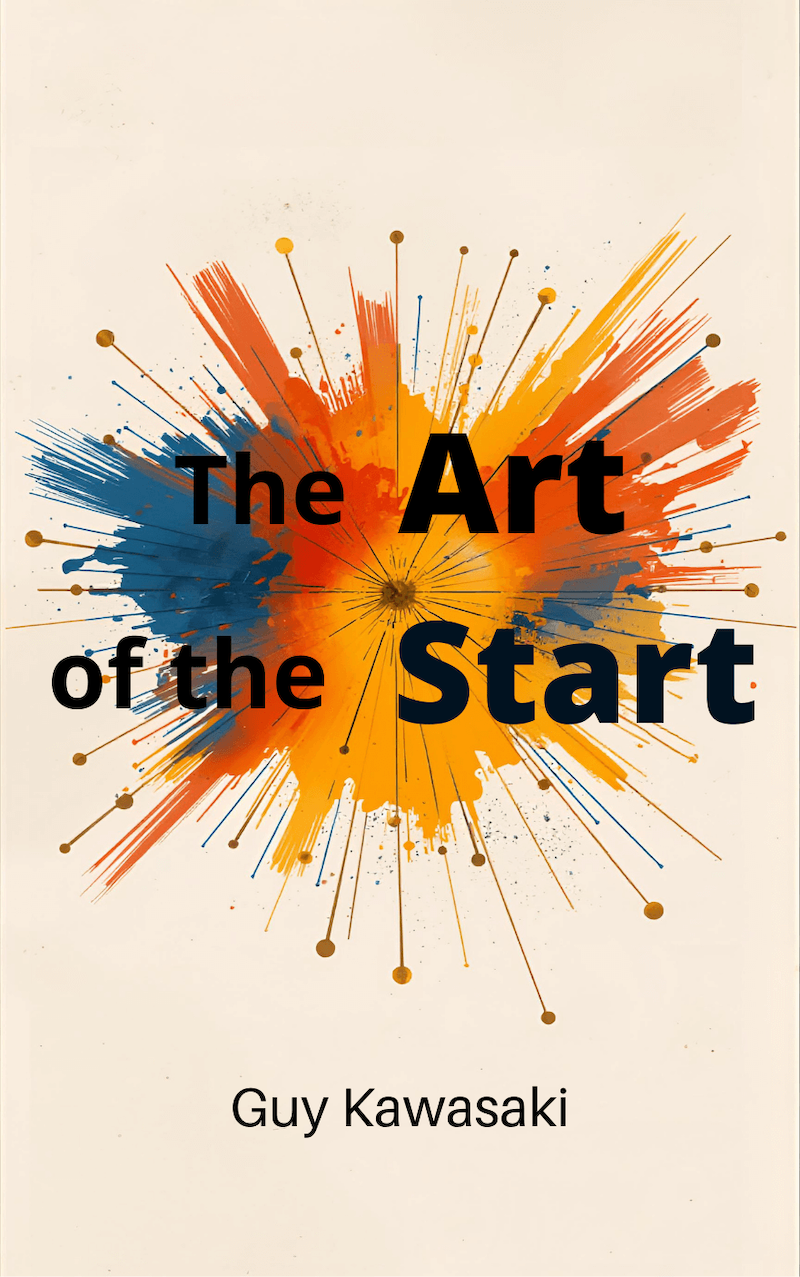
The Art of the Start Book Summary
This The Art of the Start Book Summary covers the key ideas, lessons, and takeaways in about 20 minutes.
Helps with these goals
Want the complete 20-minute summary?
- Full structured summary
- Video Summary
- Podcast Summary
- Audio summary
- Key takeaways
- Exercises
- Quiz
- Highlights and notes
- Ask the book with AI
What is in the The Art of the Start book summary?
Below is a preview of Sumizeit’s expert-written summary of The Art of the Start by Guy Kawasaki. The full summary covers the book’s key ideas in text, audio, and video.
At the heart of The Art of the Start, Guy Kawasaki argues that the strongest organizations are not born from a hunger for profit, fame, or exit opportunities. They begin with a deeper motivation: the desire to contribute something valuable to the world. This idea reframes entrepreneurship as an act of service rather than extraction. Instead of asking, “How can I get rich?” Kawasaki challenges founders to ask, “What change do I want to create?”
Meaning becomes the compass that guides every decision an organization makes. When a company exists to improve lives, fix broken systems, or preserve something worthwhile, it naturally attracts people who care. Employees are more engaged because their work feels purposeful. Customers become loyal because they believe in the mission. Partners and investors are drawn to clarity of intent rather than empty hype.
Kawasaki explains that this principle applies across all types of organizations. Businesses may create meaning by delivering tools that improve productivity or joy. Nonprofits do so by addressing unmet social needs. Schools create meaning by equipping people with knowledge and confidence. Faith-based organizations offer belonging and moral grounding. In each case, meaning provides resilience during difficult moments, when revenue dips or growth stalls.
By anchoring an organization in purpose, founders avoid the trap of chasing every opportunity or trend. Meaning acts as a filter. If an idea doesn’t align with the reason the organization exists, it doesn’t deserve attention. This clarity reduces confusion, accelerates decision-making, and builds trust internally and externally.
From Bloated Mission Statements to Living Mantras
Kawasaki takes direct aim at traditional mission statements, dismissing them as verbose, forgettable, and disconnected from daily work. He argues that no one remembers them, let alone uses them to guide decisions. In their place, he introduces the concept of a mantra: a compact expression of purpose that can be recalled instantly.
A mantra distills meaning into just a few words. It is not designed for framing on a wall but for shaping behavior. The most effective mantras are short, active, and centered on the value delivered to users. Because they are simple, they spread easily within an organization and become part of its shared language.
Kawasaki emphasizes that creating a mantra requires discipline. Founders must strip away jargon, buzzwords, and abstract ideals. Terms like “world-class,” “innovation,” or “leadership” say nothing specific and inspire no action. Instead, a mantra should describe what the organization actually does for people.
When done well, a mantra becomes a practical tool. It helps teams resolve disagreements by asking whether a decision aligns with those few words. It also helps customers immediately understand what the organization stands for. Over time, the mantra becomes synonymous with the brand itself, shaping expectations and experiences.
Acting First Instead of Planning Forever
One of the book’s most persistent themes is urgency. Kawasaki repeatedly warns against excessive planning, forecasting, and theorizing. He argues that entrepreneurs often mistake preparation for progress, convincing themselves that more spreadsheets and slide decks will reduce risk.
Want the complete 20-minute summary?
- Full structured summary
- Video Summary
- Podcast Summary
- Audio summary
- Key takeaways
- Exercises
- Quiz
- Highlights and notes
- Ask the book with AI
Who should read The Art of the Start?
The Art of the Start is essential for entrepreneurs, founders, and business leaders who want to build organizations with lasting impact. It's equally valuable for anyone starting a new venture, whether a tech startup, nonprofit, or small business, as well as professionals seeking to understand the principles behind successful entrepreneurship.
Why does The Art of the Start matter?
In a world obsessed with funding rounds and rapid scaling, The Art of the Start by Guy Kawasaki offers a refreshing alternative: building companies rooted in purpose rather than profit extraction. Today's entrepreneurs face constant pressure to chase trends and hypergrowth; this book provides the clarity and discipline needed to build ventures that endure and create genuine value.
What are the key themes in The Art of the Start?
- Purpose-driven organization as a competitive advantage
- Action and iteration over endless planning
- Resourcefulness and bootstrapping as strategic mindset
- People and culture as the foundation of success
- Customer evangelism and community building
- Realistic assessment and honest feedback
- Pitching clarity as a core survival skill
What are the key lessons from the The Art of the Start book summary?
Start with meaning, not money
Organizations that begin with a desire to contribute something valuable to the world attract engaged employees, loyal customers, and aligned partners. Meaning acts as a compass that guides decisions and provides resilience when growth stalls.
Replace mission statements with mantras
Mantras are short, actionable expressions of purpose that guide behavior and become part of an organization's shared language. Unlike verbose mission statements, effective mantras are memorable, specific, and used daily in decision-making.
Build first, plan later
Rough prototypes in users' hands reveal truths that internal planning cannot. Moving quickly and gathering real feedback is more valuable than perfecting concepts in documents.
Treat mistakes as data, not failure
When entrepreneurs launch early and iterate based on evidence, they reduce the cost of being wrong and increase learning velocity. Speed becomes a competitive advantage because it accelerates discovery.
Master the art of pitching
Pitching is a core entrepreneurial function, not just for fundraising. Founders must constantly explain their ideas clearly and persuasively to investors, customers, partners, and employees.
Lead with outcomes and stories
Effective pitches focus on results and real-world examples rather than features or technical details. Simplicity signals confidence, while complexity often signals uncertainty.
Bootstrap as a mindset, not just a budget
Resourcefulness and careful prioritization create stronger fundamentals and foster creativity. Bootstrapped organizations avoid vanity projects and focus on activities that directly create value.
Consider services before products
Launching a service generates immediate revenue and exposes teams to customer problems firsthand. Insights gained directly inform product development and reduce the risk of building something nobody wants.
Hire for mission alignment and passion
A small group of highly capable, mission-aligned individuals outperforms a large team of disengaged employees. The best hires already believe in the mission or feel personally connected to solving the problem.
Evaluate candidates through real work, not credentials
Demonstrated ability, curiosity, adaptability, and integrity matter more than resumes or pedigrees. Observe how candidates think and collaborate in situations that mirror actual work.
Build traction before seeking capital
Revenue, active users, partnerships, and repeat customers speak louder than projections. Investors are far more interested in evidence of demand than in founder enthusiasm.
Money is fuel, not the destination
Raising capital can accelerate growth, but chasing investors before proving demand often leads to inflated expectations and fragile businesses. The strongest position is one where the business could survive without outside money.
Choose investors carefully for alignment
The best investors contribute perspective, connections, and long-term alignment beyond capital. A misaligned investor creates more problems than solutions, regardless of check size.
Base partnerships on concrete benefits
Effective partnerships are built on clearly defined objectives and mutual understanding of gains and contributions. Without measurable goals, partnerships drift and eventually dissolve.
Start small in partnerships
Limited-scope collaborations allow both sides to test compatibility without significant risk. Trust develops through execution, not enthusiasm.
Create evangelists, not just customers
The most powerful marketing force is a community of customers who genuinely love what an organization offers. Evangelists promote products because they believe in them, not because they're paid to.
Excellence and respect build evangelism
Creating evangelists begins with delivering consistent value and treating customers with respect. Listening authentically to feedback and inviting customer participation deepens investment in the organization's success.
Stay open to unexpected opportunities
Markets rarely behave exactly as expected. Organizations that observe behavior and remain flexible can identify surprising applications, new customer segments, and emerging opportunities.
Seek candid feedback and challenge assumptions
Surrounding yourself with people who challenge assumptions and provide honest feedback prevents self-deception and groupthink. Realism enables better decisions than optimism alone.
Ground ambition in evidence
Facing uncomfortable truths about weaknesses and risks allows organizations to address them proactively. Honesty combined with hope creates sustainable momentum rather than fragile expectations.
Want the complete 20-minute summary?
- Full structured summary
- Video Summary
- Podcast Summary
- Audio summary
- Key takeaways
- Exercises
- Quiz
- Highlights and notes
- Ask the book with AI
How can you apply ideas from The Art of the Start?
- Develop a concise mantra for your organization and use it to filter decisions and resolve disagreements
- Launch a minimum viable product or service within weeks rather than months to begin gathering real user feedback
- Identify and recruit early team members who already use your product or deeply believe in your mission
- Practice your pitch repeatedly with different audiences, refining based on what works rather than memorizing a script
- Generate revenue through services before building a full product, using customer insights to reduce risk
- Create a community of customers who can share experiences and contribute ideas, turning them into advocates
- Implement a feedback loop that tracks unexpected uses or customer segments, exploring emerging opportunities
- Establish clear partnership agreements with defined objectives, roles, and success metrics before committing
What common mistakes do readers make with The Art of the Start?
- Waiting for perfect planning and funding before taking action, delaying learning and market validation
- Creating long, jargon-filled mission statements that nobody remembers or uses in daily decisions
- Hiring quickly to fill roles rather than waiting for mission-aligned people who genuinely care about the work
- Chasing every opportunity and trend instead of using meaning as a filter for strategic decisions
- Overvaluing the company early through inflated fundraising rounds, raising the bar for future performance
Sumizeit Exercises Apply what you've learned
Turn ideas from The Art of the Start into action with a short guided reflection: identify the biggest takeaway, connect it to your life, and commit to one step you can take in the next 24 hours.
What is the expert analysis of The Art of the Start?
Overview
The Art of the Start is a seminal work by Guy Kawasaki, a renowned entrepreneur and venture capitalist with deep roots in Silicon Valley’s startup ecosystem. Kawasaki’s extensive experience as an early Apple evangelist and his subsequent career advising startups lend the book a practical authority that resonates with founders and innovators alike. The book’s significance lies in its reframing of entrepreneurship—not merely as a quest for profit or fame, but as a purposeful act of creating meaningful change. Kawasaki’s approach blends actionable advice with a philosophical underpinning that elevates the discourse around startup culture and organizational purpose.
Core Thesis
Kawasaki’s central argument is that successful organizations are founded on meaning rather than mere financial incentives. He posits that a clear, authentic purpose acts as a compass guiding every decision, fostering engagement among employees, loyalty among customers, and trust among partners and investors. This intrinsic motivation, expressed succinctly through mantras rather than bloated mission statements, helps organizations maintain focus and resilience. The book advocates for urgency in execution, resourcefulness in bootstrapping, and the cultivation of passionate, mission-aligned teams. Ultimately, Kawasaki asserts that entrepreneurship is a disciplined craft centered on meaningful impact, rapid learning, and honest self-assessment.
Strengths
- Practical Wisdom Rooted in Experience: Kawasaki’s advice is grounded in real-world Silicon Valley practice, making his insights highly actionable for founders navigating early-stage challenges.
- Emphasis on Purpose and Meaning: The book elevates the conversation beyond profit to the importance of mission-driven work, which is increasingly relevant in today’s socially conscious business environment.
- Clear Frameworks and Tools: Concepts like mantras, iterative product development, and focused pitching provide concrete methods that founders can implement immediately.
- Human-Centered Focus: Kawasaki’s insistence on hiring “infected” people who care deeply about the mission underscores the importance of culture and intrinsic motivation in building enduring organizations.
- Balanced View on Capital and Partnerships: The pragmatic stance on funding and collaboration avoids hype, encouraging sustainable growth and strategic alignment.
Critiques & Counterarguments
- Overemphasis on Urgency May Undervalue Planning: While Kawasaki champions rapid iteration, some schools of thought argue that insufficient upfront planning can lead to strategic drift or resource wastage, especially in complex industries requiring regulatory compliance or heavy R&D investment.
- Resourcefulness vs. Scale Tension: The bootstrapping mindset is laudable but may not be universally applicable. Certain ventures—such as biotech or hardware startups—require significant capital early on, making Kawasaki’s advice less relevant or even risky in those contexts.
- Mantras vs. Comprehensive Vision: The critique of traditional mission statements is valid, yet some organizations benefit from nuanced, multi-dimensional visions that capture complexity and long-term aspirations, which a mantra alone may oversimplify.
- Evangelism and Customer Loyalty Assumptions: Kawasaki’s ideal of turning customers into evangelists presumes product excellence and cultural fit, but this can overlook market dynamics where consumers are indifferent or highly price-sensitive, limiting the efficacy of evangelism as a marketing strategy.
- Competing Perspectives on Failure and Learning: Kawasaki’s framing of failure as data aligns with lean startup methodology but contrasts with more cautious approaches that emphasize risk mitigation and thorough validation before market entry, especially in high-stakes sectors.
Who Should Read This
The Art of the Start is essential reading for aspiring entrepreneurs, early-stage founders, and intrapreneurs seeking a grounded yet inspiring blueprint for launching ventures with purpose and momentum. It is particularly valuable for those operating in fast-moving, innovation-driven industries where agility and clarity of mission are critical. Additionally, business educators and startup mentors will find Kawasaki’s frameworks useful for guiding novices through the complexities of venture creation. However, readers involved in highly regulated, capital-intensive, or traditional industries may need to supplement Kawasaki’s advice with more specialized strategic planning resources.
Frequently asked questions about the The Art of the Start book summary
What is The Art of the Start about?
The Art of the Start by Guy Kawasaki is a guide to building organizations rooted in purpose and meaning rather than profit extraction or hype. The book emphasizes practical principles including starting with a clear mission, moving quickly through action, hiring passionate people, pitching effectively, and staying grounded in reality to create ventures with lasting impact.
Who should read The Art of the Start?
The Art of the Start is essential for entrepreneurs, founders, and business leaders building new ventures in any industry. It's valuable for anyone starting a startup, nonprofit, or small business, as well as professionals seeking to understand how to build organizations with clarity, discipline, and purpose rather than shortcuts or hype.
What are the main takeaways from The Art of the Start?
Key takeaways include building organizations around meaningful purpose rather than profit, moving quickly through action instead of endless planning, replacing bloated mission statements with memorable mantras, hiring mission-aligned people over high-credential individuals, treating capital as fuel rather than the goal, and creating customer evangelists through excellence and authentic engagement. The book emphasizes that success comes from consistently doing the right things for the right reasons.
How does Kawasaki recommend founders approach fundraising?
Kawasaki advises building real traction first—revenue, active users, and partnerships—before seeking capital. He emphasizes that money is fuel to accelerate growth, not the destination. Founders should be selective about investors, prioritizing alignment and perspective over check size, and aim to reach a position where the business could survive without outside funding.
What is a mantra and why is it better than a mission statement?
A mantra is a short, memorable expression of what an organization does for its users, distilled into a few actionable words. Unlike traditional mission statements that are verbose and forgotten, mantras guide daily behavior, become part of shared language, and help teams make decisions quickly by filtering against a clear standard.
How does The Art of the Start define success?
Success is not about shortcuts, hype, or rapid exits, but about building meaningful organizations that create genuine value. The book defines success through resilience, clarity of purpose, engaged employees, loyal customers, and lasting impact—outcomes that emerge when meaning leads and execution follows with integrity and discipline.
What does Kawasaki say about hiring in The Art of the Start?
Kawasaki emphasizes hiring for mission alignment and passion over credentials. The best candidates already use the product, believe deeply in the problem being solved, or feel personally connected to the organization's purpose. Small teams of highly capable, mission-aligned people outperform larger teams of disengaged employees.
Why does Kawasaki advocate for bootstrapping?
Bootstrapping is a mindset of resourcefulness that forces organizations to prioritize ruthlessly, avoid vanity projects, and focus on activities that create direct value. It fosters creativity, builds resilience and independence, and preserves founder control over vision and timeline—even if external funding becomes necessary later.
About Sumizeit
Sumizeit is a profitable Scomy LLC company based in Miami, Florida. It has been helping readers learn from nonfiction books for 7 years with expert-written summaries in text, audio, podcast, and video.
Want the complete 20-minute summary?
- Full structured summary
- Video Summary
- Podcast Summary
- Audio summary
- Key takeaways
- Exercises
- Quiz
- Highlights and notes
- Ask the book with AI
Here's why readers love Sumizeit
Join thousands of learners getting smarter every day
"Great experience. Detailed summaries. Loved the gamification feature. Makes learning fun. Good customer service. I recommend Sumizeit to anyone. You'll learn a lot."
"I always felt busy but still wanting to keep up with the book discussion in my friend group. This was a great supplement to help me keep reading the books I find fun while keeping up with important books."
"I love this website. Instead of scrolling social media, I find myself learning a lot. I use it everyday. I recommend this app for anyone who is too busy and wants to get up to speed with their favorite books."
The Art of the Start Book Summary PDF
Looking for a The Art of the Start Book Summary PDF you can save and revisit offline? Our The Art of the Start Book Summary PDF captures the book’s core ideas in a clean, printable format — the key frameworks, takeaways, and structure without the fluff. Download the The Art of the Start Book Summary PDF when you want a reference you can annotate, share with your team, or review on the go. Get your The Art of the Start Book Summary PDF from the download page below.
Download The Art of the Start Book Summary PDFPeople also liked these summaries
Readers who explored The Art of the Start often enjoyed these titles next.


Want the complete 20-minute summary?
- Full structured summary
- Video Summary
- Podcast Summary
- Audio summary
- Key takeaways
- Exercises
- Quiz
- Highlights and notes
- Ask the book with AI
Featured Book Titles
Popular Book Summaries at sumizeit, leading book summary app