


Prefer the print book? Buy on Amazon
As an Amazon Associate, Sumizeit earns from qualifying purchases.
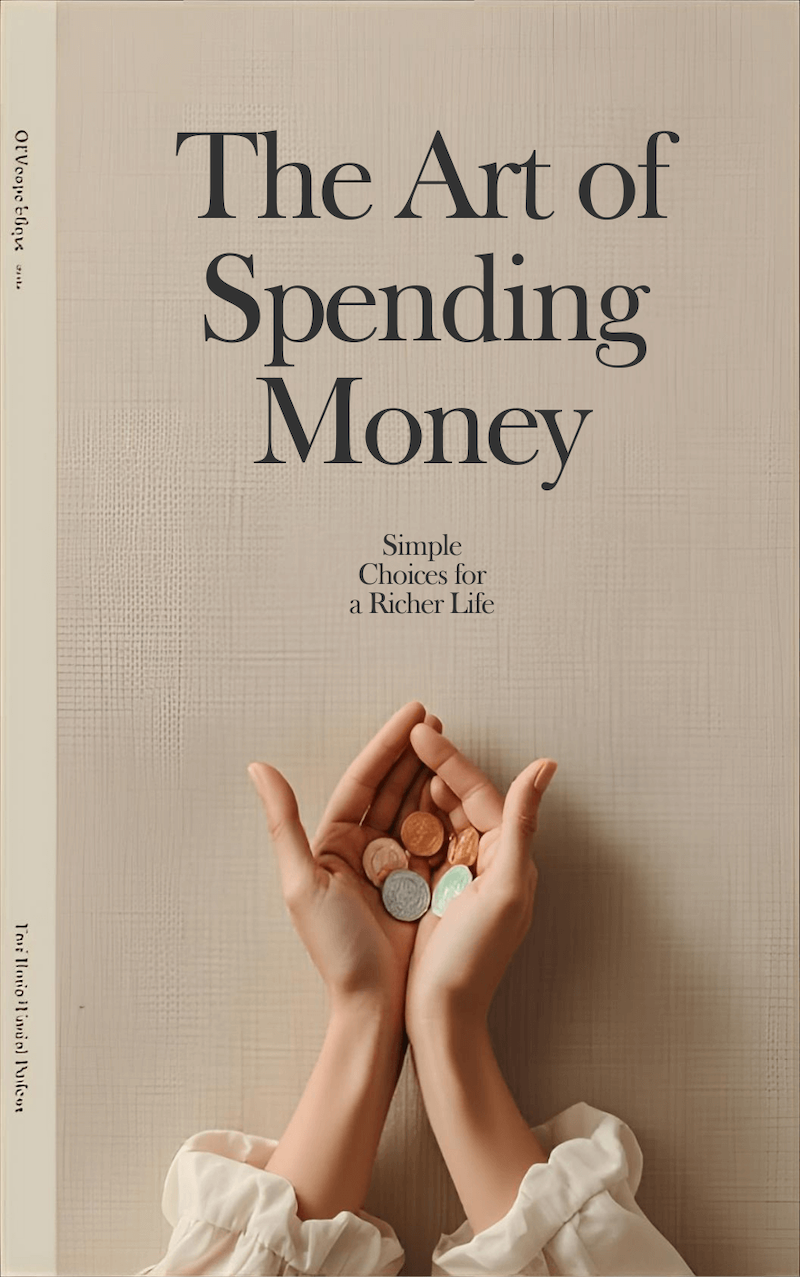
The Art of Spending Money: Understanding the Human Side of Financial Choices Book Summary
This The Art of Spending Money: Understanding the Human Side of Financial Choices Book Summary covers the key ideas, lessons, and takeaways in about 20 minutes.
Short Description:
The Art of Spending Money aligns spending with values for fulfillment.
Helps with these goals
Preview the The Art of Spending Money: Understanding the Human Side of Financial Choices book summary
Below is a preview of Sumizeit’s comprehensive human-written summary of The Art of Spending Money: Understanding the Human Side of Financial Choices by Morgan Housel. The full summary is 15-20 minutes long and covers the book’s key ideas in text, audio, visual, and video formats. Unlock the full 20 Minute Summary
Money is commonly taught as if it were governed by formulas, principles, and predictable outcomes. Textbooks and financial courses portray personal finance as a logical, numerical realm—one where budgets, investments, and savings are the main characters. But the reality of how people spend money reflects something far more unpredictable and complex: money decisions are emotional, subjective, and deeply intertwined with identity, upbringing, fear, desire, and personal history. Spending is not a precise equation; it is an art form shaped by individuality and the pursuit of meaning. The lessons in The Art of Spending Money illuminate why financial choices that seem irrational from the outside are perfectly reasonable once you understand the full context of someone’s life. By exploring topics such as contentment, independence, regret, experimentation, and status, the book challenges conventional assumptions about wealth, reframing money not as a scoreboard but as a versatile tool for living a fulfilling life.
Spending as an Expression of Identity
Contrary to popular belief, there is no universal definition of spending wisely. Two people with identical incomes may make completely different financial choices, and neither is wrong. What matters is how well their spending aligns with their values. People rarely spend solely based on practicality; they spend to reinforce identity, heal wounds, create security, or chase a sense of belonging. Someone who grew up experiencing scarcity may place enormous emotional significance on having a full pantry, driving a reliable car, or maintaining savings. A person who spent childhood feeling invisible may allocate money toward luxury or social display to feel seen. A financially successful adult may insist on frugality because fear still governs their decisions. Every behavior has roots. When we view spending through the lens of psychology rather than math, we understand that money is rarely about objects—it’s about emotional needs, internal stories, self-definition, and the desire to feel safe or valued. To judge another person’s spending without knowing their background is like reviewing a movie after watching only ten seconds.
Money as a Tool, Not a Trophy
A fundamental dividing line separates people who use money as a tool from those who treat it as a scoreboard. When money becomes a measure of superiority or validation, it controls the person instead of supporting them. Those who chase money for appearances typically find dissatisfaction, as status is endlessly comparative—you can always look upward and feel insufficient. The artist of spending reframes money as a resource to build a better life: to improve comfort, foster relationships, reduce stress, or create opportunities. Happiness does not grow from accumulating possessions but from using resources in ways that reflect personal fulfillment rather than social expectation. The purpose of money is to support life, not overshadow it.
Happiness Through Contentment, Not Expansion
Many people assume that more money naturally generates more happiness, yet research and lived experience show the opposite. Joy is not the result of accumulation; it comes from closing the gap between what you have and what you want.
Want the complete 20-minute summary?
- Full structured summary
- Video Summary
- Podcast Summary
- Audio summary
- Key takeaways
- Exercises
- Quiz
- Highlights and notes
- Ask the book with AI
Who should read The Art of Spending Money: Understanding the Human Side of Financial Choices?
The Art of Spending Money is for anyone who wants to understand why they spend the way they do and how to align their finances with their values. Whether you're a high earner feeling unfulfilled, a saver struggling to enjoy what you've built, or simply curious about the psychology behind financial choices, this book offers insights that transcend traditional budgeting advice.
Why does The Art of Spending Money: Understanding the Human Side of Financial Choices matter?
In a world of endless consumption, social comparison, and financial noise, The Art of Spending Money reframes how we think about money as a tool for living well rather than a scorecard for measuring success. Morgan Housel's exploration of the emotional and psychological dimensions of spending helps readers escape the trap of comparison culture and discover what authentic financial fulfillment actually looks like.
What are the key themes in The Art of Spending Money: Understanding the Human Side of Financial Choices?
- Spending as an expression of identity and personal values
- Money as a tool for independence rather than a symbol of status
- Contentment and gratitude as sources of lasting happiness
- The emotional cost of envy and social comparison
- Balancing present enjoyment with future security
- Experimentation to discover authentic sources of joy
How can you apply ideas from The Art of Spending Money: Understanding the Human Side of Financial Choices?
- Track spending patterns to uncover emotional triggers and identify which purchases align with core values versus those driven by status or comparison
- Conduct experiments with different spending categories, then ruthlessly eliminate what fails to deliver genuine satisfaction or well-being
- Calculate your financial independence number to understand how much freedom different saving levels can purchase, making future autonomy concrete and motivating
- Build a personal spending philosophy that articulates your values, then use it as a decision filter before major purchases to prevent regret
- Deliberately reduce exposure to comparison triggers (social media, status-conscious environments) and seek out communities that reinforce contentment and grounded values
- Ask yourself the authenticity question before purchases: Would I still want this if no one else knew I had it?
What common mistakes do readers make with The Art of Spending Money: Understanding the Human Side of Financial Choices?
- Assuming that earning more money will automatically increase happiness without examining spending patterns and psychological drivers behind financial choices
- Using wealth or possessions as a primary source of identity, which locks you into rigid spending behaviors and prevents evolution as priorities shift
- Buying based on cultural scripts about what should bring happiness rather than experimenting to discover your unique sources of joy and meaning
- Comparing your financial situation to others' highlight reels on social media, outsourcing self-worth to strangers and fueling endless pursuit of status
Sumizeit Exercises Apply what you've learned
Turn ideas from The Art of Spending Money: Understanding the Human Side of Financial Choices into action with a short guided reflection: identify the biggest takeaway, connect it to your life, and commit to one step you can take in the next 24 hours.
What is the expert analysis of The Art of Spending Money: Understanding the Human Side of Financial Choices?
Overview
The Art of Spending Money: Understanding the Human Side of Financial Choices is authored by Morgan Housel, a renowned financial thought leader celebrated for his insightful fusion of behavioral psychology, history, and storytelling. Housel’s reputation is built on his ability to transcend traditional financial advice by focusing on the emotional and psychological dimensions of money management. This book extends his influential work, inviting readers to reconsider money not as a mere numerical challenge but as a deeply personal and subjective art form. Housel’s background as a columnist for prestigious publications and bestselling author lends significant credibility and depth to his exploration of financial behavior.
Core Thesis
At its core, the book argues that financial decisions are fundamentally emotional and identity-driven rather than purely rational or formulaic. Housel posits that money should be viewed as a versatile tool for crafting a fulfilling life, rather than as a scoreboard for social comparison or status. He challenges conventional wisdom by emphasizing that true wealth lies in contentment, independence, and alignment with personal values. The central insight is that spending wisely is not about universal rules but about understanding the unique psychological and emotional contexts that shape individual choices, thereby transforming money management into an art of living well.
Strengths
- Psychological Depth: Housel masterfully integrates behavioral psychology to reveal the hidden motivations behind spending, enriching the discourse beyond typical financial advice.
- Nuanced Perspective on Wealth: The book’s reframing of money as a tool for freedom and happiness rather than status challenges pervasive societal narratives and offers a refreshing, humane approach.
- Practical Wisdom: Through concepts like minimizing future regret, slow compounding, and experimentation, the book provides actionable guidance that respects the complexity of real-life financial decisions.
- Engaging Storytelling: Housel’s narrative style makes complex ideas accessible without sacrificing intellectual rigor, appealing to both lay readers and seasoned thinkers.
- Emphasis on Emotional Authenticity: By highlighting the importance of aligning spending with identity and values, the book encourages readers to cultivate financial self-awareness and intentionality.
Critiques & Counterarguments
- Potential Overemphasis on Subjectivity: While the book rightly underscores individuality in spending, it may underplay the value of objective financial principles that provide necessary structure and discipline.
- Limited Engagement with Structural Factors: The analysis focuses heavily on personal psychology but gives less attention to systemic economic inequalities and cultural influences that constrain financial choices.
- Competing Research on Happiness and Money: Some empirical studies suggest that beyond a certain threshold, increased income does correlate with greater life satisfaction and opportunities, complicating Housel’s argument about contentment through lowered expectations.
- Alternative Schools of Thought: Behavioral economists like Richard Thaler emphasize “nudges” and external interventions to improve financial behavior, which contrasts with Housel’s emphasis on internal self-awareness and identity alignment.
- Risk of Relativism: The assertion that no spending choice is inherently wrong if aligned with personal values could be critiqued for potentially excusing financially harmful behaviors under the guise of subjective meaning.
Who Should Read This
This book is ideal for readers seeking a sophisticated, psychologically informed perspective on personal finance—particularly those disillusioned by conventional, numbers-driven financial advice. It will resonate with individuals interested in the intersection of money, identity, and well-being, including professionals in finance, psychology, and philosophy, as well as thoughtful consumers aiming to cultivate a more mindful and authentic relationship with their finances. Moreover, anyone grappling with the emotional complexities of spending and saving will find Housel’s insights both validating and transformative.
Frequently asked questions about the The Art of Spending Money: Understanding the Human Side of Financial Choices book summary
What is The Art of Spending Money: Understanding the Human Side of Financial Choices about?
The Art of Spending Money by Morgan Housel explores how financial decisions are shaped by psychology, emotions, identity, and personal history rather than logic alone. The book reframes money not as a mathematical problem but as a tool for living a fulfilling life aligned with personal values, addressing topics like contentment, independence, comparison, and regret to help readers understand why they spend the way they do.
Who should read The Art of Spending Money: Understanding the Human Side of Financial Choices?
This book is for anyone struggling with spending choices, financial dissatisfaction despite earning well, or the emotional toll of comparison culture. It's particularly valuable for those who feel trapped by financial expectations, want to better understand their spending habits, or seek to align their money with their authentic values rather than external pressures.
What are the main takeaways from The Art of Spending Money: Understanding the Human Side of Financial Choices?
Key takeaways include: money decisions reflect emotional needs and personal history rather than pure logic; true wealth is independence and control over your time; happiness comes from contentment rather than accumulation; utility-driven spending creates lasting satisfaction while status-driven spending creates endless dissatisfaction; and the ultimate purpose of money is to improve life, create freedom, and enable time with people and pursuits you love.
How can I tell if I'm spending for status or utility?
The counterfeit test reveals your true motivation: imagine discovering a luxury item you purchased was actually counterfeit. If you'd feel disappointed despite unchanged quality and function, you bought it for status and the narrative attached to it rather than for its practical benefits. Utility-driven purchases deliver satisfaction regardless of external validation.
How does Morgan Housel define true wealth?
Housel defines true wealth as independence and control over your time and decisions rather than accumulation of possessions or money. Real wealth is the freedom to say no to situations you dislike, choose work aligned with your values, maintain relationships, and avoid external pressures—making autonomy far more valuable than luxury or status.
What's the best way to balance saving and spending according to The Art of Spending Money?
Rather than choosing between extreme saving or spending, Housel recommends a framework focused on minimizing future regret. This means intentionally balancing present meaningful experiences with future security, allowing the balance to shift with your life stage, and regularly asking what your future self will wish you had done.
How does envy affect financial decision-making?
Envy corrupts financial choices by outsourcing your self-worth to others and fueling endless pursuit of status that can never be satisfied. Social media intensifies this by presenting polished fragments of others' lives, creating unrealistic comparisons and inflated expectations that destroy contentment and emotional well-being.
About Sumizeit
Sumizeit is a profitable Scomy LLC company based in Miami, Florida. Our founders, Clemens Raemy and Weina Scott, are successful entrepreneurs with several exits. Sumizeit is a popular book summary app / micro learning app used by busy professionals and entrepreneurs with over 2,500 non-fiction book summaries and 10,000 podcast summaries in text, audio, visual, podcast, and video format. We also have stellar retention tools to make ideas stick - such as flashcards with spaced repetition, quizzes, streaks, highlighting and notes, daily challenges, riddles, mini-courses, meditation, and more. You won't only learn the idea, but also remember it. Over 90% of our users change their habits with Sumizeit.
Upgrade Now
Here's why readers love Sumizeit
Join thousands of learners getting smarter every day
"Great experience. Detailed summaries. Loved the gamification feature. Makes learning fun. Good customer service. I recommend Sumizeit to anyone. You'll learn a lot."
"I always felt busy but still wanting to keep up with the book discussion in my friend group. This was a great supplement to help me keep reading the books I find fun while keeping up with important books."
"I love this website. Instead of scrolling social media, I find myself learning a lot. I use it everyday. I recommend this app for anyone who is too busy and wants to get up to speed with their favorite books."
The Art of Spending Money: Understanding the Human Side of Financial Choices Book Summary PDF
Looking for a The Art of Spending Money: Understanding the Human Side of Financial Choices Book Summary PDF you can save and revisit offline? Our The Art of Spending Money: Understanding the Human Side of Financial Choices Book Summary PDF captures the book’s core ideas in a clean, printable format — the key frameworks, takeaways, and structure without the fluff. Download the The Art of Spending Money: Understanding the Human Side of Financial Choices Book Summary PDF when you want a reference you can annotate, share with your team, or review on the go. Get your The Art of Spending Money: Understanding the Human Side of Financial Choices Book Summary PDF from the download page below.
Download The Art of Spending Money: Understanding the Human Side of Financial Choices Book Summary PDFPeople also liked these summaries
Readers who explored The Art of Spending Money: Understanding the Human Side of Financial Choices often enjoyed these titles next.
Ready to read the whole thing?
- Full structured summary
- Video Summary
- Podcast Summary
- Audio summary
- Key takeaways
- Exercises
- Quiz
- Highlights and notes
- Ask the book with AI
Featured Book Titles
Popular Book Summaries at sumizeit, leading book summary app