


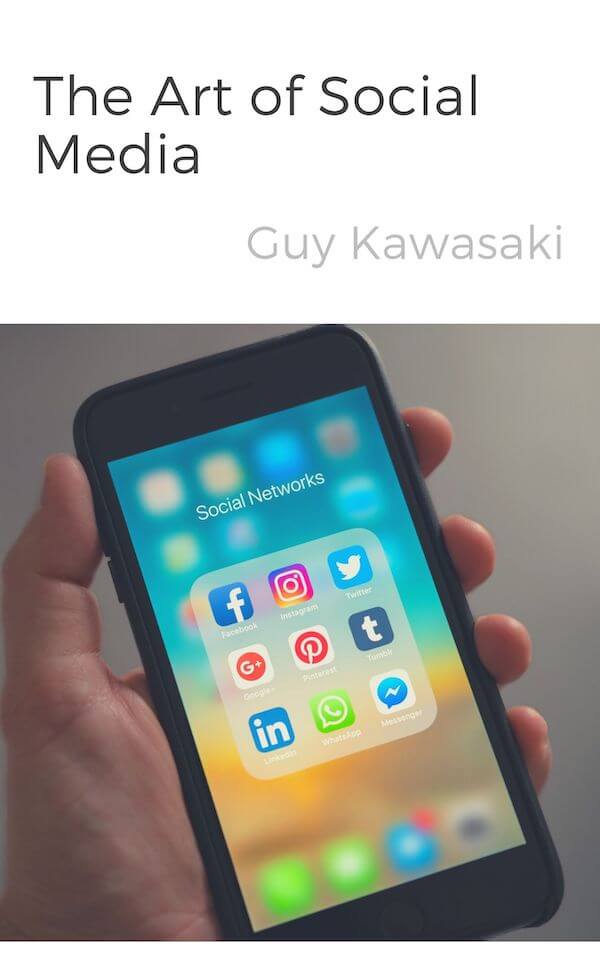
Prefer the print book? Buy on Amazon
As an Amazon Associate, Sumizeit earns from qualifying purchases.
The Art of Social Media Book Summary
This The Art of Social Media Book Summary covers the key ideas, lessons, and takeaways in about 20 minutes.
Short Description:
Good social media practices build a valuable online brand.
By implementing good etiquette and utilizing the resources available on social media, you can maximize your presence. Following good sense practices will help you build a successful online brand. This includes creating valuable content, integrating access to all of your social media, and responding to user comments in a professional manner. If you adhere to these practical steps, you will continue to build an online presence that is valued and interesting.
Preview the The Art of Social Media book summary
Below is a preview of Sumizeit’s comprehensive human-written summary of The Art of Social Media by Guy Kawasaki and Peg Fitzpatrick. The full summary is 15-20 minutes long and covers the book’s key ideas in text, audio, visual, and video formats. Unlock the full 20 Minute Summary
These days almost everyone uses social media. Whether you have a personal or professional social media presence, learning how to avoid mistakes that can damage your brand is essential. The Art of Social Media provides an in-depth guide on how to elevate your presence while steering clear of damaging mistakes.
The Art of Social Media offers practical advice on how to effectively engage your audience, and build a positive brand image on social media platforms. It is an excellent resource of tools and methods that have been proven through real-world testing by the authors. This is an essential read for those who wish to become more adept at using social media.
Your profile needs to accurately represent who you are.
A successful social media presence is built upon a foundation of excellent communication. Your audience needs to know who you are. People often form an opinion of a person or organization from their profile, so it is important to make sure your profile effectively communicates who you are. Creating the right impression from the beginning is essential in building your presence.
Your profile picture is as important as the information written in your profile. If you are using your photo try to get a professional headshot. To make it more interesting, try an asymmetrical pose. Headshots that are not taken face on are regarded as more interesting and generate a better response. Once you are happy with your profile picture, use it across all platforms so there is consistency in your brand.
When it comes to choosing your social media name, keep it simple and straightforward. The goal is to make yourself easy to find. If you choose a name that is too obscure you may regret it later if it hinders your ability to increase your audience. A name that is easily remembered will help people to find your brand across all platforms of social media.
Determine what your mission statement is and create a suitable tagline or slogan that can be used on all social media. Consistency is key to creating a strong following. By using the same profile information across all platforms you will project the same image to all audiences.
Apart from a good profile picture and name, you need a strong narrative about your brand. Relate the narrative to your slogan and use pictures where possible to enhance the information. For example, you may have the option of a banner photo or cover photo on your social media page. Use this as the space to get across as much information to the customer audience as possible. Remember, you are trying to create the best first impression you can by optimizing your profile.
Curate and create content that has value for your audience and keeps them engaged.
The key to a successful social media presence is the ability to keep your audience engaged. The most effective way is to produce quality content regularly.
Want the complete 20-minute summary?
- Full structured summary
- Video Summary
- Podcast Summary
- Audio summary
- Key takeaways
- Exercises
- Quiz
- Highlights and notes
- Ask the book with AI
Who should read The Art of Social Media?
The Art of Social Media is essential for business owners, entrepreneurs, content creators, and social media influencers who want to build a meaningful online presence. If you manage a brand—whether personal or professional—and want to avoid common pitfalls while maximizing engagement, this book provides actionable strategies from industry experts Guy Kawasaki and Peg Fitzpatrick.
Why does The Art of Social Media matter?
In today's digital landscape, a strong social media presence is critical for brand visibility and audience connection, yet most people make preventable mistakes that damage their credibility. The Art of Social Media cuts through the noise by offering proven, tested strategies for creating valuable content, building genuine engagement, and establishing yourself as an authority in your field. With insights from experts who've worked with global brands, this book helps you avoid wasting time and resources on ineffective tactics.
What are the key themes in The Art of Social Media?
- Profile optimization and consistent brand identity
- Creating and curating high-value content
- Authentic audience engagement over vanity metrics
- Integrating multiple platforms and tools for efficiency
- Professional etiquette and reputation management
- Leveraging events and live content for reach
- Building relationships through meaningful interaction
How can you apply ideas from The Art of Social Media?
- Audit your current profile pictures and bios across all platforms, then update them to match professional standards and ensure brand consistency
- Create a content calendar and use HootSuite or Buffer to schedule posts in advance, freeing time for authentic community engagement
- Conduct audience research using Reddit and platform analytics to identify trending topics relevant to your niche, then plan content around those insights
- Set up a blog with share buttons and RSS feed submission to Alltop, then link back to your social profiles to drive cross-platform traffic
- Develop a response protocol for handling comments and criticism—decide in advance which comments deserve replies and commit to professional, brief responses
- Plan and execute a live video event with proper technology (microphone, webcam, high-speed internet) and enable streaming to reach followers who can't attend live
- Recruit influencers or internal advocates to promote your next major event using consistent hashtags across their platforms to amplify reach
What common mistakes do readers make with The Art of Social Media?
- Buying followers or using bots to artificially inflate numbers, which creates a fake audience that never engages or converts
- Posting inconsistently or too infrequently, which causes audiences to lose interest and algorithms to reduce visibility
- Creating content without understanding what your target audience actually wants, resulting in posts that don't resonate or generate engagement
- Responding defensively to criticism or getting dragged into public arguments, which damages your brand reputation far more than the original complaint
- Using different names, pictures, and messaging on different platforms, which confuses followers and weakens brand recognition
- Over-promoting yourself constantly without providing value, which causes audiences to mute or unfollow you
Sumizeit Exercises Apply what you've learned
Turn ideas from The Art of Social Media into action with a short guided reflection: identify the biggest takeaway, connect it to your life, and commit to one step you can take in the next 24 hours.
What is the expert analysis of The Art of Social Media?
Overview
The Art of Social Media: Power Tips for Power Users is co-authored by Guy Kawasaki and Peg Fitzpatrick, two seasoned experts in the realm of digital marketing and social media strategy. Kawasaki, renowned for his role as chief evangelist at Apple and Canva, brings a wealth of experience in evangelism and brand building, while Fitzpatrick complements this with her extensive background as a social media strategist and brand ambassador for major global companies. Together, they offer a practical, no-nonsense guide aimed at empowering users to harness social media effectively for personal and professional branding.
Core Thesis
The central argument of the book is that successful social media presence hinges on authenticity, strategic content creation, and meaningful engagement. Rather than chasing superficial metrics such as follower counts, Kawasaki and Fitzpatrick emphasize the importance of building a consistent, value-driven brand identity through well-crafted profiles, curated and original content, and active, positive interaction with audiences. The authors advocate for the use of practical tools, disciplined scheduling, and integration across platforms to maximize reach and impact.
Strengths
- Practical and Actionable Advice: The book excels in delivering clear, step-by-step guidance that readers can immediately implement, from profile optimization to content scheduling and engagement techniques.
- Emphasis on Authenticity and Value: By prioritizing content quality and genuine interaction over vanity metrics, the authors align their advice with sustainable social media growth strategies.
- Comprehensive Coverage: The text addresses a broad spectrum of social media activities including branding, content curation, event promotion, and etiquette, providing a holistic approach.
- Integration of Tools and Platforms: Recommendations for leveraging social media management tools like HootSuite and Buffer demonstrate an understanding of the operational challenges faced by users.
- Authoritative Voices: The combined expertise of Kawasaki and Fitzpatrick lends credibility and real-world validation to the strategies presented.
Critiques & Counterarguments
- Potential Oversimplification: While the book provides practical tips, it occasionally glosses over the complexities of algorithmic changes and platform-specific nuances that can significantly impact strategy effectiveness.
- Limited Discussion of Emerging Trends: The fast-evolving nature of social media means that some examples and tools may become outdated quickly, and the book offers limited foresight into emerging platforms or technologies such as TikTok or AI-driven content creation.
- Neglect of Deeper Psychological and Sociological Dynamics: The focus on tactics somewhat underrepresents the broader psychological motivations behind audience behavior and the societal implications of social media use.
- Counterpoint from Critical Scholarship: Some research challenges the notion that frequent posting and broad engagement always yield positive brand growth, suggesting that overexposure can lead to audience fatigue or diminished authenticity.
- Alternative Schools of Thought: Minimalist or niche-focused social media strategies argue for quality over quantity in content posting, contrasting with the book’s encouragement of frequent and multi-platform activity.
Who Should Read This
This book is ideally suited for business owners, media professionals, social media influencers, and individuals seeking to establish or enhance their digital presence. Its accessible yet comprehensive approach makes it valuable for both novices aiming to avoid common pitfalls and intermediate users looking to refine their strategies. Additionally, organizations such as museums and educational institutions can benefit from its insights into brand consistency and audience engagement. Readers who appreciate practical, tested advice grounded in industry experience will find this work particularly rewarding.
Frequently asked questions about the The Art of Social Media book summary
What is The Art of Social Media about?
The Art of Social Media: Power Tips for Power Users by Guy Kawasaki and Peg Fitzpatrick is a practical guide to building an authentic, engaging social media presence without falling into common traps. The book covers profile optimization, content strategy, audience engagement, event promotion, and professional online etiquette—all based on real-world testing and experience with global brands.
Who should read The Art of Social Media?
This book is ideal for business owners, entrepreneurs, social media influencers, content creators, and anyone managing a brand—personal or professional—who wants to grow their audience authentically. It's also valuable for media professionals, nonprofits, and organizations like museums or universities seeking to maximize their social media impact.
What are the main takeaways from The Art of Social Media?
The core takeaways include: create a professional, consistent profile across platforms; produce high-value content rather than posting frequently; engage authentically with your audience; never buy followers; handle criticism professionally; integrate your blog with social media; use management tools to save time; and maintain good online etiquette. Success comes from quality, strategy, and genuine relationship-building—not shortcuts.
Should I buy followers to grow my social media account faster?
No—buying followers is explicitly discouraged in The Art of Social Media because fake followers don't engage with your content, don't support your brand, and actually damage your credibility. Organic growth from authentic, valuable content creates a real audience that cares about what you share.
How often should I post on social media?
The Art of Social Media emphasizes consistency over frequency. Rather than posting randomly, create a schedule and maintain a steady stream of quality content. It's better to post fewer high-value posts on a consistent schedule than to flood feeds with mediocre content. Use analytics to identify the times when your audience is most active and engaged.
How should I respond to negative comments or criticism on social media?
The book recommends keeping responses brief and professional, never becoming defensive or retaliatory. Use negative feedback as a learning opportunity, and if comments are offensive, you can delete them, block the user, or report to the platform. Remember that getting dragged into arguments damages your brand far more than the original criticism.
What social media tools does The Art of Social Media recommend?
Key tools mentioned include HootSuite and Buffer for scheduling posts across multiple platforms simultaneously, Canva for visual content creation, MailChimp for email lists, Alltop for RSS feed distribution, and native platform tools like Twitter Spaces and Google Hangouts for live video events.
How can I make my profile stand out on social media?
According to The Art of Social Media, use a professional headshot with an asymmetrical pose (not straight-on), keep your username simple and memorable, write a clear bio that reflects your mission, maintain a consistent profile picture across all platforms, and create a strong brand narrative supported by visuals like banner photos. Consistency and authenticity are key.
About Sumizeit
Sumizeit is a profitable Scomy LLC company based in Miami, Florida. Our founders, Clemens Raemy and Weina Scott, are successful entrepreneurs with several exits. Sumizeit is a popular book summary app / micro learning app used by busy professionals and entrepreneurs with over 2,500 non-fiction book summaries and 10,000 podcast summaries in text, audio, visual, podcast, and video format. We also have stellar retention tools to make ideas stick - such as flashcards with spaced repetition, quizzes, streaks, highlighting and notes, daily challenges, riddles, mini-courses, meditation, and more. You won't only learn the idea, but also remember it. Over 90% of our users change their habits with Sumizeit.
Upgrade Now
Here's why readers love Sumizeit
Join thousands of learners getting smarter every day
"Great experience. Detailed summaries. Loved the gamification feature. Makes learning fun. Good customer service. I recommend Sumizeit to anyone. You'll learn a lot."
"I always felt busy but still wanting to keep up with the book discussion in my friend group. This was a great supplement to help me keep reading the books I find fun while keeping up with important books."
"I love this website. Instead of scrolling social media, I find myself learning a lot. I use it everyday. I recommend this app for anyone who is too busy and wants to get up to speed with their favorite books."
The Art of Social Media Book Summary PDF
Looking for a The Art of Social Media Book Summary PDF you can save and revisit offline? Our The Art of Social Media Book Summary PDF captures the book’s core ideas in a clean, printable format — the key frameworks, takeaways, and structure without the fluff. Download the The Art of Social Media Book Summary PDF when you want a reference you can annotate, share with your team, or review on the go. Get your The Art of Social Media Book Summary PDF from the download page below.
Download The Art of Social Media Book Summary PDFPeople also liked these summaries
Readers who explored The Art of Social Media often enjoyed these titles next.

Ready to read the whole thing?
- Full structured summary
- Video Summary
- Podcast Summary
- Audio summary
- Key takeaways
- Exercises
- Quiz
- Highlights and notes
- Ask the book with AI
Featured Book Titles
Popular Book Summaries at sumizeit, leading book summary app