


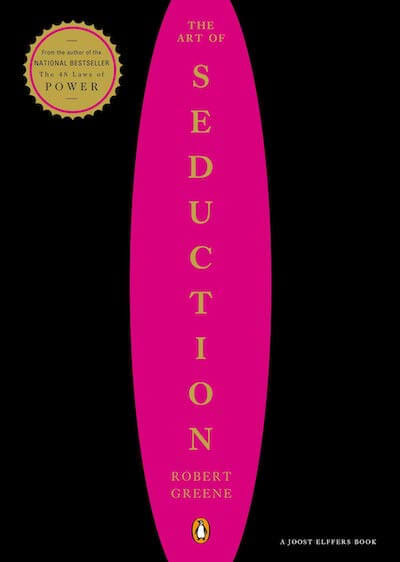
Prefer the print book? Buy on Amazon
As an Amazon Associate, Sumizeit earns from qualifying purchases.
The Art of Seduction Book Summary
This The Art of Seduction Book Summary covers the key ideas, lessons, and takeaways in about 20 minutes.
Short Description:
The Art of Seduction explores influence through charm and psychological tactics.
Helps with these goals
Preview the The Art of Seduction book summary
Below is a preview of Sumizeit’s comprehensive human-written summary of The Art of Seduction by Robert Greene. The full summary is 15-20 minutes long and covers the book’s key ideas in text, audio, visual, and video formats. Unlock the full 20 Minute Summary
Robert Greene’s The Art of Seduction dissects how influence, attraction, and persuasion operate beneath the surface of human behavior.
It’s not a manual on romance but a guide to emotional strategy — to win attention, loyalty, or power through subtlety rather than force.
Seduction, Greene argues, is the most refined form of control because it works invisibly. When done right, the other person doesn’t feel pressured — they feel compelled.
From Cleopatra’s deliberate theater to Casanova’s tailored charm, Greene shows how emotional intelligence and psychological insight can turn ordinary encounters into instruments of persuasion.
Seduction as the Language of Emotion
Unlike brute power, which provokes resistance, seduction works because it aligns with how people want to feel.
Humans are emotional before they are rational. When someone awakens curiosity, admiration, or longing, our critical thinking softens.
Cleopatra didn’t just appeal to Caesar’s senses — she offered him the thrill of myth. She represented glory, adventure, and immortality. Likewise, Napoleon used vision to seduce armies: he replaced fear with destiny.
Greene’s central point is that seduction isn’t about deceit — it’s about reading emotional landscapes. Those who can speak to people’s hidden yearnings will always hold quiet authority over those who rely only on reason or command.
Desire Arises from Discontent
All longing begins with a feeling of absence. Seduction starts when someone awakens that sense of lack — and then embodies its fulfillment.
Greene writes that the most magnetic people don’t simply flatter; they reveal what others didn’t realize they craved.
Casanova mastered this art. Before seducing, he would learn a woman’s disappointments — an inattentive husband, a dull routine, a neglected passion — and then become the antidote. To a woman starved for adventure, he offered danger; to one who longed for tenderness, he offered devotion.
This principle operates beyond love. In marketing, advertisers first create anxiety (“You’re missing out”) and then sell relief (“This will make you whole”).
Seduction, Greene shows, follows the same emotional architecture: make them feel the void — then become the answer.
Mastering the Subtle Power of Suggestion
The art of seduction thrives in ambiguity. People resist when they feel pushed, but they open up when they choose to interpret things themselves.
That’s why great seducers hint rather than declare. They let gestures, pauses, and tone do the work words cannot.
Historical figures used this to profound effect. Queen Elizabeth I maintained control over her court not through commands but through suggestive withholding. Her admirers could never tell if her affections were real — and that uncertainty kept them devoted.
Greene explains that insinuation bypasses defense mechanisms. It lets ideas take root as if they originated in the target’s own mind. In other words, the best seduction feels self-discovered.
When Greta Garbo performed, her allure wasn’t explicit; it was implied in her eyes, in her silence, in the mystery she left unsolved. That’s how influence works — through invitation, not instruction.
The Aura of Desire and Popularity
Humans instinctively chase what others seem…
Want the complete 20-minute summary?
- Full structured summary
- Video Summary
- Podcast Summary
- Audio summary
- Key takeaways
- Exercises
- Quiz
- Highlights and notes
- Ask the book with AI
Who should read The Art of Seduction?
The Art of Seduction is for anyone seeking to understand how influence, persuasion, and emotional connection truly work—whether in leadership, sales, relationships, or creative endeavors. Ambitious professionals, entrepreneurs, artists, and leaders will find profound insights into the psychology of attraction and how to move others without coercion.
Why does The Art of Seduction matter?
In a world saturated with logic-based messaging and direct appeals, Robert Greene's The Art of Seduction reveals that human behavior is fundamentally driven by emotion and desire, not reason. Understanding these invisible forces is essential for anyone hoping to inspire loyalty, build followings, or create lasting influence in the modern landscape.
What are the key themes in The Art of Seduction?
- Emotion as the primary driver of human behavior
- Ambiguity and mystery as tools of attraction
- Strategic absence and distance to intensify desire
- Psychological mirroring and emotional alignment
- Creating narrative and myth around oneself
- Identifying and awakening unfulfilled needs
- Contradiction and complexity as sources of fascination
How can you apply ideas from The Art of Seduction?
- In sales and marketing, identify the emotional void your product fills and position yourself as the answer rather than leading with features
- Build influence in your organization by first establishing trust and warmth with colleagues, then gradually introducing your ideas as shared insights
- Create personal brand mystery by maintaining some ambiguity about your methods, motivations, or background—let people speculate rather than explain everything
- Use strategic silence and absence in important relationships to maintain intrigue and prevent complacency from dulling attraction or respect
- Craft a compelling narrative around your work or vision that invites others to see themselves as part of your story, not just observers of it
- Master active listening and emotional mirroring to make others feel genuinely understood, which naturally builds loyalty and opens them to influence
- Alternate between accessibility and distance in leadership to maintain respect and fascination rather than breeding contempt through constant availability
What common mistakes do readers make with The Art of Seduction?
- Assuming that facts and logical arguments are enough to persuade others; ignoring the emotional architecture that actually drives decisions
- Being too transparent and revealing everything about yourself or your strategy, which eliminates mystery and reduces fascination
- Pursuing those who are already satisfied and content, rather than identifying people experiencing genuine unfulfillment or desire for change
- Applying constant pressure and direct appeals instead of using subtle suggestion and letting others feel they are choosing your influence voluntarily
Sumizeit Exercises Apply what you've learned
Turn ideas from The Art of Seduction into action with a short guided reflection: identify the biggest takeaway, connect it to your life, and commit to one step you can take in the next 24 hours.
What is the expert analysis of The Art of Seduction?
Overview
The Art of Seduction, authored by Robert Greene, stands as a significant contribution to the literature on power, influence, and human psychology. Greene, renowned for his incisive explorations of strategy and human behavior, extends his inquiry beyond brute force and rational argument to the subtle, often invisible mechanisms of emotional persuasion. Published in 2001, this work builds upon his earlier success, The 48 Laws of Power, and delves into seduction not merely as a facet of romance but as a universal language of emotional strategy applicable across social, political, and professional realms.
Core Thesis
Greene’s central argument is that seduction represents the most refined and effective form of control because it operates through emotional resonance rather than coercion. He posits that humans are fundamentally driven by feelings and that seduction succeeds by aligning with these deep-seated emotional desires and discontents. Rather than deceit, seduction is framed as an art of reading and responding to the emotional landscape of others, awakening latent desires through suggestion, mystery, and strategic absence. This emotional engagement creates a form of influence that feels self-directed to the target, thereby bypassing resistance and fostering voluntary allegiance or attraction.
Strengths
- Comprehensive Psychological Insight: Greene adeptly synthesizes historical anecdotes and psychological principles to reveal how emotional dynamics underpin influence and attraction.
- Nuanced Understanding of Human Desire: The book’s emphasis on desire as arising from discontent and absence offers a profound framework for understanding motivation beyond superficial charm.
- Strategic Subtlety: The focus on suggestion, ambiguity, and indirect approaches highlights the power of nonverbal communication and emotional intelligence in persuasion.
- Broad Applicability: By extending seduction beyond romance to leadership, marketing, and cultural influence, Greene situates the concept as a versatile tool for understanding human interaction.
- Rich Historical and Cultural Examples: The use of figures like Cleopatra, Casanova, and Steve Jobs grounds abstract ideas in vivid, memorable narratives that enhance reader engagement.
Critiques & Counterarguments
- Potential Oversimplification of Complex Dynamics: While Greene’s framework is elegant, it sometimes risks reducing multifaceted human relationships to manipulative strategies, neglecting the ethical and reciprocal dimensions of influence.
- Selective Historical Interpretation: The reliance on anecdotal evidence from iconic figures may romanticize or mythologize behaviors that were context-specific, limiting generalizability.
- Ethical Ambiguity: The book’s instrumental view of seduction as a form of control invites critique from moral philosophers and psychologists who emphasize authenticity and consent in relationships.
- Contrasting Psychological Research: Contemporary research in social psychology suggests that long-term influence and attraction often depend on trust, mutual respect, and transparency, challenging the primacy of subtle manipulation.
- Opposing Schools of Thought: Humanistic and existential perspectives prioritize genuine connection and self-actualization over strategic emotional manipulation, offering a counterpoint to Greene’s pragmatic approach.
Who Should Read This
This book is ideal for readers interested in the interplay between psychology, power, and interpersonal dynamics—particularly those who seek a deeper understanding of influence beyond conventional logic and rhetoric. It will appeal to leaders, marketers, artists, and anyone fascinated by the mechanics of attraction and persuasion in social contexts. However, readers should approach the text with a critical mindset, aware of its strategic lens and prepared to balance its insights with ethical considerations and alternative psychological models.
Frequently asked questions about the The Art of Seduction book summary
What is The Art of Seduction about?
The Art of Seduction by Robert Greene is a psychological exploration of how influence, attraction, and persuasion operate beneath human behavior. Rather than a guide to romance, it reveals how emotional intelligence and subtle strategy can move people toward loyalty and action far more effectively than force or logic.
Who should read The Art of Seduction?
Anyone seeking to understand human psychology and influence should read this book—including leaders, entrepreneurs, salespeople, artists, and those in any field requiring persuasion or followings. It's valuable for people who want to move beyond transactional relationships and create genuine emotional connections.
What are the main takeaways from The Art of Seduction?
The main takeaways include: emotion drives behavior more than logic; desire emerges from identifying and awakening unmet needs; suggestion and mystery work better than direct statements; trust and warmth precede influence; and seduction is not manipulation but rather emotional intelligence applied strategically across all domains of life, from leadership to innovation.
Is The Art of Seduction manipulative or unethical?
Greene frames seduction as the alignment of your message with others' emotional needs and desires—not deception or harm. The book emphasizes reading emotional landscapes and speaking to genuine yearnings. Whether these tools are ethical depends on the user's intent; the same principles can be used to inspire positive change or cause harm.
How does Robert Greene define seduction?
Greene defines seduction as the art of winning attention, loyalty, and power through emotional subtlety and psychological insight rather than force or overt persuasion. It works invisibly by aligning with how people want to feel, making them feel compelled rather than pressured.
What role does mystery play in seduction according to Greene?
Mystery is central to seduction because people project their desires onto the unknown far more readily than the fully revealed. Withholding complete information invites endless speculation, transforms ordinary individuals into legends, and sustains admiration longer than total transparency ever could.
Can the principles in The Art of Seduction be applied to business and leadership?
Yes, Greene explicitly shows how seduction extends beyond romance into every sphere of influence—including business, leadership, art, and innovation. Great leaders and entrepreneurs use the same emotional persuasion techniques to inspire followings, build loyalty, and move people toward shared visions.
About Sumizeit
Sumizeit is a profitable Scomy LLC company based in Miami, Florida. Our founders, Clemens Raemy and Weina Scott, are successful entrepreneurs with several exits. Sumizeit is a popular book summary app / micro learning app used by busy professionals and entrepreneurs with over 2,500 non-fiction book summaries and 10,000 podcast summaries in text, audio, visual, podcast, and video format. We also have stellar retention tools to make ideas stick - such as flashcards with spaced repetition, quizzes, streaks, highlighting and notes, daily challenges, riddles, mini-courses, meditation, and more. You won't only learn the idea, but also remember it. Over 90% of our users change their habits with Sumizeit.
Upgrade Now
Here's why readers love Sumizeit
Join thousands of learners getting smarter every day
"Great experience. Detailed summaries. Loved the gamification feature. Makes learning fun. Good customer service. I recommend Sumizeit to anyone. You'll learn a lot."
"I always felt busy but still wanting to keep up with the book discussion in my friend group. This was a great supplement to help me keep reading the books I find fun while keeping up with important books."
"I love this website. Instead of scrolling social media, I find myself learning a lot. I use it everyday. I recommend this app for anyone who is too busy and wants to get up to speed with their favorite books."
The Art of Seduction Book Summary PDF
Looking for a The Art of Seduction Book Summary PDF you can save and revisit offline? Our The Art of Seduction Book Summary PDF captures the book’s core ideas in a clean, printable format — the key frameworks, takeaways, and structure without the fluff. Download the The Art of Seduction Book Summary PDF when you want a reference you can annotate, share with your team, or review on the go. Get your The Art of Seduction Book Summary PDF from the download page below.
Download The Art of Seduction Book Summary PDFPeople also liked these summaries
Readers who explored The Art of Seduction often enjoyed these titles next.

Ready to read the whole thing?
- Full structured summary
- Video Summary
- Podcast Summary
- Audio summary
- Key takeaways
- Exercises
- Quiz
- Highlights and notes
- Ask the book with AI
Featured Book Titles
Popular Book Summaries at sumizeit, leading book summary app