


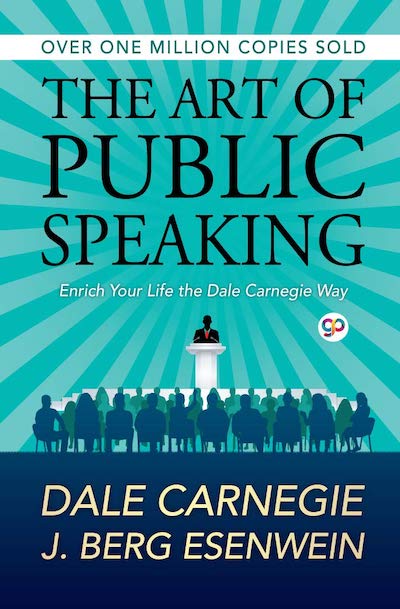
Prefer the print book? Buy on Amazon
As an Amazon Associate, Sumizeit earns from qualifying purchases.
The Art of Public Speaking Book Summary
This The Art of Public Speaking Book Summary covers the key ideas, lessons, and takeaways in about 20 minutes.
Short Description:
Public speaking requires practice, emotion, storytelling, and facts.
Helps with these goals
Want the complete 20-minute summary?
- Full structured summary
- Video Summary
- Podcast Summary
- Audio summary
- Key takeaways
- Exercises
- Quiz
- Highlights and notes
- Ask the book with AI
Want a Free Weekly Read?
Get a free summary every week straight to your mailbox.
Preview the The Art of Public Speaking book summary
Below is a preview of Sumizeit’s comprehensive human-written summary of The Art of Public Speaking by Dale Carnegie. The full summary is 15-20 minutes long and covers the book’s key ideas in text, audio, visual, and video formats. Unlock the full 20 Minute Summary
Are you terrified of standing up in front of people and delivering a speech?
Do your palms sweat and you begin to stutter on your words?
What would you give to make that business presentation just a little bit easier on your nerves?
In, “The Art of Public Speaking” by Dale Carnegie, you’ll learn that in order to become a total master at speaking in front of a crowd, all you need is some good ‘ol practice.
Doing something you’re completely uncomfortable doing is a challenge for anyone. But, with Carenegie’s help you will begin to understand that leaping right in is the most effective way to conquer your fear.
Let’s get talking...about public speaking!
Practice, Practice, Practice
Just like anything else in life, practice makes perfect...well, at least, better! For example, when you first learned to ride a bike it probably took many hours to be able to zoom down hills with confidence. Public speaking acts just the same! Once you continually do it, you will feel much more confident in your ability.
To leap into practice, you must learn to overcome you fear by facing it head-on. According to Carnegie, here are three ways to do that:
“If you believe you will fail, there is no hope for you. You will.”- Dale Carnegie
Use Your Voice As A Tool
Successful speeches all have one thing in common, they are not dull. But, how do you make a speech interesting? It’s all about your voice and the way you deliver it.
“The baseball pitcher, the bowler in cricket, the tennis server, all know the value of change of pace—change of tempo—in delivering their ball, and so must the public speaker observe its power.”- Dale Carnegie
Try emphasizing certain words and phrases. Do not keep your tone the same throughout. Seriously, think of your voice like a roller coaster going up and down. If you create an interesting stream of tonation for your audience to enjoy, you will immediately gain their admiration. They’ll want to listen to what you have to say!
Play with speaking loudly versus whispering. When done correctly, this will help the audience to understand the key points of your speech.
It’s All About Emotion
The most powerful speakers always weave emotion into their presentations. That’s because, as humans, we feed off emotions. We are not going to give money to a charity unless it provides some emotional response within us such as helping save sick children.
“A watch manufacturer in New York tried out two series of watch advertisements; one argued the superior construction, workmanship, durability, and guarantee offered with the watch; the other was headed, "A Watch to be Proud of," and dwelt upon the pleasure and pride of ownership. The latter series sold twice as many as the former. A salesman for a locomotive works informed the writer that in selling railroad engines emotional appeal was stronger than an argument based on mechanical excellence.”- Dale Carnegie
People are driven by their feelings.
Want the complete 20-minute summary?
- Full structured summary
- Video Summary
- Podcast Summary
- Audio summary
- Key takeaways
- Exercises
- Quiz
- Highlights and notes
- Ask the book with AI
Who should read The Art of Public Speaking?
The Art of Public Speaking is for anyone who experiences anxiety when presenting—whether you're a business professional, student, salesman, or aspiring leader. If you've ever felt nervous standing in front of a crowd or struggled to engage an audience, this book offers practical techniques to build confidence and mastery through deliberate practice and proven methods.
Why does The Art of Public Speaking matter?
In a world where effective communication drives career advancement and influence, the ability to speak persuasively in public remains one of the most valuable skills you can develop. Dale Carnegie's timeless principles show that speaking anxiety is conquerable, and that mastering this skill transforms not just your presentations but your entire professional trajectory and personal impact.
What are the key themes in The Art of Public Speaking?
- Overcoming fear through deliberate practice
- The power of emotional connection over pure facts
- Using your voice and body language strategically
- Building arguments with evidence and reasoning
- Storytelling as a persuasion tool
- Physical and mental preparation for performance
Want the complete 20-minute summary?
- Full structured summary
- Video Summary
- Podcast Summary
- Audio summary
- Key takeaways
- Exercises
- Quiz
- Highlights and notes
- Ask the book with AI
How can you apply ideas from The Art of Public Speaking?
- Record yourself speaking and review to identify monotone patterns or filler words you can eliminate
- Practice varying your vocal delivery by reading passages aloud with different paces and emphases
- Develop yawning exercises before speeches to relax throat muscles and improve breathing control
- Create a story or case study that illustrates your main argument emotionally before adding supporting facts
- Map out your audience layout and positioning to maximize group energy and receptivity to your message
- Pre-test your arguments by identifying and writing counterarguments, then strengthening your position against them
- Join speaking groups or volunteer for presentations to build practice hours and reduce performance anxiety
What common mistakes do readers make with The Art of Public Speaking?
- Trying to overcome nervousness by avoiding speaking opportunities instead of practicing through them
- Delivering speeches with flat, unchanging tone that puts audiences to sleep
- Using only facts and logic while ignoring emotional appeals that actually drive decision-making
- Making excessive or purposeless gestures that distract from your message rather than amplify it
Sumizeit Exercises Apply what you've learned
Turn ideas from The Art of Public Speaking into action with a short guided reflection: identify the biggest takeaway, connect it to your life, and commit to one step you can take in the next 24 hours.
What is the expert analysis of The Art of Public Speaking?
Overview
The Art of Public Speaking is a seminal work by Dale Carnegie, a pioneering figure in the fields of communication and personal development. Carnegie’s influence extends beyond this book to his more widely known bestseller, How to Win Friends and Influence People, which revolutionized interpersonal skills training in the 20th century. This book holds significance as one of the foundational texts that demystify the art of effective public speaking, making it accessible to a broad audience. Carnegie’s legacy as a lecturer and trainer imbues the text with practical wisdom drawn from decades of experience.
Core Thesis
The central argument Carnegie advances is that mastery of public speaking is primarily achieved through deliberate and consistent practice, combined with emotional engagement and strategic preparation. He posits that fear and self-consciousness are obstacles that can be overcome by "leaping in" and confronting these challenges head-on. Furthermore, Carnegie emphasizes the importance of vocal variety, emotional resonance, and physical gestures as essential tools to captivate and persuade an audience. He also underscores the necessity of understanding and testing one’s arguments rigorously to maintain credibility and effectiveness.
Strengths
- Practicality: Carnegie’s advice is grounded in actionable steps, such as preparation, vocal modulation, and gesture use, which readers can immediately apply.
- Emotional Intelligence: The book’s focus on emotion as a driver of persuasion anticipates modern understandings of affective communication and audience psychology.
- Holistic Approach: Beyond speech content, Carnegie addresses physical health and audience arrangement, reflecting a comprehensive view of public speaking as a multifaceted skill.
- Timeless Principles: Despite its age, many of Carnegie’s insights—such as the power of storytelling and the necessity of overcoming fear—remain relevant and widely endorsed in contemporary communication theory.
Critiques & Counterarguments
- Oversimplification of Fear: While encouraging direct confrontation of fear is empowering, contemporary psychology suggests that gradual exposure combined with cognitive-behavioral techniques may be more effective than simply "leaping in."
- Limited Empirical Evidence: Carnegie’s recommendations, though practical, are largely anecdotal and lack rigorous empirical validation, which modern communication studies increasingly demand.
- Emphasis on Emotional Appeal: The book privileges emotional resonance, which can sometimes overshadow the importance of logical argumentation and factual accuracy, especially in academic or technical contexts.
- Changing Audience Dynamics: Carnegie’s examples and strategies reflect mid-20th-century social contexts; today’s diverse and digitally mediated audiences may require adapted approaches that the book does not address.
- Competing Schools of Thought: Contemporary rhetoric and communication scholarship often stress dialogic and participatory models of speaking, contrasting with Carnegie’s largely one-way, speaker-centered approach.
Who Should Read This
This book is ideal for individuals seeking a foundational and accessible introduction to public speaking. It is particularly suited for business professionals, aspiring leaders, and anyone intimidated by the prospect of speaking in front of groups. Readers interested in classic self-improvement literature and those who value practical, experience-based guidance will find Carnegie’s work rewarding. However, those looking for cutting-edge research or nuanced theoretical frameworks may need to supplement this text with more contemporary studies.
Frequently asked questions about the The Art of Public Speaking book summary
What is The Art of Public Speaking about?
The Art of Public Speaking by Dale Carnegie is a practical guide to developing confidence and effectiveness as a speaker. The book teaches that mastery comes through practice and provides specific techniques for managing nervousness, using your voice effectively, connecting emotionally with audiences, structuring compelling arguments, and delivering persuasive presentations.
Who should read The Art of Public Speaking?
Anyone who experiences anxiety about public speaking or wants to improve their presentation skills should read this book. It's particularly valuable for professionals, salespeople, students, leaders, and anyone whose career or influence depends on the ability to speak persuasively to groups.
What are the main takeaways from The Art of Public Speaking?
The main takeaways include: practice is essential for mastering speaking anxiety, preparation and belief in success are critical foundations, emotional connection matters more than facts alone, vocal variety and purposeful gestures amplify your message, and the combination of proper breathing, audience awareness, and storytelling creates powerful presentations.
How does Dale Carnegie suggest overcoming public speaking fear?
Carnegie recommends three primary approaches: shift focus from your self-consciousness to your message and audience needs, prepare thoroughly so you know your material deeply, and expect success rather than failure. He emphasizes that practice is the most effective cure, as repeated speaking gradually eliminates nervousness.
Why does Carnegie emphasize emotion in speeches?
Carnegie argues that people are fundamentally driven by emotions, not logic alone. Emotional appeals move audiences to action and create stronger memory retention than factual arguments. He provides examples showing that emotionally-driven messaging consistently outperforms purely logical or technical arguments.
What does The Art of Public Speaking say about body language and gestures?
The book emphasizes that natural, purposeful gestures convey passion and credibility when used strategically to punctuate key points. However, excessive or mechanical gestures distract from your message. Gestures should feel emotionally authentic and amplify your words rather than stand alone.
How should you structure arguments according to this book?
Carnegie identifies four essential elements of strong arguments: clearly stating the question to avoid miscommunication, presenting evidence from credible expert sources, ensuring your reasoning logically supports your claim, and confirming all evidence works together to support your inference. Testing these elements before presenting prepares you for challenges.
About Sumizeit
Sumizeit is a profitable Scomy LLC company based in Miami, Florida. Our founders, Clemens Raemy and Weina Scott, are successful entrepreneurs with several exits. Sumizeit is a popular book summary app / micro learning app used by busy professionals and entrepreneurs with over 2,500 non-fiction book summaries and 10,000 podcast summaries in text, audio, visual, podcast, and video format. We also have stellar retention tools to make ideas stick - such as flashcards with spaced repetition, quizzes, streaks, highlighting and notes, daily challenges, riddles, mini-courses, meditation, and more. You won't only learn the idea, but also remember it. Over 90% of our users change their habits with Sumizeit.
Upgrade Now
Want the complete 20-minute summary?
- Full structured summary
- Video Summary
- Podcast Summary
- Audio summary
- Key takeaways
- Exercises
- Quiz
- Highlights and notes
- Ask the book with AI
Here's why readers love Sumizeit
Join thousands of learners getting smarter every day
"Great experience. Detailed summaries. Loved the gamification feature. Makes learning fun. Good customer service. I recommend Sumizeit to anyone. You'll learn a lot."
"I always felt busy but still wanting to keep up with the book discussion in my friend group. This was a great supplement to help me keep reading the books I find fun while keeping up with important books."
"I love this website. Instead of scrolling social media, I find myself learning a lot. I use it everyday. I recommend this app for anyone who is too busy and wants to get up to speed with their favorite books."
The Art of Public Speaking Book Summary PDF
Looking for a The Art of Public Speaking Book Summary PDF you can save and revisit offline? Our The Art of Public Speaking Book Summary PDF captures the book’s core ideas in a clean, printable format — the key frameworks, takeaways, and structure without the fluff. Download the The Art of Public Speaking Book Summary PDF when you want a reference you can annotate, share with your team, or review on the go. Get your The Art of Public Speaking Book Summary PDF from the download page below.
Download The Art of Public Speaking Book Summary PDFPeople also liked these summaries
Readers who explored The Art of Public Speaking often enjoyed these titles next.



Want the complete 20-minute summary?
- Full structured summary
- Video Summary
- Podcast Summary
- Audio summary
- Key takeaways
- Exercises
- Quiz
- Highlights and notes
- Ask the book with AI
Featured Book Titles
Popular Book Summaries at sumizeit, leading book summary app