


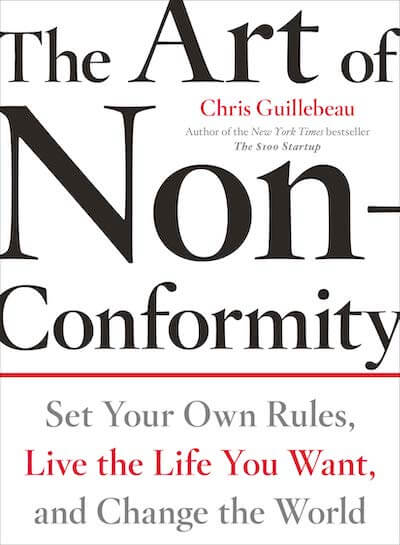
Prefer the print book? Buy on Amazon
As an Amazon Associate, Sumizeit earns from qualifying purchases.
The Art of Non-Conformity Book Summary
This The Art of Non-Conformity Book Summary covers the key ideas, lessons, and takeaways in about 20 minutes.
Short Description:
The Art Of Non-Conformity teaches how to break free and build an authentic life.
Want a Free Weekly Read?
Get a free summary every week straight to your mailbox.
Preview the The Art of Non-Conformity book summary
Below is a preview of Sumizeit’s comprehensive human-written summary of The Art of Non-Conformity by Chris Guillebeau. The full summary is 15-20 minutes long and covers the book’s key ideas in text, audio, visual, and video formats. Unlock the full 20 Minute Summary
Sometimes there’s an inner voice inside of us that wants to do things a different way. Whether it's telling you to stop wearing the color grey, it whispers that your job is not fulfilling, or it shouts that the creative solution you imagined deserves to be shared, it's there. We often shut it down because being true to that little voice that is so distinctly you can be scarier than simply conforming to what others are doing or expect of you. Conforming and being average is easy, but they can be painfully unfulfilling. Is there another way? Absolutely. The Art Of Non-Conformity gives you tips on how you can stop suppressing that little voice, and start building the life of your dreams.
Beware of insulating yourself from taking risks
The unremarkably average person works a 40-hour workweek (with roughly only 10 productive hours), sits in a cubicle, and uses the money they make to pay off their mortgage. The average person might also ask themselves, “Is this all there is?” People get stuck in this trap of unfulfilling work because they don’t know what they want. Maybe they have passing plans about starting a business or achieving their dreams, but they don’t do it. The primary reason they don’t do the things they dream of is a lack of direction. The secondary cause is security. People are insulated in the security of having a paying job, and that becomes more important than pursuing the risky things they truly want.
When Bernard Lopez took off from his unsatisfying job to ride his bike across the United States, he did it because he had a moment of clarity. He realized he needed to live his life doing what he wanted to do: even if he was leaving the comfort of his secure job. Later, with a shifted mindset, he created a rewarding and fulfilling career… while also going on bike rides every summer. He realized what he wanted, and he went for it. He then applied this attitude to everything. You can too, but you need to figure out what you want. How can you do that? Read on.
Oh, and if you find yourself asking that question, “Is this all there is?” it's a sign you’re not fulfilled. There is more to life. It's time to go find it.
You must face the things that scare you. Here’s how.
Change is a scary thing. It's even scarier when you have a voice in your head telling you that you can’t handle it, or that you’re not good enough to get the things you want. What if you go after your goal, and you fail?
Sloane Berrent knows something about that: She faced her fear of leaving a secure job as an executive to volunteer for an organization called Kivya. Her volunteer work transformed into an opportunity to fly to the Philippines and do charity work there. She also found her work to be incredibly meaningful.
When faced with the chance to…
Want the complete 20-minute summary?
- Full structured summary
- Video Summary
- Podcast Summary
- Audio summary
- Key takeaways
- Exercises
- Quiz
- Highlights and notes
- Ask the book with AI
Who should read The Art of Non-Conformity?
The Art of Non-Conformity is for anyone who feels trapped by societal expectations or unfulfilled by their current path. This book speaks to aspiring entrepreneurs, creative professionals, and individuals seeking authenticity who are willing to challenge the status quo and build a life aligned with their true values.
Why does The Art of Non-Conformity matter?
In a world that rewards conformity and security, Chris Guillebeau's message is increasingly vital for those questioning whether conventional success actually leads to fulfillment. This book provides both philosophical grounding and practical strategies to help readers break free from self-imposed limitations and design a life of genuine purpose and impact.
What are the key themes in The Art of Non-Conformity?
- Breaking free from societal expectations and conventional paths
- Facing fear as a catalyst for personal growth and meaningful change
- Building authentic income and security through personal skill development
- Aligning money and spending with core values and life purpose
- Creating meaningful work that serves others and contributes to the world
- Eliminating obligations that drain energy from pursuits that matter
- Challenging gatekeepers and authority figures who limit your choices
- Building genuine followers through understanding what you offer others
How can you apply ideas from The Art of Non-Conformity?
- Identify one unfulfilling obligation or commitment and eliminate it this week to create space for something meaningful
- Write down your core values and audit your spending for the past month to see where money actually goes versus where you want it to go
- Design and execute a small life experiment—try a new skill, visit a new place, or pursue a skill-building activity during lunch breaks for one month
- Clarify your unique skills and abilities, then brainstorm three ways you could offer value to others or solve a real problem in your community
- Practice facing one fear by defining the worst-case scenario, determining it's manageable, and planning a reward for yourself once you take action
- Audit the rules, authority figures, or gatekeepers limiting your options and identify one rule you can challenge or one gate you can go around
- Start a simple project or side venture aligned with your values and test whether it generates interest or income within 90 days
What common mistakes do readers make with The Art of Non-Conformity?
- Assuming that financial security from an employer is more valuable than building skills and confidence in yourself—making you vulnerable when circumstances change
- Waiting until you feel completely ready or unafraid to pursue your goals, which means waiting forever since perfect readiness never arrives
- Spending money without examining your underlying values, leading to debt and purchases that don't actually align with what matters to you
- Trying to follow the rules set by gatekeepers instead of questioning whether those rules serve you or simply maintain someone else's power
Sumizeit Exercises Apply what you've learned
Turn ideas from The Art of Non-Conformity into action with a short guided reflection: identify the biggest takeaway, connect it to your life, and commit to one step you can take in the next 24 hours.
What is the expert analysis of The Art of Non-Conformity?
Overview
The Art of Non-Conformity by Chris Guillebeau is a compelling manifesto for those seeking to break free from societal expectations and craft a life defined by personal values, risk-taking, and meaningful contribution. Guillebeau, an accomplished author and entrepreneur, leverages his experiences as a traveler, blogger, and business innovator to inspire readers to reject conformity and pursue unconventional paths. His work resonates in the contemporary landscape of self-improvement and entrepreneurship, where the quest for authenticity and purposeful living has become paramount.
Core Thesis
At its heart, The Art of Non-Conformity argues that true fulfillment arises not from adhering to prescribed social norms but from embracing one’s unique desires and fears, confronting them head-on, and deliberately designing a life aligned with individual values and passions. Guillebeau posits that security and conformity are often illusions that inhibit growth, and that by cultivating self-knowledge, courage, and a willingness to challenge gatekeepers and conventional wisdom, individuals can create meaningful work and lasting impact.
Strengths
- Accessible and Practical Guidance: The book excels in translating abstract ideals into actionable strategies, such as facing fears through mental preparation and rewards, managing money by clarifying values, and attracting followers by offering genuine value.
- Use of Real-Life Anecdotes: Guillebeau’s inclusion of diverse, relatable stories—from Bernard Lopez’s cross-country bike journey to Tim DeChristopher’s activist stand—grounds his philosophy in tangible examples that inspire and instruct.
- Holistic Approach: The work integrates psychological insights about fear and motivation with practical advice on career, finance, and social influence, offering a multi-dimensional roadmap to non-conformity.
- Encouragement of Ethical Impact: By emphasizing work that benefits others and leaves a positive legacy, the book elevates non-conformity beyond mere rebellion to a socially constructive endeavor.
Critiques & Counterarguments
- Potential Oversimplification of Risk: While advocating for risk-taking, the book sometimes glosses over the structural and socioeconomic barriers that limit such choices for many individuals, potentially underestimating the complexity of “breaking free.”
- Limited Engagement with Systemic Constraints: The narrative centers on individual agency but pays less attention to systemic issues like inequality, discrimination, or economic instability that can constrain non-conformist pursuits.
- Idealization of Entrepreneurship: The examples often highlight entrepreneurial success, which may inadvertently promote a narrow definition of non-conformity tied to business ventures, sidelining other forms of creative or social expression.
- Competing Research on Security and Well-Being: Psychological studies suggest that for many, a degree of stability and routine contributes significantly to mental health and productivity, challenging the book’s framing of security as primarily a hindrance.
- Gatekeeper Concept Nuance: While the critique of gatekeepers is compelling, some gatekeeping functions serve important roles in quality control and social cohesion, a nuance the book does not fully explore.
Who Should Read This
This book is ideal for readers who feel constrained by conventional life scripts—those yearning for a more authentic existence but uncertain how to initiate change. Entrepreneurs, creatives, and individuals at career crossroads will find Guillebeau’s blend of inspiration and practical advice particularly valuable. Additionally, readers interested in personal development with a socially conscious dimension will appreciate the book’s ethical framing of non-conformity. However, those seeking a rigorous critique of societal structures or comprehensive strategies for overcoming systemic barriers may need to supplement this work with broader sociological and economic analyses.
Frequently asked questions about the The Art of Non-Conformity book summary
What is The Art of Non-Conformity about?
The Art of Non-Conformity by Chris Guillebeau is a guide to breaking free from societal expectations and designing a life aligned with your authentic values and goals. The book provides practical strategies for overcoming fear, building skills, eliminating meaningless obligations, managing money based on values, and creating work that matters to both you and others. Through real-life examples and actionable advice, Guillebeau shows readers how to stop conforming to average lifestyles and start building the fulfilling life they actually want.
Who should read The Art of Non-Conformity?
This book is ideal for anyone feeling trapped by conventional expectations, unfulfilled by their current job, or questioning whether there's more to life than the standard 9-to-5 routine. It's particularly valuable for aspiring entrepreneurs, creative professionals, and individuals ready to challenge the status quo and align their lives with their true values. If you've ever felt that inner voice telling you there's another way to live, this book is for you.
What are the main takeaways from The Art of Non-Conformity?
The core takeaways include: security comes from knowing your own skills, not from an employer; facing fears rather than avoiding them unlocks growth; clarity about what you want is essential before taking action; your values should drive your spending and choices; meaningful work serves others and creates lasting fulfillment; and eliminating unnecessary obligations makes room for what truly matters. Guillebeau emphasizes that non-conformity means living authentically according to your values, not just rebelling against conventions.
How does The Art of Non-Conformity help with financial management?
The book teaches that effective financial management starts with defining your core values, which naturally guides where your money goes. Rather than creating restrictive budgets, Guillebeau suggests identifying what you truly value and ensuring spending reflects those priorities. This values-based approach prevents reckless spending, reduces debt, and allocates resources toward experiences and goals that genuinely matter to you rather than those that simply feel obligatory.
What does Chris Guillebeau say about fear and taking risks?
Guillebeau argues that fear must be acknowledged and faced directly, not avoided. He recommends asking yourself, 'What's the worst-case scenario?'—because typically, the realistic worst outcome is far more manageable than imagined. Once you mentally prepare for genuine risks, fear loses power. The book also suggests rewarding yourself for brave actions to create positive incentives, making fearful decisions feel more achievable and sustainable.
Can you start a non-conformist venture with little money?
Yes—The Art of Non-Conformity includes examples of people starting meaningful ventures with minimal investment. A former newscaster launched a yoga business for just $9 and was earning $2,000 monthly within six months. The book emphasizes that low financial barriers mean you can test ideas quickly and build skills through experimentation rather than waiting for perfect conditions or massive capital before taking action.
How does The Art of Non-Conformity address gatekeepers and authority?
Guillebeau identifies gatekeepers as authority figures who present limited choices as your only options, maintaining control through perceived authority. The book encourages readers to recognize gatekeeping and challenge rules that don't serve them. Real-world examples show how people successfully bypass gatekeepers by refusing to play by their rules, opening possibilities others thought were closed or forbidden.
About Sumizeit
Sumizeit is a profitable Scomy LLC company based in Miami, Florida. Our founders, Clemens Raemy and Weina Scott, are successful entrepreneurs with several exits. Sumizeit is a popular book summary app / micro learning app used by busy professionals and entrepreneurs with over 2,500 non-fiction book summaries and 10,000 podcast summaries in text, audio, visual, podcast, and video format. We also have stellar retention tools to make ideas stick - such as flashcards with spaced repetition, quizzes, streaks, highlighting and notes, daily challenges, riddles, mini-courses, meditation, and more. You won't only learn the idea, but also remember it. Over 90% of our users change their habits with Sumizeit.
Upgrade Now
Here's why readers love Sumizeit
Join thousands of learners getting smarter every day
"Great experience. Detailed summaries. Loved the gamification feature. Makes learning fun. Good customer service. I recommend Sumizeit to anyone. You'll learn a lot."
"I always felt busy but still wanting to keep up with the book discussion in my friend group. This was a great supplement to help me keep reading the books I find fun while keeping up with important books."
"I love this website. Instead of scrolling social media, I find myself learning a lot. I use it everyday. I recommend this app for anyone who is too busy and wants to get up to speed with their favorite books."
The Art of Non-Conformity Book Summary PDF
Looking for a The Art of Non-Conformity Book Summary PDF you can save and revisit offline? Our The Art of Non-Conformity Book Summary PDF captures the book’s core ideas in a clean, printable format — the key frameworks, takeaways, and structure without the fluff. Download the The Art of Non-Conformity Book Summary PDF when you want a reference you can annotate, share with your team, or review on the go. Get your The Art of Non-Conformity Book Summary PDF from the download page below.
Download The Art of Non-Conformity Book Summary PDFPeople also liked these summaries
Readers who explored The Art of Non-Conformity often enjoyed these titles next.



Ready to read the whole thing?
- Full structured summary
- Video Summary
- Podcast Summary
- Audio summary
- Key takeaways
- Exercises
- Quiz
- Highlights and notes
- Ask the book with AI
Featured Book Titles
Popular Book Summaries at sumizeit, leading book summary app