


As an Amazon Associate, Sumizeit earns from qualifying purchases.
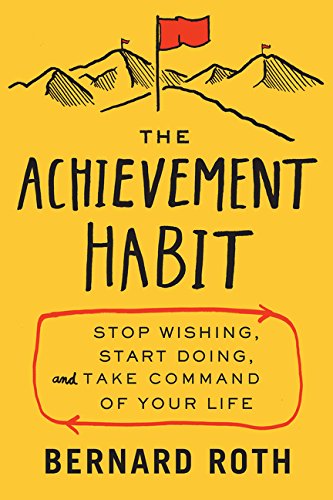
The Achievement Habit Book Summary
This The Achievement Habit Book Summary covers the key ideas, lessons, and takeaways in about 20 minutes.
Helps with these goals
Want the complete 20-minute summary?
- Full structured summary
- Video Summary
- Podcast Summary
- Audio summary
- Key takeaways
- Exercises
- Quiz
- Highlights and notes
- Ask the book with AI
What is in the The Achievement Habit book summary?
Below is a preview of Sumizeit’s expert-written summary of The Achievement Habit by Bernard Roth. The full summary covers the book’s key ideas in text, audio, and video.
In “The Achievement Habit” by Bernard Roth, you will learn how “design thought” can help you solve all of life’s many problems.
There are five important steps that must be followed in order for this to be successful:
“In life, typically, the only one keeping a scorecard of your successes and failures is you, and there are ample opportunities to learn the lessons you need to learn, even if you didn’t get it right the first—or fifth—time.”- Bernard Roth
By following these steps, you will see how excuses can hinder your outcomes, how to change your image of self, and how you can solve personal problems by utilizing good language habits.
The Topic of Nothing
Everything we experience in life comes to us without any initial meaning.
The things in our life, we must apply meanings to. And it is possible to change those meanings.
Here’s an exercise for you:
By doing these two steps you will begin to see how you assign meaning to objects and people in your life. For example, your partner means a great deal to you because you have given them meaning in your life.
“Next time you find yourself playing right and wrong, remember: You give everything in your life its meaning, so you can choose to end the game. It does not matter how right you are or how wrong they are; you lose just by playing.”- Benard Roth
You must be able to see objects and problems from multiple perspectives. Only then will you be able to make decisions that lead to positive outcomes.
Once you have accepted this, you can start redefining problems.
The Problem With Reasons
People, by nature, make a lot of excuses. And that’s because you see the reasons for your behaviors. For example, you were late for a meeting because your child’s basketball game ran late.
“Reasons are bullshit. I know it sounds harsh, however, it’s a good categorical stand to take, as you’ll see. Reasons exist because if people didn’t explain their behavior, they would seem unreasonable.”- Bernard Roth
Reasons are really just excuses. For example, you commute during rush hour and you get to work late but blame it on traffic. But is it really the busy road’s fault? Couldn’t you have planned better by leaving earlier? The fact is getting to work on time wasn’t a priority to you and that’s why you showed up late.
Excuses only encourage our destructive behavior. Think of them as security blankets that help us feel better about remaining mediocre rather than achieving our highest potentials.
Excuses prevent action. They make us keep thinking rather than start doing.
How To Get Unstuck
Design thought is all about asking the right questions. When we ask the wrong questions, we get stuck. And a lot of times we think we already know the answers to all the questions.
For example, a man named Fred drives to work every day. But, his car is starting to show some signs of distress.…
Want the complete 20-minute summary?
- Full structured summary
- Video Summary
- Podcast Summary
- Audio summary
- Key takeaways
- Exercises
- Quiz
- Highlights and notes
- Ask the book with AI
Who should read The Achievement Habit?
The Achievement Habit is for anyone stuck in cycles of excuses, self-doubt, or indecision who wants to take control of their life. Whether you're struggling with personal challenges, career growth, or creative problem-solving, this book offers practical frameworks to move from thinking to doing. It's especially valuable for professionals, entrepreneurs, and anyone seeking to redesign their approach to life's obstacles.
Why does The Achievement Habit matter?
In a world that rewards action over analysis, Bernard Roth's design-thinking approach cuts through the excuses and mental blocks that prevent achievement. The book reveals how language, self-image, and problematic questioning habits keep us trapped, then shows how to escape these patterns. By reframing how we define problems and take action, readers can unlock meaningful progress in both personal and professional domains.
What are the key themes in The Achievement Habit?
- Design thinking as a life-management tool
- Excuses and reasons as barriers to achievement
- The power of redefining problems and meanings
- Action over endless deliberation
- Language as a lens that shapes reality
- Self-image reconstruction through empathy
- Collaborative problem-solving and group dynamics
What are the key lessons from the The Achievement Habit book summary?
Everything Starts Without Meaning
Objects, people, and situations in your life have no inherent meaning—you assign it. Recognizing this gives you the freedom to reassign meanings and change how you experience life.
Reasons Are Excuses in Disguise
When you explain your behavior with reasons, you're actually making excuses that prevent growth. Taking ownership without justification is the first step to changing outcomes.
Ask the Right Question, Not Just Any Question
Asking narrow, solution-focused questions limits your options. Broader, outcome-focused questions open creative pathways and reveal multiple solutions.
The Five-Step Design Process Works for Life
Empathize with the problem, define it clearly, brainstorm solutions, create a flexible plan, and test through action—this repeatable framework solves personal and professional challenges.
Doing Beats Trying Every Time
Trying implies incompleteness and easy exit; doing implies commitment and completion. The intention behind your action determines whether you achieve or merely attempt.
Language Shapes What You See
Words like but, and, yes, and no carry hidden assumptions that limit your choices. Swapping but for and reveals options you didn't know existed.
Self-Image Comes From External Influence
Your sense of self is largely built from parents, teachers, and mentors you've absorbed. Recognizing these influences lets you consciously redesign who you want to be.
Empathy Starts With Yourself
Most people extend empathy to others but not themselves. Viewing yourself from an outsider's perspective helps you understand and reshape your identity.
Excuses Are Security Blankets for Mediocrity
Reasons make us feel comfortable staying below our potential. Dropping them forces you to see what's really blocking progress and what you can actually control.
Multiple Perspectives Unlock Better Solutions
Seeing problems only from your viewpoint keeps you stuck. Adopting others' perspectives reveals solutions and approaches you'd never consider alone.
Action Is the Only Path to Achievement
Thinking without doing is just excuse-making. Every tiny action—even small steps—moves you toward real achievement.
Learn From Everyone, Not Just Experts
Valuable lessons come from unexpected sources: rude servers, difficult colleagues, strangers. Staying curious about everyone's behavior expands your wisdom.
Honesty About Where You Stand Matters
Using others purely for personal gain will backfire; mutual respect and transparency build genuine relationships that support long-term achievement.
Constructive Criticism Requires Both Praise and Growth
Lead with two positive observations before offering critique. This approach delivers feedback without defensiveness and preserves relationships.
Build on Ideas Rather Than Reject Them
Saying no shuts down collaboration; using and to add to others' ideas transforms brainstorms into co-creation and stronger outcomes.
Redefine the Problem, Not Just the Solution
When stuck, it's often the problem definition—not the answer—that needs rethinking. Ask what you truly want to achieve, not just how to fix the immediate issue.
Hard Conversations Are Essential in Groups
Teams advance when members can speak truthfully about friction and disagreement. Avoiding difficult conversations keeps groups from reaching their potential.
You're Your Own Scorekeeper
Failures only matter if you decide they're final. Since you keep your own scorecard, you can reframe setbacks as lessons and try again.
Daily Actions Reflect Your True Identity
Small, consistent behaviors build your real self-image more than grand ambitions. Notice what you actually do each day—it reveals who you're becoming.
Problems Are Invitations to Achievement
Without obstacles to solve, there are no achievements to celebrate. Reframe problems as opportunities rather than burdens blocking your progress.
Want the complete 20-minute summary?
- Full structured summary
- Video Summary
- Podcast Summary
- Audio summary
- Key takeaways
- Exercises
- Quiz
- Highlights and notes
- Ask the book with AI
How can you apply ideas from The Achievement Habit?
- When facing a decision, ask broader outcome-focused questions instead of narrow solution-focused ones to reveal hidden options
- Replace the word but with and in conversations to see how this instantly opens possibilities you thought were blocked
- Practice the five-step design process: empathize with the problem, define it clearly, brainstorm multiple solutions, prototype a flexible plan, and take action
- Identify the key people who shaped your beliefs and consciously decide which influences you want to keep and which you want to redesign
- Create a daily practice of taking small, intentional actions toward your goals rather than spending time deliberating
- When giving feedback, use the two-praise-then-critique framework to build trust while driving improvement
- List your common excuses and reframe them as choices you made, shifting responsibility and unlocking your power to change
What common mistakes do readers make with The Achievement Habit?
- Accepting reasons and excuses as unchangeable facts instead of recognizing they're narratives you can rewrite
- Asking narrow how questions instead of broader what or why questions that reveal multiple solution paths
- Thinking before doing—analysis paralysis prevents the action necessary for real achievement
- Staying trapped in inherited beliefs from parents and teachers without questioning whether they serve who you want to become
- Saying no to collaboration or ideas instead of finding creative and solutions that build on others' input
- Waiting for the perfect plan instead of starting with a flexible prototype and learning through feedback
Sumizeit Exercises Apply what you've learned
Turn ideas from The Achievement Habit into action with a short guided reflection: identify the biggest takeaway, connect it to your life, and commit to one step you can take in the next 24 hours.
What is the expert analysis of The Achievement Habit?
Overview
The Achievement Habit is authored by Bernard Roth, a distinguished professor of engineering at Stanford University and a pioneer in robotics and design thinking. Roth leverages his extensive background in design and motion science to explore how principles of "design thought" can be applied beyond engineering to solve everyday personal and professional challenges. This book stands out for translating complex problem-solving methodologies into accessible strategies for self-improvement, making it significant for readers interested in practical psychology, creativity, and personal development.
Core Thesis
At the heart of The Achievement Habit lies the argument that adopting a design thinking mindset empowers individuals to overcome obstacles by redefining problems, questioning assumptions, and taking decisive action. Roth contends that excuses and limiting language patterns obstruct achievement, and that by consciously reshaping how we perceive problems and ourselves, we can unlock new pathways to success. The book’s central insight is that achievement is less about innate talent and more about cultivating habits of inquiry, flexibility, and proactive doing.
Strengths
- Practical Framework: Roth’s five-step process—empathize, define, ideate, prototype, and test—provides a clear, actionable roadmap that readers can readily apply to diverse challenges.
- Integration of Design Thinking with Personal Growth: The book innovatively bridges technical design principles with psychological and behavioral insights, enriching the self-help genre with a fresh, interdisciplinary perspective.
- Emphasis on Language and Mindset: The focus on how language shapes perception and limits options is a nuanced contribution, highlighting subtle cognitive traps that often go unexamined.
- Encouragement of Empathy and Self-Reflection: By advocating empathy not only toward others but also toward oneself, Roth deepens the conversation around self-image and personal transformation.
- Accessible Examples and Exercises: The inclusion of relatable anecdotes and practical exercises enhances reader engagement and facilitates internalization of concepts.
Critiques & Counterarguments
- Oversimplification of Complex Psychological Processes: While design thinking offers a useful heuristic, the book sometimes glosses over the complexity of human motivation, emotional barriers, and entrenched behavioral patterns that resist simple reframing or action.
- Limited Empirical Support: The argument that “reasons are excuses” is rhetorically powerful but may underestimate legitimate contextual factors influencing behavior, as documented in behavioral economics and social psychology research.
- Potential Neglect of Structural Constraints: Roth’s focus on individual agency may inadvertently downplay systemic or environmental factors—such as socioeconomic status or organizational culture—that significantly impact one’s ability to “just do it.”
- Competing Schools of Thought: Alternative frameworks, such as Acceptance and Commitment Therapy (ACT), emphasize acceptance of internal experiences rather than reframing or eliminating “excuses,” suggesting that some internal resistance is adaptive rather than obstructive.
- Real-World Evidence of Nonlinear Progress: The linear, stepwise approach might not capture the iterative, often chaotic nature of real-life problem-solving, where setbacks and regressions are common and sometimes necessary for growth.
Who Should Read This
The Achievement Habit is ideally suited for readers who seek a pragmatic yet intellectually grounded approach to personal development. It will particularly resonate with professionals, creatives, and students interested in design thinking, behavioral change, and self-leadership. Those who appreciate a blend of engineering rigor with psychological insight will find Roth’s work compelling. However, readers looking for deep clinical psychology or systemic social analysis may find the scope somewhat narrow. Ultimately, this book is a valuable tool for anyone eager to cultivate a proactive mindset and harness the power of intentional action in their personal and professional lives.
Frequently asked questions about the The Achievement Habit book summary
What is The Achievement Habit about?
The Achievement Habit by Bernard Roth is a practical guide that applies design-thinking principles to overcome life's obstacles and achieve your goals. The book teaches how to reframe problems, eliminate excuses, change your self-image, and take decisive action through a five-step process: empathize, define, ideate, prototype, and test.
Who should read The Achievement Habit?
This book is ideal for anyone struggling with procrastination, self-doubt, or feeling stuck in their personal or professional life. It's valuable for professionals, entrepreneurs, students, and anyone seeking practical frameworks to move from thinking to doing and unlock their potential.
What are the main takeaways from The Achievement Habit?
Key takeaways include: you assign meaning to everything in your life and can change those meanings; reasons are excuses that block progress; asking the right questions opens multiple solutions; action beats endless deliberation; language shapes what you see; and self-image can be consciously redesigned through empathy and intentional behavior.
How does design thinking apply to personal problems?
Design thinking is a five-step framework that works for any challenge: first empathize with the real problem, define it clearly (not just the surface symptom), brainstorm multiple solutions, create a flexible plan, and test it through action. This approach works for career blocks, relationships, and personal growth because it keeps you focused on outcomes rather than single solutions.
What does Bernard Roth mean by reasons are bullshit?
Roth argues that reasons are essentially excuses we use to justify mediocre outcomes. When you blame traffic for being late or lack of time for poor work quality, you're hiding the real issue: you didn't prioritize differently. Dropping reasons forces you to own your choices and see what you can actually control and change.
How can changing my language improve my achievement?
Words like but, yes, and no carry hidden assumptions that limit options. Replacing but with and instantly reveals possibilities (e.g., I can't clean the house becomes I can clean the house and meet my friend). Language habits shape what you see, so changing them changes what you believe is possible.
What is the difference between trying and doing according to the book?
Trying implies a process you might not finish and from which you might easily exit, while doing implies commitment to completion. When you try, you might achieve something; when you do, you always end with an achievement. This distinction changes how you approach goals and the results you get.
How do I redesign my self-image?
Start by identifying the people who shaped your beliefs—parents, teachers, mentors—and understand their influence on how you see yourself. Then use empathy to view yourself from an outsider's perspective and ask yourself what you truly want to become. Daily actions that align with that vision gradually reshape your identity.
About Sumizeit
Sumizeit is a profitable Scomy LLC company based in Miami, Florida. It has been helping readers learn from nonfiction books for 7 years with expert-written summaries in text, audio, podcast, and video.
Want the complete 20-minute summary?
- Full structured summary
- Video Summary
- Podcast Summary
- Audio summary
- Key takeaways
- Exercises
- Quiz
- Highlights and notes
- Ask the book with AI
Here's why readers love Sumizeit
Join thousands of learners getting smarter every day
"Great experience. Detailed summaries. Loved the gamification feature. Makes learning fun. Good customer service. I recommend Sumizeit to anyone. You'll learn a lot."
"I always felt busy but still wanting to keep up with the book discussion in my friend group. This was a great supplement to help me keep reading the books I find fun while keeping up with important books."
"I love this website. Instead of scrolling social media, I find myself learning a lot. I use it everyday. I recommend this app for anyone who is too busy and wants to get up to speed with their favorite books."
The Achievement Habit Book Summary PDF
Looking for a The Achievement Habit Book Summary PDF you can save and revisit offline? Our The Achievement Habit Book Summary PDF captures the book’s core ideas in a clean, printable format — the key frameworks, takeaways, and structure without the fluff. Download the The Achievement Habit Book Summary PDF when you want a reference you can annotate, share with your team, or review on the go. Get your The Achievement Habit Book Summary PDF from the download page below.
Download The Achievement Habit Book Summary PDFPeople also liked these summaries
Readers who explored The Achievement Habit often enjoyed these titles next.


Want the complete 20-minute summary?
- Full structured summary
- Video Summary
- Podcast Summary
- Audio summary
- Key takeaways
- Exercises
- Quiz
- Highlights and notes
- Ask the book with AI
Featured Book Titles
Popular Book Summaries at sumizeit, leading book summary app
