


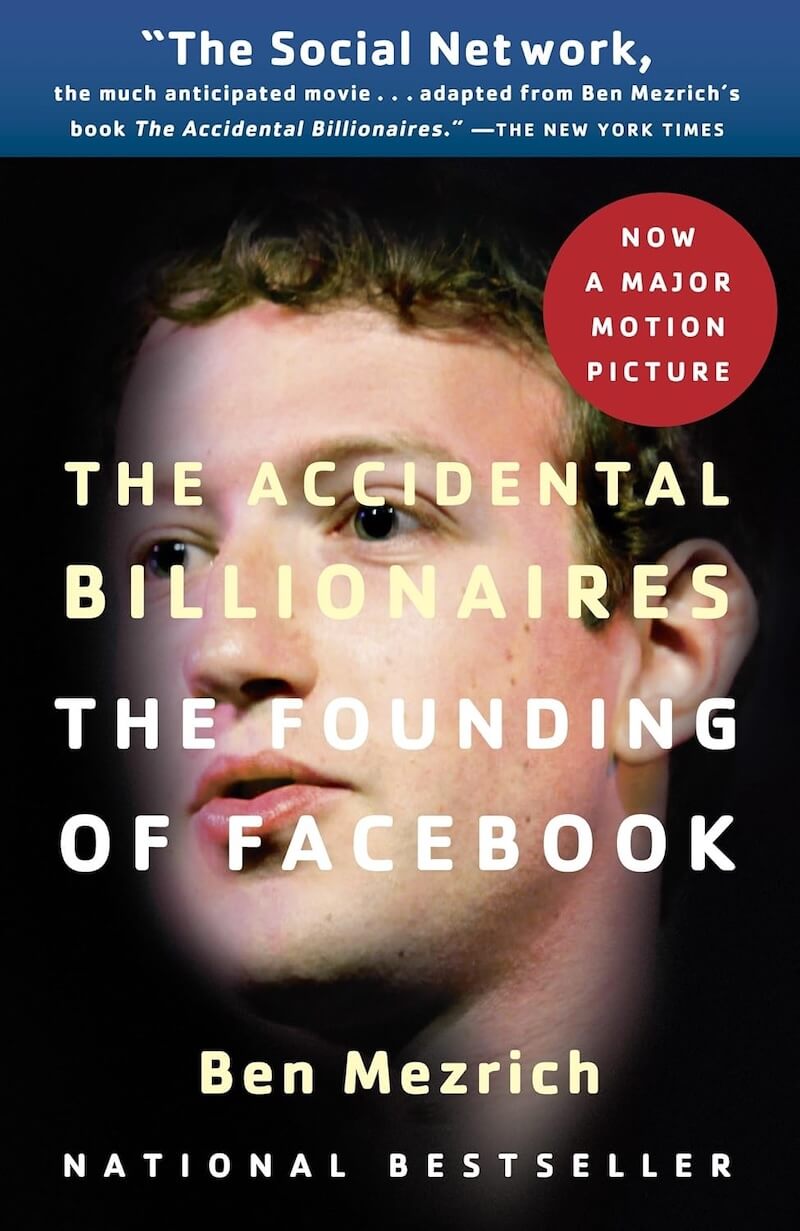
Prefer the print book? Buy on Amazon
As an Amazon Associate, Sumizeit earns from qualifying purchases.
The Accidental Billionaires Book Summary
This The Accidental Billionaires Book Summary covers the key ideas, lessons, and takeaways in about 20 minutes.
Short Description:
The Accidental Billionaires reveals Facebook’s rise amid rivalry and moral complexit.
Helps with these goals
Preview the The Accidental Billionaires book summary
Below is a preview of Sumizeit’s comprehensive human-written summary of The Accidental Billionaires by Ben Mezrich. The full summary is 15-20 minutes long and covers the book’s key ideas in text, audio, visual, and video formats. Unlock the full 20 Minute Summary
Harvard serves as the backdrop of a world where ambition is currency, connections are power, and the right idea at the right moment can shift the future of communication forever. In this environment of old-money legacies, secret societies, and intellectual prodigies, social standing is everything. Being seen, being known, and being connected shapes opportunity, and social hierarchy operates through clubs, influence, fraternity houses, and the unspoken rules of elite culture. Into this world walks Mark Zuckerberg, a highly intelligent but socially awkward student whose genius is matched only by his emotional reserve.
Mark doesn’t belong to the world of polished privilege. He is not tall, athletic, or wealthy like many of his peers. He has no family legacy tied to the crimson crest. Yet what he does possess is something rarer: the ability to build in code what others can only envision. His talent is a weapon, and even if he isn’t part of the inner circle socially, he is capable of remaking it virtually—on a scale no one could yet imagine.
This tension between insiders and outsiders fuels the tone of the book. Much of The Accidental Billionaires is built upon the friction between those who have status and those who must create their own. Harvard is a chessboard, and Mark—small, unnoticed at first—is about to make a move that changes the board itself.
Facemash: The Spark That Lit the Fuse
The origin story begins not with Facebook, but with a late-night burst of frustration and creativity. After a complicated evening involving rejection and wounded pride, Mark sits at his computer and rapidly builds a crude website called Facemash. He hacks into Harvard dorm directories, pulls student photos, and programs a system where students can compare classmates' faces and vote on attractiveness.
The site spreads like wildfire. It shocks the campus, infuriates university administration, and brings Mark before disciplinary boards. Yet its impact is undeniable—students flock to it, consume it passionately, and talk about it nonstop. What Mark realizes in the aftermath is profound: people are desperate to view, compare, and connect with one another online. Facemash is crude, controversial, and ethically questionable, but it reveals a truth—Harvard students crave a digital social identity.
What begins as a prank becomes the seed of a billion-dollar idea. Even though Facemash is shut down and condemned, Mark discovers something he wasn’t looking for: attention. His name spreads. People recognize him. And most importantly, classmates begin to see him not as a quiet programming nerd, but as someone capable of building something big.
The Winklevoss Proposal and a Perfect Storm of Opportunity
Cameron and Tyler Winklevoss—identical Olympic rowers with the looks of catalog models and family prestige to match—along with their partner Divya Narendra, have been working on a project of their own: a Harvard-exclusive social networking site called Harvard Connection. It intends to link students academically and socially, forming a digital ecosystem reflecting campus dynamics.
Want the complete 20-minute summary?
- Full structured summary
- Video Summary
- Podcast Summary
- Audio summary
- Key takeaways
- Exercises
- Quiz
- Highlights and notes
- Ask the book with AI
Who should read The Accidental Billionaires?
The Accidental Billionaires is essential for entrepreneurs, tech industry professionals, and anyone interested in how transformative companies actually get built. If you want to understand the messy human reality behind Silicon Valley's glossy success stories, or if you're curious about the power dynamics and ethical tensions that accompany rapid innovation, this book reveals the unfiltered truth that sanitized corporate narratives typically hide.
Why does The Accidental Billionaires matter?
The Accidental Billionaires exposes the complex personal, legal, and moral dimensions of one of the world's most influential platforms. In an era where tech companies shape society and founder narratives dominate business culture, Ben Mezrich's account reveals how friendship can fracture under ambition, how ideas blur ownership boundaries, and how brilliance doesn't guarantee ethical clarity. Understanding Facebook's origin story—with all its complications—is crucial for making sense of modern technology's impact on connection, culture, and accountability.
What are the key themes in The Accidental Billionaires?
- The tension between outsiders and insiders in elite social hierarchies
- How ambition and innovation can erode personal relationships and trust
- The blurred ethics of intellectual property in startup culture
- The role of serendipity and timing in world-changing ideas
- Friendship versus growth as competing priorities in building empires
- The cost of rapid scaling on company culture and founder relationships
- Silicon Valley's mentality of moving fast and breaking things—including people
How can you apply ideas from The Accidental Billionaires?
- Clarify ownership structures and equity distribution in writing from day one, not verbally or through assumed shared understanding, to prevent costly disputes later
- Recognize when physical distance from decision-making centers is gradually eroding your role and influence in a growing company
- Understand that rapid scaling requires ruthless prioritization, and that not everyone who started the journey will be aligned with the speed or direction of growth
- Build diverse advisory groups that include both cautious voices (like Eduardo's financial discipline) and risk-takers (like Sean Parker's scale-first mentality) to balance judgment
- Document assumptions about partnership roles and expectations regularly, especially when external advisors or investors enter the picture and shift priorities
- Recognize that network effects and user psychology matter far more than feature completeness when launching a social platform
- Understand that legal victory in an intellectual property dispute doesn't heal the personal betrayal, and that cultural reputation damage can outlast financial settlements
What common mistakes do readers make with The Accidental Billionaires?
- Assuming verbal agreements and handshake deals are sufficient protection when founding partnerships involve equity, especially as external stakeholders enter
- Believing that being smarter or more talented than your co-founders guarantees you'll navigate ambition and growth in ways that preserve the original partnership
- Underestimating how geographic separation from co-founders compounds into ideological separation when external advisors and investors fill the communication gap
- Thinking you can pursue a different vision than what a collaborator believes you agreed to pursue without serious consequences to both the relationship and potentially your legal position
- Overlooking the role of serendipity and timing in success and attributing all outcomes to founder brilliance alone
Sumizeit Exercises Apply what you've learned
Turn ideas from The Accidental Billionaires into action with a short guided reflection: identify the biggest takeaway, connect it to your life, and commit to one step you can take in the next 24 hours.
What is the expert analysis of The Accidental Billionaires?
Overview
The Accidental Billionaires by Ben Mezrich is a compelling narrative that chronicles the tumultuous origins of Facebook, one of the most transformative social platforms of the 21st century. Mezrich, known for his ability to dramatize real-life events with cinematic flair, delves into the intersection of youthful genius, ambition, and the complex social dynamics of Harvard’s elite. The book stands out not merely as a corporate origin story but as an exploration of human relationships strained by innovation and success. Mezrich’s background in translating high-stakes environments into gripping nonfiction makes this work significant for readers interested in the human side of technological revolutions.
Core Thesis
The central insight of The Accidental Billionaires is that groundbreaking innovation rarely emerges from a purely rational or harmonious process. Instead, it is born from a volatile mix of brilliance, rivalry, ego, and ethical ambiguity. Mezrich argues that the creation of Facebook was as much about navigating fractured friendships, legal battles, and social hierarchies as it was about coding and business acumen. The book posits that success on a global scale often demands personal sacrifice and moral compromise, highlighting the tension between visionary ambition and the human costs embedded within.
Strengths
- Engaging Narrative Style: Mezrich’s storytelling transforms a complex corporate and legal saga into a page-turner that reads like a novel, making intricate social and technological dynamics accessible and compelling.
- Humanizing Tech Giants: By focusing on the interpersonal conflicts and emotional stakes among Zuckerberg, Saverin, Parker, and the Winklevoss twins, the book provides a nuanced portrait of the personalities behind the headlines.
- Contextualizing Harvard’s Social Ecosystem: The depiction of Harvard’s elite culture as a crucible for ambition and social stratification enriches the narrative, illustrating how environment shapes opportunity and rivalry.
- Illumination of Ethical Ambiguity: The book does not shy away from the moral complexities of idea ownership, betrayal, and the ruthless pragmatism often required in startup culture.
- Insight into Early Silicon Valley Dynamics: The introduction of Sean Parker and Peter Thiel provides a vivid look at the cultural and financial forces that propel tech startups beyond their origins.
Critiques & Counterarguments
- Potential Overdramatization: Mezrich’s narrative style, while engaging, sometimes veers toward sensationalism, potentially exaggerating conflicts and character traits for dramatic effect rather than balanced analysis.
- Limited Perspective: The story is primarily told from the viewpoint of Mark Zuckerberg and his immediate circle, which may underrepresent the Winklevoss twins’ and Eduardo Saverin’s perspectives and motivations.
- Ethical Oversimplification: The book frames the ethical dilemmas largely in terms of personal betrayal and ambition, without deeply engaging with broader philosophical debates about intellectual property and collaborative innovation.
- Competing Research: Other accounts and investigative reports suggest a more complex legal and ethical landscape, including evidence that challenges the notion of Zuckerberg’s sole visionary genius and raises questions about the Winklevoss twins’ claims.
- Real-World Evidence of Collaborative Innovation: Contemporary research in innovation studies emphasizes the importance of collaborative networks and shared credit, contrasting with the book’s focus on individual rivalry and zero-sum outcomes.
Who Should Read This
The Accidental Billionaires is ideal for readers fascinated by the human stories behind technological disruption—those interested in entrepreneurship, startup culture, and the psychology of ambition. It appeals to a sophisticated audience that appreciates narrative nonfiction blending business history with personal drama. Additionally, scholars and professionals in business ethics, innovation studies, and social psychology will find the book a provocative case study, albeit one to be read alongside more critical and multifaceted analyses. Finally, fans of cinematic storytelling and those curious about the origins of Facebook will find Mezrich’s work both informative and entertaining.
Frequently asked questions about the The Accidental Billionaires book summary
What is The Accidental Billionaires about?
The Accidental Billionaires by Ben Mezrich is a narrative account of Facebook's founding and early years, told through the parallel stories of Mark Zuckerberg, Eduardo Saverin, the Winklevoss twins, and Sean Parker. The book captures how a Harvard dorm room project evolved into a global social platform while examining the ambitions, betrayals, legal battles, and fractured friendships that accompanied its meteoric rise.
Who should read The Accidental Billionaires?
Anyone interested in tech entrepreneurship, startup culture, or the hidden human stories behind famous companies will find value in this book. It's particularly useful for founders, investors, business students, and anyone curious about how innovation actually happens—messily, with competing egos and unclear ethics—rather than the polished narratives typically presented.
What are the main takeaways from The Accidental Billionaries?
The Accidental Billionaires demonstrates that world-changing innovation often comes at a human cost, with friendship eroding and trust breaking as ambition accelerates. The book shows how ambiguous ownership of ideas, geographic distance, and shifting priorities can transform co-founders from collaborators into litigants, and how success measured in billions of users can coexist with failure measured in lost relationships and unacknowledged contributions.
How did Facebook start, and what role did Facemash play?
Facebook's origin traces back to Facemash, a crude site Mark Zuckerberg built late one night that let students compare classmates' faces and vote on attractiveness. Though Facemash was shut down and condemned as controversial, it revealed a profound insight: people desperately wanted to view, compare, and connect with each other online—a realization that became the seed for Facebook's broader social network vision.
What happened between Mark Zuckerberg and Eduardo Saverin?
Eduardo Saverin was an early co-founder and CFO who funded Facebook's initial servers with his own money and handled business development. As Facebook scaled and moved to California, Eduardo's involvement diminished due to geographic distance and ideological differences. He later discovered his equity stake had been dramatically diluted through restructurings he didn't fully understand, leading to lawsuits and a painful breach of trust that extended beyond financial concerns.
Why did the Winklevoss twins sue Facebook?
The Winklevoss twins and Divya Narendra believed Mark stole their idea for a Harvard-exclusive social network called Harvard Connection. They claim Mark agreed to help build their platform but instead redirected his efforts to create Facebook, which he built broader and more independently. The legal battle centered on intellectual property and whether Mark misappropriated their concept, ultimately resulting in a settlement but also lasting reputational damage.
What role did Sean Parker and Peter Thiel play in Facebook's growth?
Sean Parker, co-founder of Napster, became a mentor who opened doors to Silicon Valley's venture capital world and convinced Mark to relocate from Harvard to California. Peter Thiel's $500,000 investment in Facebook provided crucial credibility and capital that transformed it from a college project into a serious startup, while also shifting power dynamics toward the west coast team and away from early collaborators like Eduardo.
Is The Accidental Billionaires just a biography or does it offer broader lessons?
While The Accidental Billionaires tells the specific story of Facebook's founding, it also explores universal tensions in startup culture: how ambition can erode friendship, how proximity to power shapes influence, what ownership really means when ideas intersect with execution, and whether transformative innovation requires breaking personal bonds. These lessons apply beyond tech to any environment where rapid growth meets human relationships.
About Sumizeit
Sumizeit is a profitable Scomy LLC company based in Miami, Florida. Our founders, Clemens Raemy and Weina Scott, are successful entrepreneurs with several exits. Sumizeit is a popular book summary app / micro learning app used by busy professionals and entrepreneurs with over 2,500 non-fiction book summaries and 10,000 podcast summaries in text, audio, visual, podcast, and video format. We also have stellar retention tools to make ideas stick - such as flashcards with spaced repetition, quizzes, streaks, highlighting and notes, daily challenges, riddles, mini-courses, meditation, and more. You won't only learn the idea, but also remember it. Over 90% of our users change their habits with Sumizeit.
Upgrade Now
Here's why readers love Sumizeit
Join thousands of learners getting smarter every day
"Great experience. Detailed summaries. Loved the gamification feature. Makes learning fun. Good customer service. I recommend Sumizeit to anyone. You'll learn a lot."
"I always felt busy but still wanting to keep up with the book discussion in my friend group. This was a great supplement to help me keep reading the books I find fun while keeping up with important books."
"I love this website. Instead of scrolling social media, I find myself learning a lot. I use it everyday. I recommend this app for anyone who is too busy and wants to get up to speed with their favorite books."
The Accidental Billionaires Book Summary PDF
Looking for a The Accidental Billionaires Book Summary PDF you can save and revisit offline? Our The Accidental Billionaires Book Summary PDF captures the book’s core ideas in a clean, printable format — the key frameworks, takeaways, and structure without the fluff. Download the The Accidental Billionaires Book Summary PDF when you want a reference you can annotate, share with your team, or review on the go. Get your The Accidental Billionaires Book Summary PDF from the download page below.
Download The Accidental Billionaires Book Summary PDFPeople also liked these summaries
Readers who explored The Accidental Billionaires often enjoyed these titles next.

Ready to read the whole thing?
- Full structured summary
- Video Summary
- Podcast Summary
- Audio summary
- Key takeaways
- Exercises
- Quiz
- Highlights and notes
- Ask the book with AI
Featured Book Titles
Popular Book Summaries at sumizeit, leading book summary app