


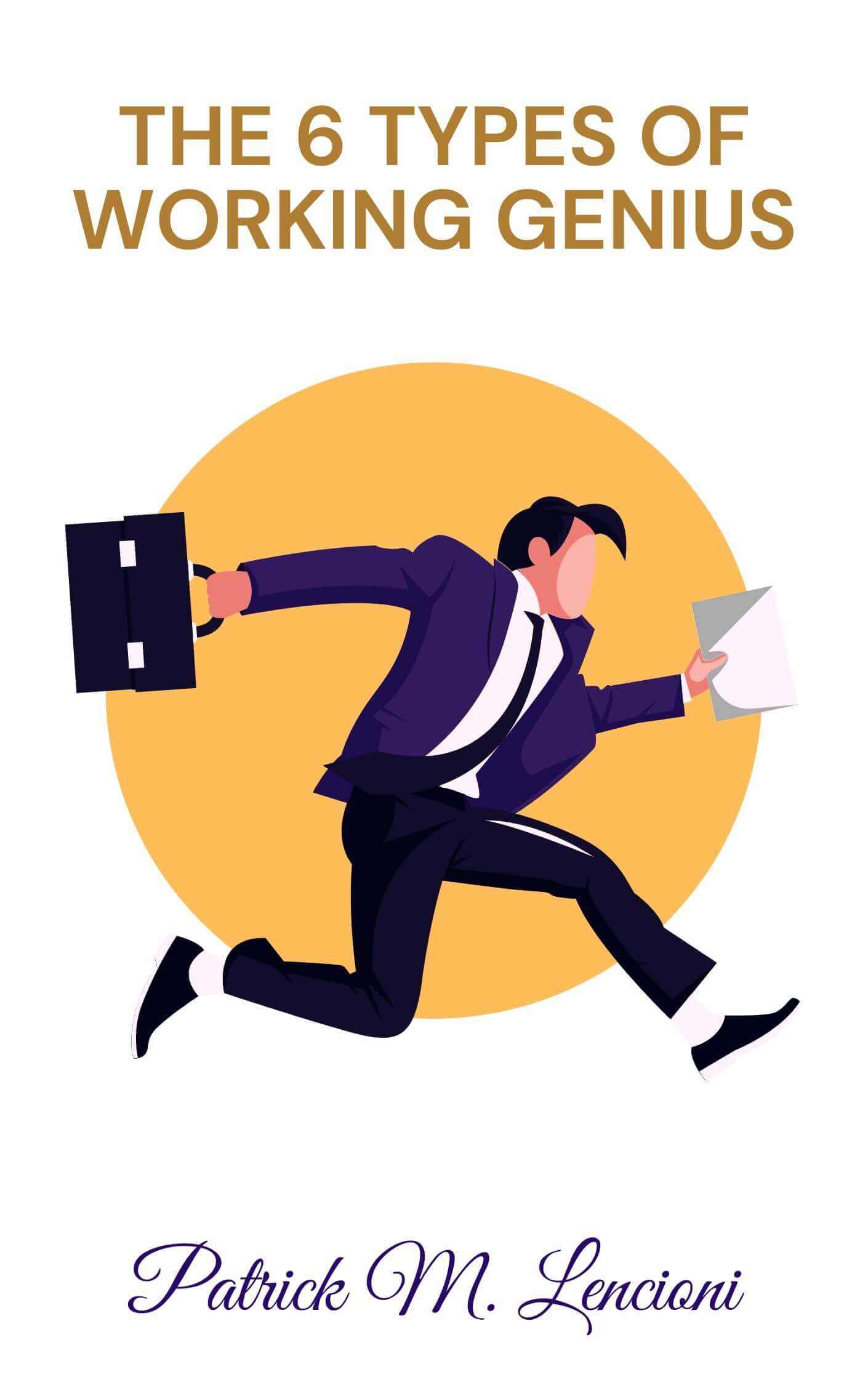
Prefer the print book? Buy on Amazon
As an Amazon Associate, Sumizeit earns from qualifying purchases.
The 6 Types Of Working Genius Book Summary
This The 6 Types Of Working Genius Book Summary covers the key ideas, lessons, and takeaways in about 20 minutes.
Short Description:
Pope Francis leads with inclusivity, focusing on marginalized communities.
Even more than just a practical tool for productivity, “The 6 Types of Working Genius” offers workable strategies for strengthening team collaboration, boosting team dynamics, and creating a workspace that feels not only joyful and energized, but where people feel valued every day for their expertise and contribution.
Helps with these goals
Want a Free Weekly Read?
Get a free summary every week straight to your mailbox.
Preview the The 6 Types Of Working Genius book summary
Below is a preview of Sumizeit’s comprehensive human-written summary of The 6 Types Of Working Genius by Patrick M. Lencioni. The full summary is 15-20 minutes long and covers the book’s key ideas in text, audio, visual, and video formats. Unlock the full 20 Minute Summary
Key Insights
In “The 6 Types of Working Genius,” by Patrick M. Lencioni, you’ll learn about the different types of working genius and the special skills based on personality that are associated with each.
Knowledge of these genius types will aid you in drawing the best out of everyone you work with, and in other areas of life. You can use this information as a stay-at-home mom, a member of the PTA, a CEO, or a team member of any company. You can also use this information to draw out your best attributes as well, helping you better understand yourself to work in cohesion with the people around you.
Furthermore, Lencioni explains why your company may have lost valuable members in the past and how to transform your workplace into a place that people want to stay long-term.
Key Points
Most People Don’t Look Forward To Work
When Sunday rolls around, the Sunday scaries kick in for a majority of people. They’re stressed about the week ahead and mourning the end of the weekend, doing things that they enjoy. But why don’t people enjoy their work when they spend a third of their adult lives doing it?
Work is a hard thing to shake off since you spend so much time doing it. This can cause an overflow into your personal life, affecting relationships with your spouse, your children, and your friends.
You may be waiting for that next raise or a new title to start feeling happy and excited about work. But people with promotions are, in truth, not happier in their workplace. There may be a temporary high, but that is quickly over, and work just feels like work again.
Even entrepreneurs deal with work woes. It may seem like a dream to control the vision of your business, but especially in the beginning stages, figuring out problems solo can be challenging.
There are many issues that can contribute to the unhappiness of working, such as bad choices, poor management, inadequate counseling, and people simply not fitting into the culture of the workplace they’re in.
But, there are also people who are very skilled in their positions, maintain quality relationships with the people they work with, and are still dissatisfied or feel burned out. If a promotion or title won’t fix that, what will?
The Three Stages Of Work
Let’s introduce a fictional character to better understand unhappiness in the workplace. We will call him Bull Brooks.
Brooks graduated with a degree in economics. He started in a position at a bank and then moved into advertising. While working in advertising, he gets promoted to vice president at his company. That was great for Brooks at first, but he started to suddenly lose his passion and decided to found his own ad firm with some of his friends and colleagues.
The new ad firm is wonderful at first, and he’s living on the high of being the leader of the vision.
Want the complete 20-minute summary?
- Full structured summary
- Video Summary
- Podcast Summary
- Audio summary
- Key takeaways
- Exercises
- Quiz
- Highlights and notes
- Ask the book with AI
Who should read The 6 Types Of Working Genius?
This book is ideal for managers, team leaders, and anyone responsible for building or optimizing teams across any organization. It's also valuable for individuals seeking to understand their own work preferences and find greater fulfillment in their career. Whether you're running a startup, managing a department, or coordinating a volunteer group, you'll benefit from learning how to align people with work that energizes rather than drains them.
Why does The 6 Types Of Working Genius matter?
Most people spend a third of their lives at work yet feel unfulfilled and dreading Monday mornings—promotions and raises don't fix this disconnect. Patrick M. Lencioni's framework shows that true workplace satisfaction and productivity come from matching individuals to tasks aligned with their natural talents, not just their competencies. In today's competitive talent market, organizations that understand and leverage their team's working genius retain better people and achieve superior results. This approach transforms workplace culture from one of obligation to one of genuine engagement and pride.
What are the key themes in The 6 Types Of Working Genius?
- Natural talent versus learned competency
- Six distinct types of working genius
- The three stages of work: ideation, activation, and implementation
- Building complementary teams through talent alignment
- Workplace fulfillment through meaningful work
- The role of proactive versus responsive talents
- Strategic team composition and gap management
How can you apply ideas from The 6 Types Of Working Genius?
- Assess your team members' working genius types to create a visual team map identifying strengths and critical gaps
- Restructure meeting invitations based on which genius types are most relevant to each conversation's purpose
- Redesign job roles to emphasize tasks aligned with each person's genius while redistributing draining tasks to others who find them energizing
- Use the six genius framework when hiring to fill specific talent gaps rather than just looking for general competence
- Create career development conversations focused on moving people toward roles that leverage their genius rather than promoting them into misaligned positions
- Form cross-departmental project teams with all six genius types represented to ensure comprehensive coverage of each work stage
- Implement paired working arrangements between complementary genius types to increase efficiency and job satisfaction
What common mistakes do readers make with The 6 Types Of Working Genius?
- Promoting high performers into roles misaligned with their working genius, assuming success in one area transfers to management
- Filling teams with people who share the same genius types, creating gaps in critical areas and redundancy in others
- Requiring all team members to attend every meeting stage, wasting time and creating frustration when their talents aren't needed
- Confusing competency with genius and assigning people to long-term roles where they're skilled but unfulfilled, leading to burnout and turnover
- Ignoring the need for talent pairs and attempting to progress through work stages with individuals working in isolation rather than complementary partnerships
Sumizeit Exercises Apply what you've learned
Turn ideas from The 6 Types Of Working Genius into action with a short guided reflection: identify the biggest takeaway, connect it to your life, and commit to one step you can take in the next 24 hours.
What is the expert analysis of The 6 Types Of Working Genius?
Overview
Patrick M. Lencioni’s The 6 Types of Working Genius stands as a significant contribution to contemporary organizational psychology and team management literature. Lencioni, a renowned consultant and author known for his expertise in team health and organizational effectiveness, builds upon his established reputation with this work. His prior successes, including The Five Dysfunctions of a Team, have cemented his role as a transformative thinker in business leadership. This book extends his insights by offering a nuanced typology of workplace talents, aiming to enhance both individual fulfillment and collective productivity.
Core Thesis
Lencioni’s central argument posits that work satisfaction and team efficiency are maximized when individuals operate within their natural “working genius” — a set of six distinct talents that align with different stages of the work process: Wonder, Invention, Discernment, Galvanizing, Enablement, and Tenacity. By identifying and leveraging these innate talents, organizations can structure teams that not only perform optimally but also foster joy and engagement among members. The book advances the idea that mismatches between roles and natural gifts lead to burnout, dissatisfaction, and turnover, and that deliberate alignment mitigates these issues.
Strengths
- Practical Framework: Lencioni provides a clear, actionable taxonomy that managers and team leaders can readily apply to diagnose and optimize team dynamics.
- Human-Centered Approach: The emphasis on individual fulfillment alongside organizational goals reflects a modern understanding of workplace well-being, moving beyond purely mechanistic productivity models.
- Integration of Intuition and Structure: The model balances intuitive talent recognition with structured team mapping, offering both qualitative and quantitative tools for application.
- Broad Applicability: The framework’s versatility is notable—it is designed to be useful across diverse roles, industries, and even outside traditional workplaces, such as in volunteer or family settings.
- Engaging Analogies: The use of relatable metaphors, such as the coffee temperature analogy, effectively conveys complex psychological concepts in accessible terms.
Critiques & Counterarguments
- Potential Oversimplification: While the six genius types offer clarity, human talents and motivations are often more fluid and overlapping than discrete categories suggest. Personality psychology research (e.g., the Big Five traits) underscores the complexity and variability of individual differences that may not be fully captured by this model.
- Lack of Empirical Validation: The book’s framework is largely based on Lencioni’s consulting experience and anecdotal evidence rather than rigorous, peer-reviewed empirical research. This raises questions about the generalizability and predictive power of the typology across different organizational cultures and contexts.
- Static Typology vs. Dynamic Roles: The model assumes relatively stable “geniuses” per individual, but contemporary work environments demand adaptability and role fluidity, which may challenge the fixed categorization approach.
- Neglect of External Factors: The focus on internal talents may underplay systemic organizational issues such as leadership failures, structural inequities, or market forces that also critically impact team success and employee satisfaction.
- Competing Theories: Alternative frameworks, such as StrengthsFinder or the DISC personality assessment, offer different lenses for understanding workplace behavior and may provide complementary or competing insights that question the exclusivity of Lencioni’s model.
Who Should Read This
The 6 Types of Working Genius is ideally suited for organizational leaders, team managers, HR professionals, and consultants seeking practical tools to enhance team composition and dynamics. It also benefits individuals interested in self-awareness and career alignment, particularly those who feel disengaged or burned out in their current roles. Additionally, the book’s accessible style makes it useful for educators and facilitators who aim to foster collaboration and productivity in group settings beyond the corporate sphere.
Frequently asked questions about the The 6 Types Of Working Genius book summary
What is The 6 Types Of Working Genius about?
The 6 Types of Working Genius by Patrick M. Lencioni is a framework for identifying and leveraging six distinct types of natural talent in the workplace: wonder, invention, discernment, galvanizing, enablement, and tenacity. The book teaches readers how to align team members with tasks that energize them rather than drain them, creating more productive teams and more fulfilled employees. Lencioni explains that all work progresses through three stages—ideation, activation, and implementation—and each genius type plays a crucial role in specific stages.
Who should read The 6 Types Of Working Genius?
Anyone responsible for building or managing teams should read this book, including managers, executives, entrepreneurs, and organizational leaders. It's also valuable for individuals seeking greater fulfillment in their careers or trying to understand why they thrive in some roles but struggle in others. Whether you work in corporate environments, nonprofits, schools, or volunteer organizations, the framework applies universally to any setting where people collaborate on projects.
What are the main takeaways from The 6 Types Of Working Genius?
The core takeaway is that true workplace satisfaction and productivity come from matching people to work aligned with their natural genius, not just their learned skills. Lencioni teaches that complementary genius types work best in pairs at different project stages, and that organizations should design teams with representation across all six types to avoid critical gaps. Finally, he shows that creating a workplace where people do work they love isn't just better for morale—it drives organizational growth and creates cultures where people genuinely want to stay.
How do the six working genius types work together?
The six types progress through work stages: wonder identifies opportunities, invention creates solutions, discernment evaluates feasibility, galvanizing mobilizes teams, enablement provides support, and tenacity completes projects. These types work best in complementary pairs—wonder with invention, discernment with galvanizing, enablement with tenacity—creating efficient workflows. Different types should be included in different types of meetings based on whether the conversation is brainstorming, decision-making, launching, or problem-solving.
What's the difference between working genius and competency?
Your working genius is your natural talent that energizes and inspires you—work in this area feels effortless and fulfilling. Competency refers to skills you've developed and do well, but they don't necessarily energize you. Using the coffee thermos analogy from the book, genius keeps you hot and energized long-term, while competency cools down and becomes a burden when done continuously, eventually feeling like a chore despite your proficiency.
How can I identify my working genius type?
You can identify your working genius by reflecting on which types of work activities energize you and make you lose track of time, versus which activities you're skilled at but find draining. Consider whether you naturally wonder about improvements, invent solutions, evaluate decisions, motivate teams, support others, or push things to completion. Many people have two genius types, and you can assess yourself or take a formal assessment tool based on Lencioni's framework to clarify where you fall.
What happens when a team is missing a working genius type?
Missing any genius type creates predictable problems: without wonder, teams miss opportunities; without invention, problems repeatedly go unsolved; without discernment, teams over-rely on data instead of intuition; without galvanizing, momentum fizzles; without enablement, people feel unsupported; without tenacity, projects remain unfinished. Teams can address gaps by hiring new members with needed talents, rotating people from other departments, or leveraging team members who possess multiple genius types.
Can reading The 6 Types Of Working Genius improve employee retention?
Yes, significantly. Lencioni's framework directly addresses why talented people leave organizations—it's not due to lack of opportunity or compensation, but because their work doesn't align with their natural talents. By designing roles and teams around the six genius types, organizations create environments where people feel valued and fulfilled. When employees consistently work in their genius, they remain engaged, take pride in organizational success, and want to stay long-term rather than seeking opportunities elsewhere.
About Sumizeit
Sumizeit is a profitable Scomy LLC company based in Miami, Florida. Our founders, Clemens Raemy and Weina Scott, are successful entrepreneurs with several exits. Sumizeit is a popular book summary app / micro learning app used by busy professionals and entrepreneurs with over 2,500 non-fiction book summaries and 10,000 podcast summaries in text, audio, visual, podcast, and video format. We also have stellar retention tools to make ideas stick - such as flashcards with spaced repetition, quizzes, streaks, highlighting and notes, daily challenges, riddles, mini-courses, meditation, and more. You won't only learn the idea, but also remember it. Over 90% of our users change their habits with Sumizeit.
Upgrade Now
Here's why readers love Sumizeit
Join thousands of learners getting smarter every day
"Great experience. Detailed summaries. Loved the gamification feature. Makes learning fun. Good customer service. I recommend Sumizeit to anyone. You'll learn a lot."
"I always felt busy but still wanting to keep up with the book discussion in my friend group. This was a great supplement to help me keep reading the books I find fun while keeping up with important books."
"I love this website. Instead of scrolling social media, I find myself learning a lot. I use it everyday. I recommend this app for anyone who is too busy and wants to get up to speed with their favorite books."
The 6 Types Of Working Genius Book Summary PDF
Looking for a The 6 Types Of Working Genius Book Summary PDF you can save and revisit offline? Our The 6 Types Of Working Genius Book Summary PDF captures the book’s core ideas in a clean, printable format — the key frameworks, takeaways, and structure without the fluff. Download the The 6 Types Of Working Genius Book Summary PDF when you want a reference you can annotate, share with your team, or review on the go. Get your The 6 Types Of Working Genius Book Summary PDF from the download page below.
Download The 6 Types Of Working Genius Book Summary PDFPeople also liked these summaries
Readers who explored The 6 Types Of Working Genius often enjoyed these titles next.


Ready to read the whole thing?
- Full structured summary
- Video Summary
- Podcast Summary
- Audio summary
- Key takeaways
- Exercises
- Quiz
- Highlights and notes
- Ask the book with AI
Featured Book Titles
Popular Book Summaries at sumizeit, leading book summary app