


As an Amazon Associate, Sumizeit earns from qualifying purchases.
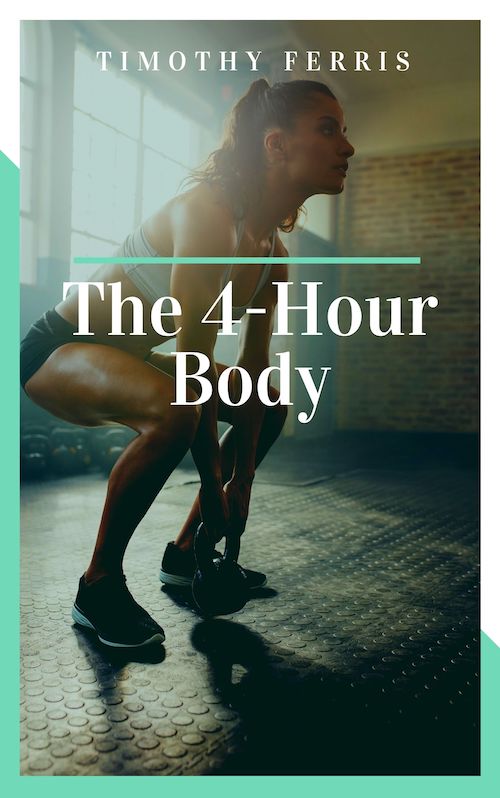
The 4 Hour Body Book Summary
This The 4 Hour Body Book Summary covers the key ideas, lessons, and takeaways in about 20 minutes.
The beauty of Ferriss’s method is its adaptability. You can apply his frameworks to fat loss, muscle gain, recovery, sleep, or even learning. By treating your body as a laboratory and tracking what works for you, you gain control over what once seemed uncontrollable. The book’s central message: success in health is not about doing more — it’s about doing the right things, precisely.
Ultimately, Ferriss’s approach teaches that physical transformation is the doorway to something greater — mastery of self. When you optimize your body, you reclaim your time, your confidence, and your freedom to live deliberately.
Helps with these goals
Want the complete 20-minute summary?
- Full structured summary
- Video Summary
- Podcast Summary
- Audio summary
- Infographic
- Key takeaways
- Exercises
- Quiz
- Highlights and notes
- Ask the book with AI
What is in the The 4 Hour Body book summary?
Below is a preview of Sumizeit’s expert-written summary of The 4 Hour Body by Tim Ferriss. The full summary covers the book’s key ideas in text, audio, and video.
In The 4-Hour Body, Timothy Ferriss asks a radical question: what if the key to transforming your body isn’t more effort, but less — done smarter?
Over a decade of self-experimentation, Ferriss turned himself into a human laboratory. He tested diets, training regimens, supplements, and even sex techniques, meticulously measuring everything from fat percentage to hormone levels. The result is a blueprint for body redesign, distilled into principles that challenge nearly every assumption in modern fitness and health culture.
The book is based on one idea: the human body is a system that can be hacked, and success comes from finding the smallest possible action that produces the biggest possible change.
The Minimum Effective Dose: The Science of Doing Less
At the heart of Ferriss’s philosophy lies the Minimum Effective Dose (MED) — the smallest amount of input required to produce a desired outcome. Anything beyond that is wasted energy.
Ferriss argues that most people overtrain, overeat, and overcomplicate their routines. True progress happens when you identify and focus only on the high-impact actions that move the needle.
In medicine, the MED of penicillin is the lowest dose that kills bacteria. More isn’t better — it’s toxic. Ferriss applies this same principle to human performance:
For muscle gain: One slow, intense set of 80–120 seconds under tension triggers muscle growth without additional sets.
For fat loss: A simple, repeatable diet combined with minimal exercise is more sustainable than long workouts.
For learning: Study only the 20% of material that leads to 80% of results — a nod to the Pareto Principle.
An example: Ferriss recounts gaining 34 pounds of muscle in 28 days by doing just four exercises twice a week, each to failure. No endless gym hours, no protein obsession — just laser-focused effort.
He discovered that rest and recovery, not intensity, were the true bottlenecks to growth. When he cut his training frequency, his results doubled.
This efficiency-driven model doesn’t just redefine fitness — it reframes how we think about time, productivity, and mastery in general.
The Slow-Carb Diet: Eat Simply, Burn Fat Efficiently
Dieting, Ferriss argues, fails because it’s too complicated. Calorie counting is unreliable, “clean eating” is vague, and deprivation never lasts. The Slow-Carb Diet, his solution for effortless fat loss, uses five simple rules that produce measurable results fast — often 20 pounds in the first month without exercise.
Avoid white carbohydrates. Eliminate all forms of bread, rice (even brown), cereal, pasta, and fried food with breading. These spike insulin, the hormone that stores fat.
Eat the same few meals repeatedly. Consistency simplifies decision-making and stabilizes metabolism. Meals typically combine a protein (chicken, beef, eggs), legumes (lentils, black beans), and vegetables (spinach, broccoli, asparagus).
Don’t drink calories. Liquid calories — milk, fruit juice, soda, even smoothies — are silent saboteurs. Stick to water, unsweetened tea, or black coffee.
Skip fruit (except avocados and tomatoes). Most fruit is high in fructose, which triggers fat storage in the liver.
Have one “cheat…
Want the complete 20-minute summary?
- Full structured summary
- Video Summary
- Podcast Summary
- Audio summary
- Infographic
- Key takeaways
- Exercises
- Quiz
- Highlights and notes
- Ask the book with AI
Who should read The 4 Hour Body?
The 4-Hour Body is for anyone tired of complicated fitness advice who wants real results through smarter, not harder work. Whether you're seeking fat loss, muscle gain, better sleep, or injury recovery, this book appeals to busy professionals, athletes, and self-improvement enthusiasts who value efficiency and measurable progress over hype.
Why does The 4 Hour Body matter?
In an age of information overload and fitness misinformation, The 4-Hour Body offers a data-driven alternative based on personal experimentation rather than dogma. Tim Ferriss's emphasis on the Minimum Effective Dose challenges the cultural obsession with more effort and more hours, proving that transformation is possible through precision and strategic simplicity. His principles have influenced modern fitness, biohacking, and performance culture.
What are the key themes in The 4 Hour Body?
- Minimum Effective Dose: doing only what's necessary for maximum results
- Efficiency over intensity in fitness and health
- Self-experimentation and personal data as the foundation for change
- Simplicity and consistency beat complexity and perfection
- Recovery and rest as bottlenecks, not weakness
- Body systems can be optimized like any other complex problem
What are the key lessons from the The 4 Hour Body book summary?
Apply the Minimum Effective Dose to Everything
The smallest amount of input that produces a desired outcome is optimal; anything beyond that is waste. This principle applies to training, diet, sleep, and learning.
Muscle Growth Requires Intensity, Not Volume
One set to failure performed slowly creates the same muscle-building stimulus as multiple sets, making brief, focused workouts more effective than marathon gym sessions.
Simplify Your Diet to Automate Your Results
Eating the same few nutritious meals repeatedly removes decision fatigue, stabilizes metabolism, and makes dietary adherence sustainable long-term.
The Slow-Carb Diet Eliminates Willpower as a Problem
By stabilizing blood sugar through five simple rules, hunger and cravings naturally decrease, making fat loss effortless rather than a constant struggle.
Rest and Recovery Are the True Bottlenecks
Overtraining prevents progress; reducing training frequency while prioritizing recovery often doubles results by allowing the body adequate adaptation time.
Cold Exposure Activates Brown Fat for Passive Calorie Burn
Strategic cold exposure triggers non-shivering thermogenesis, allowing fat oxidation even at rest through ice water, cold showers, or ice packs.
Sleep Quality Is Engineered, Not Inherited
Environmental tweaks like temperature, light exposure, and targeted supplementation can dramatically improve sleep depth and recovery without medication.
Movement Corrects Dysfunction Before Strength Building
Fixing posture and alignment through biomechanical awareness prevents injury and enables more effective training than jumping into heavy lifts.
Measurement Creates Accountability and Motivation
Tracking body composition, sleep, and performance metrics makes invisible progress visible, fostering consistency and enabling data-driven adjustments.
Compound Lifts Deliver Superior Functional Strength
Multi-joint movements like deadlifts and chin-ups build real-world stability and injury resistance better than isolation exercises focused solely on aesthetics.
One Cheat Day Per Week Resets Metabolism
Strategic refeeding prevents fat-loss plateaus and provides psychological relief, making dietary adherence sustainable and paradoxically accelerating progress.
Precision Beats Willpower in Long-Term Change
Structure and clarity eliminate the need for constant discipline; when a system is designed well, adherence becomes automatic.
Track Unconventional Metrics Beyond the Scale
Body fat percentage, circumference measurements, sleep duration, and emotional state reveal progress and patterns that weight alone cannot capture.
Liquid Calories Are Hidden Fat Storage Triggers
Drinks like juice, smoothies, and milk spike insulin without satiety, making them the most efficient calories to eliminate for rapid fat loss.
The Body Is a System That Can Be Hacked
Applying scientific principles and systematic experimentation to your own body reveals shortcuts and optimizations that seem impossible until tested.
Consistent Novelty Prevents Adaptation Plateaus
Rotating exercises and training methods prevents the body from adapting too completely, maintaining ongoing progress and engagement.
Injury Recovery Requires a Systematic Four-Stage Process
Combining movement, manipulation, medication, and mechanical reconstruction in sequence addresses injury at multiple biological levels for complete restoration.
The Pareto Principle Applies to Learning and Fitness
Focus on the vital 20% of actions that produce 80% of results; avoid the trap of perfectionism and comprehensive knowledge.
Want the complete 20-minute summary?
- Full structured summary
- Video Summary
- Podcast Summary
- Audio summary
- Infographic
- Key takeaways
- Exercises
- Quiz
- Highlights and notes
- Ask the book with AI
How can you apply ideas from The 4 Hour Body?
- Design a two-day-per-week workout using compound lifts and perform each set to failure with slow, controlled tempo to build muscle without time investment
- Implement the Slow-Carb Diet's five rules for 30 days to establish a baseline for how your body responds to insulin management and consistent eating patterns
- Replace morning cardio with 15-20 minutes of cold exposure three times weekly to activate brown fat and accelerate fat oxidation passively
- Optimize sleep by lowering bedroom temperature to 65-70°F, eliminating blue light before bed, and adding magnesium and potassium supplementation
- Create a simple tracking system using body fat percentage and circumference measurements instead of weight to monitor real progress and adjust strategy
- Practice the Critical Four functional exercises weekly to identify and correct left-right imbalances and improve injury resilience in daily life
What common mistakes do readers make with The 4 Hour Body?
- Assuming more training volume is always better; most people overtrain and under-recover, limiting muscle growth and fat loss
- Counting calories instead of focusing on food quality and blood sugar stability, leading to constant hunger and unsustainable restriction
- Ignoring sleep and recovery as priorities; optimizing these first multiplies the benefits of training and diet more than any exercise addition
- Measuring only scale weight, which misses fat loss, muscle gain, and metabolic improvements that determine true body composition change
Sumizeit Exercises Apply what you've learned
Turn ideas from The 4 Hour Body into action with a short guided reflection: identify the biggest takeaway, connect it to your life, and commit to one step you can take in the next 24 hours.
What is the expert analysis of The 4 Hour Body?
Overview
The 4-Hour Body by Timothy Ferriss stands as a landmark in the self-improvement and fitness genre, notable for its radical reframing of body transformation through the lens of efficiency and experimentation. Ferriss, already renowned for his disruptive approach to productivity in The 4-Hour Workweek, applies his signature methodology of “lifestyle design” and rigorous self-tracking to human physiology. The book’s significance lies in its challenge to conventional wisdom in fitness, nutrition, and health, proposing that minimal, precisely targeted interventions can yield outsized results. Ferriss’s background as an investor and experimentalist lends credibility and breadth to his approach, bridging anecdotal rigor with emerging scientific concepts.
Core Thesis
At the heart of The 4-Hour Body is the principle of the Minimum Effective Dose (MED): the smallest input necessary to provoke the desired physiological change. Ferriss argues that traditional fitness and diet paradigms suffer from inefficiency, overtraining, and complexity. Instead, by hacking the body as a system—through focused, data-driven experimentation—one can optimize muscle gain, fat loss, recovery, and even sexual performance with far less time and effort. This thesis extends beyond physical transformation, implying a broader philosophy of mastery through precision, measurement, and elimination of waste.
Strengths
- Innovative Synthesis of Self-Experimentation: Ferriss’s methodical self-tracking and willingness to test unconventional ideas provide a compelling model for personalized health optimization.
- Accessible Frameworks: Concepts like the Minimum Effective Dose and the Slow-Carb Diet offer clear, actionable strategies that demystify fitness and nutrition for a broad audience.
- Emphasis on Recovery and Functionality: Prioritizing rest, injury prevention, and functional strength challenges the often misguided “more is better” mentality pervasive in fitness culture.
- Cross-Disciplinary Approach: The integration of biomechanics, nutrition science, sleep research, and even sexual health creates a holistic blueprint rather than a narrow fitness manual.
- Encouragement of Data-Driven Personalization: The insistence on measurement and adaptation empowers readers to become their own scientists, fostering sustainable lifestyle changes.
Critiques & Counterarguments
- Reliance on Anecdotal Evidence: While Ferriss’s self-experimentation is thorough, much of the book’s evidence is anecdotal or based on small sample sizes, limiting generalizability.
- Oversimplification of Complex Physiology: The MED concept, though elegant, risks minimizing the nuanced interplay of genetics, environment, and psychology that influence body composition and health.
- Dated or Contested Scientific Claims: Some protocols, such as the PAGG supplement stack or extreme polyphasic sleep schedules, lack robust peer-reviewed support and may not be advisable for all readers.
- Competing Research: Studies in exercise science often emphasize volume and progressive overload for muscle hypertrophy, contrasting with Ferriss’s minimalist approach. Similarly, the role of fruit in a balanced diet is supported by extensive nutritional research, challenging the Slow-Carb Diet’s fruit restrictions.
- Potential Risks of Self-Experimentation: The book’s encouragement of radical personal testing without medical supervision could lead to adverse outcomes, especially in injury recovery or extreme dietary manipulation.
Who Should Read This
The 4-Hour Body is ideal for readers who are:
- Intrigued by biohacking and willing to engage in disciplined self-tracking and experimentation.
- Professionals and enthusiasts seeking efficient, science-informed strategies to optimize fitness and health without devoting excessive time.
- Individuals frustrated by conventional diet and exercise advice who desire a fresh, data-centric perspective.
- Readers interested in a holistic approach that spans nutrition, sleep, injury prevention, and even sexual wellness.
- Those with a critical mindset who can discern between anecdotal insights and established scientific consensus, applying the book’s principles judiciously.
Frequently asked questions about the The 4 Hour Body book summary
What is The 4-Hour Body about?
The 4-Hour Body by Tim Ferriss is a guide to rapid body transformation through the Minimum Effective Dose principle—doing only the smallest amount of work necessary to produce maximum results. The book covers fat loss, muscle gain, sleep optimization, injury recovery, and other body redesign strategies based on Ferriss's decade of self-experimentation and detailed measurement.
Who should read The 4-Hour Body?
The 4-Hour Body is ideal for busy professionals, athletes, and self-improvement enthusiasts who want efficient fitness and health strategies without complex routines. It appeals to anyone skeptical of conventional fitness wisdom, frustrated by slow progress, or seeking data-driven approaches to body change and performance optimization.
What are the main takeaways from The 4-Hour Body?
The core takeaways include: apply the Minimum Effective Dose to eliminate wasted effort, simplify your diet using five Slow-Carb rules, prioritize rest and recovery over intense training, use measurement to drive consistency, and treat your body as a testable system. Success comes from precision and strategic simplicity, not willpower or marathon effort.
What is the Minimum Effective Dose?
The Minimum Effective Dose is the smallest amount of input required to produce a desired outcome; anything beyond it is waste. In fitness, this means one intense set to failure builds muscle as effectively as multiple sets, and minimal, focused actions beat exhaustive routines. It's the principle of efficiency applied to health and performance.
How does the Slow-Carb Diet work?
The Slow-Carb Diet uses five simple rules: avoid white carbohydrates, eat the same meals repeatedly, don't drink calories, skip most fruit, and include one cheat day weekly. By stabilizing blood sugar and removing decision fatigue, the diet produces measurable fat loss—often 20 pounds in the first month—without requiring calorie counting or exercise.
Can you gain muscle quickly with minimal training?
Yes, according to Ferriss's Occam's Protocol: two workouts per week using compound lifts, one set to failure per exercise, with slow five-second repetitions. Ferriss demonstrated gaining over 30 pounds of lean muscle in a month using this approach because the body grows during recovery, not in the gym, making rest the true bottleneck.
What role does cold exposure play in The 4-Hour Body?
Cold exposure activates brown adipose tissue, which burns calories through non-shivering thermogenesis. Ferriss recommends ice water before meals, cold showers, or ice packs on the upper back to increase daily calorie expenditure and accelerate fat loss passively, based on research showing cold can increase energy expenditure by up to 30%.
Why is sleep optimization important in The 4-Hour Body?
Sleep is treated as an engineered system critical to recovery and fat loss. Ferriss emphasizes cool bedroom temperature (65-70°F), light management, magnesium supplementation, and avoiding blue light before bed. Poor sleep sabotages both muscle gain and fat loss, making sleep optimization as important as diet and training.
About Sumizeit
Sumizeit is a profitable Scomy LLC company based in Miami, Florida. It has been helping readers learn from nonfiction books for 7 years with expert-written summaries in text, audio, podcast, and video.
Want the complete 20-minute summary?
- Full structured summary
- Video Summary
- Podcast Summary
- Audio summary
- Infographic
- Key takeaways
- Exercises
- Quiz
- Highlights and notes
- Ask the book with AI
Here's why readers love Sumizeit
Join thousands of learners getting smarter every day
"Great experience. Detailed summaries. Loved the gamification feature. Makes learning fun. Good customer service. I recommend Sumizeit to anyone. You'll learn a lot."
"I always felt busy but still wanting to keep up with the book discussion in my friend group. This was a great supplement to help me keep reading the books I find fun while keeping up with important books."
"I love this website. Instead of scrolling social media, I find myself learning a lot. I use it everyday. I recommend this app for anyone who is too busy and wants to get up to speed with their favorite books."
The 4 Hour Body Book Summary PDF
Looking for a The 4 Hour Body Book Summary PDF you can save and revisit offline? Our The 4 Hour Body Book Summary PDF captures the book’s core ideas in a clean, printable format — the key frameworks, takeaways, and structure without the fluff. Download the The 4 Hour Body Book Summary PDF when you want a reference you can annotate, share with your team, or review on the go. Get your The 4 Hour Body Book Summary PDF from the download page below.
Download The 4 Hour Body Book Summary PDFPeople also liked these summaries
Readers who explored The 4 Hour Body often enjoyed these titles next.

Want the complete 20-minute summary?
- Full structured summary
- Video Summary
- Podcast Summary
- Audio summary
- Infographic
- Key takeaways
- Exercises
- Quiz
- Highlights and notes
- Ask the book with AI
Featured Book Titles
Popular Book Summaries at sumizeit, leading book summary app