


Prefer the print book? Buy on Amazon
As an Amazon Associate, Sumizeit earns from qualifying purchases.
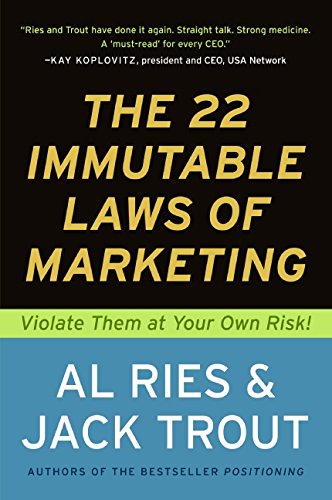
The 22 Immutable Laws of Marketing Book Summary
This The 22 Immutable Laws of Marketing Book Summary covers the key ideas, lessons, and takeaways in about 20 minutes.
Short Description:
The 22 Immutable Laws of Marketing stress positioning and perception for success.
Helps with these goals
Want a Free Weekly Read?
Get a free summary every week straight to your mailbox.
Preview the The 22 Immutable Laws of Marketing book summary
Below is a preview of Sumizeit’s comprehensive human-written summary of The 22 Immutable Laws of Marketing by Al Ries. The full summary is 15-20 minutes long and covers the book’s key ideas in text, audio, visual, and video formats. Unlock the full 20 Minute Summary
The game of marketing is all about the perception of a business, brand, or product.
Companies, however, fail to always see this. They will spend millions and millions of dollars trying to vamp an old product when instead all they really had to do was change people’s perspectives about the product!
“Marketing is a battle of perceptions, not products.”
― Al Ries
In, “The 22 Immutable Laws of Marketing,” by Al Ries and Jack Trout, you will learn how to use marketing as a tool to change people’s perspectives in order to make your competitor look weak and to make your brand strong.
Get Your Product to the Market ASAP
Your company’s success depends on how fast you can get your product to the market. To do this, you must make a very good first impression.
To make an impression on the market, you must get creative. You must make your product seem different from other products that are out there. This will make it seem like an innovative product, even if it’s not! Perception is everything!
When your product is the ‘first’ of its kind, it will automatically be a market leader.
And, when a company is a market leader, it will automatically come to a customer’s mind when they think of that market.
When you are the leader of the market, you have a definite advantage because a customer’s mind is hard to change once it has made a decision. But, why is this?
“You want to change something on a computer? Just type over or delete the existing material. Do you want to change something in a mind? Forget it.”
― Al Ries
It’s because brands have such high recognition when they are the first. For example, Purell is a known hand-sanitizer, just like Kleenex is a known tissue brand. Oftentimes, people will ask for the name brand, rather than the product.
Having a catchy name brand is important too! Think Apple or Google. They are short and sweet.
Create Your Own Product Category
So, if it’s impossible for you to be a leader in an already established market, then create your own!
When you create a new category, you will be first in the category automatically, so you are giving yourself the upper-hand.
And, by starting your own category, you will eliminate potential competition, at least until people start to infiltrate your new category.
If you do not want to create your own category but join an existing one, use the Law of the Opposite to your advantage. This law states that you should look at the leader in the market, observe their strengths, and make them come off as weaknesses.
While doing that you must also paint the positives of your company in comparison to the market leader.
Try “Owning” A Word
A good company logo will do wonders for your business.
For example, Google owns the word “google”. It is not just the name of their brand, it is now an adjective people use…
Want the complete 20-minute summary?
- Full structured summary
- Video Summary
- Podcast Summary
- Audio summary
- Key takeaways
- Exercises
- Quiz
- Highlights and notes
- Ask the book with AI
Who should read The 22 Immutable Laws of Marketing?
This book is essential for marketers, business owners, and entrepreneurs who want to understand how perception shapes consumer behavior. Whether you're launching a startup, revitalizing an established brand, or competing in a crowded marketplace, The 22 Immutable Laws of Marketing by Al Ries provides the strategic framework you need to succeed.
Why does The 22 Immutable Laws of Marketing matter?
In today's saturated markets, companies waste billions trying to improve products when they should be changing how customers perceive them. Understanding these 22 laws helps you avoid costly mistakes, differentiate your brand authentically, and build lasting competitive advantages. Marketing success isn't about having the best product—it's about winning the battle of perceptions.
What are the key themes in The 22 Immutable Laws of Marketing?
- Perception is more powerful than product reality
- Being first to market creates lasting competitive advantage
- Creating your own category beats fighting established leaders
- Focus and sacrifice lead to market dominance
- Owning a word in customer minds drives recognition
- Arrogance and overconfidence destroy successful brands
- Admitting mistakes builds customer trust and loyalty
How can you apply ideas from The 22 Immutable Laws of Marketing?
- Launch new products quickly with a focus on market perception rather than perfection to secure first-mover advantage and customer mindshare
- Develop a narrow, focused product line rather than expanding into multiple categories, concentrating resources on dominating your chosen segment
- Create distinctive brand positioning by owning a single word or concept that differentiates you from competitors in customer minds
- If entering an established market, use the Law of the Opposite to reposition the leader's strengths as weaknesses and highlight your contrasting advantages
- Build customer trust by acknowledging mistakes transparently rather than defending them, which strengthens long-term brand loyalty
- Avoid making major strategic or budget decisions based on market predictions; instead, ground strategy in current market realities and customer behavior
- Target a specific demographic and message rather than trying to appeal to everyone, which increases marketing effectiveness and brand clarity
What common mistakes do readers make with The 22 Immutable Laws of Marketing?
- Investing heavily in improving products while ignoring customer perception, missing the real battle happening in consumers' minds
- Expanding into too many product categories or customer segments instead of sacrificing breadth to dominate a focused niche
- Attempting to compete directly against established market leaders rather than either creating a new category or repositioning against their strengths
- Allowing company arrogance and success to create blindspots that prevent leadership from seeing flaws and making necessary strategic adjustments
Sumizeit Exercises Apply what you've learned
Turn ideas from The 22 Immutable Laws of Marketing into action with a short guided reflection: identify the biggest takeaway, connect it to your life, and commit to one step you can take in the next 24 hours.
What is the expert analysis of The 22 Immutable Laws of Marketing?
Overview
The 22 Immutable Laws of Marketing is a seminal work co-authored by Al Ries and Jack Trout, two pioneers in the field of marketing strategy. Al Ries, in particular, is renowned for his contributions to the concept of “positioning,” a cornerstone in modern marketing thought. Published decades ago, this book distills marketing into 22 fundamental principles that the authors argue are timeless and universally applicable. Its significance lies in its prescriptive clarity and its enduring influence on how marketers conceptualize brand strategy and competitive positioning.
Core Thesis
The central argument of the book is that marketing is fundamentally a battle of perceptions rather than products. Ries and Trout contend that success in marketing hinges on shaping and controlling consumer perceptions by adhering to immutable laws—such as being first to market, owning a word in the consumer’s mind, and focusing narrowly rather than broadly. These laws serve as strategic imperatives that guide companies to establish strong brand leadership by influencing how customers perceive their offerings relative to competitors.
Strengths
- Clarity and Structure: The book’s division into 22 concise “laws” provides a clear, memorable framework that marketers can easily reference and apply.
- Emphasis on Perception: Highlighting perception over product features was a paradigm-shifting insight that anticipates the modern focus on branding and consumer psychology.
- Practical Examples: The use of well-known brands such as Google, Apple, and Kleenex effectively illustrates abstract principles, making the concepts tangible and relatable.
- Focus on Differentiation: The insistence on being first or creating a new category underscores the importance of innovation and market leadership in brand success.
- Enduring Relevance: Many of the laws, such as the Law of Focus and Law of Sacrifice, remain relevant in contemporary marketing strategy, especially in an age of information overload and consumer choice saturation.
Critiques & Counterarguments
- Oversimplification: The book’s “immutable laws” sometimes present marketing strategy as more formulaic than it is in practice, neglecting the complexity and fluidity of markets and consumer behavior.
- Limited Empirical Evidence: While rich in anecdotal examples, the book lacks rigorous empirical validation, which can make some laws appear more like aphorisms than scientifically grounded principles.
- Changing Market Dynamics: The rise of digital marketing, social media, and consumer-generated content challenges some laws, such as the primacy of being first, as late entrants can disrupt markets rapidly through viral influence or innovative business models.
- Competing Schools of Thought: Approaches like agile marketing and customer-centric innovation emphasize adaptability and iterative learning over rigid adherence to fixed laws, suggesting that flexibility can sometimes trump strict positioning.
- Real-World Contradictions: Brands like Tesla and Airbnb succeeded by entering established markets late but differentiated through technology and experience, indicating that “first mover advantage” is not always decisive.
Who Should Read This
This book is ideal for marketing professionals, brand strategists, entrepreneurs, and business students seeking foundational insights into brand positioning and competitive strategy. It offers a valuable mental model for understanding how to influence consumer perception and establish market leadership. However, readers should approach it as a starting point—complementing its principles with contemporary marketing research and adaptive strategies suited to today’s dynamic marketplaces.
Frequently asked questions about the The 22 Immutable Laws of Marketing book summary
What is The 22 Immutable Laws of Marketing about?
The 22 Immutable Laws of Marketing by Al Ries is a strategic guide that reveals how perception—not product quality—determines market success. The book outlines fundamental principles that explain why some brands become market leaders while others fail, emphasizing that marketing is fundamentally a battle of perceptions in the customer's mind.
Who should read The 22 Immutable Laws of Marketing?
This book is essential for marketers, business owners, entrepreneurs, and anyone responsible for brand strategy or product launches. Whether you're starting a new company, competing against established leaders, or trying to revitalize a struggling brand, Ries provides actionable frameworks for winning in your market.
What are the main takeaways from The 22 Immutable Laws of Marketing?
The core takeaway is that marketing success depends on shaping customer perception rather than improving products. Key lessons include: being first to market creates lasting advantage, creating your own category beats competing in crowded ones, focusing on a narrow position is more powerful than broad appeal, and admitting mistakes builds trust—all grounded in the principle that the human mind is difficult to change once it decides.
How can I apply The 22 Immutable Laws of Marketing to my business?
Start by assessing whether your real problem is perception rather than product quality. Launch quickly to secure first-mover advantage, narrow your product line and target audience, own a specific word or positioning in customers' minds, and use the Law of the Opposite if competing against leaders. Most importantly, base decisions on current market reality rather than predictions, and build trust by being transparent about mistakes.
What is the Law of the Opposite in The 22 Immutable Laws of Marketing?
The Law of the Opposite states that if you cannot be the market leader, study what makes the leader strong and reposition those strengths as weaknesses while highlighting your contrasting advantages. This allows you to compete effectively against established competitors by offering a distinct alternative rather than trying to beat them at their own game.
Why do arrogant companies fail according to The 22 Immutable Laws of Marketing?
The Law of Success explains that successful, arrogant leaders develop blindspots that prevent them from seeing their own mistakes and flaws. This arrogance leads to poor strategic decisions that eventually cause market dominance to erode. Maintaining humility and self-awareness is critical to sustaining market leadership.
What does The 22 Immutable Laws of Marketing say about brand names?
The book emphasizes that strong, concise brand names become so associated with their category that consumers use them generically—like Kleenex or Google. Through the Law of Focus, owning a single memorable word in customers' minds is more powerful than trying to own multiple attributes, making brand name selection and positioning critical to long-term success.
How does The 22 Immutable Laws of Marketing address failure and risk?
The Law of Failure states that mistakes are inevitable and cannot be avoided entirely. Rather than paralyzed by fear of failure, successful companies accept risk and make decisions knowing failure is possible. The key is learning from failures and avoiding the arrogance that blinds leaders to their mistakes—transparency about errors builds customer trust.
About Sumizeit
Sumizeit is a profitable Scomy LLC company based in Miami, Florida. Our founders, Clemens Raemy and Weina Scott, are successful entrepreneurs with several exits. Sumizeit is a popular book summary app / micro learning app used by busy professionals and entrepreneurs with over 2,500 non-fiction book summaries and 10,000 podcast summaries in text, audio, visual, podcast, and video format. We also have stellar retention tools to make ideas stick - such as flashcards with spaced repetition, quizzes, streaks, highlighting and notes, daily challenges, riddles, mini-courses, meditation, and more. You won't only learn the idea, but also remember it. Over 90% of our users change their habits with Sumizeit.
Upgrade Now
Here's why readers love Sumizeit
Join thousands of learners getting smarter every day
"Great experience. Detailed summaries. Loved the gamification feature. Makes learning fun. Good customer service. I recommend Sumizeit to anyone. You'll learn a lot."
"I always felt busy but still wanting to keep up with the book discussion in my friend group. This was a great supplement to help me keep reading the books I find fun while keeping up with important books."
"I love this website. Instead of scrolling social media, I find myself learning a lot. I use it everyday. I recommend this app for anyone who is too busy and wants to get up to speed with their favorite books."
The 22 Immutable Laws of Marketing Book Summary PDF
Looking for a The 22 Immutable Laws of Marketing Book Summary PDF you can save and revisit offline? Our The 22 Immutable Laws of Marketing Book Summary PDF captures the book’s core ideas in a clean, printable format — the key frameworks, takeaways, and structure without the fluff. Download the The 22 Immutable Laws of Marketing Book Summary PDF when you want a reference you can annotate, share with your team, or review on the go. Get your The 22 Immutable Laws of Marketing Book Summary PDF from the download page below.
Download The 22 Immutable Laws of Marketing Book Summary PDFPeople also liked these summaries
Readers who explored The 22 Immutable Laws of Marketing often enjoyed these titles next.





Ready to read the whole thing?
- Full structured summary
- Video Summary
- Podcast Summary
- Audio summary
- Key takeaways
- Exercises
- Quiz
- Highlights and notes
- Ask the book with AI
Featured Book Titles
Popular Book Summaries at sumizeit, leading book summary app