


Prefer the print book? Buy on Amazon
As an Amazon Associate, Sumizeit earns from qualifying purchases.
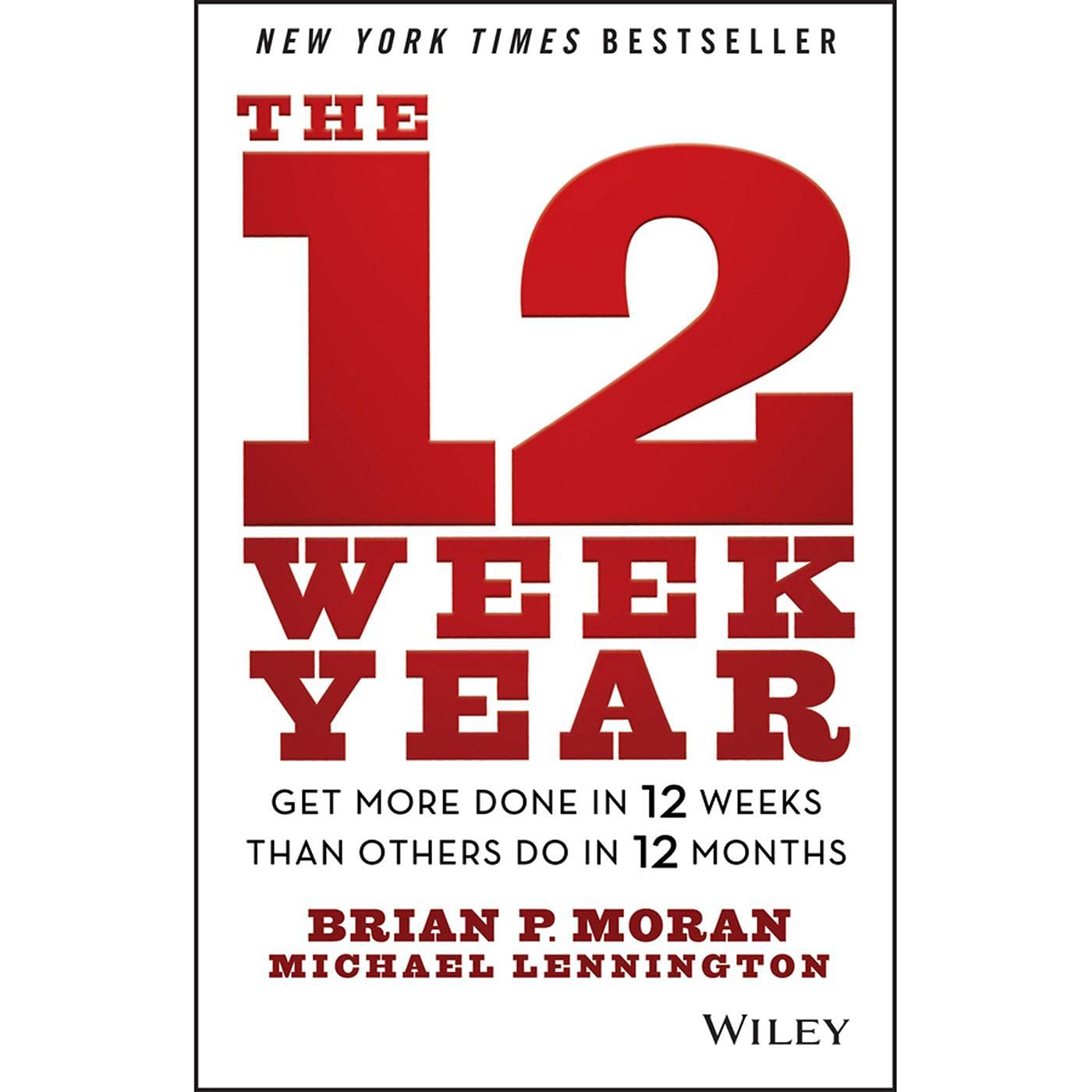
The 12 Week Year Book Summary
This The 12 Week Year Book Summary covers the key ideas, lessons, and takeaways in about 20 minutes.
The 12 Week Year creates urgency and momentum through short cycles.
By compressing goals into 12-week periods, individuals shift attention from intention to execution. Vision provides meaning. Planning creates direction. Measurement offers feedback. Time structure protects focus. Accountability sustains effort.
The result is not burnout, but rhythm. Four chances a year to reset. Four opportunities to learn. Four moments of urgency instead of one. Over time, these cycles stack, producing results that feel disproportionate to effort.
The book’s core promise is simple but demanding: if you commit fully to executing what matters for the next twelve weeks, your future will start arriving faster than you expect.
Helps with these goals
Want the complete 20-minute summary?
- Full structured summary
- Video Summary
- Podcast Summary
- Audio summary
- Key takeaways
- Exercises
- Quiz
- Highlights and notes
- Ask the book with AI
Want a Free Weekly Read?
Get a free summary every week straight to your mailbox.
Preview the The 12 Week Year book summary
Below is a preview of Sumizeit’s comprehensive human-written summary of The 12 Week Year by Brian P. Moran. The full summary is 15-20 minutes long and covers the book’s key ideas in text, audio, visual, and video formats. Unlock the full 20 Minute Summary
The 12 Week Year challenges a deeply ingrained assumption: that meaningful progress naturally unfolds over twelve months. Brian P. Moran argues that the calendar most people rely on quietly sabotages execution. When goals are assigned a year-long deadline, urgency fades, focus fragments, and effort becomes inconsistent. The book introduces a radically different lens—compressing long horizons into intense, repeatable 12-week cycles that force clarity, decisiveness, and sustained action .
Instead of treating a year as a single unit, Moran reframes it as four concentrated sprints. Each cycle creates the same pressure and momentum people typically feel only at the end of December—but now experienced multiple times a year. This shift isn’t about working harder; it’s about restructuring time so execution becomes unavoidable.
The Hidden Cost of Annual Thinking
Annual goal-setting feels responsible and mature, yet Moran shows how it quietly undermines results. When deadlines sit months away, the human brain relaxes. There’s always “later.” Small delays don’t feel costly. Missed weeks are rationalized away. Over time, effort diffuses, and intention outpaces behavior.
The irony is that organizations and individuals often produce their best work in the final stretch of the year. Pressure sharpens attention. Distractions lose their grip. Priorities become obvious. The book asks a deceptively simple question: if urgency drives performance, why design a system that suppresses urgency for most of the year?
The 12-week framework removes the illusion of excess time. With only twelve weeks available, every week matters. Every missed action has visible consequences. Momentum becomes fragile—and therefore protected.
Execution as the True Competitive Advantage
A central theme of the book is that information is not the problem. Most people already know what they should do. Businesses fail not from ignorance, but from inconsistent follow-through. Moran distinguishes between potential and performance, arguing that execution—not intelligence, talent, or ambition—is the deciding factor between average and exceptional results .
Execution, in this model, is not a personality trait. It’s a discipline that can be designed, measured, and strengthened. The 12-week system exists to close the gap between knowing and doing by removing ambiguity about what matters now.
Discipline One: Building a Vision That Pulls You Forward
The foundation of the system is vision—not a vague aspiration, but a deeply personal picture of a future that feels emotionally compelling. Moran emphasizes that change is uncomfortable by nature. Without a meaningful reason to endure discomfort, most people retreat to familiar habits.
A compelling vision serves two purposes. First, it creates emotional fuel. Second, it reshapes belief. The brain responds differently when a future feels desirable and believable. Over time, repeated visualization strengthens confidence and reduces resistance.
The book outlines four belief stages people move through as a vision matures: disbelief, possibility, likelihood, and inevitability. Importantly, Moran advises against asking “how” too early. Early planning can prematurely shrink ambition. Instead, the initial work is imaginative—allowing desire to expand before constraints appear.
Vision is also multi-layered. Long-term aspirations define direction. Medium-term objectives bridge aspiration and action. Short-term goals—specifically 12-week goals—convert intention into execution.
Discipline…
Want the complete 20-minute summary?
- Full structured summary
- Video Summary
- Podcast Summary
- Audio summary
- Key takeaways
- Exercises
- Quiz
- Highlights and notes
- Ask the book with AI
Who should read The 12 Week Year?
The 12 Week Year is for anyone frustrated by annual goal-setting that produces minimal results—professionals, entrepreneurs, managers, and individuals who know what they should do but struggle with follow-through. It's especially valuable for people who feel their ambitions outpace their actual accomplishments and who want a proven system to close the gap between intention and execution.
Why does The 12 Week Year matter?
In a world that worships long-term planning, Brian P. Moran reveals that annual timeframes actually sabotage progress by allowing procrastination and diffusion of effort. By restructuring how we think about time and goals, The 12 Week Year offers a practical alternative that mirrors the urgency and focus humans naturally access under pressure—but in a repeatable, sustainable way that produces measurable results without burnout.
What are the key themes in The 12 Week Year?
- The hidden cost of annual thinking and why longer timeframes reduce urgency
- Execution as the competitive advantage—closing the gap between knowing and doing
- Vision as emotional fuel that sustains commitment through discomfort
- Time compression as a tool for focus, not a source of stress
- Process control over outcome obsession for consistent progress
- Weekly rhythms and accountability as replacements for motivation
- Lead indicators versus lag indicators in measuring what drives results
Want the complete 20-minute summary?
- Full structured summary
- Video Summary
- Podcast Summary
- Audio summary
- Key takeaways
- Exercises
- Quiz
- Highlights and notes
- Ask the book with AI
How can you apply ideas from The 12 Week Year?
- Break your annual goals into four separate 12-week sprints with specific, measurable actions due in three months rather than twelve
- Create a weekly planning and review ritual every week to clarify priorities, assess execution score (target 85%+), and adjust the plan before drift becomes costly
- Design a 'model week' that blocks time into strategic work (deep focus on priorities), buffer time (interruptions and admin), and recovery (rest and renewal)
- Measure lead indicators (calls made, content produced, workouts completed) weekly rather than waiting for lag indicators (revenue, weight loss, results) to appear months later
- Establish a peer accountability group that meets weekly to report progress and discuss obstacles, creating external reinforcement without judgment
- Write goals and actions positively, framing them around what you'll achieve rather than what you'll avoid, and ensure each action ties directly to your goal
- Build belief gradually by visualizing your vision repeatedly and tracking yourself moving through disbelief, possibility, likelihood, and inevitability
What common mistakes do readers make with The 12 Week Year?
- Asking 'how' too early in the vision stage, which prematurely constrains ambition before fully imagining what's possible
- Creating 12-week plans that are essentially glorified to-do lists with dozens of actions rather than focusing on fewer, high-impact activities
- Assuming motivation will sustain effort through the middle weeks when novelty fades and urgency hasn't yet revived—not preparing your habits in advance
- Measuring only lag indicators (final results) instead of lead indicators (daily behaviors), leaving you blind to what's actually driving or blocking progress
Sumizeit Exercises Apply what you've learned
Turn ideas from The 12 Week Year into action with a short guided reflection: identify the biggest takeaway, connect it to your life, and commit to one step you can take in the next 24 hours.
What is the expert analysis of The 12 Week Year?
Overview
The 12 Week Year, authored by Brian P. Moran, stands as a significant contribution to the literature on productivity and execution. Moran, a seasoned leadership consultant and performance strategist, challenges conventional wisdom about annual goal-setting by proposing a transformative framework that compresses the traditional yearly cycle into focused 12-week periods. This approach is designed to foster urgency, clarity, and consistent action, thereby addressing a pervasive barrier in both personal and organizational achievement: the gap between intention and execution. Moran’s work synthesizes decades of experience into a practical system that resonates across business, psychology, and self-improvement domains.
Core Thesis
The central argument of The 12 Week Year is that the standard annual calendar undermines performance by diluting urgency and fragmenting focus. Moran posits that meaningful progress is not a function of time length but of disciplined execution within well-defined, short cycles. By reframing a year as four discrete 12-week sprints, individuals and organizations can create repeated bursts of pressure and momentum that sustain high performance. Execution—defined as the disciplined, measurable follow-through on critical actions—is the true competitive advantage, surpassing intelligence, talent, or ambition. The system emphasizes vision, planning, process control, measurement, and time structuring as interlocking disciplines that convert knowledge into consistent results.
Strengths
- Innovative Temporal Reframing: Moran’s insight to compress annual goals into quarterly cycles addresses a fundamental psychological challenge—procrastination caused by perceived abundance of time—making the book’s core framework both intuitive and impactful.
- Action-Oriented Methodology: The emphasis on specific, measurable, and time-bound actions within each cycle moves beyond abstract goal-setting to tangible execution, enhancing accountability and reducing overwhelm.
- Integration of Emotional and Practical Dimensions: The book acknowledges the emotional arc inherent in goal pursuit, providing a realistic roadmap for sustaining motivation and discipline through inevitable fluctuations.
- Applicability Across Contexts: While grounded in individual productivity, the system’s principles extend effectively to teams and organizations, offering a scalable model for shared vision and transparent progress.
- Balanced Focus on Process and Outcome: By distinguishing lead and lag indicators, Moran equips readers with tools to maintain control over behaviors that drive results, fostering a feedback-rich environment conducive to continuous improvement.
Critiques & Counterarguments
- Potential Oversimplification of Human Behavior: While the 12-week framework leverages urgency effectively, it may underestimate the complexity of motivation and the diverse psychological factors influencing execution, such as intrinsic motivation or external stressors not addressed by temporal restructuring alone.
- Limited Consideration of Long-Term Strategic Planning: Compressing goals into 12-week cycles risks fragmenting vision if not carefully managed. Critics might argue that some objectives inherently require longer horizons for meaningful development, which Moran’s model could inadvertently marginalize.
- Evidence Base and Empirical Validation: The book’s arguments, while compelling, rely heavily on anecdotal and experiential insights rather than rigorous empirical studies. Competing research in organizational behavior and cognitive psychology suggests that motivation and performance are influenced by multifaceted variables beyond time framing.
- Contrasting Schools of Thought: Approaches such as Agile methodologies or OKRs (Objectives and Key Results) also emphasize short cycles but incorporate iterative learning and adaptability in ways that may offer more flexibility than Moran’s structured disciplines.
- Risk of Burnout Despite Claims: Although Moran advocates for rest and recovery, the intensity of repeated 12-week sprints could, for some individuals or teams, lead to fatigue or diminished creativity if not balanced with adequate psychological safety and autonomy.
Who Should Read This
The 12 Week Year is ideally suited for professionals, entrepreneurs, and leaders who struggle with procrastination, inconsistent follow-through, or lack of clarity in execution. It appeals to readers who appreciate structured, disciplined approaches to productivity and are seeking a practical framework to bridge the gap between knowing what to do and actually doing it. Additionally, teams and organizations aiming to enhance alignment, transparency, and momentum will find Moran’s principles valuable. However, readers interested in nuanced psychological theories or those requiring flexible, long-term strategic planning may need to supplement this work with complementary perspectives.
Frequently asked questions about the The 12 Week Year book summary
What is The 12 Week Year about?
The 12 Week Year by Brian P. Moran argues that annual goal-setting sabotages execution by removing urgency and allowing procrastination. Instead, the book introduces a system that compresses goals into intense 12-week cycles, creating four reset opportunities per year and turning vague intentions into concrete weekly actions that feel immediately consequential.
Who should read The 12 Week Year?
Anyone frustrated with annual planning that produces minimal results should read The 12 Week Year—professionals, entrepreneurs, managers, and individuals who struggle to close the gap between what they know they should do and what they actually complete. It's ideal for people who feel their ambitions outpace their accomplishments and want a practical, proven system.
What are the main takeaways from The 12 Week Year?
The core takeaways are: urgency must be designed into your system, not hoped for; execution is a discipline that can be systematized; focus requires time protection from distractions; weekly rhythms and peer accountability sustain effort better than motivation; and four 12-week cycles per year produce compounding results that feel disproportionate to effort. The central promise is that transformation requires better boundaries around time, not more time.
Why does the 12-week cycle work better than annual goals?
The 12-week cycle works because it removes the illusion of excess time—every week represents nearly 10% of the entire year, making procrastination expensive and missed days visible. This compression shifts focus from distant outcomes to daily execution, creates urgency without being artificial, and provides four opportunities annually to reset, learn, and iterate rather than waiting twelve months to evaluate progress.
How do you measure progress in The 12 Week Year system?
The system uses two types of metrics: lead indicators measure behaviors you control (calls made, workouts completed, content produced) while lag indicators measure outcomes (revenue, weight loss, sales closed). Weekly execution is scored based on completed actions, with 85%+ signaling strong alignment. This approach separates controllable behaviors from results, reducing emotional volatility and revealing exactly where to adjust.
What role does vision play in The 12 Week Year?
Vision is the foundation of the system, providing emotional fuel and reshaping belief. Rather than vague aspirations, Moran emphasizes deeply personal, emotionally compelling pictures of the future that justify enduring change. Vision should be multi-layered—long-term aspirations define direction, medium-term objectives bridge aspiration and action, and 12-week goals convert intention into execution.
Can The 12 Week Year be applied to teams and organizations?
Yes. While The 12 Week Year speaks directly to personal productivity, its principles extend naturally to teams and organizations through shared vision, short cycles that increase transparency, and weekly scorecards that replace vague performance reviews with actionable insight. Teams stay engaged because progress is visible and frequent, and momentum becomes cultural rather than dependent on heroic individual effort.
About Sumizeit
Sumizeit is a profitable Scomy LLC company based in Miami, Florida. Our founders, Clemens Raemy and Weina Scott, are successful entrepreneurs with several exits. Sumizeit is a popular book summary app / micro learning app used by busy professionals and entrepreneurs with over 2,500 non-fiction book summaries and 10,000 podcast summaries in text, audio, visual, podcast, and video format. We also have stellar retention tools to make ideas stick - such as flashcards with spaced repetition, quizzes, streaks, highlighting and notes, daily challenges, riddles, mini-courses, meditation, and more. You won't only learn the idea, but also remember it. Over 90% of our users change their habits with Sumizeit.
Upgrade Now
Want the complete 20-minute summary?
- Full structured summary
- Video Summary
- Podcast Summary
- Audio summary
- Key takeaways
- Exercises
- Quiz
- Highlights and notes
- Ask the book with AI
Here's why readers love Sumizeit
Join thousands of learners getting smarter every day
"Great experience. Detailed summaries. Loved the gamification feature. Makes learning fun. Good customer service. I recommend Sumizeit to anyone. You'll learn a lot."
"I always felt busy but still wanting to keep up with the book discussion in my friend group. This was a great supplement to help me keep reading the books I find fun while keeping up with important books."
"I love this website. Instead of scrolling social media, I find myself learning a lot. I use it everyday. I recommend this app for anyone who is too busy and wants to get up to speed with their favorite books."
The 12 Week Year Book Summary PDF
Looking for a The 12 Week Year Book Summary PDF you can save and revisit offline? Our The 12 Week Year Book Summary PDF captures the book’s core ideas in a clean, printable format — the key frameworks, takeaways, and structure without the fluff. Download the The 12 Week Year Book Summary PDF when you want a reference you can annotate, share with your team, or review on the go. Get your The 12 Week Year Book Summary PDF from the download page below.
Download The 12 Week Year Book Summary PDFPeople also liked these summaries
Readers who explored The 12 Week Year often enjoyed these titles next.



Want the complete 20-minute summary?
- Full structured summary
- Video Summary
- Podcast Summary
- Audio summary
- Key takeaways
- Exercises
- Quiz
- Highlights and notes
- Ask the book with AI
Featured Book Titles
Popular Book Summaries at sumizeit, leading book summary app