


Prefer the print book? Buy on Amazon
As an Amazon Associate, Sumizeit earns from qualifying purchases.
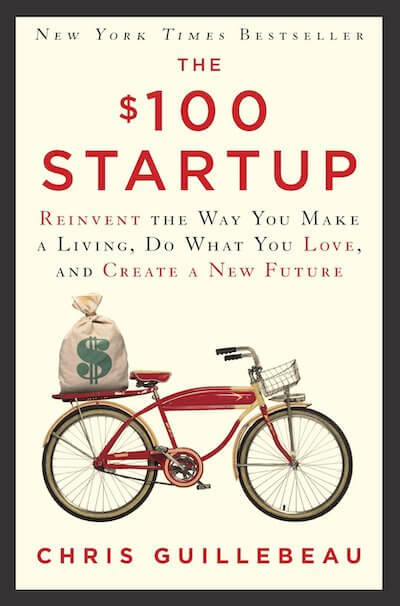
The $100 Startup Book Summary
This The $100 Startup Book Summary covers the key ideas, lessons, and takeaways in about 20 minutes.
Short Description:
Entrepreneurship thrives on simplicity, usefulness, and acti
Success comes from usefulness, not innovation for its own sake. From action, not endless planning. From serving a specific audience well rather than trying to impress everyone. By embracing simplicity, clarity, and experimentation, entrepreneurs can build businesses that generate income, autonomy, and fulfillment—without sacrificing their lives in the process.
Helps with these goals
Preview the The $100 Startup book summary
Below is a preview of Sumizeit’s comprehensive human-written summary of The $100 Startup by Chris Guillebeau. The full summary is 15-20 minutes long and covers the book’s key ideas in text, audio, visual, and video formats. Unlock the full 20 Minute Summary
The $100 Startup challenges the traditional narrative of entrepreneurship as something that requires venture capital, formal business training, or years of preparation. Chris Guillebeau reframes entrepreneurship as a practical, accessible path for ordinary people who want more autonomy, meaning, and flexibility in their work. Instead of positioning business ownership as an elite pursuit, he presents it as a series of simple, learnable actions that anyone can take with minimal financial risk.
The book centers on the concept of the microbusiness—a small, often solo operation built around skills, interests, or knowledge that already exist. These businesses are designed to generate income quickly, adapt easily, and remain lightweight. Guillebeau emphasizes that success does not come from size or complexity, but from usefulness. If something genuinely helps people, they will pay for it.
At its core, the book is about freedom. Financial freedom, creative freedom, and the freedom to design a life around values rather than obligations. The author argues that microbusinesses are uniquely suited to this goal because they minimize overhead, reduce dependence on outside approval, and allow rapid experimentation.
The Internet as the Great Equalizer
One of the foundational ideas in the book is that the internet has eliminated many of the barriers that once made entrepreneurship inaccessible. In previous eras, starting a business often required physical locations, inventory, employees, and large upfront investments. Today, digital tools allow individuals to reach global audiences with minimal cost.
Guillebeau explains that online payment processors, website builders, social media platforms, and cloud-based tools have collapsed the distance between idea and execution. Someone with a laptop and an internet connection can test an idea, find customers, and generate income faster than ever before.
This shift is not merely technological—it’s philosophical. The internet enables businesses to be built around people rather than institutions. Instead of chasing mass markets, entrepreneurs can serve small, specific audiences deeply and sustainably. A microbusiness doesn’t need millions of customers; it needs the right customers.
Passion Alone Is Not Enough
While the book encourages building businesses around personal interests, it also dismantles the myth that passion alone leads to profit. Guillebeau is careful to distinguish between hobbies and viable business ideas. Enjoyment is important, but usefulness is essential.
A sustainable microbusiness sits at the intersection of three elements: something you care about, something you’re good at (or willing to improve), and something other people are willing to pay for. When these three overlap, the result is a business that is both fulfilling and financially viable.
The author urges readers to evaluate their interests honestly. Some passions are best kept as hobbies, while others can be adapted into services or products that solve real problems. Often, the most profitable ideas are adjacent to passions rather than identical to them.
Skills Are More Valuable Than Ideas
Rather than encouraging readers to search endlessly for the “perfect idea,” Guillebeau shifts the focus toward skills. Skills are transferable, adaptable, and constantly in demand.
Want the complete 20-minute summary?
- Full structured summary
- Video Summary
- Podcast Summary
- Audio summary
- Key takeaways
- Exercises
- Quiz
- Highlights and notes
- Ask the book with AI
Who should read The $100 Startup?
The $100 Startup is for anyone who dreams of building their own business but believes they lack capital, formal training, or the right idea. Whether you're employed but unfulfilled, looking for supplemental income, or seeking complete autonomy, this book shows how to launch a profitable venture with minimal financial risk. It's ideal for people who want to turn existing skills into income without years of preparation.
Why does The $100 Startup matter?
In today's digital economy, entrepreneurship has become democratized—the barriers that once required significant capital and resources have largely disappeared. The $100 Startup by Chris Guillebeau shows readers how to leverage internet tools, their existing abilities, and audience clarity to build sustainable microbusinesses. As traditional employment becomes less stable and people increasingly seek meaningful work, this practical guide offers a proven roadmap for creating financial independence and lifestyle freedom on your own terms.
What are the key themes in The $100 Startup?
- Microbusinesses as a path to autonomy and financial freedom
- Skills matter more than ideas or business plans
- Serving a specific audience well beats trying to appeal to everyone
- Value is created by solving real problems, not by complexity
- The internet has eliminated most traditional startup barriers
- Action and experimentation beat endless planning
- Profitability is non-negotiable but achievable with discipline
How can you apply ideas from The $100 Startup?
- Conduct a skills audit to identify what you're already good at and what people in your network regularly ask you for help with
- Interview potential customers directly to understand their pain points and what solutions they'd actually pay for, rather than assuming demand
- Create a tiered pricing structure (basic, premium, deluxe) for your core offering to serve different customer segments and increase average revenue
- Set a firm launch date and announce it publicly to create accountability, even if your offering isn't perfect
- Test your offer with a small group before full-scale promotion to gather feedback and refine your messaging
- Develop a simple value proposition statement that explains what you offer, who it's for, and what transformation they'll experience
- Document your business model using Guillebeau's framework: what you'll sell, who you'll serve, what it costs to deliver, and how you'll promote it
What common mistakes do readers make with The $100 Startup?
- Waiting for the perfect idea instead of launching with something useful and refining based on real feedback
- Pricing based on effort or cost instead of the value and transformation the customer receives
- Trying to appeal to everyone instead of defining a specific audience with clear, shared characteristics and values
- Treating marketing as aggressive self-promotion rather than simply connecting helpful solutions with people who need them
Sumizeit Exercises Apply what you've learned
Turn ideas from The $100 Startup into action with a short guided reflection: identify the biggest takeaway, connect it to your life, and commit to one step you can take in the next 24 hours.
What is the expert analysis of The $100 Startup?
Overview
The $100 Startup by Chris Guillebeau stands as a significant contribution to contemporary entrepreneurship literature, particularly in its democratization of business creation. Guillebeau, an entrepreneur and author renowned for his advocacy of lifestyle design and unconventional business models, challenges entrenched notions that entrepreneurship demands substantial capital, formal education, or lengthy preparation. Instead, he offers a pragmatic blueprint for ordinary individuals seeking autonomy, meaningful work, and financial independence through microbusinesses. The book’s emphasis on simplicity, accessibility, and actionable strategies resonates deeply in an era where digital tools have radically transformed the entrepreneurial landscape.
Core Thesis
At its core, The $100 Startup posits that entrepreneurship is accessible to anyone willing to leverage their existing skills and passions to create value for a specific audience, with minimal financial risk. Guillebeau argues that success in business arises not from grand innovation or scale, but from usefulness—providing solutions that genuinely help people and addressing clearly defined needs. The internet serves as a great equalizer, enabling microbusinesses to flourish by reducing barriers to market entry and fostering direct relationships with customers. The author advocates for action over prolonged planning, clarity in audience targeting, and a focus on profitability as a form of responsibility rather than greed.
Strengths
- Practical Accessibility: Guillebeau’s approach demystifies entrepreneurship, making it approachable for readers without prior business experience or large capital.
- Emphasis on Usefulness and Value: The focus on solving real problems rather than chasing passion or complex innovation grounds the book in sustainable business principles.
- Integration of Digital Tools: Insightful articulation of how the internet and related technologies empower microbusinesses to reach targeted audiences efficiently.
- Action-Oriented Frameworks: Clear, actionable advice on launching, pricing, marketing, and growth encourages readers to move from ideation to execution swiftly.
- Balanced View on Lifestyle Entrepreneurship: The book realistically addresses the discipline and systems required to maintain freedom, avoiding romanticized notions of entrepreneurship.
Critiques & Counterarguments
- Oversimplification of Challenges: While the book’s accessibility is a strength, it occasionally glosses over the complexities and systemic barriers—such as market saturation, regulatory hurdles, or socio-economic disparities—that many entrepreneurs face.
- Limited Scope of Business Models: The focus on microbusinesses and solo ventures may underrepresent the potential and challenges of scaling or collaborative enterprises, which are often necessary for substantial economic impact.
- Potential Underestimation of Passion’s Role: Although Guillebeau rightly cautions against passion alone driving business success, some research in psychology suggests that intrinsic motivation can be critical for resilience and long-term commitment in entrepreneurship.
- Contrasting Views on Growth: The book frames growth as optional and personal, which contrasts with traditional economic theories emphasizing scaling as essential for competitive advantage and sustainability.
- Evidence and Case Study Selection: The reliance on anecdotal success stories may introduce survivorship bias, potentially underrepresenting the frequency and causes of failure among similar ventures.
Who Should Read This
The $100 Startup is ideally suited for aspiring entrepreneurs seeking a low-risk entry point into business ownership, particularly those interested in leveraging personal skills and digital platforms to create flexible, meaningful work. It appeals to readers disillusioned with corporate structures or traditional career paths, as well as individuals craving autonomy without the burden of large-scale operations or investment. Additionally, the book offers valuable insights for self-improvement enthusiasts and small business advisors who appreciate practical frameworks grounded in real-world applicability. However, those looking for in-depth analysis of complex business growth strategies or large-scale entrepreneurship may find its scope limited.
Frequently asked questions about the The $100 Startup book summary
What is The $100 Startup about?
The $100 Startup by Chris Guillebeau is a guide to building profitable, sustainable businesses with minimal capital and risk. The book argues that entrepreneurship is now accessible to ordinary people through simple business models, existing skills, digital tools, and a focus on serving specific audiences well. Rather than chasing innovation or massive scale, Guillebeau shows how to create microbusinesses that generate income, autonomy, and freedom without requiring venture capital or years of preparation.
Who should read The $100 Startup?
Anyone considering entrepreneurship but feeling blocked by lack of capital, formal training, or the right idea should read this book. It's ideal for employed professionals seeking meaningful side income, career changers wanting to build something of their own, and people who value autonomy and flexibility over traditional employment. The book appeals to both aspiring entrepreneurs and those already running small operations who want to become more strategic and profitable.
What are the main takeaways from The $100 Startup?
The core takeaways are: (1) You don't need significant capital, formal training, or a revolutionary idea to start—existing skills and market demand are enough; (2) Success comes from solving real problems for a specific audience, not from complexity or innovation for its own sake; (3) Action beats planning—launch, gather feedback, and refine rather than waiting for ideal conditions; (4) Price based on value delivered to customers, not on your costs; and (5) Build a business that enhances your life and freedom, not one that consumes it.
What is a microbusiness according to Guillebeau?
A microbusiness is a small, often solo operation built around existing skills, knowledge, or interests designed to generate income quickly with minimal overhead. It sits at the intersection of something you care about, something you're good at, and something people will pay for. Microbusinesses are characterized by low startup costs, fast feedback loops, direct customer relationships, and the ability to adapt and scale gradually or remain intentionally small.
How does The $100 Startup approach pricing and profitability?
The book emphasizes pricing based on the value and transformation your customer receives, not on your costs or effort. It advocates for tiered pricing models that serve different customer segments while increasing average revenue. Profitability is treated as non-negotiable and responsible—a profitable business sustains itself, continues serving customers, and allows you to maintain autonomy. The book also encourages disciplined spending and avoiding unnecessary debt.
What role does the internet play in The $100 Startup?
The internet is presented as the great equalizer that has removed traditional entrepreneurship barriers like geography, capital requirements, and inventory needs. Digital tools, payment processors, website builders, and social platforms enable individuals to reach global audiences, test ideas cheaply, and operate location-independently. This technological shift has made it possible for ordinary people with a laptop and internet connection to launch profitable businesses that were previously inaccessible.
Does The $100 Startup say you need a business plan before launching?
No. The book argues that action and real market feedback are more valuable than extensive planning. Rather than a traditional business plan, Guillebeau advocates for launching quickly with a clear offer, gathering customer feedback, and refining based on what you learn. The goal of an early launch is not perfection but learning. Overthinking and perpetual planning prevent entrepreneurs from ever taking action.
How does The $100 Startup define success?
Success is defined individually, not as a universal standard. Rather than assuming growth or scale is the goal, Guillebeau encourages readers to define what success means for them—whether that's modest income with maximum flexibility, building something larger, or creating work that aligns with personal values. The book emphasizes creating a business that enhances your life and freedom rather than one that consumes or restricts it.
About Sumizeit
Sumizeit is a profitable Scomy LLC company based in Miami, Florida. Our founders, Clemens Raemy and Weina Scott, are successful entrepreneurs with several exits. Sumizeit is a popular book summary app / micro learning app used by busy professionals and entrepreneurs with over 2,500 non-fiction book summaries and 10,000 podcast summaries in text, audio, visual, podcast, and video format. We also have stellar retention tools to make ideas stick - such as flashcards with spaced repetition, quizzes, streaks, highlighting and notes, daily challenges, riddles, mini-courses, meditation, and more. You won't only learn the idea, but also remember it. Over 90% of our users change their habits with Sumizeit.
Upgrade Now
Here's why readers love Sumizeit
Join thousands of learners getting smarter every day
"Great experience. Detailed summaries. Loved the gamification feature. Makes learning fun. Good customer service. I recommend Sumizeit to anyone. You'll learn a lot."
"I always felt busy but still wanting to keep up with the book discussion in my friend group. This was a great supplement to help me keep reading the books I find fun while keeping up with important books."
"I love this website. Instead of scrolling social media, I find myself learning a lot. I use it everyday. I recommend this app for anyone who is too busy and wants to get up to speed with their favorite books."
The $100 Startup Book Summary PDF
Looking for a The $100 Startup Book Summary PDF you can save and revisit offline? Our The $100 Startup Book Summary PDF captures the book’s core ideas in a clean, printable format — the key frameworks, takeaways, and structure without the fluff. Download the The $100 Startup Book Summary PDF when you want a reference you can annotate, share with your team, or review on the go. Get your The $100 Startup Book Summary PDF from the download page below.
Download The $100 Startup Book Summary PDFPeople also liked these summaries
Readers who explored The $100 Startup often enjoyed these titles next.

Ready to read the whole thing?
- Full structured summary
- Video Summary
- Podcast Summary
- Audio summary
- Key takeaways
- Exercises
- Quiz
- Highlights and notes
- Ask the book with AI
Featured Book Titles
Popular Book Summaries at sumizeit, leading book summary app