


Prefer the print book? Buy on Amazon
As an Amazon Associate, Sumizeit earns from qualifying purchases.
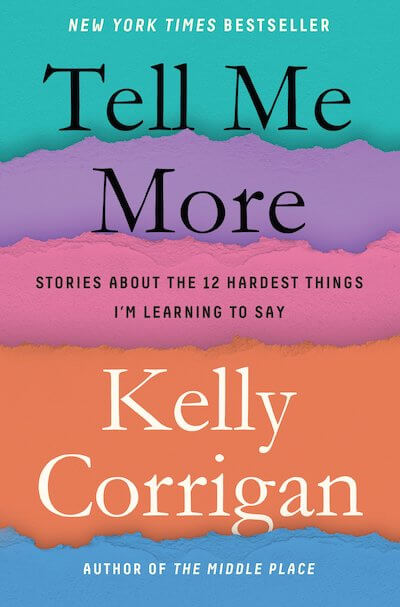
Tell Me More Book Summary
This Tell Me More Book Summary covers the key ideas, lessons, and takeaways in about 20 minutes.
Short Description:
Kelly Corrigan shares lessons on love and hardship from life’s toughest moments.
Helps with these goals
Want a Free Weekly Read?
Get a free summary every week straight to your mailbox.
Preview the Tell Me More book summary
Below is a preview of Sumizeit’s comprehensive human-written summary of Tell Me More by Kelly Corrigan. The full summary is 15-20 minutes long and covers the book’s key ideas in text, audio, visual, and video formats. Unlock the full 20 Minute Summary
Events in life would be significantly easier if things always went as expected. However, as many know, life can be messy, unpredictable, and disastrous. In these moments, it can be hard to find the right thing to say. In Kelly Corrigan’s Book, Stories About the Twelve Hardest Things I’m Learning to Say, she chronicles these events, and what she learned how to say (the hard way). From dealing with a catastrophic mess made by the family dog to untangling the aftermath when she wrongly accused someone of doing something they had no part in, Kelly has had her fair share of messy situations. She reflects on what happened, what it taught her about love and relationships, and what she’s learning to say (or not say) in tough situations. Read on to learn about the words she found, and along the way, maybe find a few of your own.
Just like this
Kelly was having a difficult morning. Just three months ago her father had died of cancer, and she felt as though she were drowning in grief. That, paired with the regular obstacles of the morning, felt like too much to handle. She noted with aggravation how her husband, Edward, wasn’t answering the telephone as he made himself eggs and bacon for breakfast. He just let it ring. Probably due to the noise of cooking. Not that it was quiet anywhere else in the house: her daughters were in a yelling match in the other room. She knew that eventually, it would be her job to break up the fighting match. Ed had read a single parenting book that suggested the solution to fighting was to just let them fight. Easy enough for him to say, he didn’t have to deal with the aftermath. She considered her husband deeply, how she didn’t know if she ever really loved him. As her family inched towards successfully leaving the house, she realized the kitchen was a disaster: egg shells dripped and mounds of dog fur lurked beneath the table. Edward appeared, ready for work, and her anger boiled. She hadn’t had time to get ready at all. Soon, everyone was out of the house, leaving Kelly alone with her thoughts. She wondered what had happened. She loved her family, and she hated being a grouch that her husband was itching to get away from in the morning. That’s when she remembered a phrase her meditation teacher told her, sometimes life is “just like this”. Sometimes, like Kelly, we are caught in a formidable storm of emotions that cause pain. If we can accept that life is “just like this”, we can feel relief, accept our surroundings, and endure the storm.
Listen.
Sometimes when someone presents us with a problem they are going through, our strongest instinct is to give them advice about how we would solve the problem. Kelly certainly felt that impulse with her daughters, Claire and Georgia.
Want the complete 20-minute summary?
- Full structured summary
- Video Summary
- Podcast Summary
- Audio summary
- Key takeaways
- Exercises
- Quiz
- Highlights and notes
- Ask the book with AI
Who should read Tell Me More?
Tell Me More is for anyone who struggles to find the right words in difficult moments—parents navigating family conflict, people healing from loss, and those seeking deeper connection in relationships. Whether you've said something you regret, avoided saying what needs to be said, or felt paralyzed by uncertainty, Kelly Corrigan's intimate stories offer both permission and guidance.
Why does Tell Me More matter?
In our culture of constant communication and quick fixes, Tell Me More teaches us that sometimes the most powerful words are the simplest ones: "I don't know," "I was wrong," or sometimes no words at all. Kelly Corrigan's vulnerable exploration of life's messiest moments—grief, parenting failures, faith questions, and family conflicts—reminds us that everyone struggles to find their voice, and that our willingness to speak truthfully (or listen deeply) is what transforms relationships.
What are the key themes in Tell Me More?
- The power of vulnerability and honest communication
- Learning to listen without offering solutions
- Accepting uncertainty and letting go of control
- Setting boundaries while preserving relationships
- Finding redemption through apology and accountability
- How faith in ourselves and others sustains us through difficulty
How can you apply ideas from Tell Me More?
- When conflict arises, pause and ask yourself: Do I need to solve this problem, or does this person need to be heard? Practice active listening without interrupting or problem-solving.
- Create a simple apology script: acknowledge what you did wrong, say "I was wrong," and ask what you can do to make amends—avoid over-explaining or defending yourself.
- Practice saying "I don't know" when you're uncertain about big questions; notice how it reduces anxiety and opens space for genuine exploration rather than false certainty.
- Identify one area where you need to set a boundary, and rehearse a simple, clear way to say no without justifying or over-explaining your decision.
- When someone shares a problem, resist the urge to offer advice; instead, reflect back what you heard and ask clarifying questions until they feel truly understood.
- After a parenting (or relational) failure, apologize directly to the person affected before moving on, and let your apology be brief and genuine rather than elaborate.
- Remind someone you care about that you believe in them, especially during times when they doubt themselves; faith from others can sustain us through uncertainty.
What common mistakes do readers make with Tell Me More?
- Assuming that offering immediate solutions is the same as offering help; often people need empathy before advice, and sometimes instead of advice.
- Delaying apologies because you're unsure what to say; the longer you wait, the more damage accumulates and the harder repair becomes.
- Blaming others based on assumptions or patterns rather than facts; taking time to listen to the full story prevents wrongful accusations and lasting hurt.
- Avoiding difficult conversations (like saying no or admitting uncertainty) because you fear conflict; avoidance usually creates more conflict down the road than honest words would.
Sumizeit Exercises Apply what you've learned
Turn ideas from Tell Me More into action with a short guided reflection: identify the biggest takeaway, connect it to your life, and commit to one step you can take in the next 24 hours.
What is the expert analysis of Tell Me More?
Overview
Tell Me More: Stories About the 12 Hardest Things I'm Learning to Say is authored by Kelly Corrigan, an acclaimed American writer known for her candid and heartfelt explorations of family, illness, and personal growth. With a background in literature and a history of bestselling works such as The Middle Place and Lift, Corrigan brings a deeply personal yet universally resonant voice to this collection of essays. The book’s significance lies in its intimate examination of communication challenges within the context of everyday life’s unpredictability and emotional complexity. Corrigan’s reputation for blending humor, vulnerability, and insight positions this work as a meaningful contribution to contemporary memoir and self-reflective literature.
Core Thesis
At the heart of Corrigan’s book is the argument that the hardest things to say—phrases like “I was wrong,” “No,” or “I don’t know”—are essential to authentic human connection and emotional resilience. Through a series of personal anecdotes, she illustrates how mastering these difficult expressions facilitates growth, empathy, and healing within relationships. The book posits that learning to articulate vulnerability and boundaries is not only a form of self-care but also a vital tool for navigating life’s inevitable messiness and uncertainty.
Strengths
- Emotional Honesty: Corrigan’s willingness to expose her own struggles—grief, doubt, conflict—creates a compelling authenticity that invites readers into a shared human experience.
- Relatable Storytelling: The use of everyday scenarios, such as family dynamics and personal health crises, grounds the philosophical insights in tangible, accessible moments.
- Nuanced Exploration of Communication: Rather than offering simplistic advice, the book thoughtfully examines the complexities behind why certain phrases are difficult to say and the transformative power they hold.
- Integration of Compassion and Self-Reflection: Corrigan balances self-critique with empathy, modeling a mature approach to personal growth that resists judgment and embraces imperfection.
Critiques & Counterarguments
- Limited Scope of Evidence: The book relies heavily on personal narrative and anecdote, which, while emotionally impactful, may lack the empirical rigor or broader sociological context that could deepen its claims about communication.
- Potential Oversimplification: The framing of twelve “hardest things” risks reducing complex interpersonal dynamics into discrete categories, which may not capture the fluidity and cultural variability of communication challenges.
- Dated or Narrow Cultural Lens: The experiences and social contexts depicted are predominantly middle-class, Western, and heteronormative, which might limit the book’s applicability across diverse populations or more systemic communication barriers.
- Competing Perspectives on Communication: Research in psychology and communication studies often emphasizes the role of active listening and nonverbal cues beyond verbal expressions; some schools of thought argue that focusing on specific phrases may neglect these broader dimensions.
- Real-World Complexity of Saying “No” or “I Was Wrong”: While Corrigan celebrates these phrases as liberating, in many cultural or organizational settings, saying “no” or admitting fault can carry significant risks, suggesting that the advice may not be universally practical without additional strategies for navigating power dynamics.
Who Should Read This
This book is ideally suited for readers interested in memoirs that blend personal storytelling with reflective insights on communication and relationships. It will particularly resonate with individuals navigating family complexities, grief, or personal transformation who seek compassionate guidance on expressing vulnerability and setting boundaries. Professionals in counseling, education, or caregiving may also find Corrigan’s candid approach a valuable complement to more clinical perspectives on communication. However, readers looking for prescriptive self-help manuals or rigorous psychological analysis might find the book’s anecdotal style less satisfying.
Frequently asked questions about the Tell Me More book summary
What is Tell Me More about?
Tell Me More by Kelly Corrigan is a collection of personal essays exploring twelve difficult phrases and conversations the author learned to navigate the hard way. Through stories about family, grief, faith, parenting, and relationships, Corrigan reflects on what she learned to say—or not say—when life gets messy, offering readers both permission and wisdom for their own struggles.
Who should read Tell Me More?
Tell Me More appeals to parents navigating family relationships, anyone grieving or processing loss, and people who struggle to communicate in difficult moments. It's particularly resonant for readers who value vulnerability, emotional honesty, and practical wisdom grounded in real-life experience rather than abstract advice.
What are the main takeaways from Tell Me More?
Key takeaways include the power of active listening over quick problem-solving, the freedom that comes from admitting "I don't know," the importance of simple and direct apologies, and the necessity of setting boundaries to protect relationships. Corrigan also emphasizes how others' faith in us can sustain us through uncertainty and how accepting life's messiness brings peace.
How does Kelly Corrigan use personal stories to teach lessons?
Corrigan anchors abstract communication lessons in specific, vivid moments from her life—a dog drinking from the toilet, a morning of grief-fueled frustration, her father's cancer diagnosis, and wrongly blaming her daughter. These concrete stories make her insights feel earned and relatable rather than prescriptive, showing readers how universal truths emerge from ordinary family life.
Is Tell Me More religious or spiritual?
While faith questions appear in the book—particularly around her father's cancer and her own spiritual doubts—Tell Me More is not prescriptively religious. Corrigan explores doubt, uncertainty about belief, and the complexity of faith and reason with honesty, showing that you don't need to choose between skepticism and spirituality.
What does Kelly Corrigan mean by 'I don't know' as one of the hardest things to say?
In Tell Me More, Corrigan illustrates how admitting "I don't know" feels risky in a culture that values certainty and expertise. She shares her struggle with questions about faith following her father's cancer, showing how releasing the need to have all the answers—whether about God, medicine, or life—brings honesty and peace into relationships.
How does Tell Me More address parenting challenges?
Corrigan draws on her experiences with her daughters to explore parenting failures and recovery, particularly around listening to children without immediately solving their problems, apologizing when you've wrongly blamed them, and setting boundaries. Her approach emphasizes that parenting well often means admitting you got it wrong and modeling accountability.
About Sumizeit
Sumizeit is a profitable Scomy LLC company based in Miami, Florida. Our founders, Clemens Raemy and Weina Scott, are successful entrepreneurs with several exits. Sumizeit is a popular book summary app / micro learning app used by busy professionals and entrepreneurs with over 2,500 non-fiction book summaries and 10,000 podcast summaries in text, audio, visual, podcast, and video format. We also have stellar retention tools to make ideas stick - such as flashcards with spaced repetition, quizzes, streaks, highlighting and notes, daily challenges, riddles, mini-courses, meditation, and more. You won't only learn the idea, but also remember it. Over 90% of our users change their habits with Sumizeit.
Upgrade Now
Here's why readers love Sumizeit
Join thousands of learners getting smarter every day
"Great experience. Detailed summaries. Loved the gamification feature. Makes learning fun. Good customer service. I recommend Sumizeit to anyone. You'll learn a lot."
"I always felt busy but still wanting to keep up with the book discussion in my friend group. This was a great supplement to help me keep reading the books I find fun while keeping up with important books."
"I love this website. Instead of scrolling social media, I find myself learning a lot. I use it everyday. I recommend this app for anyone who is too busy and wants to get up to speed with their favorite books."
Tell Me More Book Summary PDF
Looking for a Tell Me More Book Summary PDF you can save and revisit offline? Our Tell Me More Book Summary PDF captures the book’s core ideas in a clean, printable format — the key frameworks, takeaways, and structure without the fluff. Download the Tell Me More Book Summary PDF when you want a reference you can annotate, share with your team, or review on the go. Get your Tell Me More Book Summary PDF from the download page below.
Download Tell Me More Book Summary PDFPeople also liked these summaries
Readers who explored Tell Me More often enjoyed these titles next.




Ready to read the whole thing?
- Full structured summary
- Video Summary
- Podcast Summary
- Audio summary
- Key takeaways
- Exercises
- Quiz
- Highlights and notes
- Ask the book with AI
Featured Book Titles
Popular Book Summaries at sumizeit, leading book summary app