


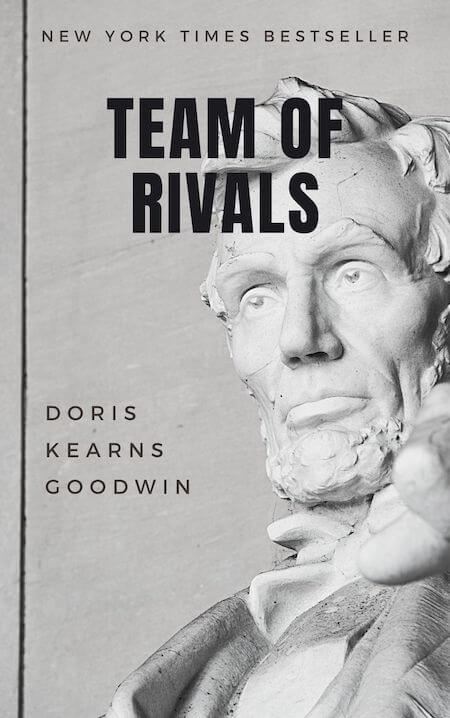
Prefer the print book? Buy on Amazon
As an Amazon Associate, Sumizeit earns from qualifying purchases.
Team of Rivals Book Summary
This Team of Rivals Book Summary covers the key ideas, lessons, and takeaways in about 20 minutes.
Helps with these goals
Want the complete 20-minute summary?
- Full structured summary
- Video Summary
- Podcast Summary
- Audio summary
- Key takeaways
- Exercises
- Quiz
- Highlights and notes
- Ask the book with AI
Not ready to upgrade?
Get this summary + 2 more picks sent to your inbox, free.
What is in the Team of Rivals book summary?
Below is a preview of Sumizeit’s expert-written summary of Team of Rivals by Doris Kearns Goodwin. The full summary covers the book’s key ideas in text, audio, and video.
The Republican Party was born in the Spring of 1860. Four men vied for the Presidential nomination of this new political entity. After winning the Republican nomination and then the election to become the 16th President of the United States, Lincoln assembled the most remarkable cabinet ever seen. He knew the difficulties ahead and built a powerhouse around him, astonishingly made up of the very three men who ran against him in the primaries. Team of Rivals by Doris Kearns Goodwin is a 900-page in-depth exploration into the formation and interaction of these adversaries-turned-allies.
Meet the Team
The most likely candidate to win the Republican nomination was New York Governor William H. Seward who had the strongest presence and reputation. He was progressive, supporting African-American rights. Ohio Governor Salmon P. Chase was deemed the second-best candidate and was also anti-slavery. Presidential hopeful Edward Bates came from a prominent family in Maryland while wood-chopping Abraham Lincoln was the dark horse. Having left politics after serving just one term in Congress in 1840, Lincoln was not predicted to win against his more practiced opponents, but Lincoln’s genius shined as he outmaneuvered all three.
As he prepared to take office in 1861, Lincoln broke ground by making William Seward Secretary of State, Salmon Chase, Treasury Secretary, and Edward Bates, Attorney General. Seward, initially humiliated by his defeat, stepped up to become one of Lincoln’s closest supporters and confidants. It is said that Lincoln spent more time with Seward in the first year of his term than anyone else, his own family included. Notably, Chase had a difficult assignment with the Treasury Department as he undertook the challenge of financing the Civil War while the government was deeply in debt.
Emancipation Ambitions
The cabinet was divided by Lincoln’s intention to free the slaves. While preserving the Union was Lincoln’s central priority, he agreed that slavery was “amoral, a social and a political wrong.” He also wanted to benefit from the manpower that freed slaves would bring to the war effort. As both a moral and “military necessity,” Lincoln asserted emancipation as both an objective and a solution.
Bates was a stout supporter, believing it would shorten the war. Seward worried that it would lead to further anarchy in the South, but his loyalty to Lincoln prevented him from publicly criticizing the proclamation. Chase, who had been the strongest opponent of slavery, recommended an approach that was more gradual. In the book, Goodwin suggests this was probably because he still held his own presidential ambitions and felt this could be more of a liability than a help to his agenda.
When the Emancipation Proclamation was made official, it led to the formation of a regiment of 180,000 black soldiers.
The Cabinet Under Attack
The mortifying defeat in Fredericksburg had antislavery Republican Congressmen up in arms, wanting change. Knowing they couldn’t attack the President, they put their sights on Seward, incorrectly believing he was the one actually driving the war.
Want the complete 20-minute summary?
- Full structured summary
- Video Summary
- Podcast Summary
- Audio summary
- Key takeaways
- Exercises
- Quiz
- Highlights and notes
- Ask the book with AI
Who should read Team of Rivals?
Team of Rivals is essential for anyone interested in presidential history, leadership, and how to manage talented but competing personalities. It appeals to business leaders, students of American politics, and readers seeking insight into effective crisis management. History buffs and those studying the Civil War era will find Doris Kearns Goodwin's detailed narrative particularly rewarding.
Why does Team of Rivals matter?
Lincoln's approach to assembling and managing a cabinet of rivals offers timeless lessons in leadership during turbulent times. In an era of polarization and organizational conflict, Goodwin's examination of how Lincoln balanced ambitious egos while pursuing his vision remains deeply relevant. The book reveals how skilled leadership can unite opposing forces toward a common goal, a principle applicable to politics, business, and public institutions today.
What are the key themes in Team of Rivals?
- Political genius and strategic coalition-building
- Managing ambition and ego in high-stakes environments
- Moral courage balanced with political pragmatism
- The role of personal relationships in leadership
- Finding and empowering the right talent
- Leadership through crisis and national trauma
Want the complete 20-minute summary?
- Full structured summary
- Video Summary
- Podcast Summary
- Audio summary
- Key takeaways
- Exercises
- Quiz
- Highlights and notes
- Ask the book with AI
How can you apply ideas from Team of Rivals?
- When building a team, prioritize diverse perspectives and proven capability over personal loyalty and agreement
- In times of organizational crisis, invest heavily in key relationships and regular communication with your most important allies
- Frame difficult decisions using both moral and practical reasoning to build broader support among stakeholders
- Take public responsibility for failures rather than shifting blame, which builds trust and respect among subordinates
- Allow and encourage debate among team members while maintaining clarity about who makes final decisions
- Develop healthy stress-management practices to sustain your judgment and resilience under prolonged pressure
- Periodically assess whether team members are delivering results and be willing to make leadership changes when performance falters
What common mistakes do readers make with Team of Rivals?
- Assuming that surrounding yourself only with people who agree with you strengthens your decision-making, when diverse opposition actually sharpens thinking
- Moving too quickly to emancipation or other major policy shifts without building sufficient political support, as opposed to Lincoln's measured but ultimately committed approach
- Allowing personal grievances with talented subordinates to override strategic necessity, such as accepting Chase's resignations despite his value
- Neglecting to institutionalize your vision through constitutional or structural changes, leaving it vulnerable to reversal after your tenure ends
Sumizeit Exercises Apply what you've learned
Turn ideas from Team of Rivals into action with a short guided reflection: identify the biggest takeaway, connect it to your life, and commit to one step you can take in the next 24 hours.
What is the expert analysis of Team of Rivals?
Overview
Team of Rivals: The Political Genius of Abraham Lincoln is a seminal work by Doris Kearns Goodwin, a distinguished presidential historian and Pulitzer Prize winner. Goodwin’s extensive scholarship and narrative skill illuminate the complex political landscape of Lincoln’s presidency, focusing on his extraordinary ability to unify a fractious cabinet composed of his former rivals. This 900-page tome is not merely a biography but a profound exploration of leadership, political strategy, and moral courage during one of America’s most turbulent eras.
Core Thesis
Goodwin’s central argument is that Abraham Lincoln’s genius lay in his deliberate choice to surround himself with political adversaries, transforming competition into collaboration. By assembling a “team of rivals,” Lincoln harnessed diverse perspectives and talents to navigate the Civil War’s immense challenges. The book posits that Lincoln’s leadership style—marked by humility, empathy, prudence, and open-mindedness—was instrumental in preserving the Union and advancing emancipation, demonstrating that effective leadership often requires embracing opposition rather than suppressing it.
Strengths
- Depth of Research: Goodwin’s meticulous archival work and comprehensive biographical detail provide a richly textured portrait of Lincoln and his cabinet members, offering fresh insights into their personalities and political dynamics.
- Narrative Engagement: The book reads with the momentum of a political thriller, skillfully balancing scholarly rigor with accessible storytelling that brings historical figures vividly to life.
- Leadership Analysis: By extracting lessons on leadership qualities such as empathy, humility, and resilience, Goodwin transcends historical biography to offer timeless guidance relevant to contemporary political and organizational contexts.
- Nuanced Characterization: The depiction of Lincoln’s rivals as complex individuals with competing ambitions enriches the historical narrative, avoiding hagiography and highlighting the pragmatic and often contentious nature of governance.
- Contextualization of Emancipation: The book situates the Emancipation Proclamation within the broader strategic and moral imperatives of the war, underscoring Lincoln’s balancing act between political necessity and ethical conviction.
Critiques & Counterarguments
- Potential Overemphasis on Lincoln’s Virtue: While Goodwin’s portrayal of Lincoln is nuanced, some critics argue that the book occasionally veers toward idealization, potentially underplaying the more controversial or flawed aspects of his presidency.
- Selective Focus on Cabinet Dynamics: The intense focus on Lincoln’s cabinet may overshadow other critical factors influencing the Civil War, such as grassroots political movements, military strategy beyond leadership appointments, and broader social forces.
- Limited Engagement with Opposing Historical Interpretations: The book largely aligns with the traditional “Great Man” theory of history, which some historians critique for minimizing structural and collective influences on historical outcomes.
- Competing Research on Emancipation Timing: Some scholars argue that emancipation was as much a product of international pressure and slave resistance as of Lincoln’s strategic calculations, suggesting a more complex causality than presented.
- Alternative Leadership Models: Contemporary leadership theory sometimes challenges the effectiveness of managing rivals as a team, warning of risks such as internal conflict and decision paralysis, which the book acknowledges but perhaps underestimates in practical terms.
Who Should Read This
Team of Rivals is essential reading for historians, political scientists, leadership scholars, and anyone interested in the interplay of personality, politics, and power. It appeals to readers seeking a profound understanding of Abraham Lincoln’s presidency beyond mythologized narratives, as well as those looking for practical lessons on managing complex teams and navigating conflict. Its blend of historical depth and leadership insight makes it particularly valuable for leaders in public service, business, and organizational development who aspire to lead with both strategic acumen and moral clarity.
Frequently asked questions about the Team of Rivals book summary
What is Team of Rivals about?
Team of Rivals by Doris Kearns Goodwin is a 900-page history of Abraham Lincoln's presidency, focusing on his unprecedented decision to appoint his three Republican rivals—William Seward, Salmon Chase, and Edward Bates—to his cabinet. The book explores how Lincoln managed these ambitious, talented men while leading the nation through the Civil War, emancipation, and the fight to preserve the Union.
Who should read Team of Rivals?
Team of Rivals appeals to history enthusiasts, business leaders, students of leadership, and anyone interested in how to manage talented but competing personalities in high-stakes environments. The book is particularly valuable for those seeking insight into crisis management, political strategy, and the interpersonal dynamics of executive leadership.
What are the main takeaways from Team of Rivals?
The central lesson is that exceptional leadership emerges from assembling talented rivals and managing them effectively despite their ambitions and disagreements. Key takeaways include the importance of patience before decisive action, accepting personal responsibility for failures, maintaining diverse perspectives in decision-making, and institutionalizing your vision through structural reforms like the Thirteenth Amendment.
Why did Lincoln appoint his rivals to his cabinet?
Lincoln appointed Seward, Chase, and Bates to his cabinet because he recognized their exceptional talents and believed that managing their strengths and perspectives would make for stronger governance. He understood that skilled rivals could challenge his thinking through debate and that their combined abilities would be essential to navigate the war and national crisis ahead, even though it created significant internal tensions.
How did Lincoln handle disagreements within his cabinet?
Lincoln welcomed debate and opposing viewpoints while maintaining clear authority over final decisions. He separated policy disagreements from personal relationships, as shown by his close partnership with Seward despite Seward's objections to emancipation. When internal conflicts threatened to undermine the cabinet, such as Chase's conspiracy against Seward, Lincoln confronted the issue directly while refusing to accept Chase's resignations, preserving the team when he needed it most.
What role did emancipation play in Team of Rivals?
Emancipation was a central point of division within Lincoln's cabinet, with Chase favoring gradual abolition while Seward worried about consequences and Bates supported immediate action. Lincoln ultimately framed emancipation as both a moral necessity and military strategy, and pushed for the Thirteenth Amendment to institutionalize it. The debate revealed each cabinet member's character and priorities while testing Lincoln's ability to hold the team together.
What does Team of Rivals reveal about crisis leadership?
The book demonstrates that effective crisis leadership requires assembling the best available talent regardless of past opposition, maintaining patience while building toward decisive action, accepting responsibility for failures, and developing healthy coping mechanisms to sustain judgment under extreme stress. Lincoln's management of the Civil War shows that diverse perspectives and skillful relationship-building are more valuable in crisis than unchallenged authority.
About Sumizeit
Sumizeit is a profitable Scomy LLC company based in Miami, Florida. It has been helping readers learn from nonfiction books for 7 years with expert-written summaries in text, audio, podcast, and video.
Want the complete 20-minute summary?
- Full structured summary
- Video Summary
- Podcast Summary
- Audio summary
- Key takeaways
- Exercises
- Quiz
- Highlights and notes
- Ask the book with AI
Here's why readers love Sumizeit
Join thousands of learners getting smarter every day
"Great experience. Detailed summaries. Loved the gamification feature. Makes learning fun. Good customer service. I recommend Sumizeit to anyone. You'll learn a lot."
"I always felt busy but still wanting to keep up with the book discussion in my friend group. This was a great supplement to help me keep reading the books I find fun while keeping up with important books."
"I love this website. Instead of scrolling social media, I find myself learning a lot. I use it everyday. I recommend this app for anyone who is too busy and wants to get up to speed with their favorite books."
Team of Rivals Book Summary PDF
Looking for a Team of Rivals Book Summary PDF you can save and revisit offline? Our Team of Rivals Book Summary PDF captures the book’s core ideas in a clean, printable format — the key frameworks, takeaways, and structure without the fluff. Download the Team of Rivals Book Summary PDF when you want a reference you can annotate, share with your team, or review on the go. Get your Team of Rivals Book Summary PDF from the download page below.
Download Team of Rivals Book Summary PDFPeople also liked these summaries
Readers who explored Team of Rivals often enjoyed these titles next.




Want the complete 20-minute summary?
- Full structured summary
- Video Summary
- Podcast Summary
- Audio summary
- Key takeaways
- Exercises
- Quiz
- Highlights and notes
- Ask the book with AI
Featured Book Titles
Popular Book Summaries at sumizeit, leading book summary app