


Prefer the print book? Buy on Amazon
As an Amazon Associate, Sumizeit earns from qualifying purchases.
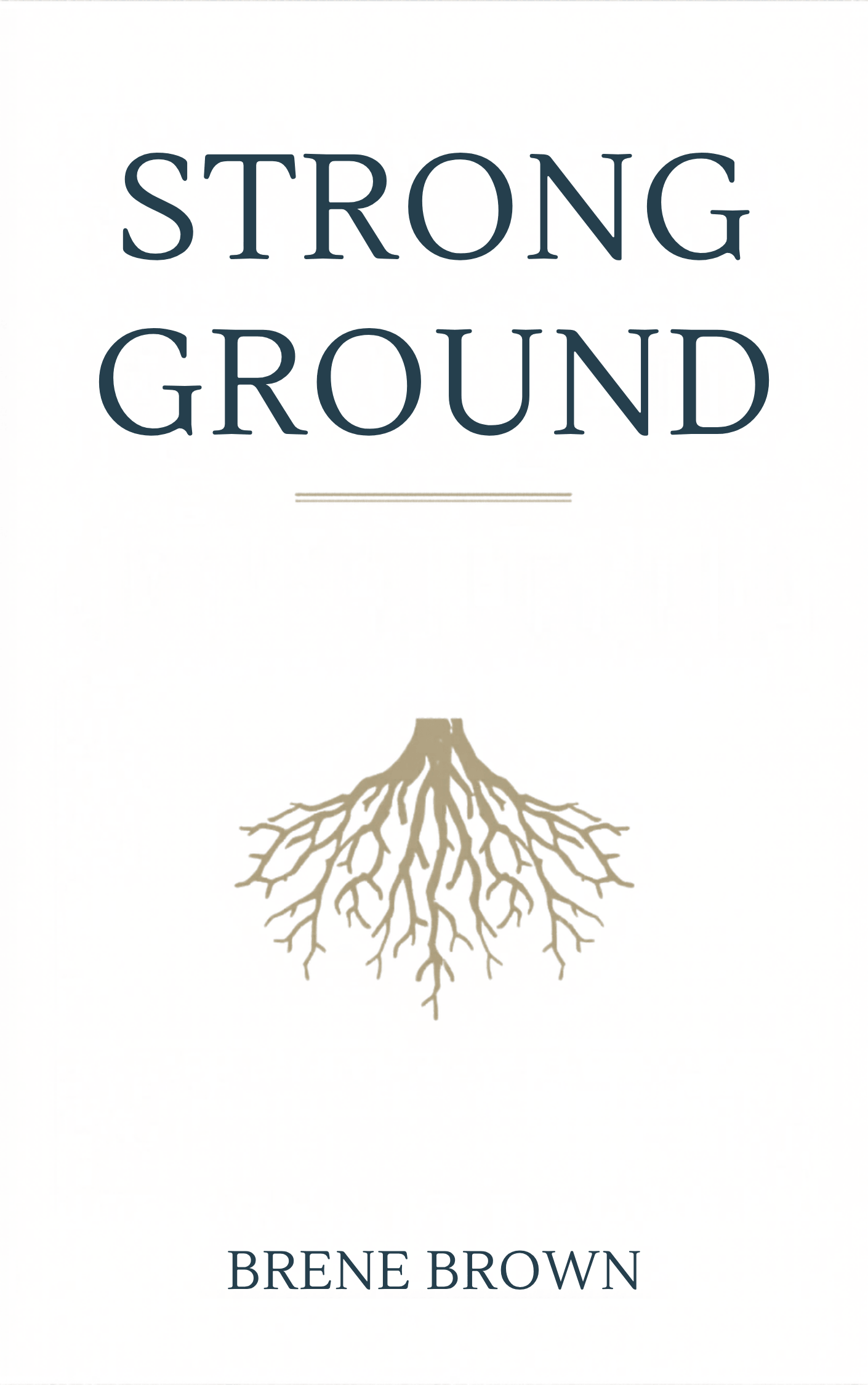
Strong Ground Book Summary
This Strong Ground Book Summary covers the key ideas, lessons, and takeaways in about 20 minutes.
Helps with these goals
Want the complete 20-minute summary?
- Full structured summary
- Video Summary
- Podcast Summary
- Audio summary
- Key takeaways
- Exercises
- Quiz
- Highlights and notes
- Ask the book with AI
Not ready to upgrade?
Get this summary + 2 more picks sent to your inbox, free.
What is in the Strong Ground book summary?
Below is a preview of Sumizeit’s expert-written summary of Strong Ground by Brené Brown. The full summary covers the book’s key ideas in text, audio, and video.
Strong Ground is Brené Brown's continuation of her Dare to Lead work, and a direct rebuke to a leadership culture that has too often confused volume for vision, dominance for direction, and bluster for backbone. Brown's argument is that the loudest and most punishing figures in contemporary organizational life have been allowed to pose as leaders for a generation, and that the rest of us have absorbed a fundamentally distorted picture of what authority actually requires. Her project in this book is to offer a different model — one in which true leadership begins with the inward work of self-mastery and only then extends outward into the cultivation of other people's potential.
The book's structure is shaped by an unexpected source: the athletic training Brown undertook to recover from a pickleball injury. Her trainer refused to let her return to competition until she had rebuilt her stance, her balance, her awareness of her own body in motion. Brown noticed that this athletic discipline mapped almost exactly onto the discipline of leadership. The leaders who rush onto the court without first developing their fundamentals injure themselves, injure their teams, and injure the organizations that depend on them. The leaders who take the time to build a stable, grounded, agile foundation can then move with the precision and explosive capacity that meaningful work requires.
From this metaphor she organizes the book into three movements. The first is the work of building the foundation itself — the skills of self-awareness, self-regulation, and focused attention that any effective leader must master before adding any other technique. The second is the work of holding paradoxes — the ability to keep contradictory ideas in productive tension rather than collapsing them into false choices. The third is the work of leading in practice — the clarity, balance, and constancy of commitment that distinguishes real leadership from the impressive-looking version that surrounds us.
Brown's voice throughout is grounded in two decades of social-science research on courage, shame, vulnerability, and human connection, but it is also unapologetically practical. She is not writing for the academy. She is writing for the manager who wants to do better, the executive who suspects something is broken, and the team member who has been wondering whether the leadership they see around them is the only kind on offer.
Building the Foundation
The first major section of the book invites readers to imagine themselves as athletes preparing for play. An athlete does not begin with the spectacular shot. An athlete begins with the stance — feet planted, weight distributed, body coiled and ready. From that foundation, every other movement becomes possible. Brown's claim is that leadership is the same. The work that makes a leader effective is largely the work that takes place before any leadership decision is made.
She identifies three foundational skills.
The first is metacognition, by which she means the capacity to observe and interrogate one's own thinking.
Want the complete 20-minute summary?
- Full structured summary
- Video Summary
- Podcast Summary
- Audio summary
- Key takeaways
- Exercises
- Quiz
- Highlights and notes
- Ask the book with AI
Who should read Strong Ground?
Strong Ground is for anyone in a leadership position—whether formal or informal—who suspects that the aggressive, certainty-driven model of authority they see around them is not the only option. This includes managers who want to lead more effectively, executives questioning whether their culture is healthy, team members wondering if better leadership is possible, and anyone who wants to develop greater self-awareness and influence in their personal or professional life.
Why does Strong Ground matter?
Leadership culture has long celebrated the loudest, most dominating figures, leaving burnout and disengagement in their wake. Strong Ground offers a radically different model grounded in two decades of research: one in which real leadership begins with unglamorous inner work and extends outward to develop others. In a time of organizational dysfunction and individual exhaustion, this book reframes what effective authority actually requires and makes it accessible to anyone willing to do the practice.
What are the key themes in Strong Ground?
- True leadership starts with self-mastery, not charisma or control
- The pause between stimulus and response is where choice and real power live
- Vulnerability and courage are not opposites but partners
- Effective leaders hold paradoxes rather than collapsing them into false choices
- Clarity of purpose and balance of support are non-negotiable leadership practices
- Leadership is a practice available at any level, not a privilege of rank
Want the complete 20-minute summary?
- Full structured summary
- Video Summary
- Podcast Summary
- Audio summary
- Key takeaways
- Exercises
- Quiz
- Highlights and notes
- Ask the book with AI
How can you apply ideas from Strong Ground?
- When you notice yourself holding a strong opinion, pause and ask why you hold it, what would change your mind, and whether you have tested it recently against reality.
- Build a richer emotional vocabulary by learning to distinguish between similar feelings (guilt vs. shame, frustration vs. disappointment) and noticing where each emotion lives in your body.
- Create transition rituals between work and home, or between different projects, to mark the shift and avoid role blurring and exhaustion.
- Communicate relentlessly and truthfully during organizational change, because people are more disturbed by uncertainty than by hard news.
- Set clear expectations about what your organization or team is trying to accomplish and how each person's role contributes, then step back and watch performance multiply.
- When someone misses an expectation, investigate first: Was the ask realistic? Was support adequate? Is this a pattern or a singular slip? Let the answer guide your response.
- Lead from wherever you are by looking for and developing potential in the people around you, regardless of your formal title or position.
What common mistakes do readers make with Strong Ground?
- Assuming that loudness, dominance, and certainty are signs of strong leadership when they are often signs of fear and the absence of inner work.
- Trying to lead others before doing the foundational work of self-awareness, emotional intelligence, and present-moment awareness.
- Collapsing paradoxes into false choices instead of holding the productive tension between contradictory demands like discipline and creativity.
- Communicating vaguely or sporadically during times of change, leaving people in uncertainty rather than delivering hard news clearly and repeatedly.
Sumizeit Exercises Apply what you've learned
Turn ideas from Strong Ground into action with a short guided reflection: identify the biggest takeaway, connect it to your life, and commit to one step you can take in the next 24 hours.
What is the expert analysis of Strong Ground?
Overview
Strong Ground is a significant contribution to contemporary leadership literature by Brené Brown, a renowned researcher and author whose work has profoundly influenced how vulnerability, courage, and emotional intelligence are understood in organizational contexts. Building on her acclaimed Dare to Lead series, Brown challenges prevailing leadership paradigms that equate loudness and dominance with effective authority. Instead, she advocates for a grounded, inward-first approach to leadership that emphasizes self-mastery as the foundation for cultivating others’ potential. The book’s unique structure, inspired by Brown’s athletic rehabilitation experience, offers a fresh metaphor that aligns physical discipline with the demands of authentic leadership, making it both accessible and deeply resonant.
Core Thesis
At its core, Strong Ground argues that true leadership is fundamentally an inside-out process. Effective leaders must first develop three foundational skills—metacognition, emotional intelligence, and present-moment awareness—before they can navigate the paradoxes inherent in leadership, such as balancing vulnerability with courage or stability with change. Only after this internal work can leaders engage in practical leadership with clarity, balance, and constancy of commitment. Brown’s thesis dismantles the myth that leadership is about performative toughness or certainty, proposing instead that leadership is a disciplined practice rooted in self-awareness, honest communication, and the capacity to hold complexity without succumbing to simplistic binaries.
Strengths
- Integrative Framework: Brown masterfully weaves social science research with practical leadership challenges, creating a framework that is both empirically grounded and immediately applicable.
- Innovative Metaphor: The athletic stance metaphor provides a vivid and memorable lens through which readers can understand the necessity of foundational work before action, enriching the conceptual narrative.
- Nuanced Exploration of Paradoxes: The book’s treatment of paradoxical tensions—such as vulnerability and courage or stability and change—is sophisticated, avoiding false dichotomies and encouraging leaders to embrace complexity.
- Practical Tools: Brown offers concrete practices for developing metacognition, emotional vocabulary, and focused attention, empowering readers to translate insights into behavioral change.
- Accessible yet Rigorous: The prose balances scholarly depth with clarity and warmth, making the book suitable for both academic and practitioner audiences without sacrificing nuance.
Critiques
- Potential Overemphasis on Individual Responsibility: While the focus on self-mastery is vital, some readers may find the approach underplays systemic and structural factors that constrain leadership effectiveness in complex organizations.
- Abstractness of Paradoxical Thinking: The concept of holding paradoxes productively, though compelling, may feel intangible to readers seeking more prescriptive guidance on navigating these tensions in specific organizational contexts.
- Limited Engagement with Power Dynamics: The book touches on authority and leadership culture but could delve deeper into how power imbalances and organizational politics shape leadership behaviors and outcomes.
- Repetition of Familiar Themes: Readers already acquainted with Brown’s previous works might find some concepts—especially around vulnerability and emotional intelligence—reiterated rather than expanded.
Who Should Read This
- Current and Aspiring Leaders: Those seeking to move beyond conventional leadership clichés and develop a more grounded, authentic style will find invaluable guidance here.
- Organizational Development Professionals: Consultants and coaches can leverage Brown’s research-based insights to foster healthier leadership cultures and improve team dynamics.
- Students of Leadership and Psychology: Academics and graduate students interested in the intersection of emotional intelligence, cognitive science, and leadership theory will appreciate the book’s interdisciplinary rigor.
- Individuals Committed to Personal Growth: Anyone invested in self-awareness and emotional regulation as pathways to influence and impact will benefit from the practical exercises and reflective prompts.
- Readers of Brené Brown’s Work: Fans of Brown’s previous books will find a compelling continuation and deepening of her leadership philosophy, enriched by new metaphors and applied frameworks.
Frequently asked questions about the Strong Ground book summary
What is Strong Ground about?
Strong Ground by Brené Brown is a leadership book that argues true leadership begins with inner work—developing self-awareness, emotional intelligence, and the ability to pause before reacting—and only then extends outward to develop others. Using the metaphor of an athlete building a strong foundation before competition, Brown shows how effective leaders must master the unglamorous discipline of self-mastery before adding any other technique.
Who should read Strong Ground?
Strong Ground is for anyone in a leadership position—formal or informal—who suspects that the aggressive, certainty-driven model of authority they see around them is incomplete. This includes managers wanting to lead better, executives questioning their culture, team members wondering if better leadership is possible, and anyone seeking greater self-awareness and influence.
What are the main takeaways from Strong Ground?
Strong Ground's main takeaways are that leadership begins with self-mastery (metacognition, emotional intelligence, present-moment awareness), moves through the ability to hold paradoxes productively (vulnerability and courage, stability and change), and culminates in three operational practices: clarity about mission, balance between demanding and supporting, and the willingness to lead from wherever you are. The book argues this model is accessible to anyone willing to do the practice, not reserved for the naturally dominant.
What does Brené Brown mean by the pause between stimulus and response?
The pause is the small but significant gap between what happens to you and how you react. Most people compress this gap to nothing, letting their nervous system's first impulse determine behavior. Through practices like meditation, breathing, therapy, and physical health, leaders can expand this gap enough to notice the impulse, examine the situation, and then choose their response deliberately rather than reflexively.
How does Strong Ground define leadership?
Strong Ground defines leadership not as a position but as a practice: the commitment to looking for and developing potential in people and ideas. This practice is available at any level—team member, manager, parent, community member—and someone who is only willing to behave like a leader when holding the formal title is not actually leading.
What are the three foundational skills in Strong Ground?
The three foundational skills are metacognition (observing and interrogating your own thinking), emotional intelligence (identifying, naming, and regulating your emotions and recognizing others'), and present-moment awareness (noticing what is actually happening without immediate judgment). Together, these skills create the foundation on which all other leadership capability rests.
What does Strong Ground say about vulnerability and courage?
Strong Ground argues that vulnerability and courage are not opposites but partners: courage is built precisely by putting yourself into situations where vulnerability is unavoidable. Courage breaks down into four trainable skills—character, daring, trust, and resilience—all developed through practice in situations where exposure is real.
About Sumizeit
Sumizeit is a profitable Scomy LLC company based in Miami, Florida. It has been helping readers learn from nonfiction books for 7 years with expert-written summaries in text, audio, podcast, and video.
Want the complete 20-minute summary?
- Full structured summary
- Video Summary
- Podcast Summary
- Audio summary
- Key takeaways
- Exercises
- Quiz
- Highlights and notes
- Ask the book with AI
Here's why readers love Sumizeit
Join thousands of learners getting smarter every day
"Great experience. Detailed summaries. Loved the gamification feature. Makes learning fun. Good customer service. I recommend Sumizeit to anyone. You'll learn a lot."
"I always felt busy but still wanting to keep up with the book discussion in my friend group. This was a great supplement to help me keep reading the books I find fun while keeping up with important books."
"I love this website. Instead of scrolling social media, I find myself learning a lot. I use it everyday. I recommend this app for anyone who is too busy and wants to get up to speed with their favorite books."
Strong Ground Book Summary PDF
Looking for a Strong Ground Book Summary PDF you can save and revisit offline? Our Strong Ground Book Summary PDF captures the book’s core ideas in a clean, printable format — the key frameworks, takeaways, and structure without the fluff. Download the Strong Ground Book Summary PDF when you want a reference you can annotate, share with your team, or review on the go. Get your Strong Ground Book Summary PDF from the download page below.
Download Strong Ground Book Summary PDFPeople also liked these summaries
Readers who explored Strong Ground often enjoyed these titles next.





Want the complete 20-minute summary?
- Full structured summary
- Video Summary
- Podcast Summary
- Audio summary
- Key takeaways
- Exercises
- Quiz
- Highlights and notes
- Ask the book with AI
Featured Book Titles
Popular Book Summaries at sumizeit, leading book summary app