
Question 1 of 10


Prefer the print book? Buy on Amazon
As an Amazon Associate, Sumizeit earns from qualifying purchases.
Book Summary
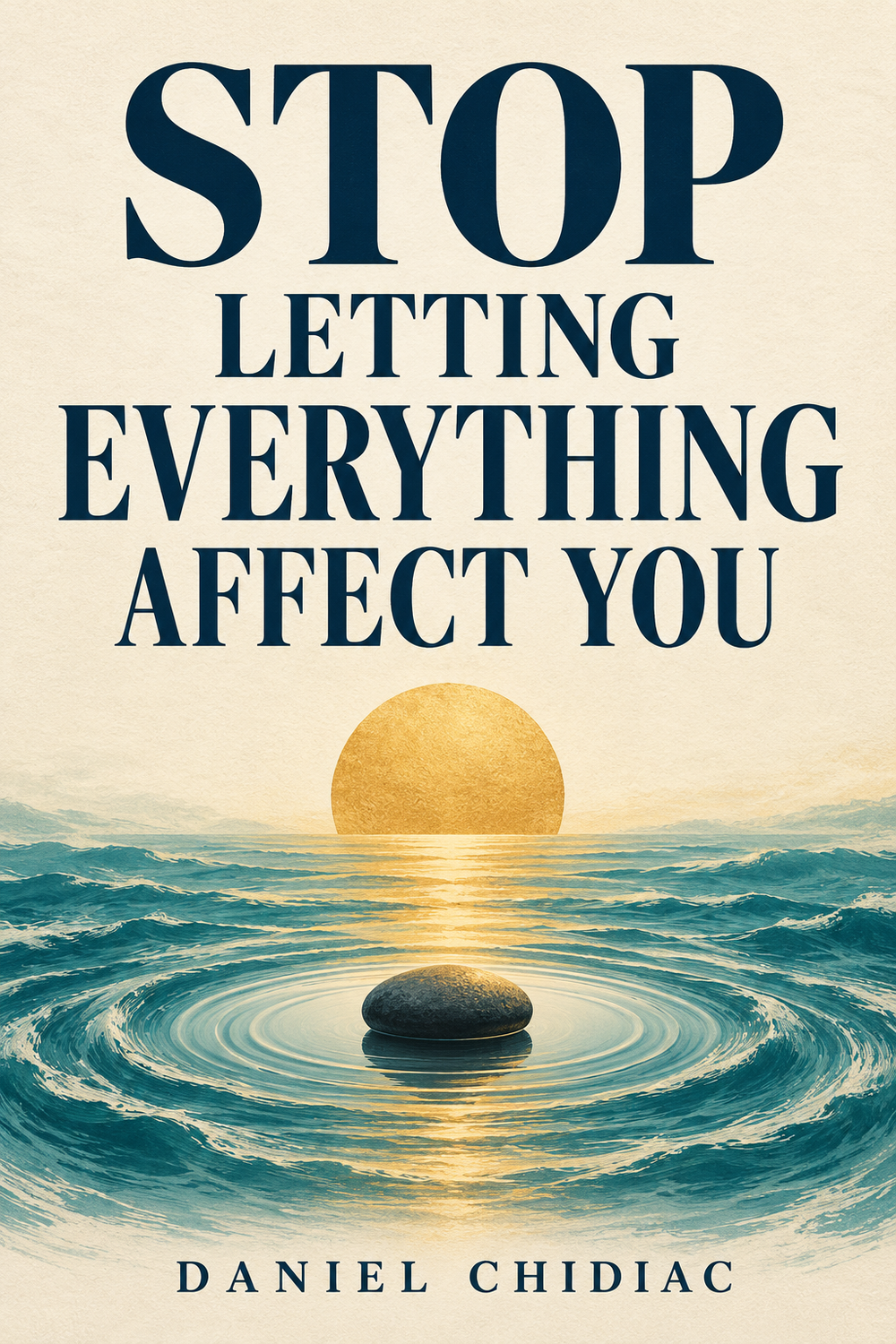
Stop Letting Everything Affect You Book Summary
This Stop Letting Everything Affect You Book Summary covers the key ideas, lessons, and takeaways in about 20 minutes.
Short Description:
How to calm oversensitivity, set boundaries, and stop absorbing other people’s moods.
Being emotionally hypersensitive isn't a permanent part of who you are. It's a set of learned habits that drain your body, your relationships, and your mind, and you can retrain them. When you separate your feelings from other people's, set clear boundaries, focus on what you can control, give your worries a scheduled time, see manipulation for what it is, and leave relationships that keep hurting you, you stop letting everything affect you and you get your energy and calm back.
Preview the Stop Letting Everything Affect You book summary
Below is a preview of Sumizeit’s comprehensive human-written summary of Stop Letting Everything Affect You by Daniel Chidiac. The full summary is 15-20 minutes long and covers the book’s key ideas in text, audio, visual, and video formats. Unlock the full 20 Minute Summary
Picture this. You text a friend and they take a while to answer, so you decide they're mad at you. Or you make a small mistake at work and the whole day feels ruined. Daniel Chidiac says that if this sounds like you, you may be emotionally hypersensitive. Your reactions run hotter than the situation calls for, and they wear you out.
His big claim is that this isn't a flaw you're stuck with. It's a habit, and you can unlearn habits. The book shows you how to calm your nervous system and guard your energy so you can find some peace.
Chidiac lists the signs. You question yourself constantly, replay old conversations, and read too much into what other people do. You feel wiped out after being around people because you soak up their moods. You cry or panic over things someone else would laugh off. You spend your energy pleasing everyone but yourself. And you get trapped in loops of worry that circle the same fears again and again. In short, other people's feelings and actions take up too much room in your head.
Where it comes from
Some people are simply born this way. Research points to a group often called Highly Sensitive People, whose nervous systems react strongly to sensory and emotional input. They make up about one in five people.
Childhood plays a part too. If you grew up around caregivers whose moods you had to watch and manage to feel safe, you likely stayed tuned to everyone's emotions as an adult. Both paths leave you with a jumpy nervous system. You're the first to spot the shift in someone's body language when they start getting angry.
Whatever the cause, Chidiac insists these patterns aren't fixed personality traits. They're learned responses that harden into habits. That means you can teach your brain to respond differently.
How it drains you
Chidiac names three ways this keeps costing you.
The first is physical strain. Living in an overburdened emotional state can bring constant fatigue, tense muscles, and headaches. Over time it can raise your risk of bigger problems like a weaker immune system and high blood pressure.
The second is neglecting yourself. When you pour everything into pleasing others and managing their feelings, you teach people to expect it. They keep taking because it benefits them, and you keep running dry. Your relationships turn lopsided. You feel unappreciated, and that builds resentment that eats at the relationship.
The third is an overloaded mind. Your brain can only handle so much at once. When difficult emotions and stress pile up, tiny things start setting off huge reactions. Say you had several awkward moments at work and a friend in crisis has been calling you at all hours. Then your partner forgets the dishes. Instead of thinking they were busy, you decide they don't respect you, and suddenly you're remembering an old partner and wondering whether this relationship can work.
Want the complete 20-minute summary?
- Full structured summary
- Video Summary
- Podcast Summary
- Audio summary
- Key takeaways
- Exercises
- Quiz
- Highlights and notes
- Ask the book with AI
Who should read Stop Letting Everything Affect You?
This book is for anyone who feels emotionally drained by others' moods, overthinks small interactions, or struggles to separate their feelings from those around them. If you find yourself constantly managing others' emotions, replaying conversations, or feeling exhausted after social interactions, Stop Letting Everything Affect You offers practical tools to reclaim your emotional independence and energy.
Why does Stop Letting Everything Affect You matter?
Emotional hypersensitivity is increasingly common in our connected world, where we're constantly exposed to others' opinions and moods. Daniel Chidiac reframes this not as a permanent personality flaw but as a learned habit that can be unlearned, offering relief to the millions who feel drained by absorbing everyone else's stress and expectations. In a time of rising anxiety and burnout, learning to protect your emotional boundaries has become essential for mental health and wellbeing.
What are the key themes in Stop Letting Everything Affect You?
- Emotional hypersensitivity as a learned habit, not a fixed trait
- The importance of emotional boundaries and separation from others
- Recognizing and defending against manipulation and gaslighting
- Taking control of what you can influence to reduce overwhelm
- Breaking cycles of anxiety and rumination
- When and how to end relationships that damage your wellbeing
How can you apply ideas from Stop Letting Everything Affect You?
- Track your emotional exchanges for one week to identify which people and conversations drain you most
- Set clear boundaries about your emotional availability, time, and discussion topics before conflicts arise
- Create a two-column list of your stressors and identify one actionable step for each to restore your sense of control
- Establish daily 15-20 minute anxiety appointments to contain rumination and teach your brain worries aren't emergencies
- Document interactions with manipulative people objectively to protect yourself from gaslighting and narrative manipulation
- Use the manipulation checklist to evaluate whether relationships leave you feeling smaller or constantly questioned
- Write a detailed inventory of a harmful relationship's broken promises and refused changes before ending it
What common mistakes do readers make with Stop Letting Everything Affect You?
- Assuming emotional sensitivity is a fixed personality trait rather than a learned habit you can change
- Setting boundaries but failing to enforce them consistently, which teaches people to ignore them
- Trying to solve anxiety through constant rumination rather than taking concrete action on what you can control
- Trusting a manipulator's reframing of events instead of recording interactions to verify your own reality
- Staying in damaging relationships out of guilt or hope the person will change, ignoring their actual patterns of behavior
Sumizeit Exercises Apply what you've learned
Turn ideas from Stop Letting Everything Affect You into action with a short guided reflection: identify the biggest takeaway, connect it to your life, and commit to one step you can take in the next 24 hours.
What is the expert analysis of Stop Letting Everything Affect You?
Overview
Stop Letting Everything Affect You is authored by Daniel Chidiac, a writer and coach known for his contributions to personal development and motivation. Chidiac’s background includes coaching media personalities and creating works that blend self-help with narrative storytelling. This book stands out in the crowded self-improvement genre by addressing the pervasive issue of emotional hypersensitivity—a condition that affects a significant minority of people—and offering practical strategies to regain emotional equilibrium. Its significance lies in reframing hypersensitivity not as an immutable trait but as a set of habits that can be consciously altered, thereby empowering readers to reclaim their mental and emotional energy.
Core Thesis
Chidiac’s central argument is that emotional hypersensitivity, often experienced as overwhelming reactions to everyday social and emotional stimuli, is not a fixed personality characteristic but rather a learned set of habitual responses. These habits, while deeply ingrained, can be unlearned through intentional practices that calm the nervous system, establish boundaries, and foster a clearer distinction between one’s own emotions and those of others. By doing so, individuals can reduce emotional exhaustion, improve relationships, and enhance their overall well-being. The book emphasizes agency—highlighting that emotional reactivity is malleable and that readers can cultivate resilience by focusing on what they can control and by managing anxiety through structured techniques.
Strengths
- Practical and Actionable Tools: The book excels in providing concrete exercises, such as emotional journaling, boundary setting, and anxiety scheduling, which translate psychological insights into daily practices accessible to a broad audience.
- Holistic Understanding of Emotional Sensitivity: Chidiac integrates biological predispositions (e.g., Highly Sensitive Person research) with developmental psychology, acknowledging both innate and environmental contributors to hypersensitivity.
- Focus on Empowerment and Agency: Rather than pathologizing hypersensitivity, the author frames it as a habit that can be modified, which is an encouraging and hopeful stance for readers struggling with emotional overwhelm.
- Recognition of Manipulation Dynamics: The inclusion of manipulation tactics such as gaslighting and strategies to counteract them adds a critical social dimension often overlooked in self-help literature.
- Balanced View on Relationships: The nuanced approach to ending harmful relationships—acknowledging grief and identity loss while advocating for self-preservation—demonstrates emotional intelligence and respect for complexity.
Critiques & Counterarguments
- Evidence Base and Depth: While the book references Highly Sensitive Person research, it does not deeply engage with the broader scientific literature on emotional regulation, trauma, or neurobiology, which could enrich its claims and provide stronger empirical grounding.
- Potential Oversimplification of Complex Traits: The framing of emotional hypersensitivity purely as a habit risks underestimating the interplay of genetics, neurodiversity (e.g., autism spectrum, ADHD), and chronic mental health conditions that may not be fully amenable to behavioral retraining alone.
- Boundary Setting Challenges: The advice to set and enforce boundaries, while sound, may underestimate the social and cultural complexities involved, especially for readers in environments where boundaries are routinely violated or where power imbalances are severe.
- Competing Perspectives on Emotional Sensitivity: Some psychological schools, such as affective neuroscience and psychodynamic theory, emphasize the importance of emotional sensitivity as a source of creativity, empathy, and social attunement rather than solely as a liability to be managed.
- Real-World Constraints: The suggestion to schedule anxiety appointments, though innovative, may be difficult to implement for individuals with chronic anxiety disorders or those in high-stress environments lacking psychological support.
Who Should Read This
This book is ideally suited for readers who identify as emotionally reactive or overwhelmed by social and interpersonal dynamics and who seek practical, self-directed strategies to cultivate emotional resilience. It will particularly resonate with those interested in personal development frameworks that emphasize habit change and boundary work. Professionals in coaching, counseling, or human resources may also find its insights valuable for understanding and supporting individuals with heightened sensitivity. However, readers with complex psychological conditions or those seeking a deep scientific or clinical exploration of emotional sensitivity might need to supplement this book with more specialized literature.
Discussion questions for Stop Letting Everything Affect You Short questions you can actually use in a conversation
Frequently asked questions about the Stop Letting Everything Affect You book summary
What is Stop Letting Everything Affect You about?
Stop Letting Everything Affect You by Daniel Chidiac is a guide to overcoming emotional hypersensitivity—the habit of absorbing others' moods, overthinking interactions, and feeling drained by constant emotional awareness. Chidiac argues that this sensitivity is a learned habit, not a permanent flaw, and provides practical tools like boundary-setting, anxiety management, and manipulation detection to help you reclaim your emotional independence and energy.
Who should read Stop Letting Everything Affect You?
This book is ideal for anyone who feels emotionally drained by others' moods, constantly replays conversations, or struggles to separate their feelings from those around them. It's especially valuable for people who find themselves managing others' emotions, feeling exhausted after social interaction, or staying in relationships that damage their wellbeing.
What are the main takeaways from Stop Letting Everything Affect You?
The main takeaways include: emotional hypersensitivity is a learned habit you can retrain, not a fixed trait; separating your emotions from others' requires clear boundaries and self-awareness; focusing on what you can control reduces overwhelm; scheduling anxiety appointments prevents rumination; recognizing manipulation protects you from gaslighting; and sometimes the healthiest choice is to end relationships that keep hurting you. Together, these practices help you stop absorbing everyone else's stress and reclaim your calm.
How does Daniel Chidiac explain why people become emotionally hypersensitive?
Chidiac identifies two main origins: some people are born highly sensitive with nervous systems that react strongly to emotional and sensory input, making up roughly one in five people. Others learned this pattern in childhood by monitoring their caregivers' moods to feel safe, which left them tuned to everyone's emotions as adults. Regardless of the cause, he emphasizes that these patterns are learned responses, not fixed personality traits.
What practical tools does Stop Letting Everything Affect You provide?
The book offers several concrete tools: a one-week tracking exercise to identify which people drain you; a framework for setting and enforcing clear boundaries; a two-column method to separate controllable from uncontrollable stressors; scheduled anxiety appointments to contain rumination; objective documentation of interactions to protect against gaslighting; and a three-step process for ending harmful relationships. Each tool is designed to be implemented immediately in daily life.
How does emotional hypersensitivity affect your physical health according to the book?
Chidiac explains that living in an overburdened emotional state causes concrete physical damage: chronic fatigue, muscle tension, headaches, and over time a weakened immune system and elevated blood pressure. Your emotional state directly impacts your body, making emotional protection a matter of physical health, not just mental wellbeing.
What does Daniel Chidiac say about ending relationships in Stop Letting Everything Affect You?
Chidiac argues that sometimes healing requires leaving relationships that damage your wellbeing; you shouldn't have to shrink yourself or justify your needs to keep someone in your life. He provides a three-step process: document the pattern of harm in detail, create a practical plan including support and boundary-setting, and deliver your decision directly without justifying or negotiating. He also reframes endings as letting go of relationships meant only for one phase of your life.
About Sumizeit
Sumizeit is a profitable Scomy LLC company based in Miami, Florida. Our founders, Clemens Raemy and Weina Scott, are successful entrepreneurs with several exits. Sumizeit is a popular book summary app / micro learning app used by busy professionals and entrepreneurs with over 2,500 non-fiction book summaries and 10,000 podcast summaries in text, audio, visual, podcast, and video format. We also have stellar retention tools to make ideas stick - such as flashcards with spaced repetition, quizzes, streaks, highlighting and notes, daily challenges, riddles, mini-courses, meditation, and more. You won't only learn the idea, but also remember it. Over 90% of our users change their habits with Sumizeit.
Upgrade Now
Here's why readers love Sumizeit
Join thousands of learners getting smarter every day
"Great experience. Detailed summaries. Loved the gamification feature. Makes learning fun. Good customer service. I recommend Sumizeit to anyone. You'll learn a lot."
"I always felt busy but still wanting to keep up with the book discussion in my friend group. This was a great supplement to help me keep reading the books I find fun while keeping up with important books."
"I love this website. Instead of scrolling social media, I find myself learning a lot. I use it everyday. I recommend this app for anyone who is too busy and wants to get up to speed with their favorite books."
Stop Letting Everything Affect You Book Summary PDF
Looking for a Stop Letting Everything Affect You Book Summary PDF you can save and revisit offline? Our Stop Letting Everything Affect You Book Summary PDF captures the book’s core ideas in a clean, printable format — the key frameworks, takeaways, and structure without the fluff. Download the Stop Letting Everything Affect You Book Summary PDF when you want a reference you can annotate, share with your team, or review on the go. Get your Stop Letting Everything Affect You Book Summary PDF from the download page below.
Download Stop Letting Everything Affect You Book Summary PDFPeople also liked these summaries
Readers who explored Stop Letting Everything Affect You often enjoyed these titles next.


Ready to read the whole thing?
- Full structured summary
- Video Summary
- Podcast Summary
- Audio summary
- Key takeaways
- Exercises
- Quiz
- Highlights and notes
- Ask the book with AI
Featured Book Titles
Popular Book Summaries at sumizeit, leading book summary app
Atomic Habits Book Summary Rich Dad Poor Dad Book Summary The Four Agreements Book Summary The 48 Laws of Power Book Summary When Breath Becomes Air Book Summary Think and Grow Rich Book Summary