

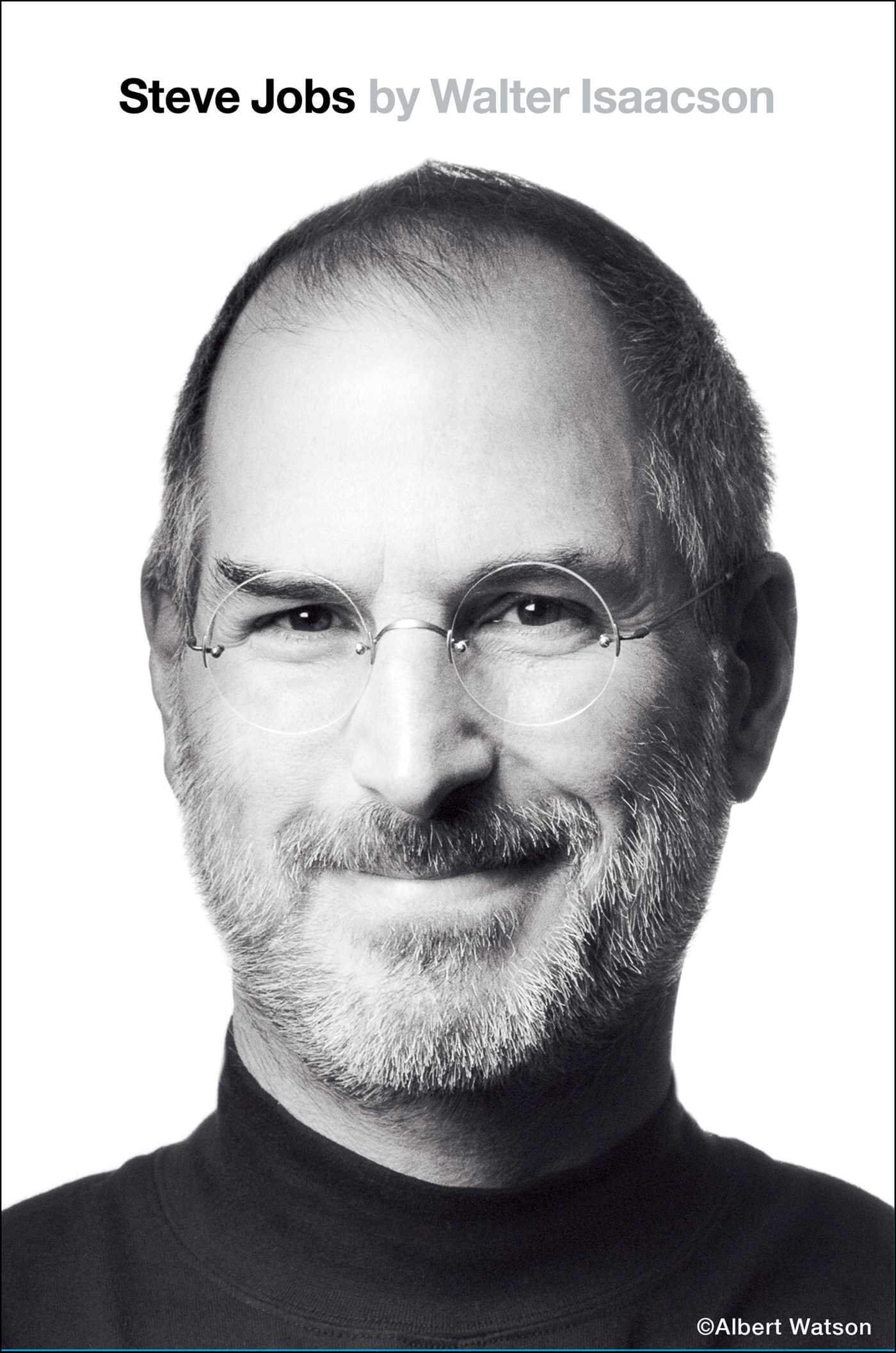
Steve Jobs by Walter Isaacson is a comprehensive biography that explores the life and legacy of Apple co-founder Steve Jobs. Based on over 40 interviews with Jobs and insights from family, friends, colleagues, and rivals, the book delves into his visionary approach to technology, design, and business. It highlights his intense personality, groundbreaking achievements, and the complexities of his character, offering a nuanced portrait of a man who reshaped multiple industries, from personal computing to entertainment and communication.
Helps with these goals
As an Amazon Associate, Sumizeit earns from qualifying purchases.
What Will You Learn
Who is This For
"Steve Jobs" is a comprehensive biography published on October 24, 2011, written by Walter Isaacson, based on more than forty interviews with Jobs himself and interviews with more than a hundred family members, friends, competitors, colleagues, and adversaries. The book provides an in-depth exploration of the life of Steven Paul Jobs, co-founder of Apple Inc., from his birth on February 24, 1955, in San Francisco, California, to his death on October 5, 2011, in Palo Alto, California.
The biography traces Jobs' entire life trajectory, beginning with his adoption by Paul and Clara Jobs, and covering his early years in Mountain View, California, during the emerging Silicon Valley technology boom. It documents his childhood in the Santa Clara Valley, his educational experiences, and his transformative years at Atari and Apple Computer.
Isaacson's work provides a comprehensive account of Jobs' professional journey, including the founding of Apple Computer with Steve Wozniak on April 1, 1976, in Cupertino, California. The book explores Jobs' pivotal role in developing revolutionary technologies such as the Macintosh computer, iPod, iPhone, and iPad, which fundamentally transformed multiple industries.
The biography offers detailed insights into Jobs' complex personality, documenting his management style, technological vision, design philosophy, and personal relationships. It covers his professional trajectory through multiple companies, including Apple, NeXT Computer, and Pixar Animation Studios, providing a systematic exploration of his technological innovations and business strategies.
Isaacson's work is based on extensive research and direct interviews, offering an unprecedented look into the life of one of the most significant technological innovators of the 20th and early 21st centuries.
Steve Jobs wasn’t just born curious—he was wired for innovation from the start. Born on February 24, 1955, to graduate students Joanne Schieble and Abdulfattah Jandali, his biological parents decided they weren’t ready to raise a child. Instead, they chose adoption, ensuring he’d grow up in a family that could nurture his potential. Enter Paul and Clara Jobs, who adopted Steve and, later, his sister Patty, and raised them in the Bay Area with love and encouragement.
From a young age, Steve’s energy and curiosity were impossible to miss. While other kids might stick to books or music, Steve found his passion in electronics. It wasn’t always smooth sailing—his experiments as a toddler landed him in the ER more than once. But instead of holding him back, his parents set up a workspace in their garage and encouraged him to dive in. His father, a mechanic, taught him to value precision and quality, even in the parts no one else would see—lessons Steve carried with him for life.
When he was six, a friend’s offhand comment about his biological parents not wanting him could’ve shaken his confidence. Instead, Paul and Clara reassured him that he was chosen. That belief, instilled early on, gave him a deep sense of belonging and uniqueness that stayed with him.
As a teenager, Steve joined an electronics club and even snagged a summer job at a tech company—signs of things to come. When his family moved to Mountain View, the heart of Silicon Valley, he was surrounded by the early stirrings of the tech revolution. This environment profoundly shaped his vision for combining design, functionality, and innovation in ways the world had never seen.
Apple’s journey from a scrappy startup to a tech giant began with the Apple I in 1976. But the real turning point came in 1977, thanks to Mike Markkula, a retired Intel executive with a knack for spotting potential. Markkula believed in the vision of Apple’s co-founders, Steve Jobs and Steve Wozniak, so much that he invested $250,000 of his own money—a huge sum back then, equivalent to about $1 million today. This funding wasn’t just financial; it came with Markkula’s business expertise.
He predicted Apple could become a Fortune 500 company in just two years—a bold claim for a company started in a garage. Markkula took on multiple roles, from being Apple’s first angel investor to its interim CEO and chairman, providing much-needed structure to the young company. He stayed involved through the highs and lows of the company’s early years, even approving Jobs’s controversial exit in 1985. However, when Jobs returned in 1997, he made sweeping changes, including asking Markkula and the entire board to step down.
While Markkula handled strategy, Steve Wozniak, or “Woz,” was the engineering genius behind Apple’s early products. His creation of the Apple II in 1977 was revolutionary. Unlike the bulky, inaccessible computers of the time, the Apple II was designed with everyday people in mind. It could run a programming language called BASIC, display its output on a regular TV, and later featured a floppy disk drive for saving data—features that made it a game-changer.
What really set the Apple II apart was its ability to run software like VisiCalc, the first spreadsheet program. This made it indispensable for small businesses, turning a hobbyist’s gadget into a business tool. Suddenly, companies could handle accounting and other tasks digitally, which was faster and more efficient than anything done by hand.
The Apple II wasn’t just a hit—it became a cornerstone of the personal computing revolution. Apple sold between five and six million units over its lifetime, continuing to upgrade the model until 1993. For millions of people, it was their first experience with a personal computer, showing them that technology could be both useful and accessible.
Apple’s success in these early days came from a perfect mix of vision and practicality. Markkula’s business savvy and Wozniak’s engineering brilliance laid the groundwork for Apple’s long-standing commitment to creating technology that’s easy to use and deeply impactful. Their work didn’t just sell computers—it changed how people viewed technology and what it could do for their lives. Apple rapidly established itself as a pioneering force in the personal computer revolution.
By 1997, Apple was on the verge of collapse, with only 90 days’ worth of operating cash left. Steve Jobs—who had been ousted from the company he co-founded in 1976—was asked to return after Apple acquired NeXT, his software company, in 1996. It was a dramatic turn of events: Jobs, forced out in 1985 by John Sculley, the CEO he had personally recruited, was now seen as Apple’s last hope.
When Jobs assumed the role of interim CEO, the company was drowning in problems. Its product line was bloated and confusing, market share was shrinking, and Apple’s once-iconic brand had lost its luster. Jobs took swift action, cutting unprofitable products, focusing on a few key innovations, and reinvigorating Apple’s marketing. Inspired by Nike’s branding strategy, he emphasized simplicity and creativity, which became central to Apple’s identity.
In 1998, Jobs introduced the iMac, a strikingly colorful, all-in-one computer that emphasized aesthetics, simplicity, and performance. The iMac wasn’t just a hit; it was a statement that Apple was back. From there, Jobs steered Apple into uncharted territory with products that didn’t just succeed—they reshaped industries.
The iPod revolutionized music by making songs portable and easy to manage. The iPhone redefined what a smartphone could be, combining communication, entertainment, and productivity into one sleek device. The iPad created an entirely new category of tablets, offering a blend of portability and power. What made these products revolutionary was their seamless integration of hardware, software, and services, setting Apple apart from its competitors. Jobs’ leadership transformed Apple from a struggling company into one of the most valuable brands in the world.
Steve Jobs’ life was marked by struggle and resilience from the start. His biological mother, Joanne Schieble, was a young graduate student who felt unprepared to raise a child. Determined to give her baby a better future, she placed him for adoption but insisted that the adoptive parents be college-educated. When Paul and Clara Jobs—neither of whom had a degree—promised to send her son to college, she reluctantly agreed.
Jobs grew up in a modest household, where his adoptive parents worked hard to nurture his curiosity. He fulfilled their promise by enrolling in college but dropped out after realizing traditional academics didn’t inspire him. During this period, Jobs led a hand-to-mouth existence, sleeping on friends’ floors, collecting Coke bottles for food money, and attending free calligraphy classes simply because they fascinated him. Though seemingly unrelated to technology, these calligraphy lessons later influenced the Macintosh’s typography, introducing features like proportional spacing and elegant fonts.
After co-founding Apple in his parents’ garage in 1976, Jobs experienced meteoric success as the company revolutionized personal computing. Within a decade, Apple was worth over $2 billion. Yet, in 1985, internal conflicts led to his removal from the company he had helped build. Jobs later described this as a blessing in disguise, as it freed him to explore new ventures. He founded NeXT, a company focused on high-end workstations, and acquired Pixar, a struggling animation studio. Pixar went on to create blockbuster hits like Toy Story, proving Jobs’ ability to spot potential in unlikely places.
Jobs’ resilience was further tested by health challenges. In 2004, he was diagnosed with a rare form of pancreatic cancer. Initially treatable through surgery, the disease recurred, leading to a liver transplant in 2009. Despite his declining health, Jobs continued to work, driven by his passion for innovation. He passed away in 2011, leaving behind a legacy of not just groundbreaking products but also an inspiring story of overcoming adversity.
Steve Jobs left a profound legacy that reshaped the relationship between technology, design, and human creativity. His philosophy emphasized the powerful synergy between technology and liberal arts, where the most transformative innovations occur. Jobs believed that technology should not only function effectively but also evoke emotion and inspire creativity. This vision guided his approach to creating products that were as beautiful and intuitive as they were groundbreaking.
A hallmark of Jobs’ philosophy was his focus on simplicity in design. For him, simplicity was not about reducing features but about eliminating unnecessary complexity, making technology easy to use and accessible to everyone. Products like the iMac, iPhone, and iPad exemplified this principle, offering clean, minimalist designs paired with user-friendly interfaces. These innovations reflected Jobs' belief that design should communicate its purpose effortlessly, requiring little explanation or learning curve.
Central to Jobs’ vision was the creation of integrated technological ecosystems, where hardware, software, and services worked seamlessly together. Unlike other companies that specialized in one domain, Apple under Jobs ensured that every component of its products complemented the others. This holistic approach resulted in devices that offered unparalleled reliability and a cohesive user experience, setting new industry standards.
Steve Jobs’ legacy extends far beyond the products he created. He redefined how technology integrates into daily life, making it more personal, intuitive, and inspiring. His focus on blending function and form has become a standard in the tech industry, influencing countless companies and creators.
Jobs’ emphasis on simplicity, user experience, and the intersection of technology and creativity continues to shape how people approach innovation. His work not only transformed industries but also left an enduring cultural impact, proving that technology, when designed with humanity in mind, can elevate lives and inspire change.innovations.
Furthermore, Steve Jobs' life demonstrates the power of vision, resilience, and a commitment to excellence in shaping industries and transforming the way we interact with technology. His ability to combine creativity with practicality shows that innovation thrives at the intersection of liberal arts and technology. Jobs taught us that success often comes from simplifying the complex, anticipating needs before they arise, and creating holistic systems that prioritize user experience.
To apply Jobs' philosophy in your own life, focus on pursuing your passions, trust your intuition, and embrace setbacks as opportunities for growth. Strive for simplicity in your work, push boundaries with bold ideas, and cultivate an unwavering dedication to quality. B
Walter Isaacson is an American journalist and historian known for his comprehensive biographies of influential historical figures. Born on May 20, 1952, in New Orleans, Louisiana, Isaacson has served as the CEO of the Aspen Institute, chairman of CNN, and managing editor of Time magazine.
Isaacson has written acclaimed biographies of numerous historical figures, including Benjamin Franklin, Albert Einstein, and Leonardo da Vinci. His biography of Steve Jobs was authorized by Jobs himself and completed shortly after Jobs' death in 2011.
A graduate of Harvard College and the University of Oxford, where he was a Rhodes Scholar, Isaacson has been a prominent journalist and author. His work is characterized by extensive research, multiple interviews, and a comprehensive approach to documenting the lives of significant historical figures.
Looking for a Steve Jobs Book Summary PDF you can save and revisit offline? Our Steve Jobs Book Summary PDF captures the book’s core ideas in a clean, printable format — the key frameworks, takeaways, and structure without the fluff. Download the Steve Jobs Book Summary PDF when you want a reference you can annotate, share with your team, or review on the go. Get your Steve Jobs Book Summary PDF from the download page below.
Download Steve Jobs Book Summary PDFGet full access to 2,500+ book summaries with audio and video
Start Free Trial →