


Prefer the print book? Buy on Amazon
As an Amazon Associate, Sumizeit earns from qualifying purchases.
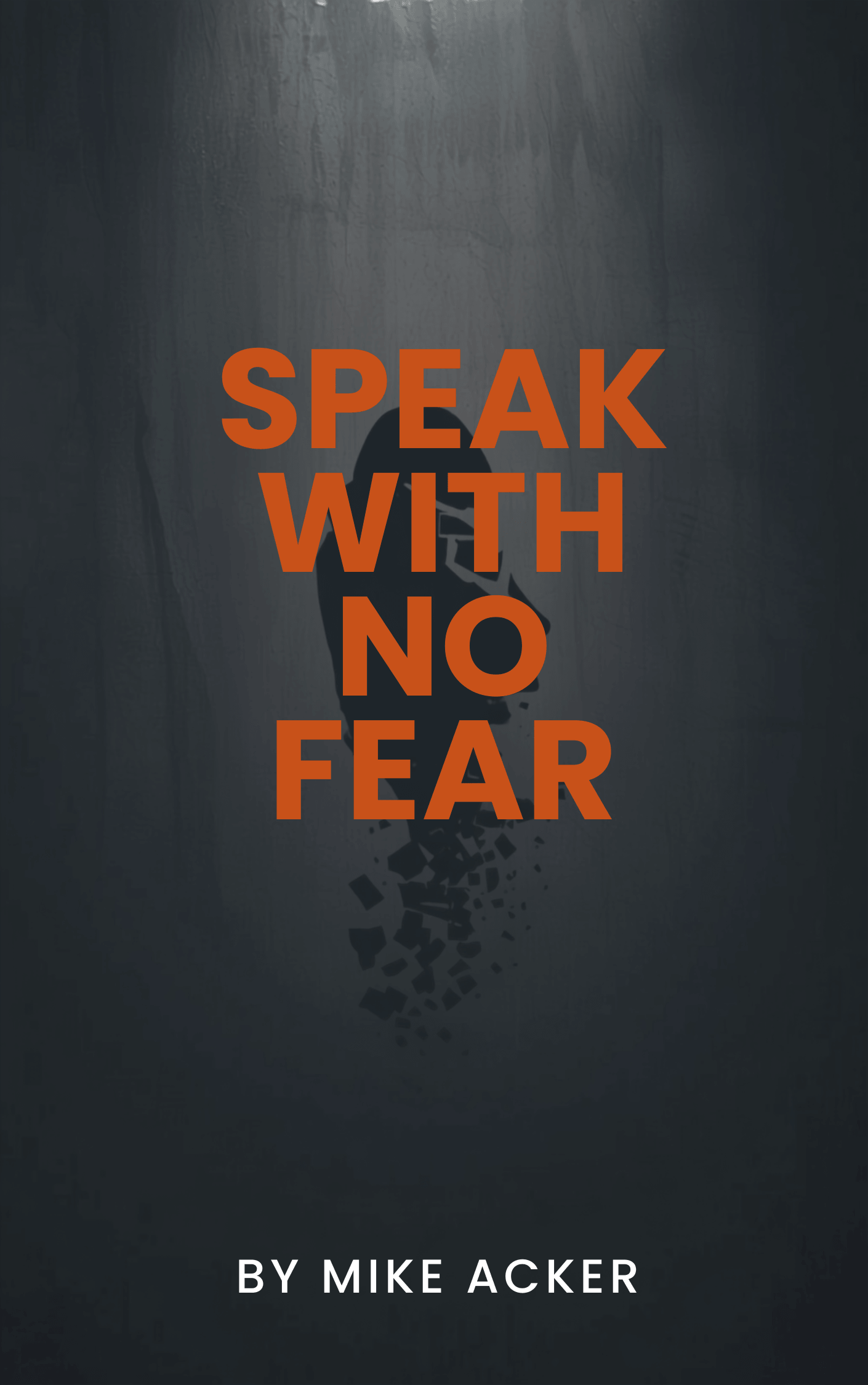
Speak With No Fear Book Summary
This Speak With No Fear Book Summary covers the key ideas, lessons, and takeaways in about 20 minutes.
Short Description:
Seven ways to beat stage fright, from finding the root of your fear to using it.
Want a Free Weekly Read?
Get a free summary every week straight to your mailbox.
Preview the Speak With No Fear book summary
Below is a preview of Sumizeit’s comprehensive human-written summary of Speak With No Fear by Mike Acker. The full summary is 15-20 minutes long and covers the book’s key ideas in text, audio, visual, and video formats. Unlock the full 20 Minute Summary
Ask people in the United States what frightens them most and public speaking climbs above death on the list. Read that again. A room of forty coworkers scares more people than the end of their own life. Mike Acker builds Speak With No Fear on top of that strange fact, and instead of shrugging at it or telling you to picture the audience in their underwear, he treats the fear as a real problem with a real structure. Something caused it. Something keeps feeding it. And there are ways to starve it.
Acker knows the territory. He has been speaking for more than two decades, to rooms of eight people and to arenas of thousands. He learned the craft on a competitive debate team at Northwest University and has spent years since then coaching executives, celebrities, church leaders, and nonprofit staff on how to hold a room. His book lays out seven moves. Four of them do most of the heavy lifting. The other three make the big ones work better. None of them require you to become a different person.
What follows walks through all seven, along with the reasoning behind each one and some practical ways to actually use them before your next talk.
Find the moment your fear was born
Acker starts in an uncomfortable place. He argues that most people who dread speaking are not afraid of speaking at all. They are afraid of a specific thing that already happened to them. Somewhere in your history there is a moment when a group of people turned on you, laughed at you, or watched you fail. Your body filed that away. Now every podium reminds it of that day.
For Acker the memory was easy to name. He tried speaking in high school and his classmates tore him apart for it. Brutal, obvious, unforgettable. Most people do not get that kind of clean origin story. Yours might be buried under years of other stuff and might not even involve a stage.
So he tells you to go digging. Think about the times you became the center of attention for the wrong reason. Times a group of people made you the joke. Times someone called on you and you had nothing ready and everyone watched you flounder. A teacher who corrected your reading in front of the class. A boss who cut you off in a meeting. A relative who mocked your voice at a family dinner. Any of it can be the seed.
This part is not fun. Acker compares a buried painful memory to a bone that healed at the wrong angle. It stopped hurting, sure, but it never worked right again. To fix it you have to break it once more and set it properly. That is exactly what he is asking you to do with your own head. Go back into the pain on purpose so you can finally come out the other side of it.
Why the bone metaphor holds up better than…
Want the complete 20-minute summary?
- Full structured summary
- Video Summary
- Podcast Summary
- Audio summary
- Key takeaways
- Exercises
- Quiz
- Highlights and notes
- Ask the book with AI
Who should read Speak With No Fear?
This book is for anyone who dreads public speaking, from nervous professionals presenting to executives and leaders facing high-stakes audiences. Whether you avoid speaking opportunities entirely or push through with significant anxiety, Speak With No Fear offers practical strategies that don't require you to become a different person.
Why does Speak With No Fear matter?
Public speaking anxiety ranks above the fear of death for many people, yet most approaches dismiss it as irrational or suggest surface-level fixes. Mike Acker treats speaking fear as a learnable response with genuine roots and proven countermeasures, making it relevant for anyone seeking to reclaim their voice in professional and personal contexts.
What are the key themes in Speak With No Fear?
- Speaking anxiety has traceable origins in past social humiliation
- Nervous energy can be reframed as fuel rather than failure
- Authenticity and presence matter more than borrowed personas
- Preparation strategies reduce anxiety by building competence and control
- The audience's needs deserve more attention than your own performance
- Physical and emotional pain trigger similar nervous system responses
How can you apply ideas from Speak With No Fear?
- Write down or draw the specific moment when you experienced social humiliation related to speaking, then work to reframe it with new perspective
- Before your next presentation, spend 15 minutes imagining every possible disaster in detail, then plan backup responses for each
- Meet three audience members before speaking by arriving early and asking them genuine questions to convert strangers into familiar anchors
- List three things your audience wants and three worries they're bringing, then adjust your content to address what they actually came for
- During presentations, watch for signs of engagement (nodding, leaning forward) and adjust pacing or move early to the next section if attention drops
- Practice a short daily meditation to strengthen your ability to stay present and catch yourself when your mind drifts to self-monitoring
- After speaking, spend exactly ten minutes identifying one thing that worked and one thing to change, then don't revisit it
What common mistakes do readers make with Speak With No Fear?
- Treating nervousness as a personal flaw rather than evidence of caring about the outcome
- Trying to eliminate fear through force of will instead of building a working relationship with it
- Copying another speaker's style and mannerisms instead of developing your own authentic voice
- Staying trapped in self-focused thoughts about how you look rather than redirecting attention to what the audience needs
- Rehearsing disasters without planning specific responses, so panic still wins when something goes wrong
- Replaying your talk for days afterward looking for what went wrong instead of extracting lessons and moving forward
Sumizeit Exercises Apply what you've learned
Turn ideas from Speak With No Fear into action with a short guided reflection: identify the biggest takeaway, connect it to your life, and commit to one step you can take in the next 24 hours.
What is the expert analysis of Speak With No Fear?
Overview
Speak With No Fear by Mike Acker is a significant contribution to the literature on public speaking and personal development, particularly addressing the pervasive and often paralyzing fear of speaking in front of others. Acker, a seasoned speaker and executive coach with over two decades of experience, draws from his own formative trauma and extensive professional practice to offer a pragmatic, psychologically informed approach to overcoming stage fright. Unlike many self-help books that rely on platitudes or superficial tricks, Acker’s work stands out for its nuanced understanding of fear as a learned response rooted in past social pain, and for its clear, actionable framework designed to help readers build a sustainable and authentic relationship with their anxiety.
Core Thesis
The central argument of Speak With No Fear is that the fear of public speaking is not a character flaw or an immutable trait but a conditioned response anchored in specific, often early-life humiliations or social rejections. Acker posits that by identifying the origin of this fear, deliberately processing the associated memories, and employing a set of seven interrelated strategies—ranging from mental rehearsal of worst-case scenarios to cultivating authentic self-expression and audience connection—speakers can transform their anxiety from a debilitating force into a source of energy and presence. This thesis reframes stage fright as a manageable, even useful, phenomenon rather than an enemy to be vanquished.
Strengths
- Grounded Psychological Insight: Acker’s use of trauma theory and neuroscience, such as the parallels between social and physical pain, lends scientific credibility and empathy to the discussion of fear, moving beyond clichés to validate the reader’s experience.
- Practical and Layered Framework: The seven strategies are well-structured, addressing both long-term healing and immediate preparation, and they interlock logically to support each other, which enhances their applicability across different speaking contexts.
- Authenticity Emphasis: Encouraging speakers to embrace their unique style rather than imitate others is a refreshing antidote to the homogenizing tendencies in public speaking advice, fostering genuine connection with audiences.
- Balanced Caution: Acker responsibly acknowledges the limits of self-help techniques, advocating for professional support when trauma is too heavy to process alone, which demonstrates ethical awareness.
- Integration of Mindfulness and Intent: The focus on presence and purposeful engagement aligns with contemporary psychological research on flow states and performance under pressure, providing a holistic approach.
Critiques & Counterarguments
- Potential Oversimplification of Trauma: While Acker’s bone metaphor and trauma framing are powerful, the book may understate the complexity and variability of trauma responses. Not all public speaking anxiety stems from discrete humiliations, and some readers might find the excavation process psychologically risky without more extensive guidance.
- Limited Engagement with Alternative Techniques: The book focuses heavily on cognitive and emotional strategies but gives less attention to physiological interventions (e.g., biofeedback, progressive muscle relaxation) or pharmacological options that some research supports for acute anxiety management.
- Mixed Evidence on Imagery Techniques: The recommendation to rehearse worst-case scenarios is compelling but contested. Some studies suggest that positive visualization alone may be equally or more effective, and repeated exposure to negative imagery could exacerbate anxiety in vulnerable individuals, as noted by trauma experts like Bessel van der Kolk.
- Contextual Limitations: The framework is primarily tailored to Western cultural norms around public speaking and may not fully account for how cultural differences influence fear and communication styles, potentially limiting its global applicability.
- Absence of Audience Diversity Considerations: The book encourages focusing on individual audience members to reduce anxiety, but it does not deeply explore how factors like power dynamics, audience hostility, or virtual speaking environments might complicate this strategy.
Who Should Read This
Speak With No Fear is ideally suited for professionals, leaders, and anyone who experiences debilitating anxiety about public speaking but seeks a compassionate, evidence-informed, and practical guide to managing that fear. It will particularly resonate with readers who appreciate a psychological lens on self-improvement and who prefer actionable frameworks over motivational platitudes. Additionally, coaches and therapists working with clients on communication anxiety may find Acker’s blend of personal narrative and clinical insight a valuable resource. However, those with severe trauma histories should approach the book’s memory excavation advice with caution and consider professional support alongside reading.
Frequently asked questions about the Speak With No Fear book summary
What is Speak With No Fear about?
Speak With No Fear by Mike Acker is a practical guide to managing public speaking anxiety by addressing its roots and building concrete strategies. Rather than promising fearlessness, the book teaches you to work productively with nervousness using seven evidence-based moves: identifying the traumatic origin of your fear, rehearsing worst-case scenarios, being authentic rather than imitative, anchoring to specific audience members, focusing outward on audience needs, channeling nervous energy into conviction, and staying present during your talk.
Who should read Speak With No Fear?
This book is for anyone who experiences anxiety around public speaking, from professionals giving occasional presentations to leaders and executives facing high-stakes audiences. It's especially useful if you've avoided speaking opportunities, push through with significant stress, or want to feel more confident and authentic on stage. Acker's approach works for people at any skill level because it doesn't require you to become someone different.
What are the main takeaways from Speak With No Fear?
The core takeaways are: speaking fear usually traces back to a specific moment of social humiliation that can be processed and reframed; nervousness is a sign you care, not a sign you're failing; authenticity matters more than borrowed confidence; focusing on audience needs rather than your own performance reduces anxiety; and confidence means managing your nervous energy, not eliminating it. Together these insights shift speaking from something to survive into something you can direct with intention.
How do I find the root cause of my speaking anxiety?
Start by thinking back to moments when a group turned on you, laughed at you, or watched you fail—a teacher correcting you publicly, classmates mocking you, a boss cutting you off in a meeting. These don't have to be dramatic; they can be buried under years of other experiences. Once you identify the memory, you can process it through creative expression (writing, drawing) and then reframe it by finding what you learned or how you survived it.
Why does being authentic matter more than sounding polished?
Research shows that audiences decide quickly whether a speaker is sincere, and authenticity signals come primarily from your body rather than your script. When you copy someone else's delivery, you're sustaining a character while delivering content—that tension reads as insincerity even if the material is solid. Your genuine quirks, rhythm, and humor are what make audiences remember you instead of the forty other polished speakers they saw that quarter.
Can I overcome speaking anxiety without revisiting painful memories?
Yes. The book offers six other strategies you can use if digging into old trauma feels too heavy. Rehearsing disasters, focusing on the audience, picking out friendly faces, staying present, and reframing nervousness as fuel all work independently. If you do choose to revisit painful memories, the book warns that if the process tightens rather than loosens your anxiety, that's a signal to work with a therapist instead of pushing through alone.
About Sumizeit
Sumizeit is a profitable Scomy LLC company based in Miami, Florida. Our founders, Clemens Raemy and Weina Scott, are successful entrepreneurs with several exits. Sumizeit is a popular book summary app / micro learning app used by busy professionals and entrepreneurs with over 2,500 non-fiction book summaries and 10,000 podcast summaries in text, audio, visual, podcast, and video format. We also have stellar retention tools to make ideas stick - such as flashcards with spaced repetition, quizzes, streaks, highlighting and notes, daily challenges, riddles, mini-courses, meditation, and more. You won't only learn the idea, but also remember it. Over 90% of our users change their habits with Sumizeit.
Upgrade Now
Here's why readers love Sumizeit
Join thousands of learners getting smarter every day
"Great experience. Detailed summaries. Loved the gamification feature. Makes learning fun. Good customer service. I recommend Sumizeit to anyone. You'll learn a lot."
"I always felt busy but still wanting to keep up with the book discussion in my friend group. This was a great supplement to help me keep reading the books I find fun while keeping up with important books."
"I love this website. Instead of scrolling social media, I find myself learning a lot. I use it everyday. I recommend this app for anyone who is too busy and wants to get up to speed with their favorite books."
Speak With No Fear Book Summary PDF
Looking for a Speak With No Fear Book Summary PDF you can save and revisit offline? Our Speak With No Fear Book Summary PDF captures the book’s core ideas in a clean, printable format — the key frameworks, takeaways, and structure without the fluff. Download the Speak With No Fear Book Summary PDF when you want a reference you can annotate, share with your team, or review on the go. Get your Speak With No Fear Book Summary PDF from the download page below.
Download Speak With No Fear Book Summary PDFPeople also liked these summaries
Readers who explored Speak With No Fear often enjoyed these titles next.


Ready to read the whole thing?
- Full structured summary
- Video Summary
- Podcast Summary
- Audio summary
- Key takeaways
- Exercises
- Quiz
- Highlights and notes
- Ask the book with AI
Featured Book Titles
Popular Book Summaries at sumizeit, leading book summary app