


As an Amazon Associate, Sumizeit earns from qualifying purchases.
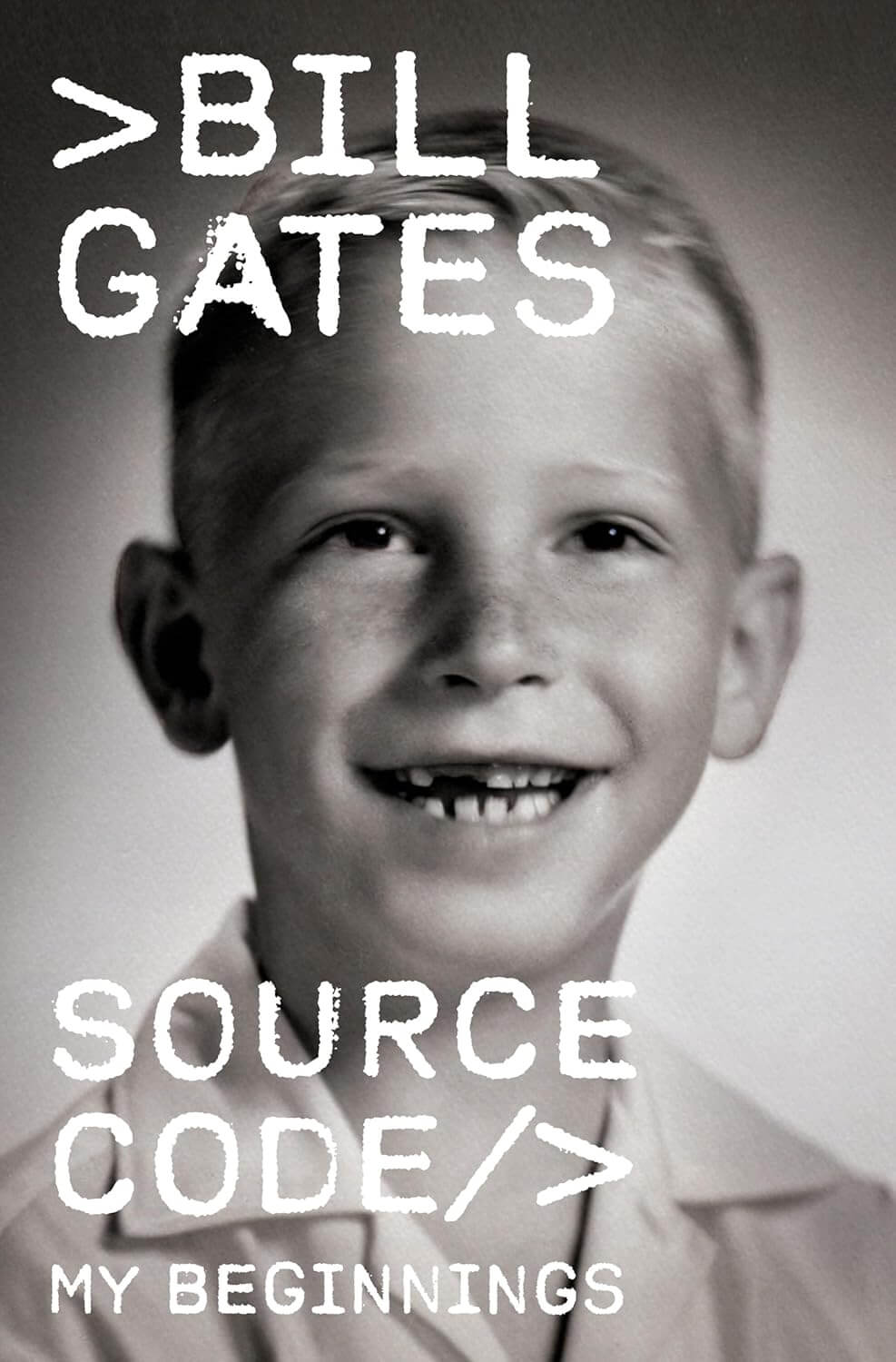
Source Code Book Summary
This Source Code Book Summary covers the key ideas, lessons, and takeaways in about 20 minutes.
A supportive family that valued intellect and moral responsibility
A city charged with engineering optimism
A grandmother who taught strategy and pattern recognition
Teachers, friends, and rivals who stretched his thinking
A school accidentally acquiring a computer before most universities had one
Early access to programming at a time when it was rare
Tragedy reminding him that opportunity isn’t guaranteed
A university environment that shook his ego and refined his focus
A technology revolution arriving exactly when he had skills to meet it
A willingness to drop out and run toward risk while others watched safely
Success wasn’t magic. It was timing meeting preparation. Curiosity meeting opportunity. Will meeting adversity. Luck opened doors — obsession walked through them.
The book argues that greatness is built quietly, long before anyone sees it. Gates became Bill Gates not when Microsoft succeeded, but when:
he learned to think strategically rather than reactively
he discovered passion deep enough to sacrifice comfort
he found something to love harder than obstacles could push back
Ultimately, Source Code is a reminder that identity, like software, is editable. You can refactor yourself. You can rewrite your future. You are your own project — and you are allowed version updates.
Helps with these goals
Want the complete 20-minute summary?
- Full structured summary
- Video Summary
- Podcast Summary
- Audio summary
- Key takeaways
- Exercises
- Quiz
- Highlights and notes
- Ask the book with AI
What is in the Source Code book summary?
Below is a preview of Sumizeit’s expert-written summary of Source Code by Bill Gates. The full summary covers the book’s key ideas in text, audio, and video.
When most people think of Bill Gates, they picture a billionaire founder, the architect behind Microsoft Windows, a philanthropic leader tackling global disease, or a symbol of the personal computer revolution. Yet Source Code focuses on none of that. Instead, Gates rewinds to childhood—to the decades before fame, wealth, or global platform—and asks a more human question:
How did the kid I was become the person who built Microsoft?
The memoir isn’t a history of products. It’s a story about influences, mistakes, mentorship, grief, curiosity, obsession, privilege, and luck. Gates makes clear that success didn’t spring from brilliance alone but from a perfect collision of environment, opportunity, timing, and relentless drive.
This is not the Bill most people know.
This is Bill before the world knew him.
1. Early Life in Seattle — A Childhood Shaped by Timing and Environment
Bill Gates was born in 1955 in Seattle, Washington—one of the luckiest places in the world to be a future technologist. Post-war America was booming. Boeing dominated the local economy, engineering was admired, and technology felt thrilling rather than intimidating. Gates describes Seattle as a city where ambition wasn’t unusual — it was expected.
His family embodied discipline and achievement. His father, Bill Gates Sr., a tall, steady, rational attorney, believed in fairness and calm logic. His mother, Mary Maxwell Gates, was outgoing, socially connected, civic-minded, and relentless in organizing community efforts. One parent taught analytical thinking; the other taught leadership, networking, service, and responsibility. Together they formed a powerful environment for a child with latent intensity.
But the family dynamic was more than inspirational. It was demanding. Expectations were high. Bill wasn’t merely encouraged—he was pushed to participate, apply himself, and meet standards of excellence. His mother believed deeply in structured development: sports, activities, social involvement, and good manners. Bill, however, felt out of place in sports and resisted being steered.
Then came his grandmother, Adelle "Gami" Thompson.
If his father taught logic and his mother taught drive, Gami taught strategy.
She was sharp, competitive, and a ruthless card player. Young Bill initially saw her as magical—she simply won. But he eventually realized she was counting cards mentally, storing patterns, and calculating probabilities. When he learned to do the same, he finally beat her. That victory wasn't about games—it was a discovery:
Complex problems yield to patient thinking.
Intelligence isn’t talent — it’s technique.
This lesson would one day power how he approached code, business, and technology.
2. The Troublesome Child — Curious, Rebellious, and Exceptionally Intense
Gates doesn’t romanticize his early personality. He admits he was often difficult—argumentative, obsessive, and socially odd. He rocked back and forth while thinking, which drew attention. He was small for his age and uninterested in the sports most boys bonded over. Instead he read voraciously, devouring biographies, math books, science material, and encyclopedias for fun. Teachers viewed him as gifted but disruptive, brilliant but stubborn.
He would ace something if it fascinated him and ignore…
Want the complete 20-minute summary?
- Full structured summary
- Video Summary
- Podcast Summary
- Audio summary
- Key takeaways
- Exercises
- Quiz
- Highlights and notes
- Ask the book with AI
Who should read Source Code?
Source Code is for anyone curious about how transformative success actually forms—not through sudden genius, but through layered influences, relentless curiosity, and strategic adaptation. It appeals to entrepreneurs, technologists, students questioning their identity, and readers seeking to understand how childhood experiences and mentorship shape adult potential.
Why does Source Code matter?
In an era obsessed with overnight success and founding mythology, Source Code by Bill Gates reveals the unglamorous truth: greatness is built quietly over years through preparation meeting opportunity. Gates dismantles the myth that success comes from brilliance alone, instead showing how environment, timing, grief, privilege, and deliberate identity evolution collide to create transformative impact. This perspective offers valuable lessons for anyone building something meaningful.
What are the key themes in Source Code?
- Identity as an evolving project, not a fixed state
- How privilege and opportunity must meet preparation and obsession
- The role of mentorship and key relationships in shaping trajectory
- Strategic thinking as a learnable skill, not innate talent
- Grief and loss as accelerants for clarity and purpose
- The collision of timing, environment, and individual will in creating success
What are the key lessons from the Source Code book summary?
Complex problems yield to patient thinking
Gates learned from his grandmother that intelligence isn't raw talent but a technique of counting patterns, storing information mentally, and calculating probabilities. This discovery that complex challenges respond to systematic thinking shaped how he approached coding and business.
Structure can be redirected, not broken
When family conflict arose between Gates' need for autonomy and his mother's demands for engagement, a family counselor advised redirecting his willpower rather than breaking it. This taught him to strategically choose battles—a skill that later defined his negotiation style.
Competence builds leadership more than charisma
On hiking trips, Gates discovered that others relied on him not for charm but for problem-solving under pressure and thoughtful planning. This showed him that leadership could be earned through demonstrated capability rather than social dominance.
Passion creates flow that transcends obligation
When Gates encountered computers at Lakeside School, he experienced hours of complete absorption where meals were forgotten and time vanished. This flow state revealed that genuine obsession—not external pressure—drives mastery.
Responsibility transforms talent into professionalism
Writing payroll software for real money under real deadlines taught Gates that a programmer becomes professional through delivery under pressure, not through talent alone. Passion fuels work; responsibility disciplines it.
Grief accelerates purpose with clarity
When Kent Evans died in a mountaineering accident, Gates resolved to carry their shared ambition forward rather than abandon it. The loss crystallized an insight: the future is not promised, so ambition cannot wait.
Elite environments reveal what you're not
At Harvard, Gates encountered thousands of elite minds and realized being 'the smartest kid' was no longer a defining advantage. This humbling forced him to redefine himself by future potential rather than past dominance.
Unsustainable intensity eventually breaks down
Gates' nocturnal coding marathons at Harvard combined with skipped meals and poor sleep eventually sent him to the hospital. The lesson: even obsession requires physical sustainability to persist long-term.
Seeing the future requires pattern recognition across domains
When Gates saw the Altair 8800, he instantly recognized that personal computers would need software, and that BASIC—the language he'd learned at Lakeside years earlier—was the missing piece. Pattern recognition across time enabled him to see what others couldn't.
Speed matters more than perfection when opportunity arrives
Gates and Allen built BASIC for the Altair by simulating the microprocessor on Harvard computers, working night after night with no guarantee of success. Being fast enough to reach the market first mattered more than building the perfect version.
Ideas without execution are just ideas
Gates and Allen didn't wait for perfect conditions; they contacted MITS claiming they could build BASIC for the Altair before they even had a working version. Bold claims followed by relentless execution turned possibility into reality.
Philosophy shapes business strategy
Gates' conviction that software was intellectual property—not communal resource—was revolutionary and controversial in the hobbyist computing culture. But this philosophical stance enabled Microsoft to become a sustainable business rather than a hobbyist project.
Ambition requires breaking partnerships that constrain growth
When MITS failed to support Microsoft's expansion, Gates fought for and won arbitration to regain full rights to BASIC source code. Staying loyal to a limiting partner would have prevented exponential growth.
Lucky accidents require prepared minds to recognize them
Lakeside School's Mothers' Club randomly acquired a computer terminal with leftover budget. But Gates was positioned—curious, mathematically obsessed, ready—to recognize this accident as transformative when others saw only a toy.
Rebellion can be reframed as creative independence
Young Gates was argumentative, dismissive of rules that didn't make sense, and resistant to structure. Rather than crushing this trait, his family learned to redirect it. The same willfulness that made him difficult became the independence required to build something new.
Reading widely builds pattern recognition
Gates voraciously consumed biographies, math books, science material, and encyclopedias. This broad reading created mental bridges between domains, allowing him to see connections others missed.
The right environment amplifies latent intensity
Gates' Seattle childhood in post-war America, his family's expectation of achievement, and his school's accidental computer access created conditions where his natural intensity could focus productively rather than destructively.
Identity evolves through deliberately adopted roles
Gates moved from class clown to hiker to rebellious son to coder to Harvard student to entrepreneur. Each role taught him something different, and he consciously updated his identity as he outgrew previous versions.
Your future identity requires shedding your past one
The version of Gates that disrupted class by being clever eventually became a liability when building a company. Growth required recognizing which traits served him and which had become obstacles, then consciously choosing new patterns.
Luck opens doors; obsession walks through them
Gates had extraordinary luck—born in the right city, right family, right time for computing. But luck alone didn't create success. His obsession, willingness to sacrifice, and relentless focus transformed opportunity into reality.
Want the complete 20-minute summary?
- Full structured summary
- Video Summary
- Podcast Summary
- Audio summary
- Key takeaways
- Exercises
- Quiz
- Highlights and notes
- Ask the book with AI
How can you apply ideas from Source Code?
- Identify the key mentors and relationships that shaped your thinking, and deliberately seek similar growth relationships in your current work.
- When facing a complex problem, practice patient systematic thinking rather than seeking quick solutions—count patterns, store information, calculate probabilities like Gates learned from his grandmother.
- Map your own identity evolution: what roles have you adopted at different life stages, and which ones still serve you? Which need updating?
- Build a habit of wide reading across domains to strengthen your pattern recognition and creative connections between fields.
- When you discover passionate flow in an activity, lean into it deliberately rather than treating it as distraction—that's where mastery lives.
- Before pursuing an opportunity, ask: What preparation or access do I need? Then work backward to build those foundations rather than waiting for perfect conditions.
- Develop a personal philosophy about your work's value (intellectual property vs. sharing, profit vs. impact) and let that guide your business decisions rather than following industry defaults.
What common mistakes do readers make with Source Code?
- Assuming success comes from a single breakthrough moment rather than recognizing the years of layered influences and preparation that precede it.
- Trying to sustain unsustainable intensity—Gates learned at Harvard that all-nighters and skipped meals eventually lead to hospitalization, not achievement.
- Staying loyal to partnerships or paths that constrain your growth rather than having the courage to break away and pursue larger opportunity.
- Waiting for perfect conditions before starting—Gates and Allen built the Altair BASIC without having a machine or guarantee of success, moving fast enough to win.
Sumizeit Exercises Apply what you've learned
Turn ideas from Source Code into action with a short guided reflection: identify the biggest takeaway, connect it to your life, and commit to one step you can take in the next 24 hours.
What is the expert analysis of Source Code?
Overview
Source Code is a memoir by Bill Gates, one of the most iconic figures in technology and business history. Unlike traditional autobiographies that emphasize achievements and legacy, Gates chooses to focus on the formative years preceding his rise to global prominence. The book offers a rare introspective look at the personal influences, environment, and mindset that shaped the young Gates before Microsoft became a household name. Its significance lies in humanizing a figure often mythologized for his intellect and wealth, revealing the nuanced interplay of privilege, perseverance, and circumstance that underpinned his journey.
Core Thesis
The central argument of Source Code is that extraordinary success is rarely the product of innate genius alone; rather, it emerges from a confluence of environment, mentorship, timing, personal identity evolution, and relentless drive. Gates posits that identity is not fixed but malleable—like software—that can be iteratively refined through experience and conscious effort. This metaphor frames his narrative, emphasizing that the foundations of greatness are laid quietly over years of layered influences and deliberate transformation, long before public recognition.
Strengths
- Humanizing a Legend: Gates eschews the conventional success narrative to explore vulnerability, struggle, and growth, which adds depth and relatability to his story.
- Rich Contextualization: The memoir situates Gates’s development within broader social, technological, and familial contexts, illuminating how external factors like Seattle’s post-war optimism and early computing access were critical.
- Intellectual Honesty: Gates candidly discusses personal flaws—rebelliousness, social awkwardness, burnout—offering a nuanced portrait rather than a sanitized hero’s journey.
- Identity as a Dynamic Construct: The extended metaphor of identity as editable code provides a compelling framework for understanding personal growth and adaptability.
- Insight into Early Tech Culture: The detailed recounting of the Lakeside School computer terminal, the Altair BASIC project, and the nascent software industry offers valuable historical perspective on the origins of personal computing.
Critiques & Counterarguments
- Selective Retrospection: The memoir’s focus on early life and formative experiences risks oversimplifying the complex, often chaotic realities of entrepreneurship and technological innovation that followed. The narrative may inadvertently underplay systemic factors and collaborative contributions beyond Gates’s immediate circle.
- Privilege Understated: While Gates acknowledges luck and environment, the book could delve deeper into how socioeconomic privilege and access to elite education and networks fundamentally shaped his opportunities—an aspect often underexplored in success memoirs.
- Philosophical Tensions on Intellectual Property: Gates’s early stance against software piracy, as recounted, contrasts with later open-source movements that have demonstrated alternative models of innovation and value creation, challenging the notion that proprietary control is the sole path to software industry success.
- Identity Metaphor Limitations: While evocative, the software-as-identity metaphor may oversimplify the psychological and sociocultural complexities of selfhood, potentially minimizing the role of unconscious factors and external constraints in personal development.
- Competing Narratives of Success: Other schools of thought emphasize systemic change, collective action, or serendipity beyond individual agency. For instance, research on network effects and ecosystem dynamics in innovation suggests success is often less about individual transformation and more about navigating complex social-technological systems.
Who Should Read This
Source Code is ideally suited for readers interested in the human dimensions behind technological revolutions—those who seek to understand how personal identity, environment, and mindset intersect with innovation and entrepreneurship. It appeals to aspiring entrepreneurs, students of leadership and psychology, and anyone fascinated by the origins of the digital age. Moreover, readers who appreciate reflective memoirs that challenge simplistic success myths will find Gates’s candidness and intellectual framing particularly rewarding.
Frequently asked questions about the Source Code book summary
What is Source Code about?
Source Code by Bill Gates is a memoir about his childhood and early years before Microsoft became a global company. Rather than focusing on business achievements or technology history, the book explores the influences, mentorship, family dynamics, curiosity, grief, and identity evolution that shaped who Gates became. It traces how layered experiences in Seattle, at Lakeside School, during time with key mentors, and at Harvard prepared him to recognize and seize the personal computing revolution.
Who should read Source Code?
Source Code appeals to entrepreneurs seeking to understand how success actually forms, technologists curious about computing's origins, students questioning their identity and potential, and anyone interested in how childhood experiences and mentorship shape adult achievement. It's especially valuable for readers who want to move beyond success mythology and understand the unglamorous work of preparation meeting opportunity.
What are the main takeaways from Source Code?
The main takeaway is that transformative success rarely springs from a single moment but accumulates over years through layered influences: supportive family, strategic mentorship, early access to opportunity, key friendships, grief that clarifies purpose, and the willingness to pursue risk. Gates emphasizes that identity is not fixed but evolves like software through deliberate versions. He also demonstrates that luck opens doors, but obsession and disciplined execution walk through them.
How did Gates' family shape his success?
Gates' father taught him analytical thinking and fairness through logic; his mother taught him leadership, networking, and responsibility through demanding engagement; his grandmother taught him strategy and pattern recognition through competitive card games. Together, this family environment created high expectations for excellence, which Gates initially rebelled against but eventually learned to redirect toward productive ambition.
What role did Lakeside School play in Gates' trajectory?
Lakeside School was a turning point because its Mothers' Club accidentally acquired a computer terminal with surplus budget in 1968—rare even at universities. This accident wouldn't have mattered without Gates' prepared, curious mind. He became obsessed with coding in BASIC, gained access to paid computing time through local companies, and discovered the flow state that would define his adult focus.
How did Gates recognize the Altair 8800 as transformative?
When Paul Allen showed Gates the Altair 8800 on a Popular Electronics cover in January 1975, Gates instantly saw the pattern: personal computers were leaving research labs, they would need software, and BASIC—the language he'd mastered at Lakeside—was the missing piece. This pattern recognition across time and domains enabled him to see opportunity others couldn't yet imagine.
What does Gates say about identity and personal growth?
Gates frames identity as a platform that evolves like software through deliberate versions—not a fixed prison. He describes how he moved from class clown to hiker to rebellious son to coder to entrepreneur, with each role teaching him something different. He emphasizes that growth requires self-awareness about which traits serve you and the courage to consciously update your identity when old versions become obstacles.
About Sumizeit
Sumizeit is a profitable Scomy LLC company based in Miami, Florida. It has been helping readers learn from nonfiction books for 7 years with expert-written summaries in text, audio, podcast, and video.
Want the complete 20-minute summary?
- Full structured summary
- Video Summary
- Podcast Summary
- Audio summary
- Key takeaways
- Exercises
- Quiz
- Highlights and notes
- Ask the book with AI
Here's why readers love Sumizeit
Join thousands of learners getting smarter every day
"Great experience. Detailed summaries. Loved the gamification feature. Makes learning fun. Good customer service. I recommend Sumizeit to anyone. You'll learn a lot."
"I always felt busy but still wanting to keep up with the book discussion in my friend group. This was a great supplement to help me keep reading the books I find fun while keeping up with important books."
"I love this website. Instead of scrolling social media, I find myself learning a lot. I use it everyday. I recommend this app for anyone who is too busy and wants to get up to speed with their favorite books."
Source Code Book Summary PDF
Looking for a Source Code Book Summary PDF you can save and revisit offline? Our Source Code Book Summary PDF captures the book’s core ideas in a clean, printable format — the key frameworks, takeaways, and structure without the fluff. Download the Source Code Book Summary PDF when you want a reference you can annotate, share with your team, or review on the go. Get your Source Code Book Summary PDF from the download page below.
Download Source Code Book Summary PDFPeople also liked these summaries
Readers who explored Source Code often enjoyed these titles next.




Want the complete 20-minute summary?
- Full structured summary
- Video Summary
- Podcast Summary
- Audio summary
- Key takeaways
- Exercises
- Quiz
- Highlights and notes
- Ask the book with AI
Featured Book Titles
Popular Book Summaries at sumizeit, leading book summary app