


As an Amazon Associate, Sumizeit earns from qualifying purchases.
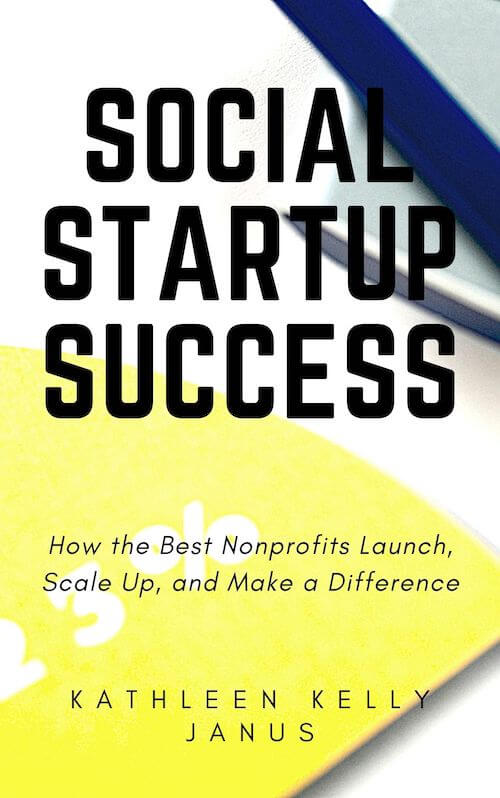
Social Startup Success Book Summary
This Social Startup Success Book Summary covers the key ideas, lessons, and takeaways in about 20 minutes.
Helps with these goals
Want the complete 20-minute summary?
- Full structured summary
- Video Summary
- Podcast Summary
- Key takeaways
- Exercises
- Quiz
- Highlights and notes
- Ask the book with AI
What is in the Social Startup Success book summary?
Below is a preview of Sumizeit’s expert-written summary of Social Startup Success by Kathleen Kelly Janus. The full summary covers the book’s key ideas in text, audio, and video.
As a social startup, you must always test your ideas. It will help you avoid costly mistakes.
Learn from your failure and share the lessons learned.
Track your program activities. Just like private organizations, data is important. It will help you make informed decisions.
Incorporate donations and earned income into your funding model.
Offer complimentary services when collaborating with other nonprofits.
Empower your staff. Design and implement a governance structure.
Believe in the power of story-telling. It will help you connect with the donors.
Kathleen Kelly Janus, a philanthropy expert and the founder of Spark, illustrates how social service organizations and nonprofits can thrive. According to Janus, creative leadership and innovation is the need of the hour. She bases her study on different funding models of innovators in the tech sector. Her expertise in helping small non-profits beyond the initial funding stage has helped many leaders bring about a change. Social Startup Success is an inspirational book for social entrepreneurs, or for anyone who is interested in social service.
Use a human-centered design to maximize funding and control costs.
Nonprofits rely on the government, activists, beneficiaries, and other similar organizations for funds. Money is always scarce. Like private organizations, there are no angel investors to take care of costs. Therefore, it becomes all the more important for nonprofits to craft ways to maximize their funding.
This is where human-centered design comes in. It is a creative approach to problem-solving. It helps you understand the people you are designing for, generate ideas, build low-fidelity prototypes, and test. The entire process is extremely cost-effective.
The approach is very useful when developing prototypes. Janus highlights the example of Aspire Public School, a non-profit organization providing education to children from low-income groups. The school made a prototype of its Preschool Bus using the human-centered design. With just carpet, Ikea furniture, and some tape, they successfully tested their idea. They understood the granularity of their design and its feasibility without spending money on expensive models made of industrial material. Such an approach also ensures low capital and operational expense.
Therefore, wherever possible, go back to using a human-centered approach to design your products and services.
Learn from your failures. Share the lessons learned.
Innovation doesn’t come without taking risks. It means that you may fail. Non-profit leaders are so committed to their ideas that they find it hard to admit failure. They keep the lessons to themselves and avoid taking risks. The team often commits the same mistakes because the real information was never shared with them.
Many Silicon Valley firms are successful because they focus on failing fast and learning faster. Therefore, nonprofits must learn to embrace failure and develop a tolerance for risk.
The best way to do this is to test your services in the field. If you succeed, great. If you fail, the lesson would yield valuable information that could be used in the future. To experiment is to learn, and innovative organizations know this truth.
Want the complete 20-minute summary?
- Full structured summary
- Video Summary
- Podcast Summary
- Key takeaways
- Exercises
- Quiz
- Highlights and notes
- Ask the book with AI
Who should read Social Startup Success?
Social Startup Success is essential for nonprofit leaders, social entrepreneurs, and anyone launching or scaling mission-driven organizations. It's also valuable for board members, program managers, and philanthropic professionals who want to understand how effective nonprofits build sustainable models and maximize their impact.
Why does Social Startup Success matter?
As nonprofits compete for limited resources and face growing pressure to demonstrate impact, Kathleen Kelly Janus's framework bridges the gap between social mission and business discipline. This book provides practical strategies grounded in real-world case studies that help organizations move beyond survival mode to sustainable, scalable success—a critical need in today's social sector.
What are the key themes in Social Startup Success?
- Human-centered design for cost-effective innovation
- Embracing failure and rapid learning cycles
- Data-driven decision making and impact measurement
- Diversified and sustainable funding models
- Staff empowerment and collaborative governance
- Strategic storytelling and donor engagement
What are the key lessons from the Social Startup Success book summary?
Test ideas early and often with low-cost prototypes
Use simple, accessible materials to validate concepts before investing heavily in development. This approach reduces waste and accelerates learning cycles in resource-constrained environments.
Create psychological safety around failure
Leaders must actively communicate failures and lessons learned to build organizational trust and prevent teams from repeating mistakes. Transparency about setbacks encourages innovation rather than risk-aversion.
Establish clear KPIs and track them consistently
Define measurable outcomes specific to your mission, then monitor progress regularly using simple tools like dashboards. Data visibility enables faster course corrections and stronger funder relationships.
Build a diversified funding strategy
Combine philanthropic grants with earned income from service delivery, memberships, or product sales. A mixed revenue model reduces dependency on any single funding source and builds organizational resilience.
Align earned-income ventures with your mission
When selling services or products, ensure they reinforce rather than dilute your core mission. Ethical guardrails prevent mission drift while creating sustainable revenue.
Leverage staff expertise as a revenue stream
Consider licensing your organization's knowledge or consulting services to the private sector. This monetizes your expertise while extending your influence beyond traditional nonprofit boundaries.
Invest in front-line staff and their insights
Those closest to beneficiaries understand ground-level impact better than executives. Valuing and elevating their voices drives innovation and ensures programs remain responsive to community needs.
Reverse traditional hierarchies for accountability
Horizontal accountability structures where teams collectively own outcomes foster collaboration and faster problem-solving than top-down command models.
Recruit board members for skills and mission alignment, not just fundraising
A strong board brings diverse expertise and genuine belief in your cause, enabling better governance and strategic direction than boards composed primarily of wealthy donors.
Use storytelling to trigger emotional connection
Stories about discovery, challenge, and transformation move donors and stakeholders more effectively than statistics alone. They humanize your mission and inspire action.
Incorporate beneficiary feedback into program design
Qualitative data from those you serve reveals unmet needs and misaligned assumptions. Regular feedback loops ensure your programs stay relevant and effective.
Collaborate strategically without losing identity
Partner organizations can share resources and expertise while maintaining separate public brands to avoid confusing donors and diluting individual organizational identities.
Cultivate donor ambassadors
Ask committed donors to leverage their networks to introduce your organization to prospects. This multiplies your reach while building deeper funder relationships.
Balance growth ambitions with resource capacity
Scaling requires sufficient funding, human capital, and operational infrastructure. Test assumptions about growth readiness before expanding programs or geographic reach.
Document and share institutional memory
Encourage staff to capture and share stories, lessons, and best practices. This builds organizational knowledge and helps new team members understand your culture and mission.
Use simple, accessible tools for data management
Google Sheets, Salesforce, and other affordable platforms can track outcomes effectively without requiring expensive custom solutions. Start simple and scale your data infrastructure as needed.
Design programs with cost efficiency built in
Human-centered design upfront identifies the most essential features and lowest-cost ways to deliver value. This mindset reduces operational bloat as you grow.
Keep conversations with funders mission-focused
Rather than leading with organizational needs, emphasize the impact your work creates and how partnerships advance the funder's own values and goals.
Invest in developing staff capabilities
Professional development, mentoring, and learning opportunities increase retention, boost morale, and build the leadership pipeline your organization needs for long-term sustainability.
Want the complete 20-minute summary?
- Full structured summary
- Video Summary
- Podcast Summary
- Key takeaways
- Exercises
- Quiz
- Highlights and notes
- Ask the book with AI
How can you apply ideas from Social Startup Success?
- Build a simple dashboard using Google Sheets or Salesforce to track 3-5 key performance indicators aligned to your mission outcomes
- Design and test a low-cost prototype of your new program or service using everyday materials before seeking full funding approval
- Create a structured feedback loop where beneficiaries monthly review your programs and suggest changes directly to program leadership
- Identify one earned-income opportunity—membership fees, consulting services, product sales—and pilot it with a small test group over 90 days
- Establish a storytelling archive where staff share experiences, lessons learned, and impact examples that can be used in fundraising and internal training
- Redesign your board recruitment process to prioritize mission alignment and specialized expertise over donor capacity
- Institute monthly cross-team learning sessions where staff share failures, lessons, and successes in a psychologically safe environment
- Develop a diversified funding proposal calendar that includes foundation grants, individual giving campaigns, and one corporate partnership opportunity
What common mistakes do readers make with Social Startup Success?
- Assuming that private-sector business practices apply directly to nonprofits without adapting them to mission-driven contexts and stakeholder relationships
- Launching programs at full scale before testing core assumptions with real beneficiaries, leading to wasted resources and program misalignment
- Treating data collection as a compliance burden rather than a strategic tool for improving programs and demonstrating impact to funders
- Concentrating fundraising efforts on a single source (one major funder or grant type) rather than building a diversified revenue model for stability
Sumizeit Exercises Apply what you've learned
Turn ideas from Social Startup Success into action with a short guided reflection: identify the biggest takeaway, connect it to your life, and commit to one step you can take in the next 24 hours.
What is the expert analysis of Social Startup Success?
Overview
Social Startup Success by Kathleen Kelly Janus is a seminal work that bridges the worlds of nonprofit management and entrepreneurial innovation. Janus, a respected social entrepreneur and Stanford lecturer, draws on her extensive experience advising social ventures and her role as co-founder of Spark to offer actionable strategies for nonprofit leaders. The book stands out for its integration of human-centered design principles and data-driven decision-making within the unique constraints of social startups, making it a vital resource for those seeking to scale impact in the nonprofit sector.
Core Thesis
Janus argues that nonprofit organizations must adopt entrepreneurial practices—specifically iterative testing, transparent failure, rigorous data tracking, and innovative funding models—to thrive and scale their social impact. She emphasizes that while nonprofits differ from private enterprises in mission and funding sources, they benefit immensely from applying human-centered design and business-like accountability. The central insight is that sustainable social change requires nonprofits to balance mission fidelity with strategic innovation, leveraging storytelling, collaboration, and diversified income streams to maximize effectiveness and resilience.
Strengths
- Practical Frameworks: The book excels in translating abstract concepts like human-centered design and data dashboards into concrete, replicable practices tailored for nonprofits.
- Rich Case Studies: Janus’s use of diverse examples—from Aspire Public School’s prototyping to Code2040’s corporate partnerships—grounds her advice in real-world successes, enhancing credibility and relatability.
- Balanced Perspective on Funding: The nuanced discussion of earned-income strategies alongside philanthropic funding addresses the complex ethical and operational challenges nonprofits face.
- Emphasis on Organizational Culture: By advocating for horizontal accountability and staff empowerment, the book highlights often-overlooked internal dynamics crucial for innovation.
- Storytelling as a Strategic Tool: The recognition of narrative’s power to engage donors and stakeholders enriches the strategic toolkit for social entrepreneurs.
Critiques & Counterarguments
- Overreliance on Silicon Valley Models: While the tech sector offers valuable lessons, the book’s frequent analogies to Silicon Valley risk oversimplifying the unique challenges nonprofits face, such as regulatory constraints and mission-driven trade-offs that do not neatly align with startup culture.
- Limited Attention to Structural Inequalities: The focus on innovation and scaling may underplay systemic barriers—such as funding biases and political dynamics—that impede many social startups, particularly those led by marginalized communities.
- Potential Ethical Tensions in Earned-Income Models: Although the book acknowledges conflicts of interest, it could further interrogate the risks of mission drift when nonprofits commercialize services, a concern raised by critics of social enterprise hybridization.
- Data-Driven Approaches May Overshadow Qualitative Nuances: The advocacy for dashboards and KPIs is compelling, yet some social outcomes resist quantification, and an overemphasis on metrics can marginalize beneficiary voices and contextual subtleties.
- Alternative Theories of Social Change: Competing schools of thought, such as grassroots organizing and systemic advocacy, prioritize collective action over organizational scaling, suggesting that innovation at the nonprofit level is not the sole or even primary path to social transformation.
Who Should Read This
Social Startup Success is essential reading for nonprofit leaders, social entrepreneurs, and philanthropy professionals seeking to enhance organizational effectiveness and sustainability. It offers valuable insights for those navigating the transition from startup phase to scale, especially individuals interested in integrating design thinking and data analytics into mission-driven work. Additionally, funders and policymakers aiming to understand the operational realities and innovation potential of social ventures will find Janus’s analysis instructive. However, readers should approach the book as a strategic toolkit rather than a comprehensive theory of social change, complementing it with broader perspectives on equity and systemic reform.
Frequently asked questions about the Social Startup Success book summary
What is Social Startup Success about?
Social Startup Success by Kathleen Kelly Janus is a practical guide that shows nonprofits and social enterprises how to launch effectively, grow sustainably, and measure their impact. The book combines real-world case studies from successful nonprofits with frameworks for human-centered design, data-driven decision-making, diversified fundraising, and team empowerment—helping organizations move beyond survival to lasting influence.
Who should read Social Startup Success?
This book is essential for nonprofit leaders, social entrepreneurs launching new organizations, program managers, board members, and anyone interested in understanding how mission-driven organizations scale sustainably. It's also valuable for foundation officers and philanthropic professionals who support the nonprofit sector.
What are the main takeaways from Social Startup Success?
The main takeaways include: test ideas affordably using human-centered design, embrace failure as a learning tool and share lessons openly, track impact through clear metrics and dashboards, diversify funding with earned-income strategies, empower staff through horizontal accountability, and use storytelling to connect emotionally with donors. Together, these practices help nonprofits build resilient, scalable organizations aligned with their missions.
How can nonprofits reduce costs while testing new programs?
Kathleen Kelly Janus recommends human-centered design—using inexpensive, readily available materials to build low-fidelity prototypes before committing to expensive development. The book cites Aspire Public School's Preschool Bus prototype made from carpet, Ikea furniture, and tape, which allowed them to validate their concept and understand feasibility without significant capital investment.
What is the importance of data in nonprofit management?
Social Startup Success emphasizes that data enables nonprofits to understand the real impact of their work and make informed decisions. The book recommends creating simple dashboards with key performance indicators, incorporating feedback from beneficiaries, and comparing outcomes over time—allowing organizations to continuously improve their programs and communicate results convincingly to funders.
How can nonprofits create sustainable funding models?
According to the book, nonprofits should diversify revenue by combining philanthropic grants with earned income from service fees, membership programs, product sales, or consulting. The key is ensuring earned-income ventures align with the organization's mission and ethical boundaries, while testing different strategies to find what works best for your specific context.
How does storytelling improve nonprofit fundraising?
Janus argues that stories about personal challenges, discovery, and transformation humanize your mission and trigger emotional responses in donors more powerfully than statistics alone. Strategic storytelling—both from staff and documented institutional memory—helps funders understand the deeper impact of your work and inspires them to become partners in your mission.
About Sumizeit
Sumizeit is a profitable Scomy LLC company based in Miami, Florida. It has been helping readers learn from nonfiction books for 7 years with expert-written summaries in text, audio, podcast, and video.
Want the complete 20-minute summary?
- Full structured summary
- Video Summary
- Podcast Summary
- Key takeaways
- Exercises
- Quiz
- Highlights and notes
- Ask the book with AI
Here's why readers love Sumizeit
Join thousands of learners getting smarter every day
"Great experience. Detailed summaries. Loved the gamification feature. Makes learning fun. Good customer service. I recommend Sumizeit to anyone. You'll learn a lot."
"I always felt busy but still wanting to keep up with the book discussion in my friend group. This was a great supplement to help me keep reading the books I find fun while keeping up with important books."
"I love this website. Instead of scrolling social media, I find myself learning a lot. I use it everyday. I recommend this app for anyone who is too busy and wants to get up to speed with their favorite books."
Social Startup Success Book Summary PDF
Looking for a Social Startup Success Book Summary PDF you can save and revisit offline? Our Social Startup Success Book Summary PDF captures the book’s core ideas in a clean, printable format — the key frameworks, takeaways, and structure without the fluff. Download the Social Startup Success Book Summary PDF when you want a reference you can annotate, share with your team, or review on the go. Get your Social Startup Success Book Summary PDF from the download page below.
Download Social Startup Success Book Summary PDFPeople also liked these summaries
Readers who explored Social Startup Success often enjoyed these titles next.


Want the complete 20-minute summary?
- Full structured summary
- Video Summary
- Podcast Summary
- Key takeaways
- Exercises
- Quiz
- Highlights and notes
- Ask the book with AI
Featured Book Titles
Popular Book Summaries at sumizeit, leading book summary app