


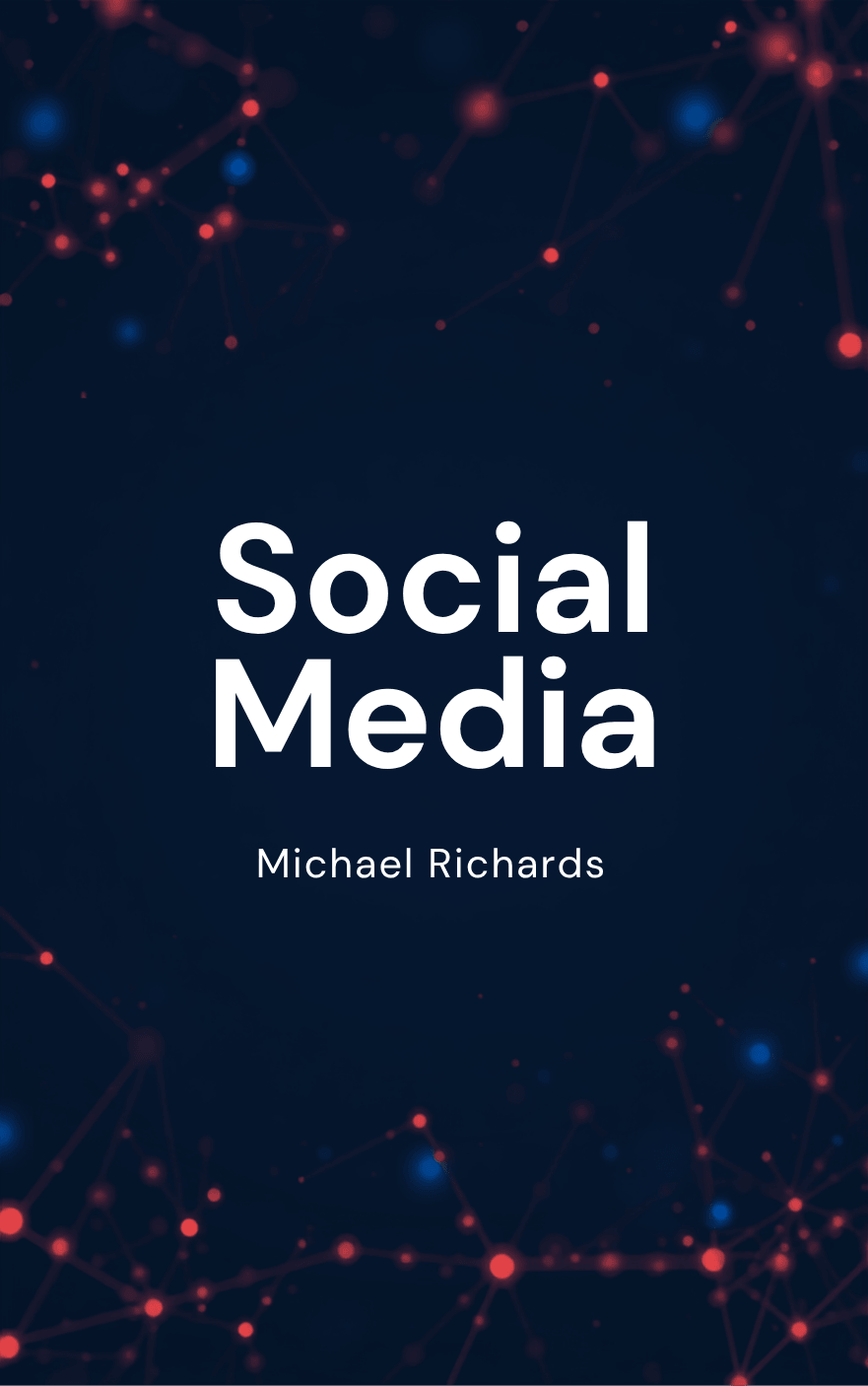
Prefer the print book? Buy on Amazon
As an Amazon Associate, Sumizeit earns from qualifying purchases.
Social Media Book Summary
This Social Media Book Summary covers the key ideas, lessons, and takeaways in about 20 minutes.
Short Description:
A platform by platform playbook for turning social media into real growth.
Helps with these goals
Want a Free Weekly Read?
Get a free summary every week straight to your mailbox.
Preview the Social Media book summary
Below is a preview of Sumizeit’s comprehensive human-written summary of Social Media by Michael Richards. The full summary is 15-20 minutes long and covers the book’s key ideas in text, audio, visual, and video formats. Unlock the full 20 Minute Summary
Michael Richards wrote "Social Media" as a working manual for business owners who feel lost the moment someone tells them to "just get on social media." The book walks through the major platforms one at a time and explains what actually works on each one, why the platforms behave so differently from each other, and how a small brand can compete for attention without a huge budget. Richards spends less time on theory and more time on specific moves you can make this week, which is why the book reads more like a field guide than a textbook.
The thread running through every chapter is that social media only pays off when you stop treating it like one big megaphone. Each platform has its own culture, its own pace, and its own version of what counts as good content. Richards argues that brands waste enormous energy posting the same thing everywhere and then wonder why nothing sticks. His fix is simple to state and harder to practice. Learn each platform on its own terms, then show up there the way the people who already live on that platform expect you to show up.
Pick your platforms instead of chasing all of them
Richards opens with a warning against spreading yourself too thin. He tells readers to resist the urge to claim a profile on every network that exists. Instead, look at where your actual customers spend their time and put your energy there. A company selling industrial equipment probably has more luck on LinkedIn than on Instagram, while a bakery photographing frosted cakes will do the opposite. Once you know your audience, build a plan around the handful of platforms that fit them best rather than a shallow presence everywhere.
That selection process also shapes how you write for each platform. Richards asks readers to picture the exact moment someone opens the app. What are they doing right before they see your post, and what state of mind are they in? Someone scrolling Instagram on their phone during a break wants something they can absorb in two seconds, so a clean photo with a short caption beats a wall of text. A blog post linked from your website can afford a longer, more polished headline because the reader has already committed more time to being there.
Speak the language each network already speaks
One of the clearest ideas in the book is that tone has to shift by platform even when the underlying message stays the same. Richards breaks down how Facebook has become a place for catching up with family, sharing photos, and having low stakes conversations. Twitter runs at a much faster clip, rewarding short and clever posts that fit inside a tight character count. LinkedIn is the buttoned up cousin of both, built for professional conversation where a joke that kills on Facebook can fall flat or even look unprofessional.
Richards pushes readers to pause before posting the same message everywhere.
Want the complete 20-minute summary?
- Full structured summary
- Video Summary
- Podcast Summary
- Audio summary
- Key takeaways
- Exercises
- Quiz
- Highlights and notes
- Ask the book with AI
Who should read Social Media?
Social Media by Michael Richards is for business owners, entrepreneurs, and marketing teams who feel overwhelmed by the pressure to be everywhere online at once. Whether you are launching a brand new business or trying to revive a stagnant social presence, this book offers practical, platform-specific guidance that cuts through the confusion. You do not need to be a tech expert or social media native to benefit—Richards writes for people who want to understand what actually works instead of chasing every new trend.
Why does Social Media matter?
Social media has become essential to business growth, yet most brands waste enormous energy posting identical content everywhere and wondering why nothing sticks. Social Media by Michael Richards addresses this directly by showing that each platform has its own culture, audience expectations, and rules for success. In a landscape where algorithm changes happen constantly and attention spans grow shorter, learning to speak each platform's language is no longer optional—it is the difference between brands that grow and brands that get buried.
What are the key themes in Social Media?
- Platform-specific strategy beats spreading yourself thin across every network
- Tone and messaging must adapt to each platform's unique culture
- Visual content and video consistently outperform text-only posts
- Consistency in brand voice builds recognition and trust over time
- Data and testing should guide strategy, not gut feeling or trends
- Community engagement and genuine interaction matter more than constant promotion
- Platforms continue to evolve, requiring ongoing attention and adjustment
How can you apply ideas from Social Media?
- Audit your current social media presence and identify which platforms actually reach your target customers, then shift your effort to those channels
- Create platform-specific content calendars that account for differences in tone, format, and posting frequency across Facebook, Twitter, YouTube, and your blog
- Set up Facebook remarketing campaigns targeting people who have visited your website, testing different ad creative to see what converts best
- Launch a YouTube channel with a consistent posting schedule and use video descriptions and tags to optimize for search results
- Run a user-generated content contest with a branded hashtag to encourage customers to create content featuring your product or service
- Test the same core message in at least three different formats—plain text, image, and video—and track which version gets more engagement
- Establish partnerships with 2-3 complementary businesses or micro-influencers in your niche for guest posts or joint campaigns
What common mistakes do readers make with Social Media?
- Spreading yourself too thin by trying to maintain an active presence on every platform instead of focusing on the ones where your customers actually spend time
- Posting identical content everywhere without adapting tone, format, or messaging to match each platform's culture and audience expectations
- Treating social media as a constant sales pitch instead of balancing promotion with genuine value, entertainment, or useful information
- Ignoring negative comments or criticism instead of responding quickly and honestly, which damages trust and shows a lack of customer care
- Setting up an account and forgetting it rather than treating social media as something that requires ongoing attention, updates, and strategy adjustments
Sumizeit Exercises Apply what you've learned
Turn ideas from Social Media into action with a short guided reflection: identify the biggest takeaway, connect it to your life, and commit to one step you can take in the next 24 hours.
What is the expert analysis of Social Media?
Overview
Social Media by Michael Richards stands out as a pragmatic, hands-on guide tailored specifically for small business owners and marketers who find themselves overwhelmed by the sprawling and often contradictory advice surrounding social media marketing. Richards, drawing from practical experience rather than academic theory, offers a systematic exploration of major platforms, emphasizing actionable strategies over abstract concepts. This focus on usability and real-world application makes the book significant as a field guide for those seeking to navigate the complex social media landscape without a large budget or marketing team.
Core Thesis
At the heart of Richards’ argument is the insistence that social media should not be treated as a monolithic megaphone broadcasting identical messages across all platforms. Instead, success hinges on recognizing each social network as a distinct ecosystem with its own culture, user expectations, and content norms. Richards advocates for deliberate platform selection based on audience presence, tailored messaging that respects the unique tone and format of each channel, and consistent engagement informed by data analytics. This approach challenges the scattergun strategy many brands adopt and reframes social media as an ongoing, nuanced conversation rather than a one-off marketing checklist.
Strengths
- Platform-Specific Guidance: The book excels in breaking down the idiosyncrasies of each major social network, from Facebook’s community-building tools to Twitter’s rapid-fire engagement style and YouTube’s trust-building video content. This granularity equips readers with concrete tactics rather than vague principles.
- Actionable, Practical Advice: Richards prioritizes immediate, implementable steps—such as optimizing Facebook pages, using hashtags judiciously on Twitter, and leveraging YouTube’s subscription features—making the book highly accessible for practitioners.
- Emphasis on Authenticity and Engagement: The insistence on building a consistent brand voice, responding to feedback, and fostering genuine relationships with influencers and customers underscores a sophisticated understanding of modern brand-building.
- Integration of Analytics and Testing: Encouraging readers to use platform analytics and experiment with different content formats reflects a mature approach that balances creativity with evidence-based strategy.
- Balanced View on Content Reuse and Cross-Promotion: Richards thoughtfully addresses the challenge of maintaining freshness across platforms without alienating audiences through repetitive posts, a nuance often overlooked in social media guides.
Critiques & Counterarguments
- Limited Theoretical Depth: While the book’s practical orientation is a strength, its relative lack of engagement with broader social media theory or psychological insights into user behavior may leave readers seeking deeper understanding wanting more.
- Potential Oversimplification of Platform Cultures: Richards’ characterization of platform cultures—such as LinkedIn being uniformly “buttoned up” or Facebook as a place for “low stakes conversations”—risks flattening the diversity and evolving nature of these communities, which can vary widely by niche and geography.
- Rapidly Changing Social Media Landscape: Given the fast pace of platform updates and shifting user habits, some tactical recommendations (e.g., specific features or ad strategies) may become outdated quickly, necessitating continual learning beyond the book.
- Competing Schools of Thought: Alternative perspectives emphasize the power of integrated, cross-platform storytelling and brand consistency over strict platform differentiation, arguing that a unified narrative can build stronger brand equity despite differing formats.
- Real-World Evidence on Influencer Partnerships: While Richards advocates influencer collaborations, recent research highlights risks including audience skepticism, influencer fatigue, and challenges in measuring ROI, suggesting that such partnerships require more nuanced management than the book may imply.
Who Should Read This
Social Media is ideally suited for small business owners, solo entrepreneurs, and marketers who need a clear, step-by-step manual to social media without wading through theoretical jargon or overwhelming complexity. It is particularly valuable for those who want to optimize limited resources by focusing on the right platforms and learning how to engage authentically and effectively. Readers seeking a tactical, platform-by-platform playbook with an emphasis on practical execution will find Richards’ work a useful and accessible resource. However, those interested in a deeper academic or psychological exploration of social media’s societal impacts may need to supplement this with other texts.
Frequently asked questions about the Social Media book summary
What is Social Media about?
Social Media by Michael Richards is a practical field guide for business owners who want to understand how to actually use social platforms for growth. The book walks through each major platform—Facebook, Twitter, YouTube, and blogs—explaining what content works on each one, why they behave so differently, and how small brands can compete without huge budgets. Rather than generic theory, Richards focuses on specific moves you can make this week to start seeing results.
Who should read Social Media?
This book is for business owners, entrepreneurs, and marketing teams who feel lost when told to "just get on social media." It works best for people who want platform-specific guidance rather than broad theory, and for brands that are tired of posting the same content everywhere and wondering why nothing sticks. You do not need to be a tech expert—the book is written for people who want actionable steps they can actually follow.
What are the main takeaways from Social Media?
The core idea is that social media success comes from treating each platform as its own distinct environment rather than one big audience waiting for the same message. Success depends on choosing the right platforms for your audience, learning how people behave on each one, adapting your tone and content to match, staying consistent with your brand voice, and checking the data instead of guessing. Put these pieces together and you have a workable system any small business can actually follow.
How do I choose which social media platforms to focus on?
Look at where your actual customers spend their time and put your energy there instead of trying to be everywhere. A B2B company selling industrial equipment will have more success on LinkedIn, while a bakery photographing frosted cakes belongs on Instagram. Once you know your audience, build a plan around the handful of platforms that fit them best rather than spreading yourself thin across every network.
How should I adapt my message for different platforms?
Each platform has its own culture and audience expectations. Someone scrolling Instagram during a break wants something they can absorb in two seconds, while a blog reader has already committed more time. Tone matters too—a joke that kills on Facebook might look unprofessional on LinkedIn. Before posting anything, ask whether it actually fits the platform you are about to post it on.
How often should I post on social media?
The answer depends on the platform. Twitter rewards staying active throughout the day since tweets fade within about fifteen minutes, while YouTube benefits from a consistent but less frequent posting schedule that keeps subscribers engaged. Facebook and blogs fall somewhere in between. Richards recommends testing different frequencies and tracking which schedule actually gets responses from your specific audience.
What should I do if I get negative comments or criticism on social media?
Respond quickly and politely rather than deleting comments or getting defensive. Thank people for raising concerns, own up to mistakes honestly, and avoid arguing in the comments. Public criticism is part of doing business in public, and how you handle it shows your audience whether you actually care about their feedback. This kind of transparency tends to build trust over time.
How do I measure whether my social media efforts are actually working?
Every platform provides analytics tools—use them. Track website traffic, lead generation, and how often inquiries turn into actual sales alongside softer signals like comments and shares. Richards recommends testing the same core message in different formats and platforms to see what resonates with your specific audience. Let the data guide your next move instead of relying on instinct or generic advice.
About Sumizeit
Sumizeit is a profitable Scomy LLC company based in Miami, Florida. Our founders, Clemens Raemy and Weina Scott, are successful entrepreneurs with several exits. Sumizeit is a popular book summary app / micro learning app used by busy professionals and entrepreneurs with over 2,500 non-fiction book summaries and 10,000 podcast summaries in text, audio, visual, podcast, and video format. We also have stellar retention tools to make ideas stick - such as flashcards with spaced repetition, quizzes, streaks, highlighting and notes, daily challenges, riddles, mini-courses, meditation, and more. You won't only learn the idea, but also remember it. Over 90% of our users change their habits with Sumizeit.
Upgrade Now
Here's why readers love Sumizeit
Join thousands of learners getting smarter every day
"Great experience. Detailed summaries. Loved the gamification feature. Makes learning fun. Good customer service. I recommend Sumizeit to anyone. You'll learn a lot."
"I always felt busy but still wanting to keep up with the book discussion in my friend group. This was a great supplement to help me keep reading the books I find fun while keeping up with important books."
"I love this website. Instead of scrolling social media, I find myself learning a lot. I use it everyday. I recommend this app for anyone who is too busy and wants to get up to speed with their favorite books."
Social Media Book Summary PDF
Looking for a Social Media Book Summary PDF you can save and revisit offline? Our Social Media Book Summary PDF captures the book’s core ideas in a clean, printable format — the key frameworks, takeaways, and structure without the fluff. Download the Social Media Book Summary PDF when you want a reference you can annotate, share with your team, or review on the go. Get your Social Media Book Summary PDF from the download page below.
Download Social Media Book Summary PDFPeople also liked these summaries
Readers who explored Social Media often enjoyed these titles next.
Ready to read the whole thing?
- Full structured summary
- Video Summary
- Podcast Summary
- Audio summary
- Key takeaways
- Exercises
- Quiz
- Highlights and notes
- Ask the book with AI
Featured Book Titles
Popular Book Summaries at sumizeit, leading book summary app