


As an Amazon Associate, Sumizeit earns from qualifying purchases.
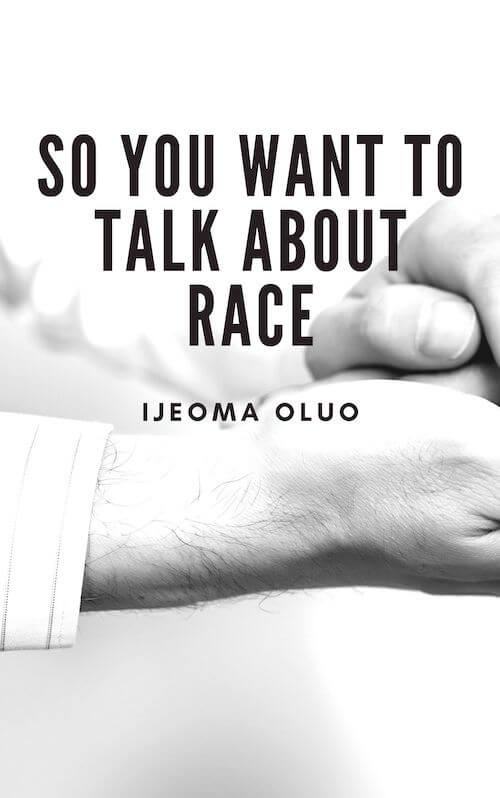
So You Want to Talk About Race Book Summary
This So You Want to Talk About Race Book Summary covers the key ideas, lessons, and takeaways in about 20 minutes.
Helps with these goals
Want the complete 20-minute summary?
- Full structured summary
- Video Summary
- Podcast Summary
- Audio summary
- Key takeaways
- Exercises
- Quiz
- Highlights and notes
- Ask the book with AI
What is in the So You Want to Talk About Race book summary?
Below is a preview of Sumizeit’s expert-written summary of So You Want to Talk About Race by Iljeoma Oluo. The full summary covers the book’s key ideas in text, audio, and video.
So You Want to Talk about Race author Ijeoma Oluo explores systemic racism and white supremacy through a unique worldview: the well-meaning white person who is not fully aware of the ways their privilege creates life advantages. Oluo argues that white supremacy is so integrated into our society that we are unable to view it objectively and it has become our default state. Applying strong and detailed prose, Oluo takes readers on a critical journey through self-awareness, ultimately voicing a community call to action that is long overdue.
On Privilege
If you ask the average white person in Middle America whether or not they are racist, you are likely to receive a confident ‘no’. However, So You Want to Talk About Race asks us to go beyond this simple answer. We are invited to bypass the stereotype that the ‘racism’ label only applies to people who make extremely noticeable prejudiced comments.
Instead, we must re-examine our personal perspective. While it is easy to claim that you are anti-discrimination, you may still--unintentionally--play a role in a society that has been built on privilege.
If you are born white or even if you pass as white (which happens when you have to light enough skin that you look like you could be white even if you are really not), you join the world with several automatic advantages.
For instance, when you learn about history in school, you are learning about white history by default. When you go to a store, the products are specifically designed with people like you (white people) in mind. When you get hurt, you do not have to worry that you will be denied medical or legal support based on who you are.
These are just a few of the many privileges white individuals are granted that people of color (BIPOC) simply do not receive.
While we like to think that nobody is born racist or starts out that way early in life, evidence suggests that children actually develop skin color preferences early on. In 2010, a CNN study found that when given the choice between a black doll and a white one, the majority of children will choose the white doll. This finding speaks to the fact that while you may not be directly telling your children to make choices based on race, they are already being impacted by the white influences around them.
For instance, your child is likely seeing white characters on TV (the majority of the time) and walking down toy aisles filled with advertisements featuring white people. Whiteness can be seen everywhere.
Personal Responsibility
We often hear people make well-meaning comments like “I have Black friends” when they are trying to show acceptance--and perhaps even an embrace--of the Black community.
In making this sort of remark, you are essentially saying this:
“How can I be racist if I occasionally hang out with a Black person. If I was racist, I would never hang out with a black person.”
While it is true that…
Want the complete 20-minute summary?
- Full structured summary
- Video Summary
- Podcast Summary
- Audio summary
- Key takeaways
- Exercises
- Quiz
- Highlights and notes
- Ask the book with AI
Who should read So You Want to Talk About Race?
This book is essential for anyone who wants to have meaningful conversations about race, particularly white readers seeking to understand systemic racism and their role in it. It's also valuable for people of color who want to articulate their experiences and for educators, activists, and anyone committed to building a more equitable society.
Why does So You Want to Talk About Race matter?
Racial inequality remains deeply embedded in American institutions, from education to criminal justice to the workplace. Iljeoma Oluo's direct, accessible approach makes conversations about race less intimidating and more productive, offering a crucial roadmap for recognizing privilege, confronting complicity, and taking meaningful action toward justice.
What are the key themes in So You Want to Talk About Race?
- Systemic racism and white privilege
- Personal responsibility and moral obligation
- The dangers of stereotypes and tone policing
- Educational equity and the school-to-prison pipeline
- Cultural appropriation and respect
- Affirmative action as a necessary remedy
- The importance of listening to lived experience
What are the key lessons from the So You Want to Talk About Race book summary?
Racism extends beyond overt prejudice
Being non-racist isn't enough; individuals must actively examine how they benefit from systemic racism and work against it. Unintentional participation in discriminatory systems still causes harm.
White privilege is structural, not personal blame
Acknowledging privilege isn't about guilt or self-flagellation; it's about recognizing real, measurable advantages built into systems like education, healthcare, and retail that affect people differently based on race.
Performative allyship falls short
Having friends of color or claiming to be 'not racist' doesn't constitute real anti-racism work. True accountability requires ongoing effort to challenge discriminatory systems and speak up against injustice.
Children absorb racial biases early
From media representation to toy aisles to classroom materials, children internalize racial hierarchies long before they can think critically. Environments must be actively shaped to counter these influences.
Tone policing silences important voices
Criticizing how people express anger about injustice rather than addressing the substance of their concerns dismisses legitimate grievances. Tone policing is a tactic that protects the status quo.
Stereotypes persist and cause real damage
Whether depicting Black people as loud and criminal or Asian Americans as the 'model minority,' stereotypes narrow how people are perceived and create impossible standards. Recognizing these false narratives is the first step to combating them.
Cultural appropriation reflects power imbalances
When dominant cultures adopt and profit from the culture of marginalized communities without credit or consent, it strips away dignity and erases the originators' contributions.
Schools can perpetuate or interrupt racial injustice
Classroom practices, curriculum choices, and disciplinary patterns either reinforce systemic racism or challenge it. Teachers and administrators must be conscious of how their actions affect students differently based on race.
The school-to-prison pipeline is real and preventable
Discriminatory school discipline, lack of resources, and biased expectations funnel students of color toward incarceration rather than opportunity. Dismantling this pipeline requires systemic change in education.
Affirmative action addresses compounded disadvantage
Because Black students often attend underfunded schools and lack access to enrichment opportunities, policies that level the playing field are not reverse discrimination but necessary correction of historical inequity.
Black perspective is essential to understanding Black experience
White people cannot fully understand what it's like to be Black in America; engaging across racial lines requires listening, believing, and centering the voices of those who live these realities daily.
Silence equals complicity
Passively avoiding racist behavior while not actively opposing racism means allowing discriminatory systems to persist. Anti-racism requires visible, ongoing commitment.
Centering white feelings derails progress
When white people make conversations about race about their own hurt or discomfort, they redirect energy away from those experiencing actual systemic harm. Productive conversations require white people to listen rather than defend.
Representation matters across institutions
Whether in workforce, media, education, or leadership, the absence of people of color from spaces of power and visibility perpetuates the message that certain groups belong less. Equity requires intentional inclusion.
Different approaches to activism can be valid
While non-violent resistance is often celebrated, more assertive forms of activism may also serve important purposes. Judging the method rather than supporting the goal of justice is a form of control.
Privilege blinds people to systemic injustice
Those who benefit from a system often cannot see it objectively because it feels normal to them. Self-awareness and willingness to learn are required to see what privilege obscures.
Intersectionality shapes how racism is experienced
Race doesn't exist in isolation; gender, class, sexuality, and other identities intersect with race to create unique forms of oppression that require nuanced understanding.
Education is a tool for liberation and oppression
Curriculum that only teaches white history and excludes BIPOC contributions reinforces hierarchies; education that centers diverse perspectives and truths empowers all students to imagine different futures.
Discomfort is part of the growth process
Examining one's own complicity in racism feels awkward and painful, but avoidance of this discomfort means avoiding necessary personal and societal transformation.
Systemic change requires collective action
Individual good intentions matter less than organized effort to transform institutions. Sustained, visible participation in the fight for racial justice is what moves the needle.
Want the complete 20-minute summary?
- Full structured summary
- Video Summary
- Podcast Summary
- Audio summary
- Key takeaways
- Exercises
- Quiz
- Highlights and notes
- Ask the book with AI
How can you apply ideas from So You Want to Talk About Race?
- Examine the books, media, and products your household consumes and actively seek out work by and featuring people of color
- Ask your school board specific questions about discipline rates, graduation rates, and demographic representation across grade levels and advanced classes
- When discussing race, focus on listening to the experiences of people of color rather than sharing your own perspective or defensiveness
- Support affirmative action and equity-based policies even when they feel uncomfortable; recognize that equality and equity are different goals
- Actively speak up against racist comments, stereotypes, and discriminatory practices in your workplace, school, and community rather than staying silent
- Educate yourself about the historical and ongoing impacts of racism so you don't burden people of color with explaining their own oppression
- Challenge tone policing in yourself and others by focusing on the substance of what's being said rather than how angry or frustrated it sounds
What common mistakes do readers make with So You Want to Talk About Race?
- Believing that having friends of color makes you immune to perpetuating racism or absolves you of responsibility to take action
- Treating conversations about race as an opportunity to talk about your own struggles instead of centering the experiences of those facing racial injustice
- Assuming that overt, intentional racism is the main problem while ignoring the systemic racism built into institutions and everyday life
- Feeling defensive or victimized when learning about privilege, which prevents genuine self-examination and growth
- Failing to recognize how childhood environments shape racial biases and assuming that explicit teaching alone combats internalized hierarchies
Sumizeit Exercises Apply what you've learned
Turn ideas from So You Want to Talk About Race into action with a short guided reflection: identify the biggest takeaway, connect it to your life, and commit to one step you can take in the next 24 hours.
What is the expert analysis of So You Want to Talk About Race?
Overview
So You Want to Talk About Race by Ijeoma Oluo is a seminal work that confronts the pervasive and often invisible structures of systemic racism and white supremacy in contemporary American society. Oluo, a writer and social critic with a background in political science and digital activism, brings a compelling voice to the discourse on race, privilege, and social justice. Published in 2018, the book has become a vital resource for readers seeking to understand the complexities of racial dynamics beyond surface-level conversations, particularly targeting well-meaning white individuals who may be unaware of their complicity in systemic inequities.
Core Thesis
Oluo’s central argument is that racism is not merely a matter of overt prejudice or individual acts of discrimination but is deeply embedded in societal institutions and cultural norms, making white supremacy the default framework of American life. She challenges readers—especially white Americans—to move beyond denial and defensiveness, urging them to recognize their unearned privileges and take active responsibility in dismantling racist systems. The book emphasizes the necessity of self-awareness, honest dialogue, and collective action to address entrenched inequalities, while also unpacking concepts such as tone policing, cultural appropriation, and the school-to-prison pipeline.
Strengths
- Accessible yet profound prose: Oluo’s writing is clear and engaging, making complex social theories approachable without diluting their significance.
- Practical guidance: The book offers concrete strategies for individuals to engage in productive conversations about race and to confront their own biases.
- Intersectional perspective: Oluo incorporates discussions of gender, class, and other axes of identity, enriching the analysis beyond a singular focus on race.
- Emphasis on personal responsibility: The book effectively challenges the reader to move from passive awareness to active participation in anti-racist work.
- Contemporary relevance: By addressing current social issues such as affirmative action, media representation, and educational disparities, Oluo situates her arguments within ongoing societal debates.
Critiques & Counterarguments
- Potential oversimplification of white perspectives: While the book targets well-meaning white readers, some critics argue that it risks homogenizing white experiences and motivations, potentially alienating those it seeks to engage.
- Limited engagement with dissenting viewpoints: Oluo’s framework largely assumes consensus on systemic racism, with less attention paid to nuanced or opposing perspectives that question the efficacy or fairness of policies like affirmative action.
- Empirical evidence scope: Although the book references studies and social phenomena, some sections could benefit from deeper empirical grounding or engagement with longitudinal data to strengthen claims.
- Competing schools of thought: Alternative approaches to racial justice, such as class-based analyses or libertarian critiques of affirmative action, offer counterpoints that challenge some of Oluo’s prescriptions.
- Real-world complexity: The book’s call for white individuals to “do better” may underestimate structural constraints and the diversity of individual capacities and contexts, which can complicate the process of meaningful engagement.
Who Should Read This
This book is essential reading for socially conscious individuals—particularly white readers—who seek to deepen their understanding of systemic racism and their role within it. It is invaluable for educators, activists, policymakers, and anyone involved in diversity and inclusion work who desires a candid, actionable framework for addressing racial inequities. Additionally, those new to conversations about race will find Oluo’s approachable style a helpful entry point for grappling with difficult truths and embracing the ongoing work of social justice.
Frequently asked questions about the So You Want to Talk About Race book summary
What is So You Want to Talk About Race about?
So You Want to Talk About Race by Iljeoma Oluo is a guide to understanding systemic racism, white privilege, and how to have productive conversations across racial lines. Through essays and personal reflection, Oluo examines how racism is woven into American institutions—from schools to workplaces—and calls on white people specifically to recognize their complicity and take meaningful action toward racial justice.
Who should read So You Want to Talk About Race?
This book is particularly valuable for white readers seeking to understand their role in systemic racism and how to become better allies, but it's also essential for people of color, educators, activists, and anyone engaged in social justice work. It's designed for people who want to move beyond performative allyship and actually contribute to dismantling racism.
What are the main takeaways from So You Want to Talk About Race?
Key takeaways include: racism is systemic, not just individual; white privilege is real and structural; having friends of color doesn't make you anti-racist; tone policing silences important voices; schools perpetuate racial inequality through discipline and curriculum gaps; affirmative action is necessary to address compounded disadvantage; and white people have a moral obligation to actively fight racism rather than remaining silent.
How does Iljeoma Oluo define white privilege?
Oluo defines white privilege as automatic, measurable advantages that white people receive in systems like education, healthcare, retail, and policing—simply because of their race. These aren't individual character traits but structural benefits built into institutions, from seeing white people reflected in textbooks and media to receiving better service and avoiding certain dangers that people of color face daily.
What is tone policing and why does it matter?
Tone policing is criticizing how someone expresses their concerns about injustice rather than addressing the substance of their complaint. It matters because it's a tactic used to dismiss legitimate grievances—especially from people of color—by making their anger seem like the problem rather than the actual racism they're describing. This silences important voices and protects discriminatory systems.
What is the school-to-prison pipeline?
The school-to-prison pipeline is the pattern where students of color, particularly Black and Latinx students, face discriminatory discipline, lower expectations, and biased treatment in school that pushes them toward the criminal justice system rather than graduation and opportunity. It begins with practices like harsher discipline for students of color and exclusionary policies, and has lifelong consequences.
Why does Oluo argue that affirmative action is necessary?
Oluo argues that affirmative action is necessary because Black students often attend underfunded schools, lack access to expensive tutoring and extracurriculars, and face systemic barriers that create a massive achievement gap before they even apply to college. Without policies that account for these compounded disadvantages, racial inequality in education and employment will persist indefinitely.
What does Oluo say about cultural appropriation?
Oluo explains that cultural appropriation occurs when a dominant culture takes elements from a less powerful culture—like when white people adopted rap and Black fashion into mainstream culture—without credit, permission, or compensation. This strips away dignity and erases the originators' contributions, particularly harmful when the marginalized community faces discrimination for the same cultural expression.
About Sumizeit
Sumizeit is a profitable Scomy LLC company based in Miami, Florida. It has been helping readers learn from nonfiction books for 7 years with expert-written summaries in text, audio, podcast, and video.
Want the complete 20-minute summary?
- Full structured summary
- Video Summary
- Podcast Summary
- Audio summary
- Key takeaways
- Exercises
- Quiz
- Highlights and notes
- Ask the book with AI
Here's why readers love Sumizeit
Join thousands of learners getting smarter every day
"Great experience. Detailed summaries. Loved the gamification feature. Makes learning fun. Good customer service. I recommend Sumizeit to anyone. You'll learn a lot."
"I always felt busy but still wanting to keep up with the book discussion in my friend group. This was a great supplement to help me keep reading the books I find fun while keeping up with important books."
"I love this website. Instead of scrolling social media, I find myself learning a lot. I use it everyday. I recommend this app for anyone who is too busy and wants to get up to speed with their favorite books."
So You Want to Talk About Race Book Summary PDF
Looking for a So You Want to Talk About Race Book Summary PDF you can save and revisit offline? Our So You Want to Talk About Race Book Summary PDF captures the book’s core ideas in a clean, printable format — the key frameworks, takeaways, and structure without the fluff. Download the So You Want to Talk About Race Book Summary PDF when you want a reference you can annotate, share with your team, or review on the go. Get your So You Want to Talk About Race Book Summary PDF from the download page below.
Download So You Want to Talk About Race Book Summary PDFPeople also liked these summaries
Readers who explored So You Want to Talk About Race often enjoyed these titles next.



Want the complete 20-minute summary?
- Full structured summary
- Video Summary
- Podcast Summary
- Audio summary
- Key takeaways
- Exercises
- Quiz
- Highlights and notes
- Ask the book with AI
Featured Book Titles
Popular Book Summaries at sumizeit, leading book summary app