
Question 1 of 10


Prefer the print book? Buy on Amazon
As an Amazon Associate, Sumizeit earns from qualifying purchases.
Book Summary
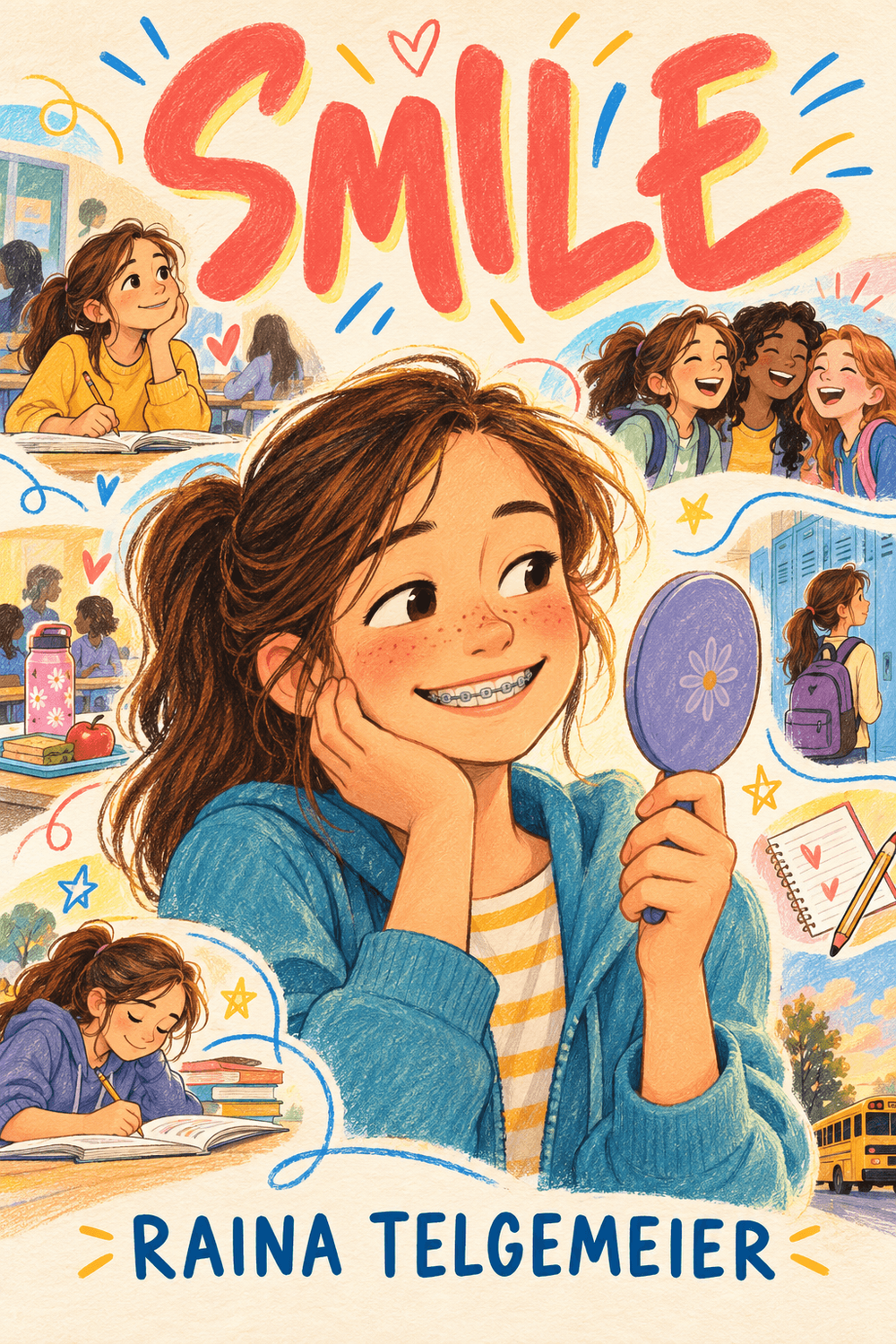
Smile Book Summary
This Smile Book Summary covers the key ideas, lessons, and takeaways in about 20 minutes.
Short Description:
Raina’s braces, teasing, and new friends show confidence comes from within.
Smile argues that confidence doesn't come from perfect teeth, perfect hair, or the approval of people who put you down. It comes from spending your time on things that matter to you, surrounding yourself with people who treat you well, and walking away from friends who don't. Raina spends years believing her braces are the problem, then finds out the real turning point was the choices she made about who to be around and what to care about.
Helps with these goals
Preview the Smile book summary
Below is a preview of Sumizeit’s comprehensive human-written summary of Smile by Raina Telgemeier. The full summary is 15-20 minutes long and covers the book’s key ideas in text, audio, visual, and video formats. Unlock the full 20 Minute Summary
Picture yourself in middle school. Homework piles up, crushes make you feel giddy and embarrassed at once, and your body keeps changing. Now add a bad fall onto the pavement that knocks your two front teeth out of place, plus the news that you'll spend years in the orthodontist's chair. That is what happened to Raina Telgemeier, and she turned it into Smile, her autobiographical graphic novel.
The book follows Raina from sixth grade to ninth grade. It looks at feeling self conscious, first crushes, shaky friendships, and the long misery of dental work. Its message is simple and kind. You build confidence by caring less about how you look and more about what you love doing. The book is written for middle school readers, but it also speaks to parents, teachers, and any adult who still carries old feelings about their own appearance.
Telgemeier grew up in San Francisco, where the story takes place. Smile came out in 2010, and it won an Eisner Award for Best Publication for Kids and Best Writer/Artist.
Sixth grade and the start of the dental saga
The book opens with Raina forcing a huge fake smile at the dentist's office. Her dentist needs a photo of her teeth. After the exam, he tells her she'll need braces to fix her overbite. Raina is not thrilled.
She isn't alone in that. Roughly 70% of kids in the US have some degree of overbite, and somewhere between 50 and 70% get braces. Dreading them is normal, especially for a teenager who already worries about how she looks. Experts suggest a few ways to help a kid through it. Make sure they understand why braces matter and what happens without them, which is more crooked teeth and heavier treatment later. Help them find a reason that belongs to them, like wanting a straighter smile. And hand them small choices, such as picking the color of the bands, since teenagers crave some control.
Then things get worse. Raina trips and lands face first on the pavement, and both front teeth are gone. She finds one of them on the ground. The other is nowhere in sight. At an emergency visit, the dentist explains that the missing tooth got driven up into her gums. He pulls it back down, puts the knocked out tooth back in, and covers her top teeth with a cast for several days. Dental injuries like this are more common than you'd think. Experts estimate that about one in four US teens and adults get care for one at some point.
Raina dreads her next appointment, and for good reason. When the cast comes off, Dental scans show that the fall damaged the bone above her teeth. Her two front teeth sit so high that they look half as long as the rest. Fixing this will take many more trips to the dentist.
Her fear is shared by a lot of people. More than half of us feel some dread about the dentist, and…
Want the complete 20-minute summary?
- Full structured summary
- Video Summary
- Podcast Summary
- Audio summary
- Key takeaways
- Exercises
- Quiz
- Highlights and notes
- Ask the book with AI
Who should read Smile?
Smile is written for middle school readers navigating appearance anxieties, dental worries, and friendship challenges during adolescence. It also resonates with parents, teachers, and adults who remember struggling with self-image as a teenager.
Why does Smile matter?
In an era of social media and image-focused culture, Smile offers a grounded, honest message about what actually builds confidence and happiness. The book shows that self-worth comes not from fixing your appearance, but from finding supportive communities and pursuing meaningful activities.
What are the key themes in Smile?
- Appearance anxiety and adolescent insecurity
- The difference between teasing and bullying
- Finding confidence through belonging and community
- How activities and passions matter more than looks
- Navigating friendship dynamics and toxic relationships
- Handling fear and anxiety about medical procedures
How can you apply ideas from Smile?
- Help young people prepare for medical procedures by explaining why the procedure matters, letting them choose small details they can control, and offering a meaningful reward afterward
- When teens express appearance anxiety, validate their feelings rather than dismissing them, then remind them of their strengths in other areas like hobbies, goals, and how they care for friends
- If a teenager is being teased and hurt, recognize that they are not 'too sensitive'—the teaser is responsible for stopping and apologizing, not the hurt person for being thicker-skinned
- Model confidence and self-advocacy directly for young people instead of lecturing them; they learn more from what you do than what you tell them
- Encourage teenagers to join clubs, teams, or activities aligned with their genuine interests as a pathway to finding their people and building self-esteem
- Help young people identify toxic friendships that drain them and actively support them in building new friendships based on shared values and interests
- Teach cognitive restructuring and deep breathing techniques for managing anxiety about specific, temporary challenges like dental work or medical procedures
What common mistakes do readers make with Smile?
- Assuming that fixing a teen's appearance (braces, new clothes, makeovers) will automatically boost their confidence and happiness, when research shows belonging and shared interests matter far more
- Telling a hurt teenager they're 'too sensitive' when peers have teased or mocked them, which invalidates their experience and misplaces responsibility for the harm
- Giving unsolicited advice to teenagers about building confidence, which they often experience as criticism of their autonomy rather than helpful guidance
- Overlooking the warning signs that appearance anxiety is becoming unhealthy, such as extreme dieting or body image obsession that may signal an eating disorder
Sumizeit Exercises Apply what you've learned
Turn ideas from Smile into action with a short guided reflection: identify the biggest takeaway, connect it to your life, and commit to one step you can take in the next 24 hours.
What is the expert analysis of Smile?
Overview
Smile is an autobiographical graphic novel by Raina Telgemeier, a celebrated illustrator and writer known for her compelling works aimed at young readers. Published in 2010, Smile chronicles Telgemeier’s personal journey through the turbulent years of middle school, marked by a traumatic dental injury and the ensuing physical and emotional challenges. The book’s significance lies not only in its candid portrayal of adolescent vulnerability but also in its innovative use of the graphic novel format to engage a demographic often underserved by traditional coming-of-age narratives. Awarded the Eisner for Best Publication for Kids and Best Writer/Artist, Telgemeier’s work has become a touchstone in children’s literature, resonating with both young readers and adults who reflect on their own formative experiences.
Core Thesis
At its heart, Smile asserts that true confidence arises not from external perfection—such as flawless teeth or appearance—but from internal choices: cultivating meaningful interests, seeking supportive friendships, and rejecting toxic social dynamics. Telgemeier’s narrative dismantles the common adolescent fixation on physical appearance by illustrating how self-worth is better anchored in personal passions and authentic relationships. The book argues that overcoming insecurity is less about cosmetic correction and more about psychological resilience and social belonging, a message reinforced by contemporary psychological research on adolescent development and well-being.
Strengths
- Authentic Voice and Relatability: Telgemeier’s first-person storytelling captures the nuanced emotional landscape of early adolescence with honesty and humor, making the book deeply relatable to its intended audience.
- Graphic Novel Medium: The visual format enhances accessibility and engagement, using expressive illustrations to convey complex feelings that words alone might fail to capture, thus broadening its appeal to reluctant readers.
- Integration of Psychological Insights: The summary’s inclusion of expert commentary and developmental psychology enriches the narrative, providing readers and caregivers with practical frameworks to understand adolescent anxieties and social challenges.
- Positive Role Modeling: The depiction of parental support, especially the mother’s assertiveness and modeling of confidence, offers a nuanced portrayal of healthy adult influence without resorting to didacticism.
- Focus on Social Belonging: The emphasis on friendship dynamics and the importance of community aligns with contemporary research underscoring social connectedness as a key determinant of adolescent happiness.
Critiques & Counterarguments
- Potential Oversimplification of Confidence Development: While the narrative rightly emphasizes internal factors over appearance, it may underplay the complex interplay of societal beauty standards, systemic pressures, and mental health issues that contribute to adolescent self-esteem struggles.
- Limited Exploration of Bullying Nuances: The distinction between teasing and bullying is introduced, yet the book’s resolution might appear too neat, glossing over the long-term psychological scars bullying can inflict and the structural interventions often required.
- Absence of Diverse Perspectives: The story is rooted in a middle-class, urban American context; it does not address how cultural, socioeconomic, or racial factors might shape adolescent experiences of appearance and belonging differently.
- Conflicting Views on Visualization Techniques: The book references opposing expert opinions on daydreaming and ideal self-imagery. However, it leans toward the view that such fantasies can be demotivating without fully engaging with evidence that guided visualization can enhance goal attainment in some contexts.
- Braces as a Metaphor—Yet Real Impact Understated: The conclusion that braces have no lasting effect on adult happiness, while supported by one longitudinal study, might not capture the nuanced ways physical self-consciousness during adolescence can affect social development and mental health.
Who Should Read This
Smile is essential reading for middle schoolers navigating the fraught terrain of early adolescence, particularly those grappling with self-image and peer relationships. Its accessible format and empathetic tone also make it invaluable for parents, educators, and mental health professionals seeking to understand and support young people’s emotional growth. Additionally, anyone interested in graphic novels as a medium for memoir and psychological insight will find Telgemeier’s work a compelling case study in marrying personal narrative with developmental themes.
Discussion questions for Smile Short questions you can actually use in a conversation
Frequently asked questions about the Smile book summary
What is Smile about?
Smile by Raina Telgemeier is an autobiographical graphic novel following the author through middle school and early high school as she deals with braces, a dental injury, and the typical appearance anxieties and friendship struggles of adolescence. The book argues that real confidence comes not from perfect teeth or looks, but from pursuing meaningful activities, surrounding yourself with supportive people, and walking away from relationships that pull you down.
Who should read Smile?
Smile is written for middle school readers navigating insecurity about their appearance and friendships during the challenging adolescent years. It also speaks to parents, teachers, and adults who remember their own struggles with self-image as teenagers and want to understand what their young people are experiencing.
What are the main takeaways from Smile?
The central message is that confidence doesn't come from perfect appearance or approval from unkind people, but from spending time on things you love, surrounding yourself with people who treat you well, and having the courage to walk away from toxic friendships. Research confirms Raina's discovery: belonging and shared activities matter far more for happiness and quality of life than achieving physical perfection.
How does Raina's story address bullying and teasing?
Smile shows that teasing becomes harmful when the person being teased is clearly hurt—and at that point, the responsibility to apologize lies with the teaser, not with the hurt person for being 'too sensitive.' Raina's friends crossed into harmful territory repeatedly, and only when Raina stood up for herself and left the group did she break free from their control.
What role do Raina's new friendships play in her transformation?
Raina's confidence and happiness don't increase when her braces come off; they increase when she joins a group of supportive friends who share her interests in activities like choir, art, and student council. These friendships create a positive loop where doing well at shared activities builds self-esteem, which attracts more support, which deepens confidence further.
How can parents help kids dealing with dental anxiety or procedures?
Parents can help by explaining why the procedure matters and what happens without it, giving the child some control by letting them choose small details like band colors, and offering a meaningful reward afterward. Research also suggests that calming techniques like deep breathing and cognitive restructuring—replacing scary thoughts with realistic ones—can reduce anxiety about medical procedures.
Does Raina's confidence improve because her braces come off?
No. Raina explicitly credits her newfound happiness to her own choices—finding kinder friends, pursuing her interests, and thinking less about her looks—rather than to the braces coming off. Research supports her: studies show that people who wore braces as teens are not happier in adulthood than those who didn't, suggesting that community and activities matter more than achieving perfect appearance.
About Sumizeit
Sumizeit is a profitable Scomy LLC company based in Miami, Florida. Our founders, Clemens Raemy and Weina Scott, are successful entrepreneurs with several exits. Sumizeit is a popular book summary app / micro learning app used by busy professionals and entrepreneurs with over 2,500 non-fiction book summaries and 10,000 podcast summaries in text, audio, visual, podcast, and video format. We also have stellar retention tools to make ideas stick - such as flashcards with spaced repetition, quizzes, streaks, highlighting and notes, daily challenges, riddles, mini-courses, meditation, and more. You won't only learn the idea, but also remember it. Over 90% of our users change their habits with Sumizeit.
Upgrade Now
Here's why readers love Sumizeit
Join thousands of learners getting smarter every day
"Great experience. Detailed summaries. Loved the gamification feature. Makes learning fun. Good customer service. I recommend Sumizeit to anyone. You'll learn a lot."
"I always felt busy but still wanting to keep up with the book discussion in my friend group. This was a great supplement to help me keep reading the books I find fun while keeping up with important books."
"I love this website. Instead of scrolling social media, I find myself learning a lot. I use it everyday. I recommend this app for anyone who is too busy and wants to get up to speed with their favorite books."
Smile Book Summary PDF
Looking for a Smile Book Summary PDF you can save and revisit offline? Our Smile Book Summary PDF captures the book’s core ideas in a clean, printable format — the key frameworks, takeaways, and structure without the fluff. Download the Smile Book Summary PDF when you want a reference you can annotate, share with your team, or review on the go. Get your Smile Book Summary PDF from the download page below.
Download Smile Book Summary PDFPeople also liked these summaries
Readers who explored Smile often enjoyed these titles next.



Ready to read the whole thing?
- Full structured summary
- Video Summary
- Podcast Summary
- Audio summary
- Key takeaways
- Exercises
- Quiz
- Highlights and notes
- Ask the book with AI
Featured Book Titles
Popular Book Summaries at sumizeit, leading book summary app
Atomic Habits Book Summary Rich Dad Poor Dad Book Summary The Four Agreements Book Summary The 48 Laws of Power Book Summary When Breath Becomes Air Book Summary Think and Grow Rich Book Summary