


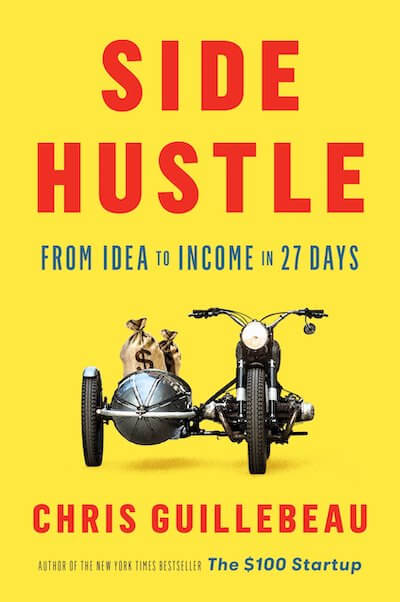
Prefer the print book? Buy on Amazon
As an Amazon Associate, Sumizeit earns from qualifying purchases.
Side Hustle Book Summary
This Side Hustle Book Summary covers the key ideas, lessons, and takeaways in about 20 minutes.
Short Description:
Build career capital through skill and strategic long-term p
Helps with these goals
Want the complete 20-minute summary?
- Full structured summary
- Video Summary
- Podcast Summary
- Audio summary
- Key takeaways
- Exercises
- Quiz
- Highlights and notes
- Ask the book with AI
Want a Free Weekly Read?
Get a free summary every week straight to your mailbox.
Preview the Side Hustle book summary
Below is a preview of Sumizeit’s comprehensive human-written summary of Side Hustle by Chris Guillebeau. The full summary is 15-20 minutes long and covers the book’s key ideas in text, audio, visual, and video formats. Unlock the full 20 Minute Summary
Sometimes it is hard to be your own boss, and not everyone can thrive and succeed away from their day job. At the same time, if you have an entrepreneurial spirit, but want to keep your primary job, it may be time to try a side hustle.
In Side Hustle: From Idea to Income in 27 Days, Chris Guillebeau shows readers what it takes to have a successful side business that brings in extra income, while also offering the dos and don’ts for a successful side hustle.
You will learn how to take a hobby that some might consider to be obscure and earn money with it. You’ll learn how to prevent making simple business mistakes with some easy math, and even what the Girl Scouts have to teach us all about business.
Side hustles are also a form of job freedom that anyone can achieve
The definition of a side hustle is to have a business venture that is profitable, while also working in conjunction with someone’s paid employment or career. In general, a side hustle is something in which the bare minimum is needed in terms of time and money spent, as well as effort, to bring in extra income.
Having a side hustle means that you have different sources to bring in money. This also helps if you are fired or quit full time because there is still money coming in to pay the bills.
When starting a side hustle, there is no reason to be overwhelmed, as you really should only be starting with an hour per day. Anything over that is likely wasting time and energy. And you don’t need a degree to get a side hustle going.
This is your personal business that you are running, so you don’t answer to anyone else.
With careful consideration and math skills, you can come up with strong ideas that in turn become a solid side hustle
In order to get started figuring out your ideal side hustle, it’s important to determine if your idea has three specific qualities. You must determine if your potential idea is motivating for you if it can be done in a short amount of time, and also if it can actually make you money.
If the answer to those three questions is yes, then you have an idea that is feasible.
In order to determine if your idea can make money, you should be able to describe it to potential customers in two sentences and see if they are interested in your proposal. If your idea is persuasive enough for people to say yes to, then you have something that could in fact make you extra money.
Once you determine whether or not you have an idea that works as a side hustle, it is time to do the math to determine how much money you can make versus how much you need.
Simply put, you should be spending less money on your side hustle than you bring in (otherwise you…
Want the complete 20-minute summary?
- Full structured summary
- Video Summary
- Podcast Summary
- Audio summary
- Key takeaways
- Exercises
- Quiz
- Highlights and notes
- Ask the book with AI
Who should read Side Hustle?
Side Hustle is ideal for anyone with an entrepreneurial spirit who wants to earn extra income without leaving their day job. Whether you're looking to monetize a hobby, build financial security, or test a business idea with minimal risk, this book shows you how to launch a profitable venture in just 27 days. You don't need business experience, a large investment, or even a degree—just an hour a day and a willingness to act.
Why does Side Hustle matter?
In today's economy, relying on a single income source is riskier than ever, and Side Hustle offers a practical path to financial independence and job freedom without the all-or-nothing leap of entrepreneurship. Chris Guillebeau's proven framework removes the overwhelm from starting a business, making it accessible to millions of people who want more control over their finances and their future. The book cuts through startup mythology to show that you can turn almost any skill or passion into real income—quickly and affordably.
What are the key themes in Side Hustle?
- Financial independence through multiple income streams
- Rapid validation and launch methodology
- Lean startup principles applied to side projects
- Building a support network of mentors and customers
- Strategic pricing and customer value proposition
- Data-driven optimization and growth decisions
- Minimal time and resource requirements for success
Want the complete 20-minute summary?
- Full structured summary
- Video Summary
- Podcast Summary
- Audio summary
- Key takeaways
- Exercises
- Quiz
- Highlights and notes
- Ask the book with AI
How can you apply ideas from Side Hustle?
- Create a two-sentence pitch for your business idea and test it with 10 potential customers to validate real interest before launching
- Set up the four essential resources (website, social media, scheduling tool, payment system) using free or low-cost platforms within your first week
- Build a customer feedback group including mentors, influencers, and ideal customers who will provide honest input and help promote your business
- Calculate your profit margins using both conservative and optimistic scenarios to understand realistic income expectations and set appropriate pricing
- Implement a weekly metric review to track time spent, revenue earned, and growth indicators to identify what's working and what to abandon
- Identify one hour each day that you can consistently dedicate to your side hustle without it interfering with your primary job or personal life
- Test different price points and offers within your first month to find the optimal balance between customer demand and profit margin
What common mistakes do readers make with Side Hustle?
- Spending too much time planning and researching instead of launching and testing your actual business idea
- Trying to perfect every aspect of your side hustle rather than identifying what works and amplifying it
- Overcomplicating your offer with unclear messaging instead of using a simple pitch, price, and promise structure
- Attempting to serve everyone instead of focusing on ideal customers who are most likely to buy
- Investing in expensive tools and resources before proving the business model actually generates profit
Sumizeit Exercises Apply what you've learned
Turn ideas from Side Hustle into action with a short guided reflection: identify the biggest takeaway, connect it to your life, and commit to one step you can take in the next 24 hours.
What is the expert analysis of Side Hustle?
Overview
Side Hustle: From Idea to Income in 27 Days is authored by Chris Guillebeau, a prolific writer and entrepreneur known for his focus on unconventional paths to success. Guillebeau’s reputation is anchored by his prior bestselling works and his influential blog, which collectively emphasize autonomy, creativity, and practical entrepreneurship. This book stands out by offering a structured, accessible roadmap for individuals seeking to supplement their income without abandoning their primary employment. Its significance lies in addressing a growing cultural and economic trend: the rise of the gig economy and the desire for financial diversification in uncertain times.
Core Thesis
Guillebeau’s central argument is that anyone can launch a profitable side hustle within a short timeframe—specifically 27 days—by applying focused effort, strategic planning, and minimal resources. He posits that side hustles are not only a means of additional income but also a form of job freedom that mitigates risk associated with traditional employment. The book advocates for starting small, leveraging personal motivation, and using simple financial calculations to validate ideas. Ultimately, the thesis promotes entrepreneurial action grounded in pragmatism and iterative learning, emphasizing that success comes from doing more of what works and abandoning what does not.
Strengths
- Practical Framework: The book excels in breaking down the complex process of starting a business into manageable, actionable steps. This demystification makes entrepreneurship accessible to novices.
- Emphasis on Feasibility: Guillebeau’s insistence on validating ideas through motivation, time constraints, and profitability criteria ensures readers focus on realistic ventures rather than chasing illusory dreams.
- Resource Orientation: The detailed guidance on essential tools—such as websites, social media, scheduling, and payment systems—grounds the reader’s efforts in tangible infrastructure.
- Psychological Insight: The encouragement to build a supportive network of mentors, supporters, influencers, and customers reflects an understanding of the social dynamics critical to entrepreneurial success.
- Conciseness and Urgency: The 27-day timeline creates a sense of immediacy that can motivate readers to act decisively rather than procrastinate.
Critiques & Counterarguments
- Oversimplification of Complexity: The promise of launching a profitable side hustle in under a month may underestimate the challenges of market research, customer acquisition, and sustainable growth, which often require longer time horizons.
- Limited Attention to Structural Barriers: The book largely assumes access to basic resources and networks, potentially overlooking socioeconomic factors that constrain entrepreneurial opportunities for marginalized groups.
- Evidence and Case Studies: While practical, the book could benefit from more robust empirical data or diverse case studies illustrating both successes and failures to provide a balanced perspective.
- Competing Perspectives: Contrasting schools of thought, such as those advocating for deep specialization and long-term brand building, might argue that rapid side hustles risk superficiality and burnout.
- Market Saturation and Gig Economy Critique: Emerging research critiques the gig economy for precarious labor conditions and limited upward mobility, suggesting that side hustles may not always translate into meaningful financial security or freedom.
Who Should Read This
This book is ideally suited for aspiring entrepreneurs, freelancers, and professionals seeking to diversify their income streams without relinquishing their primary employment. It appeals to readers who value actionable advice, time efficiency, and low-risk experimentation. Additionally, individuals interested in personal development through entrepreneurial ventures will find Guillebeau’s approach motivating and accessible. However, those looking for in-depth business strategy, comprehensive market analysis, or systemic critiques of gig work may need to supplement this book with more specialized literature.
Frequently asked questions about the Side Hustle book summary
What is Side Hustle about?
Side Hustle: From Idea to Income in 27 Days by Chris Guillebeau is a practical guide for launching a profitable business venture alongside your day job without quitting or making large investments. The book provides a proven 27-day framework for validating ideas, pricing services, building customer relationships, and scaling what works—all while spending just one hour per day on your new business.
Who should read Side Hustle?
Side Hustle is ideal for anyone with an entrepreneurial mindset who wants to earn extra income without leaving their job, as well as people seeking financial security through multiple income streams. It's also perfect for those who have a skill or passion they want to monetize but are intimidated by the risk of full-time entrepreneurship. No prior business experience is required.
What are the main takeaways from Side Hustle?
The main takeaways are: you can validate a profitable business idea in just 27 days using a simple three-criterion test, financial success requires clear pricing and customer messaging (pitch, price, and promise), and rapid growth comes from doing more of what works and abandoning what doesn't. You also need minimal upfront resources—just a website, social media presence, scheduling tool, and payment system—plus a network of supporters, mentors, influencers, and ideal customers to amplify your reach.
How much time do I need to dedicate to a side hustle?
Chris Guillebeau recommends starting with just one hour per day, which is enough to validate and grow a profitable business without overwhelming your schedule. Anything more than that typically leads to diminishing returns and burnout, so the framework emphasizes efficiency and focus rather than time investment.
Do I need money or business experience to start a side hustle?
No—Side Hustle emphasizes that you don't need significant capital, formal education, or prior business experience to succeed. The book shows how to validate ideas cheaply, use free or low-cost tools, and leverage customer networks to grow. Your ability to serve customers and execute quickly matters far more than credentials or cash reserves.
How do I know if my side hustle idea is worth pursuing?
Test your idea against three criteria: Is it motivating for you? Can you execute it quickly? Can it actually make money? Additionally, pitch your idea in two sentences to real potential customers and gauge their genuine interest. If they're not convinced, refine before investing further time or resources.
What metrics should I track to know if my side hustle is working?
The primary metric is profit—are you making money? If not, your business model needs to change. If you're making some money but lacking traction, track time spent, revenue earned, and growth rate to identify which activities are most profitable. Then do more of what works and stop doing what doesn't.
Can I really start making money in 27 days?
Yes—Side Hustle provides a structured 27-day framework designed to move you from idea to actual income. The timeline is aggressive but realistic because it focuses on validation and execution rather than perfectionism. Most people who follow the framework will have their first customers and revenue within the month, though scaling takes longer.
About Sumizeit
Sumizeit is a profitable Scomy LLC company based in Miami, Florida. Our founders, Clemens Raemy and Weina Scott, are successful entrepreneurs with several exits. Sumizeit is a popular book summary app / micro learning app used by busy professionals and entrepreneurs with over 2,500 non-fiction book summaries and 10,000 podcast summaries in text, audio, visual, podcast, and video format. We also have stellar retention tools to make ideas stick - such as flashcards with spaced repetition, quizzes, streaks, highlighting and notes, daily challenges, riddles, mini-courses, meditation, and more. You won't only learn the idea, but also remember it. Over 90% of our users change their habits with Sumizeit.
Upgrade Now
Want the complete 20-minute summary?
- Full structured summary
- Video Summary
- Podcast Summary
- Audio summary
- Key takeaways
- Exercises
- Quiz
- Highlights and notes
- Ask the book with AI
Here's why readers love Sumizeit
Join thousands of learners getting smarter every day
"Great experience. Detailed summaries. Loved the gamification feature. Makes learning fun. Good customer service. I recommend Sumizeit to anyone. You'll learn a lot."
"I always felt busy but still wanting to keep up with the book discussion in my friend group. This was a great supplement to help me keep reading the books I find fun while keeping up with important books."
"I love this website. Instead of scrolling social media, I find myself learning a lot. I use it everyday. I recommend this app for anyone who is too busy and wants to get up to speed with their favorite books."
Side Hustle Book Summary PDF
Looking for a Side Hustle Book Summary PDF you can save and revisit offline? Our Side Hustle Book Summary PDF captures the book’s core ideas in a clean, printable format — the key frameworks, takeaways, and structure without the fluff. Download the Side Hustle Book Summary PDF when you want a reference you can annotate, share with your team, or review on the go. Get your Side Hustle Book Summary PDF from the download page below.
Download Side Hustle Book Summary PDFPeople also liked these summaries
Readers who explored Side Hustle often enjoyed these titles next.


Want the complete 20-minute summary?
- Full structured summary
- Video Summary
- Podcast Summary
- Audio summary
- Key takeaways
- Exercises
- Quiz
- Highlights and notes
- Ask the book with AI
Featured Book Titles
Popular Book Summaries at sumizeit, leading book summary app