
Question 1 of 10


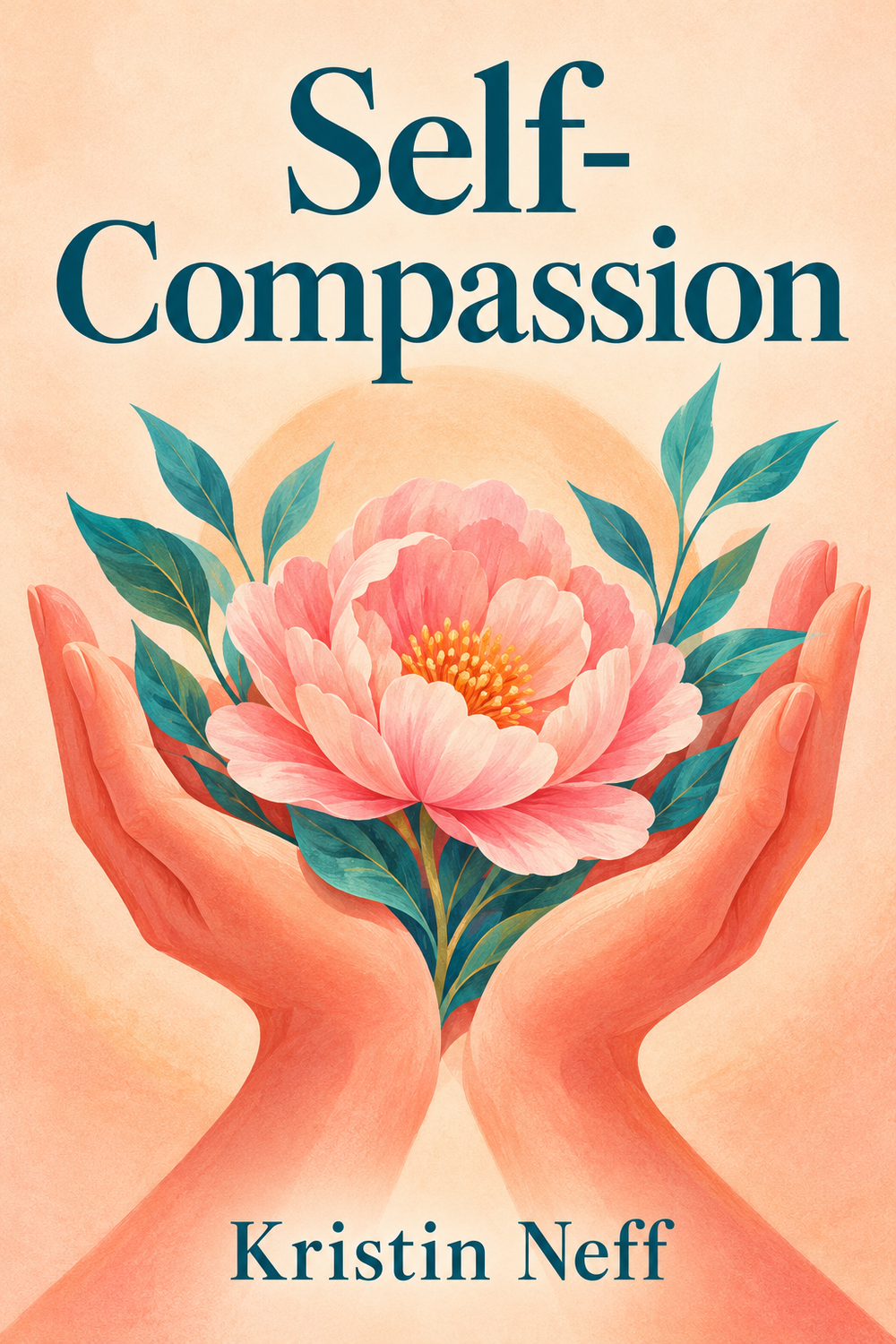
Prefer the print book? Buy on Amazon
As an Amazon Associate, Sumizeit earns from qualifying purchases.
Book Summary
Self-Compassion Book Summary
This Self-Compassion Book Summary covers the key ideas, lessons, and takeaways in about 20 minutes.
Short Description:
A kind, practical guide to treating your own pain and failures with care
Pain and failure are unavoidable, but how you treat yourself while they're happening is up to you. Neff says the answer is to meet your suffering as it is, comfort yourself like you would a friend, and remember that everyone struggles the same way. That mix builds motivation without fear, a sense of worth that doesn't swing with every win or loss, and less anxiety and depression. It also makes you more patient and present with your partner and your kids.
Helps with these goals
Preview the Self-Compassion book summary
Below is a preview of Sumizeit’s comprehensive human-written summary of Self-Compassion by Kristin Neff. The full summary is 15-20 minutes long and covers the book’s key ideas in text, audio, visual, and video formats. Unlock the full 20 Minute Summary
Kristin Neff says you can get through the hardest moments of life by treating your own pain and failures the way you'd treat someone you love. That means accepting three things. You make mistakes and you suffer, like every other human. You deserve comfort and care when that happens. And your suffering links you to other people instead of cutting you off from them. When you live this way, you stop spiraling in your own misery. You see that other people hurt too, and you feel less alone and less stuck.
Neff doesn't define suffering in a formal way. She uses the word for the emotional pain that comes from being imperfect, making mistakes, failing, and then beating yourself up about it.
What self compassion is
Self compassion is a mindset and a habit. You give yourself the same care you'd give a close friend who just had a rough day. It rests on three practices. Be kind to yourself instead of harsh. Remember that suffering is part of being human. And see your pain as it really is, without blowing it up or waving it away.
When you change how you relate to your pain, you create a calm, safe place to think about it. From there you can deal with problems with a clearer head instead of reacting on raw emotion. You can also open up to what other people are going through, and you can notice good things about yourself and the world around you.
Appreciating yourself too
Neff says the other half of being kind to yourself in hard times is enjoying what's good in your life. When you own your strengths and your joy, you tap into something universal, the same way you do when you tend to your pain. When you shrink or dismiss your good qualities, you build a wall between you and everyone else.
You can practice by setting an intention to notice what you like about yourself. If that feels awkward or embarrassing, remind yourself that everyone has good qualities, and that celebrating them gives you something to share with others.
Many people struggle with this because of fear. Some worry that if they talk about good things, something bad will come along and wreck them. Others worry that if they admit their successes, people will get jealous and pull away.
Practice one, see your suffering as it is
When you see your pain exactly as it is, without amplifying it, ignoring it, or shrinking it, you can respond in a way that actually helps. Neff points out that suffering can't be avoided. If you simply admit it's a normal, if unwelcome, part of life, you can look at it calmly, soothe yourself, and make decisions without panic.
This is harder than it sounds, because most of us fixate on the flaw or failure that caused the pain. The fixation takes over and the actual hurt goes untreated. Say someone tells you you're ugly.
Want the complete 20-minute summary?
- Full structured summary
- Video Summary
- Podcast Summary
- Audio summary
- Key takeaways
- Exercises
- Quiz
- Highlights and notes
- Ask the book with AI
Who should read Self-Compassion?
Self-Compassion is for anyone struggling with self-criticism, perfectionism, or the weight of their own failures and imperfections. Whether you're battling anxiety, depression, or simply harsh inner dialogue, this book offers a framework for treating yourself with the same kindness you'd show a close friend. It's especially valuable for parents, partners, and high-achievers who want to break cycles of self-judgment and build healthier relationships.
Why does Self-Compassion matter?
In a culture that prizes achievement and standing out, most people spend their lives judging themselves harshly—which actually undermines motivation, wellbeing, and connection to others. Kristin Neff's research-backed approach to self-compassion reveals that treating yourself kindly isn't self-indulgent; it's the foundation for resilience, mental health, and genuine success. In today's high-pressure world, learning to comfort yourself through difficulty instead of amplifying your pain is both revolutionary and necessary.
What are the key themes in Self-Compassion?
- Self-compassion as an alternative to self-criticism and perfectionism
- The three pillars of self-compassion: mindfulness, self-kindness, and common humanity
- Why self-worth should be unconditional, not tied to achievement or external validation
- The biological and psychological roots of self-criticism
- Self-compassion as a path to motivation, mental health, and stronger relationships
How can you apply ideas from Self-Compassion?
- When you make a mistake or face failure, pause and talk to yourself like a compassionate friend would—acknowledging the difficulty and offering comfort instead of self-criticism.
- Practice noticing moments of pain or shame in your body (clenched jaw, tight chest) and respond with gentle touch or soothing words to activate your calming nervous system.
- During conflict with a partner, take a moment alone to validate and comfort your own feelings before returning to the conversation with greater clarity and patience.
- When correcting your child, focus your feedback on their behavior, not their character, and remind them that mistakes are how humans learn, modeling self-compassion in action.
- Intentionally acknowledge and celebrate your strengths, talents, and joys instead of downplaying them, recognizing that owning the good in yourself connects you to others' experiences.
What common mistakes do readers make with Self-Compassion?
- Believing that self-compassion will make you lazy or unmotivated, when research shows it actually builds steadier drive and higher goal achievement than self-criticism.
- Confusing self-compassion with self-esteem or self-pity; self-compassion is balanced, internal, and grounded in shared humanity, not inflated ego or wallowing in victimhood.
- Expecting your negative self-talk to disappear, when the real work is learning not to feed it—noticing the critic without believing or acting on what it says.
- Dismissing your own good qualities as arrogance or tempting fate, when in fact owning your strengths and joy is as important to your wellbeing and connection as tending to your pain.
Sumizeit Exercises Apply what you've learned
Turn ideas from Self-Compassion into action with a short guided reflection: identify the biggest takeaway, connect it to your life, and commit to one step you can take in the next 24 hours.
What is the expert analysis of Self-Compassion?
Overview
Self-Compassion by Kristin Neff stands as a seminal work in the intersection of psychology, mindfulness, and self-improvement literature. Neff, an Associate Professor of Educational Psychology at the University of Texas at Austin, is widely recognized as a pioneer in self-compassion research. Her academic rigor combined with accessible prose has made this book a foundational text for understanding how kindness toward oneself can transform emotional resilience and well-being. Published in 2015, Self-Compassion synthesizes scientific research, Buddhist psychology, and practical exercises, establishing a new paradigm for addressing human suffering and self-criticism.
Core Thesis
Neff’s central argument is that cultivating self-compassion—treating oneself with the same kindness and understanding one would offer a dear friend—provides a powerful antidote to the pervasive self-criticism and isolation that exacerbate emotional pain. She articulates three core components of self-compassion: recognizing suffering as a universal human experience, responding to oneself with kindness rather than harsh judgment, and maintaining mindful awareness of one’s pain without exaggeration or avoidance. This triad fosters a stable sense of self-worth, motivates growth without fear, and mitigates anxiety and depression by creating a calm, supportive internal environment.
Strengths
- Integration of Research and Practice: Neff masterfully bridges empirical findings with actionable practices, making complex psychological concepts accessible and applicable to a broad audience.
- Humanizing Suffering: By framing pain and failure as shared human experiences, the book dismantles isolation and shame, offering a compassionate lens that resonates deeply.
- Clear, Practical Guidance: The three core practices—mindful awareness, self-kindness, and common humanity—are articulated with vivid examples and exercises that encourage immediate application.
- Holistic Impact: Neff extends the benefits of self-compassion beyond the individual, addressing its positive effects on interpersonal relationships, parenting, and emotional regulation.
- Challenging Cultural Norms: The critique of Western individualism and perfectionism enriches the discourse by situating self-compassion as a countercultural yet essential approach to well-being.
Critiques & Counterarguments
- Potential Oversimplification of Complex Psychopathologies: While self-compassion is beneficial, the book may understate the complexity of clinical conditions such as severe depression or trauma, where additional therapeutic interventions are often necessary.
- Limited Engagement with Opposing Views: Neff’s portrayal of self-esteem as unstable and overhyped could benefit from a more nuanced discussion of research supporting the adaptive functions of healthy self-esteem and its interplay with self-compassion.
- Cultural Specificity: The emphasis on Western individualism as a barrier to self-compassion might overlook cultural variations where collective identities and self-criticism have different social meanings and consequences.
- Risk of Misinterpretation: Some critics argue that self-compassion could be misconstrued as self-indulgence or complacency, despite Neff’s efforts to dispel these myths; real-world application requires careful guidance to avoid such pitfalls.
- Empirical Evidence Scope: Although Neff cites research supporting self-compassion’s benefits, ongoing studies continue to refine understanding of its mechanisms, and some findings suggest that self-compassion’s effects may vary depending on personality traits and situational factors.
Who Should Read This
Self-Compassion is essential reading for psychologists, therapists, and mental health professionals seeking evidence-based strategies to enhance client resilience. It also appeals to educators, parents, and individuals interested in personal growth, mindfulness, and emotional regulation. Those struggling with perfectionism, chronic self-criticism, or feelings of isolation will find profound insights and practical tools. Moreover, the book offers valuable perspectives for anyone interested in the philosophical and psychological dimensions of self-acceptance and human connectedness, making it a rich resource for scholars and practitioners across disciplines.
Discussion questions for Self-Compassion Short questions you can actually use in a conversation
Frequently asked questions about the Self-Compassion book summary
What is Self-Compassion about?
Self-Compassion by Kristin Neff is about learning to treat yourself with the same kindness and care you'd offer a close friend during difficult times. The book presents three core practices: seeing your pain clearly without amplifying it, comforting yourself actively, and recognizing that suffering is a universal human experience. Neff shows how self-compassion builds motivation, mental health, resilience, and stronger relationships—and why it's far more effective than harsh self-criticism.
Who should read Self-Compassion?
Self-Compassion is ideal for anyone struggling with self-criticism, perfectionism, anxiety, depression, or low self-worth. It's especially valuable for parents, partners, high-achievers, and people who want to break cycles of self-judgment and build healthier relationships. Whether you're dealing with a specific struggle or simply want to understand why you're hard on yourself and how to change that pattern, this book offers both research and practical guidance.
What are the main takeaways from Self-Compassion?
The main takeaways are that pain and failure are unavoidable, but how you treat yourself during those moments is entirely within your control. By meeting your suffering with kindness, seeing it clearly as part of the shared human experience, and actively comforting yourself, you build steady motivation, unconditional self-worth, lower anxiety and depression, and become a more present partner and parent. Self-compassion is far more effective than the self-criticism most people default to.
How is self-compassion different from self-esteem?
Self-esteem depends on external outcomes—how you stack up against others or whether you achieve specific goals—so it rises and falls unpredictably. Self-compassion, by contrast, is an unconditional inner stance based on kindness and shared humanity that remains stable regardless of wins or losses. Kristin Neff argues that self-compassion is psychologically healthier and more reliable than self-esteem because it doesn't hinge on circumstances you can't always control.
What are the three pillars of self-compassion?
The three pillars are self-kindness (comforting yourself instead of being harsh), mindfulness (seeing your pain exactly as it is, without amplifying or ignoring it), and common humanity (recognizing that all humans suffer and struggle, which connects you to everyone rather than isolating you). Together, these three practices create a balanced, grounded approach to handling difficulty.
Why does Neff say self-compassion builds better motivation than self-criticism?
Self-criticism works through fear and anxiety, which actually scatter your focus and can lead to self-sabotage. Self-compassion, by contrast, creates a calm, safe mental space where you can set high standards, make concrete plans, and bounce back from setbacks because you're driven by genuine desire for growth and wellbeing, not terror of failure. Research shows self-compassionate people are more likely to reach their goals and treat failures as learning opportunities.
How can I practice self-compassion when I make a mistake?
When you make a mistake, pause and notice your pain clearly without exaggerating it. Then actively comfort yourself using words and gestures you'd offer a friend—acknowledge that it's hard and that mistakes are human, soothe yourself with kind touch or words, and remind yourself that everyone fails. This shifts you from self-attack to self-support, making it easier to learn from the mistake and move forward.
Does self-compassion make you selfish or indulgent?
No. Self-compassion actually makes you more caring toward others because when you can meet your own emotional needs, you're less needy and less of a drain on those around you. Kristin Neff shows that self-compassionate people are better partners, parents, and community members because they can stay calm, listen well, and respond thoughtfully instead of reacting from a place of pain or fear.
About Sumizeit
Sumizeit is a profitable Scomy LLC company based in Miami, Florida. Our founders, Clemens Raemy and Weina Scott, are successful entrepreneurs with several exits. Sumizeit is a popular book summary app / micro learning app used by busy professionals and entrepreneurs with over 2,500 non-fiction book summaries and 10,000 podcast summaries in text, audio, visual, podcast, and video format. We also have stellar retention tools to make ideas stick - such as flashcards with spaced repetition, quizzes, streaks, highlighting and notes, daily challenges, riddles, mini-courses, meditation, and more. You won't only learn the idea, but also remember it. Over 90% of our users change their habits with Sumizeit.
Upgrade Now
Here's why readers love Sumizeit
Join thousands of learners getting smarter every day
"Great experience. Detailed summaries. Loved the gamification feature. Makes learning fun. Good customer service. I recommend Sumizeit to anyone. You'll learn a lot."
"I always felt busy but still wanting to keep up with the book discussion in my friend group. This was a great supplement to help me keep reading the books I find fun while keeping up with important books."
"I love this website. Instead of scrolling social media, I find myself learning a lot. I use it everyday. I recommend this app for anyone who is too busy and wants to get up to speed with their favorite books."
Self-Compassion Book Summary PDF
Looking for a Self-Compassion Book Summary PDF you can save and revisit offline? Our Self-Compassion Book Summary PDF captures the book’s core ideas in a clean, printable format — the key frameworks, takeaways, and structure without the fluff. Download the Self-Compassion Book Summary PDF when you want a reference you can annotate, share with your team, or review on the go. Get your Self-Compassion Book Summary PDF from the download page below.
Download Self-Compassion Book Summary PDFPeople also liked these summaries
Readers who explored Self-Compassion often enjoyed these titles next.

Ready to read the whole thing?
- Full structured summary
- Video Summary
- Podcast Summary
- Audio summary
- Key takeaways
- Exercises
- Quiz
- Highlights and notes
- Ask the book with AI
Featured Book Titles
Popular Book Summaries at sumizeit, leading book summary app
Atomic Habits Book Summary Rich Dad Poor Dad Book Summary The Four Agreements Book Summary The 48 Laws of Power Book Summary When Breath Becomes Air Book Summary Think and Grow Rich Book Summary