


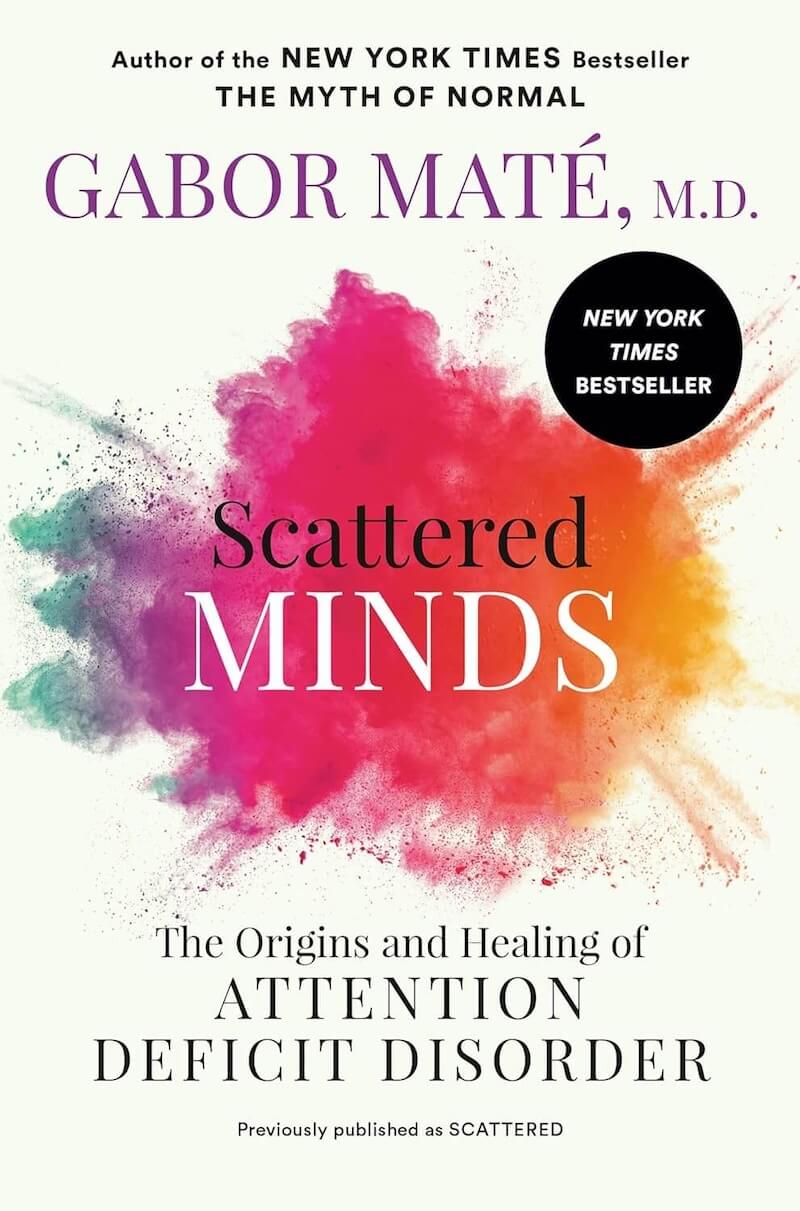
Prefer the print book? Buy on Amazon
As an Amazon Associate, Sumizeit earns from qualifying purchases.
Scattered Minds Book Summary
This Scattered Minds Book Summary covers the key ideas, lessons, and takeaways in about 20 minutes.
Short Description:
Scattered Minds reframes ADD as developmental and treatable through connection.
This reframing is not just theoretical; it has practical implications. If ADD is rooted partly in early disconnection and stress, then healing must involve cultivating safety, connection, and emotional understanding in the present. For children, that means parents and caregivers who understand the child’s brain as sensitive and in need of attuned guidance rather than harsh discipline. For adults, it means reclaiming their history with compassion, building self-awareness, and gradually strengthening the capacities that were underdeveloped—attention, emotional regulation, organization—through conscious practice and supportive relationships.
The book’s deeper takeaway is profoundly hopeful: while we cannot undo the past or change our genes, our brains remain plastic throughout life. With patience and commitment, new patterns can be formed. Individuals with ADD can move from a life dominated by chaos, shame, and unfinished projects to one where their sensitivity and creativity are harnessed in meaningful ways. Healing does not mean becoming a different person; it means becoming more fully oneself, no longer scattered by old defenses but grounded in understanding and connection.
Helps with these goals
Want a Free Weekly Read?
Get a free summary every week straight to your mailbox.
Preview the Scattered Minds book summary
Below is a preview of Sumizeit’s comprehensive human-written summary of Scattered Minds by Gabor Maté. The full summary is 15-20 minutes long and covers the book’s key ideas in text, audio, visual, and video formats. Unlock the full 20 Minute Summary
In Scattered Minds: The Origins and Healing of Attention Deficit Disorder, physician Gabor Maté argues that what we call ADD (and by extension many presentations of ADHD) is not simply a genetic brain defect or a “discipline problem.” Instead, he presents ADD as a complex, developmental response to early-life stress, emotional disconnection, and the broader pressures of modern society. The book blends scientific research, clinical experience, and Maté’s own life story as a person with ADD to offer a new way of understanding both the origins and the healing of attention difficulties.
Rather than seeing people with ADD as broken or lazy, Maté describes ADD as a coping mechanism that once protected a child’s emotional life but later becomes a barrier to functioning. The book explores how prenatal stress, early parenting, family dynamics, and cultural conditions shape the developing brain, and how this leads to problems with attention, impulse control, and emotional regulation. Equally important, he emphasizes that ADD is not a life sentence: with awareness, compassion, and the right environment, significant healing and growth are possible.
Understanding ADD: More Than Just Inattention and Hyperactivity
Maté begins by clarifying what ADD actually is—and what it isn’t. He explains that ADD is best understood as a cluster of core traits, not just a checklist of symptoms. These include:
Difficulty sustaining attention, especially on tasks that are not intrinsically interesting
Tendency to be easily distracted by external stimuli or internal thoughts
Poor impulse control, leading to interruptions, blurting, or rash decisions
Struggles with executive functions: planning, organizing, following through
Emotional volatility, with quick swings from calm to upset
Chronic sense of underachievement and self-criticism
He stresses that ADD exists on a spectrum. Many people have some traits without meeting diagnostic criteria; others are profoundly impaired. ADD can show up differently across individuals and across the lifespan—quiet daydreamers, restless kids, high-achieving but chaotic adults, seemingly “lazy” students who are actually overwhelmed.
Maté also dismantles common myths: ADD is not simply bad parenting, nor is it purely genetic. It’s not a moral failing, nor is it a trivial label for normal childhood behavior. It is a real condition rooted in the development of the brain’s attention and self-regulation systems—but those systems are shaped by both biology and environment.
The Brain and Attention: How Early Experience Shapes Neural Circuits
Central to Maté’s argument is the idea of neurodevelopment: the brain is not finished at birth. Its structure and function are sculpted by early experiences, especially in the first years of life when neural circuits are forming at a rapid pace. The systems involved in attention, emotion regulation, and impulse control—mainly in the prefrontal cortex and related networks—are highly sensitive to the relational environment around the child.
When a child consistently experiences warmth, attuned responsiveness, and emotional safety, the brain circuits associated with focus, self-soothing, and flexible thinking have a better chance to develop optimally. When the environment is stressful, chaotic, or emotionally unresponsive, the child’s brain adapts for survival.
Want the complete 20-minute summary?
- Full structured summary
- Video Summary
- Podcast Summary
- Audio summary
- Key takeaways
- Exercises
- Quiz
- Highlights and notes
- Ask the book with AI
Who should read Scattered Minds?
This book is essential for parents, educators, and healthcare providers who want to understand ADD/ADHD beyond surface-level symptoms and labels. It's also for adults with ADD seeking to understand their struggles with compassion rather than shame, and for anyone interested in how early relationships and stress shape brain development.
Why does Scattered Minds matter?
Scattered Minds reframes ADD not as a moral failing or pure genetic defect, but as an understandable response to early stress and emotional disconnection—a perspective that opens pathways to genuine healing rather than just symptom management. In a world where ADD diagnoses are rising rapidly and medication is often the default response, Maté's integrative approach offers families and individuals a more hopeful and holistic understanding of attention difficulties.
What are the key themes in Scattered Minds?
- ADD as a developmental response to early stress and attachment disruption
- The interplay between genetics and environment in shaping attention and regulation
- Shame, sensitivity, and the emotional landscape underlying ADD symptoms
- Healing through understanding, self-compassion, and relational attunement
- Societal factors and cultural pressures that contribute to rising ADD rates
- The protective function of 'tuning out' as a survival mechanism
- Strengths and gifts often present in people with ADD when properly supported
How can you apply ideas from Scattered Minds?
- If you're a parent, prioritize emotional attunement with your child: notice and name their emotions, respond calmly, and show genuine interest in their inner world rather than only focusing on fixing behavior.
- Reduce overstimulation and chaos at home by simplifying schedules, creating predictable routines, and building in calm, unstructured time so your child's nervous system can settle.
- Adults with ADD can build external structure using tools like detailed planners, time-blocking, reminders, and accountability partners to support executive functions that may not yet be fully reliable.
- Practice mindfulness or meditation regularly to strengthen your brain's capacity to notice when you're about to tune out and to choose present-moment awareness, even when it feels uncomfortable.
- Examine your own stress, trauma, and unmet needs as a parent or caregiver, and seek support (therapy, coaching, community) for yourself—this indirectly benefits those around you by helping you become more regulated and present.
- When considering medication, view it as one tool within a comprehensive approach that also includes therapy, relational healing, lifestyle changes, and environmental modifications rather than a stand-alone solution.
- Choose work and relationships that align with your strengths and offer psychological safety and flexibility rather than forcing yourself into rigid environments that demand constant compliance and suppression of your natural style.
What common mistakes do readers make with Scattered Minds?
- Viewing ADD as purely genetic or purely environmental, rather than understanding how genes create vulnerabilities that are activated or protected by early relational and environmental conditions.
- Relying entirely on medication to solve ADD without addressing the underlying emotional disconnection, lack of structure, or skill deficits that often contribute significantly to struggles.
- Blaming parents or assuming poor parenting causes ADD, rather than recognizing that parents themselves are often stressed, unsupported, and sometimes carrying their own unresolved trauma or undiagnosed ADD.
- Dismissing or minimizing the emotional and shame-based dimensions of ADD, treating it as only a cognitive or behavioral problem when healing must address the deep sense of inadequacy and self-criticism.
- Expecting rapid, linear progress in healing rather than accepting that change happens gradually, with setbacks and regressions, requiring persistent self-compassion over months and years.
Sumizeit Exercises Apply what you've learned
Turn ideas from Scattered Minds into action with a short guided reflection: identify the biggest takeaway, connect it to your life, and commit to one step you can take in the next 24 hours.
What is the expert analysis of Scattered Minds?
Overview
Scattered Minds: The Origins and Healing of Attention Deficit Disorder is a seminal work by Hungarian-Canadian physician Gabor Maté, whose expertise spans addiction, trauma, and mind–body health. Maté challenges conventional biomedical and behavioral models of Attention Deficit Disorder (ADD), offering a nuanced developmental and relational perspective that situates ADD within the broader contexts of early emotional experience and societal pressures. Drawing from clinical practice, scientific research, and personal narrative, Maté reframes ADD as a complex adaptive response rather than a fixed neurological defect, making this book a significant contribution to the fields of psychology, psychiatry, and developmental neuroscience.
Core Thesis
Maté’s central argument is that ADD is not merely a genetic or disciplinary problem but a developmental coping mechanism shaped by early-life stress, emotional disconnection, and environmental adversity. He posits that the brain’s attention and self-regulation systems are highly sensitive to relational and cultural contexts, especially during critical periods of neurodevelopment. When children experience chronic stress or insecure attachment, their brains adapt by “tuning out” as a protective strategy, which manifests as attention difficulties, impulsivity, and emotional volatility. Importantly, Maté emphasizes that these patterns are not immutable defects but malleable outcomes that can be healed through compassionate understanding, attuned relationships, and supportive environments.
Strengths
- Integrative Approach: Maté skillfully integrates scientific findings with clinical insights and personal experience, offering a holistic understanding of ADD that transcends reductionist models.
- Emphasis on Emotional and Relational Dimensions: The book foregrounds the emotional landscape of ADD—shame, sensitivity, and loneliness—highlighting often overlooked aspects that influence symptom expression and healing potential.
- Compassionate Reframing: By reframing ADD as an adaptive response rather than a moral failing or static disorder, Maté reduces stigma and fosters empathy among caregivers, educators, and individuals with ADD.
- Practical Guidance: The book offers actionable advice for parents and adults, emphasizing emotional attunement, environmental adjustments, and self-compassion as key elements of healing.
- Societal Contextualization: Maté situates ADD within modern cultural dynamics, addressing how societal stressors contribute to developmental challenges, thus broadening the discourse beyond individual pathology.
Critiques & Counterarguments
- Evidence Base and Causality: While Maté compellingly links early stress and attachment disruptions to ADD, some critics argue that the causal pathways remain insufficiently substantiated by longitudinal, controlled studies. The complexity of neurodevelopmental disorders demands cautious interpretation of correlational data.
- Genetic Contributions Underplayed: Although Maté acknowledges genetic predispositions, his emphasis on environmental factors might underrepresent the robust heritability estimates and molecular genetic findings that highlight biological underpinnings of ADD/ADHD.
- Potential Oversimplification of Parenting Role: Despite his efforts to avoid parental blame, the strong focus on early relational environments could inadvertently imply parental responsibility for the disorder, a concern raised by some in the clinical community.
- Pharmacological Treatment Nuances: Maté’s cautious stance on medication, while balanced, may underemphasize the substantial evidence supporting stimulant efficacy and safety for many individuals, potentially discouraging some from considering pharmacotherapy as a valid component of comprehensive care.
- Competing Theoretical Perspectives: Alternative models, such as the neurodiversity paradigm, advocate for recognizing ADD/ADHD as natural cognitive variations rather than disorders needing “healing.” This perspective challenges the framing of ADD as a pathology or maladaptive coping mechanism.
Who Should Read This
Scattered Minds is essential reading for mental health professionals, educators, and caregivers seeking a deeper, compassionate understanding of ADD beyond symptom checklists and medication. It is also invaluable for adults and parents of children with ADD who desire a holistic perspective that validates emotional experiences and emphasizes healing through connection and self-awareness. Scholars interested in developmental psychology, trauma-informed care, and the socio-cultural dimensions of mental health will find Maté’s integrative approach both thought-provoking and practically relevant.
Frequently asked questions about the Scattered Minds book summary
What is Scattered Minds about?
Scattered Minds: The Origins and Healing of Attention Deficit Disorder by Gabor Maté reframes ADD not as a simple genetic defect or moral failing, but as a developmental response to early stress, emotional disconnection, and attachment disruption. The book blends neuroscience, clinical experience, and Maté's own story to explain how ADD develops and how genuine healing is possible through understanding, relational attunement, and self-compassion rather than just medication.
Who should read Scattered Minds?
Parents and educators seeking to understand ADD beyond labels and symptoms will find this book invaluable, as will healthcare providers treating attention difficulties. Adults with undiagnosed or diagnosed ADD looking for self-understanding and hope will benefit from Maté's compassionate reframing, and anyone interested in how early relationships and modern society shape child development should read it.
What are the main takeaways from Scattered Minds?
The core takeaways are: ADD is a developmental story rooted in early stress and attachment disruption, not a fixed brain defect; healing requires addressing the emotional and relational dimensions alongside any cognitive or behavioral strategies; parental attunement and creating safe, calm environments matter more than techniques or discipline; and the brain's neuroplasticity means genuine change is possible at any age through compassionate, persistent effort.
How does Maté explain the rise in ADD diagnoses?
Maté argues that the rapid increase in ADD diagnoses over recent decades cannot be explained by genetics alone, but reflects how modern society undermines healthy attachment and creates chronic stress. Contemporary culture overloads children with stimulation while depriving them of calm relational time, puts intense stress on parents lacking support, and celebrates constant productivity—conditions that actively prevent the secure, attuned relationships needed for optimal brain development.
What does Scattered Minds say about medication for ADD?
Maté does not demonize stimulant medications and acknowledges they can be helpful for many people by improving focus and reducing impulsivity. However, he argues medication alone is incomplete because it doesn't address the underlying emotional disconnection or teach new relational skills. He recommends a balanced approach where medication is used when genuinely helpful but always combined with therapy, parenting changes, lifestyle adjustments, and self-understanding.
How can parents help a child with ADD according to Scattered Minds?
Maté emphasizes that the most powerful treatment is an attuned, emotionally safe relationship. Parents should notice and name their child's emotions, respond calmly, reduce overstimulation and chaos through predictable routines, set clear but compassionate limits, repair ruptures after conflicts, and emphasize the child's strengths. Equally important, parents should address their own stress and trauma, as becoming more regulated indirectly benefits the child's brain development profoundly.
Can adults with ADD heal according to Scattered Minds?
Yes, Maté emphasizes that the brain remains plastic throughout life, so adults with ADD can develop new patterns and capacities at any age. Healing involves recognizing how early experiences shaped current patterns, practicing self-compassion, building mindfulness and emotional regulation skills, using external structure and tools, and choosing supportive environments. Progress is gradual and nonlinear, but genuine transformation is possible.
About Sumizeit
Sumizeit is a profitable Scomy LLC company based in Miami, Florida. Our founders, Clemens Raemy and Weina Scott, are successful entrepreneurs with several exits. Sumizeit is a popular book summary app / micro learning app used by busy professionals and entrepreneurs with over 2,500 non-fiction book summaries and 10,000 podcast summaries in text, audio, visual, podcast, and video format. We also have stellar retention tools to make ideas stick - such as flashcards with spaced repetition, quizzes, streaks, highlighting and notes, daily challenges, riddles, mini-courses, meditation, and more. You won't only learn the idea, but also remember it. Over 90% of our users change their habits with Sumizeit.
Upgrade Now
Here's why readers love Sumizeit
Join thousands of learners getting smarter every day
"Great experience. Detailed summaries. Loved the gamification feature. Makes learning fun. Good customer service. I recommend Sumizeit to anyone. You'll learn a lot."
"I always felt busy but still wanting to keep up with the book discussion in my friend group. This was a great supplement to help me keep reading the books I find fun while keeping up with important books."
"I love this website. Instead of scrolling social media, I find myself learning a lot. I use it everyday. I recommend this app for anyone who is too busy and wants to get up to speed with their favorite books."
Scattered Minds Book Summary PDF
Looking for a Scattered Minds Book Summary PDF you can save and revisit offline? Our Scattered Minds Book Summary PDF captures the book’s core ideas in a clean, printable format — the key frameworks, takeaways, and structure without the fluff. Download the Scattered Minds Book Summary PDF when you want a reference you can annotate, share with your team, or review on the go. Get your Scattered Minds Book Summary PDF from the download page below.
Download Scattered Minds Book Summary PDFPeople also liked these summaries
Readers who explored Scattered Minds often enjoyed these titles next.



Ready to read the whole thing?
- Full structured summary
- Video Summary
- Podcast Summary
- Audio summary
- Key takeaways
- Exercises
- Quiz
- Highlights and notes
- Ask the book with AI
Featured Book Titles
Popular Book Summaries at sumizeit, leading book summary app