


Prefer the print book? Buy on Amazon
As an Amazon Associate, Sumizeit earns from qualifying purchases.
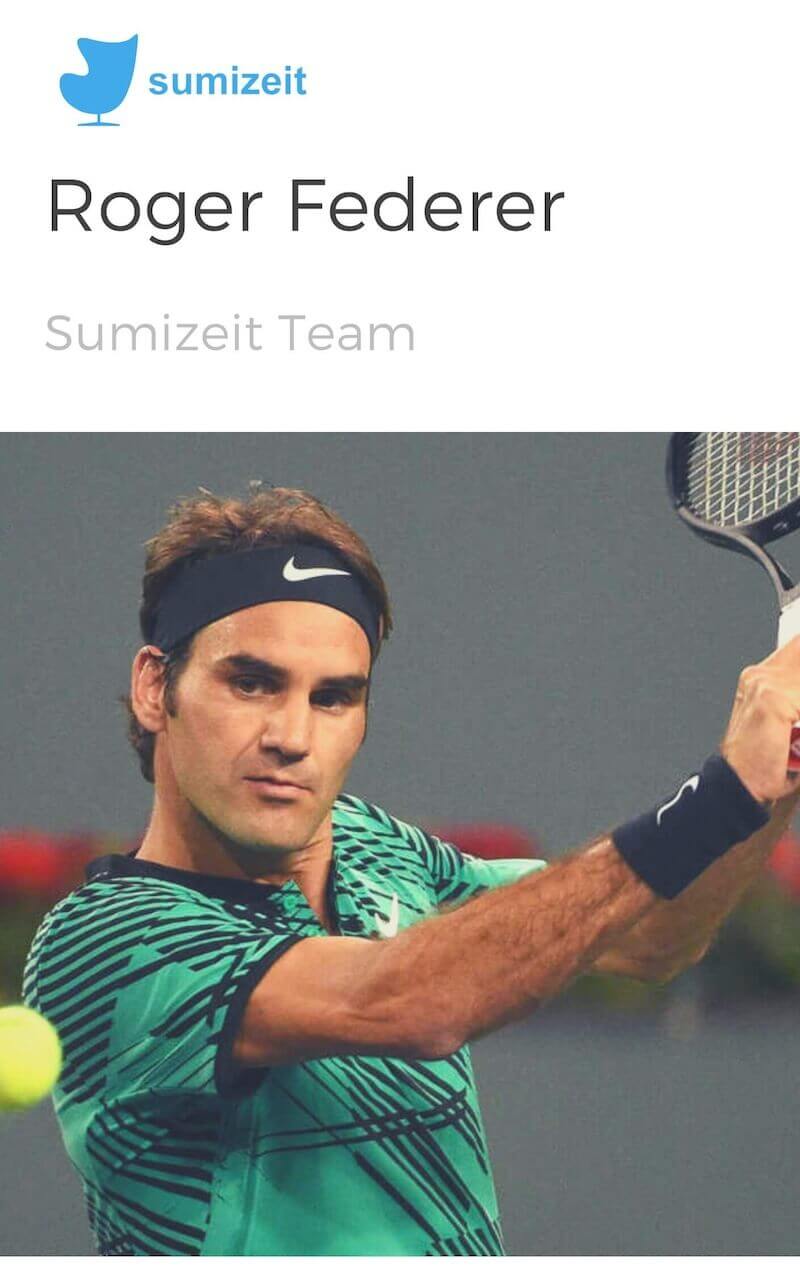
Roger Federer Book Summary
This Roger Federer Book Summary covers the key ideas, lessons, and takeaways in about 20 minutes.
Short Description:
This summary discusses Roger Federer’s tennis achievements.
Preview the Roger Federer book summary
Below is a preview of Sumizeit’s comprehensive human-written summary of Roger Federer by Sumizeit Team. The full summary is 15-20 minutes long and covers the book’s key ideas in text, audio, visual, and video formats. Unlock the full 20 Minute Summary
Roger Federer was born on August 8, 1981, in Basel, Switzerland, and grew up in the nearby town of Birsfelden. His parents, Robert and Lynette, were both athletes and encouraged their son to participate in sports from a young age. Federer showed a natural aptitude for tennis, and by the age of three, he had already begun hitting balls against a wall with a mini-racket.
As a child, Federer was a keen sportsman and played a variety of sports, including soccer, basketball, and skiing. However, he quickly realized that tennis was his true passion and began training seriously when he was eight years old. His father was his first coach, and he would accompany his son to tournaments all over Switzerland, supporting him as he competed against other young players.
Federer's talent as a tennis player soon became apparent, and he won his first tournament at the age of eight. As he got older, he continued to improve, and by the time he was a teenager, he was widely regarded as one of the most promising young players in Switzerland.
In 1996, when Federer was 15, he decided to leave school to focus on his tennis career. He began to play more and more tournaments, both in Switzerland and abroad, and his success continued to grow. In 1998, at the age of 16, he won the boys' singles title at Wimbledon, defeating Irakli Labadze in the final. This was a significant achievement, and it marked Federer out as a player to watch.
Later that year, Federer won the boys' singles titles at the Australian Open and the US Open, becoming the first player to win all three junior Grand Slam titles in the same year. This was an incredible feat and cemented his position as one of the most promising young players in the world.
In 1998, Federer also turned pro and began playing on the ATP tour. He struggled initially, and it took him a few years to establish himself as a top player. However, he continued to work hard and gradually improved. In 2001, he won his first ATP title, defeating Julien Boutter in the final of the Milan Indoor tournament.
In 2003, Federer won his first Grand Slam title at Wimbledon, defeating Mark Philippoussis in straight sets. This was a significant moment for Federer, as it marked the beginning of his ascent to the top of the men's game. Over the next few years, he would establish himself as one of the greatest tennis players of all time, winning countless titles and breaking numerous records.
In conclusion, the first 20 years of Roger Federer's life were marked by a relentless pursuit of excellence in tennis. From a young age, he showed a natural aptitude for the sport, and he worked tirelessly to develop his skills and become one of the best players in the world.
Want the complete 20-minute summary?
- Full structured summary
- Video Summary
- Podcast Summary
- Key takeaways
- Exercises
- Quiz
- Highlights and notes
- Ask the book with AI
Who should read Roger Federer?
This book is for tennis fans and sports enthusiasts who want to understand the life and career of one of the greatest athletes of all time. It appeals to anyone interested in how excellence is built through dedication, family support, and unwavering commitment to mastery. Whether you're a casual observer of tennis or someone seeking inspiration from an extraordinary sporting journey, Roger Federer's story offers valuable insights into achievement and character.
Why does Roger Federer matter?
Roger Federer's journey represents more than just tennis records—it exemplifies how talent combined with work ethic, family support, and personal integrity creates lasting impact both on and off the court. In an era of intense competition and relentless media scrutiny, Federer's example of grace, sportsmanship, and balanced living resonates as a counterpoint to conventional narratives about ambition. His story matters because it demonstrates that athletic greatness and genuine character are not mutually exclusive, and that legacy extends far beyond winning titles.
What are the key themes in Roger Federer?
- The importance of early passion and family encouragement
- Building excellence through consistent improvement and discipline
- Maintaining grace and sportsmanship in competitive environments
- Balancing professional ambition with personal relationships and family
- Using success as a platform for philanthropy and social impact
- Mental toughness and composure under pressure
- Respect for tradition and the integrity of sport
How can you apply ideas from Roger Federer?
- Identify your genuine passion early by exploring multiple domains rather than committing prematurely to a single path
- Build a support system of mentors and family who actively invest in your development, not just your outcomes
- Embrace the refinement period after initial entry into your field—early struggles are normal and necessary for mastery
- Focus on consistency and year-over-year improvement rather than chasing single breakthrough moments
- Develop composure and emotional regulation as deliberate skills through practice and mindset work, not just talent
- Use success and platform to contribute to causes beyond personal achievement through philanthropy or community engagement
- Maintain humility and respect for tradition even as you achieve recognition, building credibility that transcends your specific field
What common mistakes do readers make with Roger Federer?
- Assuming early success guarantees continued dominance without ongoing adaptation and improvement
- Letting competitive pressure damage relationships or lead to arrogance rather than maintaining perspective
- Treating family and personal life as secondary obligations rather than central sources of motivation and resilience
- Chasing records or statistics as primary goals rather than focusing on process and excellence in each competition
Sumizeit Exercises Apply what you've learned
Turn ideas from Roger Federer into action with a short guided reflection: identify the biggest takeaway, connect it to your life, and commit to one step you can take in the next 24 hours.
What is the expert analysis of Roger Federer?
Overview
This comprehensive biography of Roger Federer, authored by the Sumizeit Team, offers a detailed chronicle of the tennis legend’s formative years and his rise to global prominence. By focusing on Federer's first four decades, the book captures both the athletic milestones and the personal dimensions that have shaped his extraordinary career. The work stands out for its thoroughness and accessibility, providing readers with an insightful portrait of one of sport’s most revered figures.
Core Thesis
The central argument of the book is that Roger Federer's unparalleled success is the product of innate talent nurtured by relentless dedication, strong family support, and a balanced approach to life. It posits that his early exposure to multiple sports, combined with a disciplined focus on tennis, laid the foundation for his dominance. Moreover, the biography emphasizes Federer's character—his sportsmanship, humility, and philanthropy—as integral to his legacy, suggesting that his greatness transcends mere athletic achievement.
Strengths
- Comprehensive Chronology: The book meticulously traces Federer’s journey from childhood prodigy to record-breaking champion, offering a clear timeline of his development and achievements.
- Balanced Portrayal: It integrates personal and professional aspects, highlighting Federer's family life, character, and philanthropic efforts alongside his tennis accolades.
- Contextualization of Achievements: By referencing historical benchmarks such as Bjorn Borg and Pete Sampras, the biography situates Federer’s records within the broader tennis canon.
- Humanizing Details: The inclusion of family struggles, such as his mother’s illness, adds emotional depth and underscores the resilience behind his success.
- Accessible Language: The narrative is clear and engaging, making it suitable for both tennis aficionados and general readers interested in sports biographies.
Critiques & Counterarguments
- Lack of Analytical Depth: While rich in facts, the book tends to adopt a celebratory tone, offering limited critical analysis of Federer's career challenges, strategic adaptations, or controversies.
- Oversimplification of Rivalries: The treatment of Federer's relationships with rivals like Rafael Nadal is somewhat superficial, glossing over the complex dynamics and competitive tensions that have defined modern tennis.
- Limited Engagement with Broader Sociocultural Context: The biography does not sufficiently explore how Federer's Swiss identity, global celebrity status, or the commercialization of tennis have influenced his career and public image.
- Competing Perspectives on Greatness: Some scholars and analysts argue that Federer's legacy should be weighed alongside contemporaries such as Nadal and Djokovic, whose contrasting playing styles and mental toughness challenge the notion of a singular "greatest" player.
- Emerging Research on Athletic Longevity: Recent sports science research highlights the role of advanced training techniques and sports medicine in extending elite performance, which the book touches on only tangentially, missing an opportunity to deepen understanding of Federer's sustained excellence.
Who Should Read This
This biography is ideally suited for readers seeking an informative and inspiring overview of Roger Federer’s life and career without requiring prior in-depth knowledge of tennis. Sports enthusiasts, aspiring athletes, and fans of personal success stories will find value in the narrative’s emphasis on perseverance, family support, and character. Additionally, those interested in the human side of elite sports—balancing personal challenges with professional triumphs—will appreciate the book’s holistic approach. However, readers looking for rigorous critical analysis or a deep dive into tennis strategy may find the coverage somewhat introductory.
Frequently asked questions about the Roger Federer book summary
What is Roger Federer about?
Roger Federer is a biography examining the life and career of one of tennis's greatest players, from his childhood in Basel through his dominant years from 2004-2009 and his development as a champion. The book covers his rise through junior tennis, breakthrough at Wimbledon in 2003, record-breaking Grand Slam achievements, family life with wife Mirka and four children, and his character both on and off the court. It provides insight into how Federer built sustained excellence while maintaining grace, sportsmanship, and charitable commitments.
Who should read Roger Federer?
This book appeals to tennis enthusiasts, sports fans interested in athletic excellence, and anyone seeking inspiration from an extraordinary life story. It's valuable for those interested in understanding how dedication, family support, and integrity contribute to sustained success, as well as readers who admire Federer's reputation for grace and character in competitive sports. Whether you follow tennis closely or simply appreciate stories of human achievement, this biography offers insights applicable beyond the sport itself.
What are the main takeaways from Roger Federer?
The main takeaways include: excellence is built through patience and consistent improvement over years, not overnight success; family support and personal relationships are essential to sustaining high performance; athletic greatness and genuine character are compatible and mutually reinforcing; success is most meaningful when used to contribute to broader social good; and maintaining composure, humility, and respect for tradition creates a legacy that transcends statistics. Federer's life demonstrates that the path to mastery requires both talent and the mental discipline to stay focused on process rather than outcomes.
How did Roger Federer become the greatest tennis player?
Federer's path to greatness began with early exposure to tennis at age three through supportive parents, followed by serious training starting at age eight. After turning pro in 1998, he struggled for several years before winning his first ATP title in 2001, then achieved his breakthrough Grand Slam title at Wimbledon in 2003. From 2004-2009, he achieved unprecedented dominance through consistent improvement, mental toughness, graceful technique, and the ability to adapt his game. His competitive rivalry with Rafael Nadal also elevated his performance, pushing him to continuously evolve his skills.
What made Roger Federer different from other tennis players?
Federer distinguished himself through his fluid, graceful playing style combined with exceptional tennis intelligence and the ability to adapt to different opponents. Beyond technique, he was known for his composed demeanor on court, rare displays of frustration, and genuine sportsmanship and respect for opponents. Off the court, Federer set himself apart through philanthropy via the Roger Federer Foundation, humility despite tremendous success, and his commitment to balancing his tennis career with a devoted family life. This combination of athletic excellence, character, and social responsibility created a legacy that extended far beyond winning records.
How many Grand Slam titles did Roger Federer win?
During the first 20 years covered in this biography, Federer won 15 Grand Slam titles by 2009, breaking Pete Sampras's previous record of 14. His grand slam wins included five Australian Opens, six Wimbledon titles (consecutive), and four US Open titles. This unprecedented achievement from 2003 through 2009 established Federer as one of the greatest tennis players of all time and created a record that stood until surpassed by later players.
What is Roger Federer's philosophy on winning?
Federer's philosophy emphasizes process over outcome, expressed in his statement 'I don't play for the record books.' He focuses on playing each point with maximum intensity ('I play each point like my life depends on it') and adapting to his opponent's rhythm rather than forcing predetermined strategies. His approach reflects a belief that consistent improvement and focus on quality performance lead naturally to victories and records, rather than chasing accolades directly. This mindset sustained his longevity and allowed him to maintain peak performance across two decades.
About Sumizeit
Sumizeit is a profitable Scomy LLC company based in Miami, Florida. Our founders, Clemens Raemy and Weina Scott, are successful entrepreneurs with several exits. Sumizeit is a popular book summary app / micro learning app used by busy professionals and entrepreneurs with over 2,500 non-fiction book summaries and 10,000 podcast summaries in text, audio, visual, podcast, and video format. We also have stellar retention tools to make ideas stick - such as flashcards with spaced repetition, quizzes, streaks, highlighting and notes, daily challenges, riddles, mini-courses, meditation, and more. You won't only learn the idea, but also remember it. Over 90% of our users change their habits with Sumizeit.
Upgrade Now
Here's why readers love Sumizeit
Join thousands of learners getting smarter every day
"Great experience. Detailed summaries. Loved the gamification feature. Makes learning fun. Good customer service. I recommend Sumizeit to anyone. You'll learn a lot."
"I always felt busy but still wanting to keep up with the book discussion in my friend group. This was a great supplement to help me keep reading the books I find fun while keeping up with important books."
"I love this website. Instead of scrolling social media, I find myself learning a lot. I use it everyday. I recommend this app for anyone who is too busy and wants to get up to speed with their favorite books."
Roger Federer Book Summary PDF
Looking for a Roger Federer Book Summary PDF you can save and revisit offline? Our Roger Federer Book Summary PDF captures the book’s core ideas in a clean, printable format — the key frameworks, takeaways, and structure without the fluff. Download the Roger Federer Book Summary PDF when you want a reference you can annotate, share with your team, or review on the go. Get your Roger Federer Book Summary PDF from the download page below.
Download Roger Federer Book Summary PDFPeople also liked these summaries
Readers who explored Roger Federer often enjoyed these titles next.

Ready to read the whole thing?
- Full structured summary
- Video Summary
- Podcast Summary
- Key takeaways
- Exercises
- Quiz
- Highlights and notes
- Ask the book with AI
Featured Book Titles
Popular Book Summaries at sumizeit, leading book summary app