


Prefer the print book? Buy on Amazon
As an Amazon Associate, Sumizeit earns from qualifying purchases.
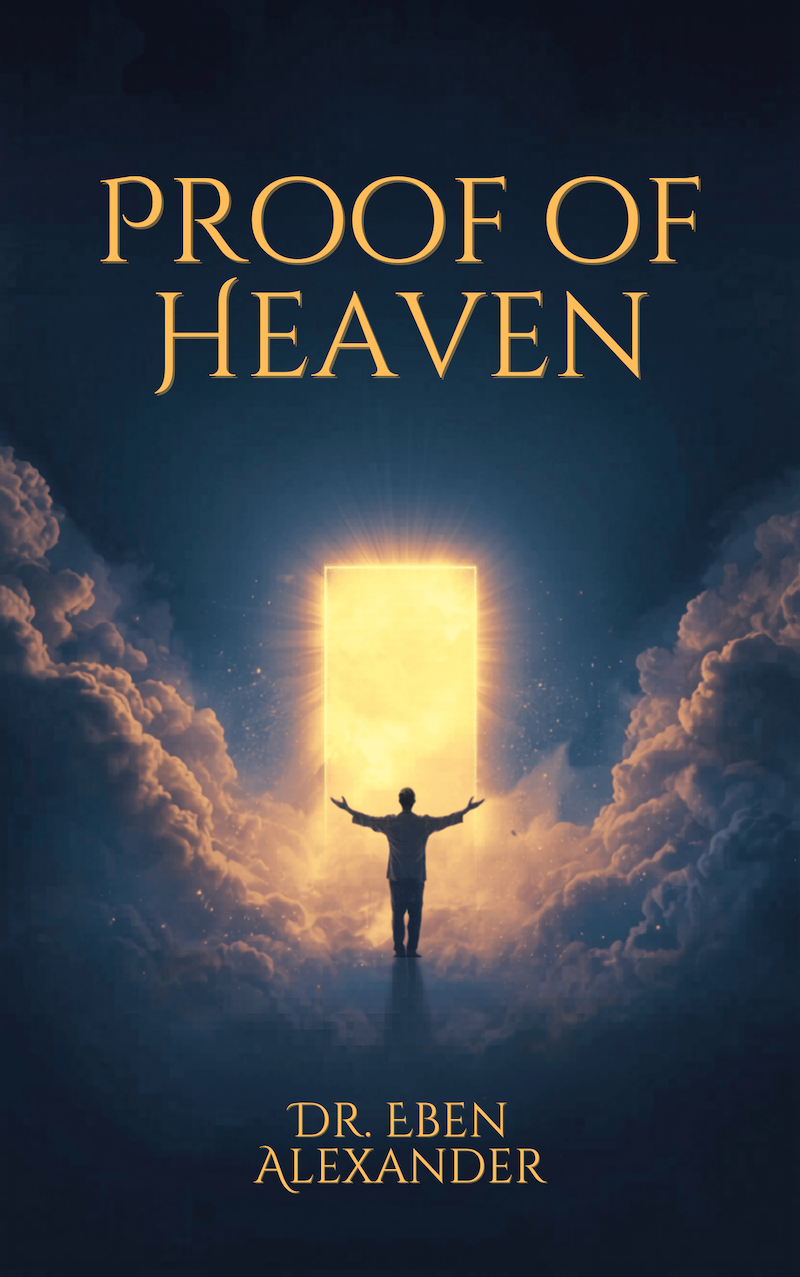
Proof of Heaven Book Summary
This Proof of Heaven Book Summary covers the key ideas, lessons, and takeaways in about 20 minutes.
Helps with these goals
Want the complete 20-minute summary?
- Full structured summary
- Video Summary
- Podcast Summary
- Audio summary
- Key takeaways
- Exercises
- Quiz
- Highlights and notes
- Ask the book with AI
Not ready to upgrade?
Get this summary + 2 more picks sent to your inbox, free.
What is in the Proof of Heaven book summary?
Below is a preview of Sumizeit’s expert-written summary of Proof of Heaven by Dr. Eben Alexander. The full summary covers the book’s key ideas in text, audio, and video.
Proof of Heaven is the personal account of Dr. Eben Alexander, an academic neurosurgeon who in 2008 contracted a rare and severe case of bacterial meningitis that should, by every clinical measure available to the team treating him, have killed him. Instead, after seven days in a deep coma during which the higher cognitive regions of his brain were not functioning, he woke up. He also woke up reporting an experience — vivid, detailed, sustained, emotionally overwhelming — that he could not reconcile with anything he had ever learned in his medical career. The book is his attempt to describe that experience honestly, to interrogate it with the same scientific rigor he had once applied to the patients of his own who described similar things, and to draw out what its implications might be for how the rest of us think about consciousness, death, and the nature of reality.
The book is unusual because of who is telling it. Alexander was not a casual observer of the human brain. He had spent more than two decades performing complex neurosurgical procedures and writing peer-reviewed papers at institutions including Duke and Harvard. He believed, before his illness, that consciousness was an emergent property of brain tissue and that any story of awareness outside the body — heavenly visions, deathbed reunions, encounters with the dead — was a misfiring brain producing a comforting hallucination at the worst moment of someone's life. He had, in his own clinical practice, calmly told the relatives of dying patients exactly that.
His own week in a coma forced him to reconsider every part of that view. He woke knowing, in a way he could not explain away, that something had happened to him during the days his neocortex was offline. The book is his sustained effort to honor both halves of what he encountered — the experience itself, and the scientific framework he had spent his career inside — without flinching from either.
The Illness
The medical situation Alexander recounts is itself extraordinary. He woke up one morning in November 2008 with a sudden, blinding headache that quickly progressed into seizures and unconsciousness. By the time he reached the emergency room, doctors had identified the cause as an extremely rare form of E. coli meningitis, an infection of the membranes surrounding the brain. The bacterium had invaded his cerebrospinal fluid and was destroying neocortical tissue at a remarkable rate. His chances of survival were low; his chances of waking up with anything close to ordinary cognitive function were, the attending physicians believed, essentially zero.
For seven days he lay in the intensive care unit at Lynchburg General Hospital in Virginia, where he was also on staff. His family kept vigil. His sons came home from college. His wife and physician colleagues watched the readouts on the machines that documented, with increasing clarity, that the higher regions of his brain were not producing the kind of electrical activity that ordinarily accompanies conscious experience.
Want the complete 20-minute summary?
- Full structured summary
- Video Summary
- Podcast Summary
- Audio summary
- Key takeaways
- Exercises
- Quiz
- Highlights and notes
- Ask the book with AI
Who should read Proof of Heaven?
Proof of Heaven is essential reading for anyone grappling with questions about consciousness, mortality, and what lies beyond physical death. It speaks directly to the dying, their loved ones, medical professionals who have dismissed spiritual experiences, and thoughtful skeptics willing to reconsider the materialist worldview that has dominated modern neuroscience.
Why does Proof of Heaven matter?
Dr. Eben Alexander brings credibility that few near-death experience accounts possess: he is a Harvard-trained neurosurgeon with decades of peer-reviewed research who initially dismissed such reports as hallucinations. His rigorously examined personal testimony challenges the dominant scientific assumption that consciousness is merely a byproduct of brain tissue, reopening fundamental questions about the nature of awareness and human survival beyond bodily death.
What are the key themes in Proof of Heaven?
- Consciousness as a fundamental feature of the universe rather than a product of brain activity
- The brain functioning as a filter of consciousness rather than a generator of it
- Unconditional love as the underlying nature of reality
- The continuity of personal consciousness after physical death
- Reconciling scientific rigor with transcendent spiritual experience
- The limitations of strict materialism in explaining consciousness
- Personal transformation through encounter with the divine
Want the complete 20-minute summary?
- Full structured summary
- Video Summary
- Podcast Summary
- Audio summary
- Key takeaways
- Exercises
- Quiz
- Highlights and notes
- Ask the book with AI
How can you apply ideas from Proof of Heaven?
- Use Proof of Heaven to initiate conversations with dying patients and their families about fear, meaning, and what may lie beyond, informed by credible medical testimony
- Apply Alexander's systematic examination of alternative explanations as a model for evaluating claims about consciousness in your own professional or personal inquiry
- Recognize moments when institutional assumptions may be limiting your willingness to investigate phenomena that don't fit existing frameworks
- Consider the filter theory of consciousness when reflecting on meditation, contemplative practice, or other experiences of expanded awareness in your own life
- Share this account with skeptical friends or colleagues as a bridge text that honors both scientific rigor and openness to transcendent experience
- Use the book's framework to reexamine medical cases or personal experiences that seemed to defy standard neurological explanation
- Reflect on how unconditional love, as described in the Gateway encounter, might reshape your approach to relationships, forgiveness, and self-judgment
What common mistakes do readers make with Proof of Heaven?
- Assuming that a credentialed author's testimony must be either completely true or completely false, rather than recognizing that memories of profound experiences can be vivid and meaningful while remaining subject to interpretation
- Reading Proof of Heaven as literal religious instruction rather than as one thoughtful person's attempt to describe an experience that resists literal translation
- Dismissing the book entirely because some neuroscientists have raised methodological questions, rather than recognizing that the existence of scientific debate does not invalidate the underlying mystery
- Expecting the book to function as scientific proof rather than as credible testimony that shifts the burden of explanation and invites deeper inquiry
- Overlooking Alexander's careful disclaimers about the inadequacy of language and treating his descriptions as if they capture the full reality of what he encountered
Sumizeit Exercises Apply what you've learned
Turn ideas from Proof of Heaven into action with a short guided reflection: identify the biggest takeaway, connect it to your life, and commit to one step you can take in the next 24 hours.
What is the expert analysis of Proof of Heaven?
Overview
Proof of Heaven is a provocative and deeply personal memoir by Dr. Eben Alexander, a highly credentialed neurosurgeon whose near-death experience (NDE) during a rare and severe case of bacterial meningitis challenged his previously staunch materialist views on consciousness. Published in 2012, the book rapidly gained bestseller status and sparked widespread debate by offering a rare insider’s perspective that bridges rigorous medical expertise and a profound metaphysical encounter. Alexander’s narrative is significant because it comes from a scientist who, after decades of clinical practice and research, confronts the limits of conventional neuroscience and proposes a radical rethinking of consciousness and the afterlife.
Core Thesis
The central argument of Proof of Heaven is that consciousness is not a mere byproduct of brain activity but a fundamental feature of reality that transcends physical death. Alexander posits that the brain functions primarily as a filter or constrainer of a broader, universal consciousness rather than its generator. His near-death experience—occurring during a period when his neocortex was clinically inactive—provides what he considers compelling anecdotal evidence that consciousness can exist independently of brain function. This leads him to challenge the dominant materialist paradigm in neuroscience and to advocate for a more open-minded scientific inquiry into the nature of awareness, death, and the possibility of an afterlife characterized by unconditional love and continuity of self.
Strengths
- Authoritative voice: Alexander’s extensive neurosurgical background and academic credentials lend unusual credibility to his account, distinguishing it from many other NDE narratives authored by laypersons.
- Methodical self-scrutiny: The author applies scientific rigor to his own experience, systematically evaluating and ultimately rejecting conventional neuroscientific explanations such as hallucinations, drug effects, or residual brain activity.
- Rich phenomenological detail: The vivid descriptions of the three distinct realms of his experience—the Earthworm’s-Eye View, the Gateway, and the Core—offer a nuanced and emotionally resonant portrayal of an ineffable event.
- Balanced theological approach: Alexander avoids sectarian dogma, instead framing his encounter in universal spiritual terms that emphasize unconditional love and personal connection without endorsing any specific religious doctrine.
- Stimulating interdisciplinary dialogue: The book encourages a thoughtful conversation at the intersection of neuroscience, philosophy, and spirituality, challenging entrenched assumptions while inviting humility and further inquiry.
Critiques & Counterarguments
- Reliance on anecdotal evidence: Despite Alexander’s credentials, his conclusions rest on a single subjective experience, which cannot serve as definitive proof in the empirical sciences.
- Ambiguities in medical data: Critics have pointed out that the neuroimaging and EEG evidence during his coma may not conclusively demonstrate total neocortical inactivity, leaving open the possibility that some brain function could have supported his experiences.
- Potential memory reconstruction: The richness and coherence of the experience might reflect post-coma memory synthesis rather than real-time consciousness during cortical shutdown, a phenomenon documented in other neurological contexts.
- Alternative neuroscientific models: Competing theories, such as the Global Workspace Theory or Integrated Information Theory, offer accounts of consciousness emergence that do not require positing consciousness as fundamental or independent of the brain.
- Skepticism from empirical research: Large-scale studies of NDEs often highlight cultural, psychological, and neurological factors that can generate similar experiences without invoking metaphysical explanations.
Who Should Read This
Proof of Heaven is best suited for readers who are open to exploring the profound mysteries of consciousness beyond strict materialism, including those interested in the philosophical and spiritual implications of near-death experiences. It will appeal to:
- Scientists and medical professionals curious about the limits of current neuroscientific paradigms and the subjective dimensions of consciousness.
- Philosophers of mind and scholars of consciousness seeking a first-person account that challenges reductionist assumptions.
- Spiritual seekers and readers drawn to narratives that integrate scientific credibility with transcendent experiences.
- Anyone grappling with questions about death, the afterlife, and the nature of reality who desires a thoughtful, rigorously presented perspective that bridges science and spirituality.
Frequently asked questions about the Proof of Heaven book summary
What is Proof of Heaven about?
Proof of Heaven is Dr. Eben Alexander's account of his near-death experience during a seven-day coma from bacterial meningitis in 2008. Though his neocortex was severely damaged and offline, he returned with vivid memories of three distinct realms—a primitive underworld, a beautiful gateway, and a transcendent core—along with a message of unconditional love. The book uses his medical credentials and scientific training to examine whether standard neuroscientific explanations can account for his experience.
Who should read Proof of Heaven?
This book speaks to anyone questioning consciousness, mortality, or what lies beyond death—especially the dying, grieving loved ones, medical professionals, and thoughtful skeptics. It is particularly valuable for those trained in science who have dismissed spiritual experiences as mere hallucination, and for anyone seeking a bridge between rigorous inquiry and openness to transcendent possibility.
What are the main takeaways from Proof of Heaven?
The central takeaways are: consciousness may be fundamental to the universe rather than produced by the brain; the brain likely filters consciousness rather than generating it; near-death experiences merit serious scientific investigation; unconditional love appears to be the nature of ultimate reality; and personal consciousness may continue beyond physical death. Alexander argues that his case demonstrates the limitations of strict materialism in neuroscience while remaining humble about what he cannot prove.
How does Dr. Alexander reconcile his medical training with his spiritual experience?
Rather than abandoning scientific rigor, Alexander applies it to his own case, systematically examining medical records and testing standard neurological explanations against what he experienced. He concludes that conventional theories strain against the evidence in his particular situation, leading him to propose that consciousness is more fundamental than the brain—a theory he finds more consistent with both scientific data and human testimony across cultures.
Does Proof of Heaven promote a specific religion?
No. Alexander was not devout before his illness and did not convert to any institutional religion afterward. Instead, he returned with a personal conviction in a benevolent God and in the continuity of consciousness after death, while deliberately avoiding attachment to specific theological traditions. He uses the language of universal love and a welcoming afterlife rather than any particular faith's doctrines.
What did Alexander encounter in the three realms he describes?
In the first realm (Earthworm's-Eye View), he experienced a murky, primitive landscape with indistinct faces and chanting. In the second realm (the Gateway), he encountered breathtaking beauty, golden light, meadows, and a female figure who conveyed three messages: you are loved, you have nothing to fear, and you cannot do wrong. In the third realm (the Core), he experienced a vast, dark space containing a benevolent presence—Om—with which he communicated directly.
How did the medical community respond to Alexander's account?
His colleagues were relieved by his physical recovery but remained skeptical of his experience itself, politely redirecting conversations away from what he was trying to describe. Alexander understood their skepticism, having held similar views before his illness, but found that the scientific framework he had been trained in could not accommodate his testimony despite his credibility and medical expertise.
What is Alexander's filter theory of consciousness?
Alexander proposes that consciousness is fundamental to the universe and that the brain's role is not to generate consciousness but to filter it—narrowing infinite awareness to the small slice useful for survival in a physical body. When the filtering is disrupted by illness, meditation, or other means, consciousness expands, revealing more of what it fundamentally is. This theory, while not original to Alexander, gains credence from his testimony as a medical professional.
About Sumizeit
Sumizeit is a profitable Scomy LLC company based in Miami, Florida. It has been helping readers learn from nonfiction books for 7 years with expert-written summaries in text, audio, podcast, and video.
Want the complete 20-minute summary?
- Full structured summary
- Video Summary
- Podcast Summary
- Audio summary
- Key takeaways
- Exercises
- Quiz
- Highlights and notes
- Ask the book with AI
Here's why readers love Sumizeit
Join thousands of learners getting smarter every day
"Great experience. Detailed summaries. Loved the gamification feature. Makes learning fun. Good customer service. I recommend Sumizeit to anyone. You'll learn a lot."
"I always felt busy but still wanting to keep up with the book discussion in my friend group. This was a great supplement to help me keep reading the books I find fun while keeping up with important books."
"I love this website. Instead of scrolling social media, I find myself learning a lot. I use it everyday. I recommend this app for anyone who is too busy and wants to get up to speed with their favorite books."
Proof of Heaven Book Summary PDF
Looking for a Proof of Heaven Book Summary PDF you can save and revisit offline? Our Proof of Heaven Book Summary PDF captures the book’s core ideas in a clean, printable format — the key frameworks, takeaways, and structure without the fluff. Download the Proof of Heaven Book Summary PDF when you want a reference you can annotate, share with your team, or review on the go. Get your Proof of Heaven Book Summary PDF from the download page below.
Download Proof of Heaven Book Summary PDFPeople also liked these summaries
Readers who explored Proof of Heaven often enjoyed these titles next.





Want the complete 20-minute summary?
- Full structured summary
- Video Summary
- Podcast Summary
- Audio summary
- Key takeaways
- Exercises
- Quiz
- Highlights and notes
- Ask the book with AI
Featured Book Titles
Popular Book Summaries at sumizeit, leading book summary app