


As an Amazon Associate, Sumizeit earns from qualifying purchases.
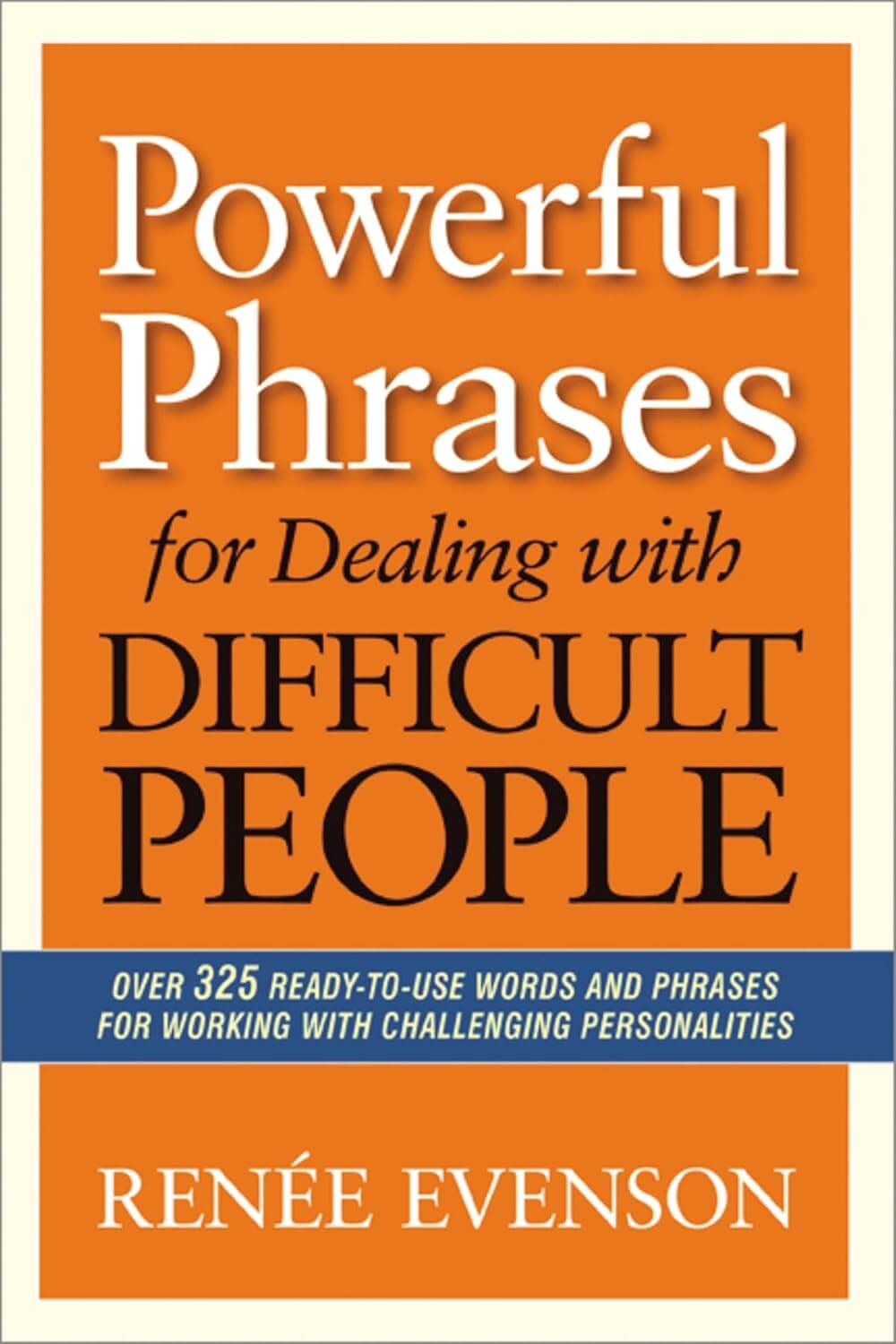
Powerful Phrases for Dealing With Difficult People Book Summary
This Powerful Phrases for Dealing With Difficult People Book Summary covers the key ideas, lessons, and takeaways in about 20 minutes.
Evenson’s framework is not about controlling others—it is about controlling your own communication with discipline and empathy. When you do, you gain influence, preserve relationships, and create environments where problems are solved rather than buried. Conflict does not disappear, but it becomes manageable, constructive, and even beneficial.
Helps with these goals
Want the complete 20-minute summary?
- Full structured summary
- Video Summary
- Podcast Summary
- Audio summary
- Key takeaways
- Exercises
- Quiz
- Highlights and notes
- Ask the book with AI
What is in the Powerful Phrases for Dealing With Difficult People book summary?
Below is a preview of Sumizeit’s expert-written summary of Powerful Phrases for Dealing With Difficult People by Renée Evenson. The full summary covers the book’s key ideas in text, audio, and video.
In Powerful Phrases for Dealing With Difficult People, Renée Evenson presents a practical, language-centered framework for navigating tense interactions without burning bridges. The book’s core promise is straightforward: difficult people don’t require magical patience or manipulative tactics—what they require is intentional communication. When you choose your words carefully, regulate your emotional tone, and guide conversations toward shared understanding, even the most frustrating exchanges can become productive.
Rather than treating conflict as something to avoid or “win,” Evenson reframes it as a normal, recurring feature of human relationships—especially in professional settings where collaboration is mandatory and personalities are not optional. Her approach emphasizes empathy, clarity, and structure, arguing that people cooperate more readily when they feel heard, respected, and included in the solution. The book lays out a five-stage method that moves a conversation from emotional tension to practical agreement, with language tools for each phase.
At its heart, the book insists that communication skills are not soft extras; they are decisive career and life multipliers. People who handle conflict well earn trust, influence outcomes, and often advance faster than peers who rely solely on technical competence. Evenson’s work is less about clever comebacks and more about disciplined, repeatable habits that turn everyday friction into forward motion.
Why Conflict Is Unavoidable—and Valuable
Evenson begins by dismantling the fantasy that harmonious relationships are conflict-free. Wherever people interact regularly, disagreements will surface. At work, this is especially true: individuals bring different priorities, stressors, communication styles, and assumptions into shared spaces. Unlike friendships, professional relationships are rarely optional, making conflict management a survival skill rather than a preference.
The book emphasizes that conflict itself is not the real problem. The real damage comes from how conflict is handled—or avoided. When people address issues respectfully and directly, relationships often become stronger. Each successfully resolved disagreement becomes evidence that both parties can rely on one another to act in good faith. Trust grows not because problems disappear, but because they are handled well when they arise.
Evenson also argues that conflict competence distinguishes leaders from individual contributors. People who can navigate tension calmly are perceived as mature, reliable, and capable of managing broader responsibility. In many organizations, promotions and influence flow toward those who can align people, not just processes.
The Hidden Cost of Avoiding Discomfort
One of the book’s strongest warnings is against the instinct to dodge uncomfortable conversations. While avoidance may feel polite or self-protective in the moment, it often produces long-term damage. Unaddressed irritation accumulates, quietly reshaping how people perceive one another. Small annoyances harden into resentment, and eventually, even neutral interactions become emotionally charged.
Evenson explains that suppressed frustration rarely stays contained. It leaks out through sarcasm, passive-aggressive behavior, emotional withdrawal, or sudden explosive confrontations that feel disproportionate to the immediate trigger. These moments can permanently damage trust, especially when the other person feels blindsided.
Avoidance also robs both parties of the chance to correct misunderstandings early. Many conflicts are not rooted in malice but in incomplete information or mismatched assumptions.…
Want the complete 20-minute summary?
- Full structured summary
- Video Summary
- Podcast Summary
- Audio summary
- Key takeaways
- Exercises
- Quiz
- Highlights and notes
- Ask the book with AI
Who should read Powerful Phrases for Dealing With Difficult People?
This book is essential for anyone who regularly interacts with challenging personalities—managers, team leaders, customer service professionals, and anyone navigating complex workplace relationships. If you find yourself dreading certain conversations, avoiding difficult discussions, or struggling to resolve ongoing friction with colleagues or collaborators, this practical guide offers concrete language strategies you can use immediately.
Why does Powerful Phrases for Dealing With Difficult People matter?
In today's workplace, technical skills alone no longer guarantee advancement; the ability to handle conflict with composure and empathy has become a defining leadership competency. Unresolved workplace tensions damage productivity, erode trust, and create toxic environments, making conflict communication not a soft skill but a business-critical capability. Renée Evenson's framework transforms abstract advice into specific, repeatable phrases and techniques you can deploy in real situations.
What are the key themes in Powerful Phrases for Dealing With Difficult People?
- Conflict is inevitable and valuable, not something to fear or avoid
- Intentional communication and word choice determine conflict outcomes
- Emotional regulation and preparation happen before the conversation starts
- Empathy and active listening create psychological safety and openness
- Clarifying the actual issue prevents solutions that miss the root cause
- Collaboration on solutions builds ownership and reduces resistance
- Conflict competence is a core leadership and career advancement skill
What are the key lessons from the Powerful Phrases for Dealing With Difficult People book summary?
Conflict reveals truth in relationships
Successfully navigated disagreements strengthen trust and deepen relationships by proving both parties can handle tension respectfully. Each resolved conflict becomes evidence of good faith and reliability.
Avoidance creates long-term damage
Suppressed frustration accumulates silently, turning small irritations into resentment and poisoning even neutral interactions. Unaddressed issues fester and eventually emerge as disproportionate emotional reactions.
Preparation is half the battle
Taking time to regain emotional balance, clarify your actual concern, and imagine the other person's perspective before speaking prevents escalation and keeps the conversation focused and productive.
I-statements replace blame
Describing your own feelings and experiences without labeling or accusing the other person invites understanding rather than defensiveness and opens dialogue instead of closing it.
Active listening signals respect
Asking open-ended questions, genuinely seeking the other person's perspective, and reflecting back what you hear demonstrates respect and creates reciprocal willingness to understand.
Misaligned definitions derail solutions
Many conflicts persist because people argue different problems without realizing it; clarifying exactly what issue needs resolution prevents solutions that miss the actual cause.
Nonverbal communication reinforces words
Calm posture, measured tone, and attentive eye contact must align with your chosen words; they either reinforce safety or undermine the message through visible tension or hostility.
Strategic apologies reset emotional climate
A sincere apology for misunderstanding, timing, or impact—without admitting blame—can signal goodwill and re-open dialogue when discussions stall due to rigid positions.
Multiple solutions beat fixed positions
Exploring alternatives that satisfy underlying concerns rather than defending initial positions increases the likelihood of finding outcomes that exceed both parties' expectations.
Breaks are wisdom, not weakness
When emotions rise during problem-solving, pausing to regain perspective and returning with clearer minds demonstrates maturity and prevents escalation into unproductive conflict.
Specificity prevents future confusion
Summarizing agreed-upon decisions aloud with concrete details ensures mutual understanding and eliminates ambiguity that can trigger new conflicts later.
End on relationship affirmation
Expressing genuine appreciation for the other person's engagement transforms the conflict from a negative episode into a shared success and leaves positive emotional residue.
Respect survives unresolved issues
Even when agreement is impossible, maintaining respect and affirming the relationship preserves collaboration and prevents unresolved disagreements from destroying trust.
Transparency builds acceptance
When authority prevents negotiation, explaining the reasoning behind decisions and demonstrating that the other person's perspective was genuinely considered increases acceptance even of unwelcome outcomes.
Perspective-taking reduces hostility
Mentally generating plausible explanations for difficult behavior that don't assume bad intent reduces your own hostility and makes curiosity rather than accusation possible.
Perspective matters more than personality
Conflict is less about personality clashes and more about conversational choices; the same difficult person can become cooperative with intentional communication adjustments.
Communication skills scale across contexts
The five-stage framework applies equally to workplaces, families, and friendships; anywhere people interact repeatedly, communication quality determines whether relationships deepen or deteriorate.
Conflict competence signals leadership maturity
Leaders are distinguished not by avoiding tension but by remaining calm, empathetic, and solution-focused under pressure—a capability that earns long-term respect and influence.
Want the complete 20-minute summary?
- Full structured summary
- Video Summary
- Podcast Summary
- Audio summary
- Key takeaways
- Exercises
- Quiz
- Highlights and notes
- Ask the book with AI
How can you apply ideas from Powerful Phrases for Dealing With Difficult People?
- Use I-statements when discussing frustrations: 'I felt overlooked when my input wasn't requested' instead of 'You always ignore my ideas'
- Schedule difficult conversations in private settings during calm moments, never in public or when either party is rushed or emotionally activated
- Pause and ask open-ended questions before proposing solutions: 'Help me understand how this affects your work' or 'What would success look like for you?'
- Summarize agreements aloud with specific details to ensure both parties hold identical expectations about what was decided and what happens next
- When emotions spike during a discussion, explicitly suggest a break: 'I want to handle this well—let's take 20 minutes and reconvene' rather than powering through tension
- Prepare before tough conversations by imagining the other person's perspective and plausible reasons for their behavior unrelated to personal disrespect
- End conflict conversations by expressing appreciation for the other person's willingness to engage and reaffirming the relationship independent of the issue's resolution
What common mistakes do readers make with Powerful Phrases for Dealing With Difficult People?
- Avoiding uncomfortable conversations to keep the peace, which allows resentment to accumulate and eventually explode disproportionately
- Blaming and labeling the other person instead of describing your own feelings, which triggers defensiveness and closes dialogue
- Jumping to solutions before clarifying what the actual issue is, resulting in fixes that address symptoms rather than root causes
- Continuing difficult conversations when emotions are high or timing is poor, which escalates conflict and damages the relationship further
Sumizeit Exercises Apply what you've learned
Turn ideas from Powerful Phrases for Dealing With Difficult People into action with a short guided reflection: identify the biggest takeaway, connect it to your life, and commit to one step you can take in the next 24 hours.
What is the expert analysis of Powerful Phrases for Dealing With Difficult People?
Overview
Powerful Phrases for Dealing With Difficult People is a pragmatic guide authored by Renée Evenson, a seasoned business training consultant with extensive experience in conflict resolution and communication. The book stands out for its laser focus on language as the pivotal tool in managing challenging interpersonal dynamics, particularly in professional environments. Evenson’s background in telecommunications and customer service training lends the work a grounded, applied sensibility that bridges theory and practice, making it a significant contribution to contemporary communication literature.
Core Thesis
Evenson’s central argument is that difficult interactions do not require extraordinary patience or manipulation but rather intentional, disciplined communication. She posits that conflict is an inevitable and even valuable aspect of human relationships, especially where collaboration is mandatory. By carefully choosing words, regulating emotional tone, and following a structured five-stage framework—from preparation to resolution—individuals can transform tension into productive dialogue. The book asserts that mastering these communication skills is not merely a soft skill but a critical leadership competency that accelerates trust, influence, and career advancement.
Strengths
- Practical Framework: The five-stage method provides a clear, actionable roadmap that readers can readily apply to real-world conflicts, enhancing the book’s utility beyond abstract theory.
- Emphasis on Empathy and Emotional Regulation: By prioritizing emotional safety and perspective-taking, Evenson addresses the psychological underpinnings of conflict, fostering genuine understanding rather than superficial compliance.
- Balanced Tone: The book avoids manipulative tactics or simplistic “quick fixes,” instead encouraging disciplined habits and self-awareness that promote sustainable relationship management.
- Integration of Verbal and Nonverbal Communication: Highlighting how tone, posture, and eye contact complement language enriches the reader’s appreciation of communication’s multifaceted nature.
- Applicability Across Contexts: While focused on professional settings, the principles extend to personal and community relationships, broadening the book’s relevance.
Critiques & Counterarguments
- Potential Oversimplification: The structured five-stage approach, while elegant, may understate the complexity of deeply entrenched conflicts involving power imbalances, cultural differences, or systemic issues that require more than communication adjustments.
- Limited Engagement with Alternative Conflict Theories: Evenson’s framework leans heavily on empathy and collaboration but does not sufficiently address adversarial or competitive conflict models where cooperation is minimal or impossible.
- Evidence Base and Examples: The book’s reliance on anecdotal and practitioner experience may leave readers seeking more empirical validation or diverse case studies, especially from cross-cultural or high-stakes negotiation contexts.
- Risk of Overemphasizing Individual Responsibility: By focusing on controlling one’s communication, there is a subtle implication that difficult interactions are primarily one’s own challenge to manage, which may inadvertently minimize the role of systemic dysfunction or the other party’s accountability.
- Contrasting Research: Some psychological research suggests that in certain situations, direct confrontation or assertive boundary-setting without extensive empathy-building may be more effective, particularly when dealing with manipulative or toxic individuals.
Who Should Read This
This book is ideally suited for professionals at all levels seeking to enhance their interpersonal effectiveness, especially those in leadership, management, customer service, or collaborative roles. It benefits readers who value structured, language-based strategies and are motivated to cultivate emotional intelligence alongside communication skills. Additionally, individuals interested in practical self-improvement tools for navigating everyday conflicts—whether at work or in personal life—will find Evenson’s approach accessible and empowering. However, readers confronting severe or systemic conflicts may need to supplement this work with broader conflict resolution or organizational change literature.
Frequently asked questions about the Powerful Phrases for Dealing With Difficult People book summary
What is Powerful Phrases for Dealing With Difficult People about?
Powerful Phrases for Dealing With Difficult People by Renée Evenson is a practical guide to navigating workplace conflict through intentional communication and strategic language choices. The book presents a five-stage framework that moves conversations from emotional tension to productive resolution, emphasizing that conflict outcomes depend less on personalities and more on how discussions are conducted.
Who should read Powerful Phrases for Dealing With Difficult People?
This book is ideal for managers, team leaders, customer service professionals, and anyone regularly navigating challenging interpersonal dynamics at work. It's especially valuable for people who dread difficult conversations, avoid confrontation, or struggle to resolve ongoing friction with colleagues or collaborators.
What are the main takeaways from Powerful Phrases for Dealing With Difficult People?
The primary insights are that conflict is inevitable and often beneficial when handled well, avoidance creates long-term damage, and intentional communication—including specific preparation, empathy-building, issue clarification, collaborative problem-solving, and relationship reaffirmation—transforms difficult interactions into trust-building opportunities. Renée Evenson emphasizes that conflict competence is a core leadership skill that determines career advancement.
What is the five-stage framework in Powerful Phrases for Dealing With Difficult People?
The framework includes: Stage 1 (Preparing Before You Speak) involves regaining emotional balance and clarifying your actual concern; Stage 2 (Creating Mutual Empathy) establishes safety through I-statements and active listening; Stage 3 (Defining the Real Issue) ensures both parties understand the actual problem; Stage 4 (Exploring Solutions Together) invites collaborative brainstorming; Stage 5 (Deciding and Reaffirming the Relationship) confirms agreements and ends on affirmation.
Why does Renée Evenson say conflict avoidance is dangerous?
Evenson argues that suppressed frustration accumulates silently, turning minor irritations into deep resentment and poisoning neutral interactions. Unaddressed issues also prevent early correction of misunderstandings, allowing people to invent unflattering stories about each other's intentions. Eventually, avoidance leads to explosive confrontations that feel disproportionate and permanently damage trust.
How do I start a difficult conversation effectively?
Begin by preparing emotionally: step back, regain calm, clarify what actually bothers you, imagine plausible explanations for the other person's behavior that don't assume bad intent, and choose a private, calm moment. During the conversation, use I-statements to describe your feelings without blame, ask open-ended questions to show genuine interest in their perspective, and repeatedly affirm your desire for a mutually workable solution.
Can the techniques in Powerful Phrases work outside the workplace?
Yes. The five-stage framework and communication principles apply equally to family relationships, friendships, and community interactions. Anywhere people interact repeatedly, the quality of communication determines whether relationships deepen or deteriorate over time, making these techniques universally valuable.
About Sumizeit
Sumizeit is a profitable Scomy LLC company based in Miami, Florida. It has been helping readers learn from nonfiction books for 7 years with expert-written summaries in text, audio, podcast, and video.
Want the complete 20-minute summary?
- Full structured summary
- Video Summary
- Podcast Summary
- Audio summary
- Key takeaways
- Exercises
- Quiz
- Highlights and notes
- Ask the book with AI
Here's why readers love Sumizeit
Join thousands of learners getting smarter every day
"Great experience. Detailed summaries. Loved the gamification feature. Makes learning fun. Good customer service. I recommend Sumizeit to anyone. You'll learn a lot."
"I always felt busy but still wanting to keep up with the book discussion in my friend group. This was a great supplement to help me keep reading the books I find fun while keeping up with important books."
"I love this website. Instead of scrolling social media, I find myself learning a lot. I use it everyday. I recommend this app for anyone who is too busy and wants to get up to speed with their favorite books."
Powerful Phrases for Dealing With Difficult People Book Summary PDF
Looking for a Powerful Phrases for Dealing With Difficult People Book Summary PDF you can save and revisit offline? Our Powerful Phrases for Dealing With Difficult People Book Summary PDF captures the book’s core ideas in a clean, printable format — the key frameworks, takeaways, and structure without the fluff. Download the Powerful Phrases for Dealing With Difficult People Book Summary PDF when you want a reference you can annotate, share with your team, or review on the go. Get your Powerful Phrases for Dealing With Difficult People Book Summary PDF from the download page below.
Download Powerful Phrases for Dealing With Difficult People Book Summary PDFPeople also liked these summaries
Readers who explored Powerful Phrases for Dealing With Difficult People often enjoyed these titles next.



Want the complete 20-minute summary?
- Full structured summary
- Video Summary
- Podcast Summary
- Audio summary
- Key takeaways
- Exercises
- Quiz
- Highlights and notes
- Ask the book with AI
Featured Book Titles
Popular Book Summaries at sumizeit, leading book summary app